Squash Company

Squash coaching with passion

  • Squash School
  • Blog
  • Videos
  • Shop

How often should you replace the grip on your racket?

Often!

This is a question I get asked on a regular basis and the real answer is it varies from player to player. The biggest factors are how much you sweat, how much you play, but perhaps most importantly, how seriously you take squash.

For information on how to actually hold the racket, check out our page on how to grip the racket.
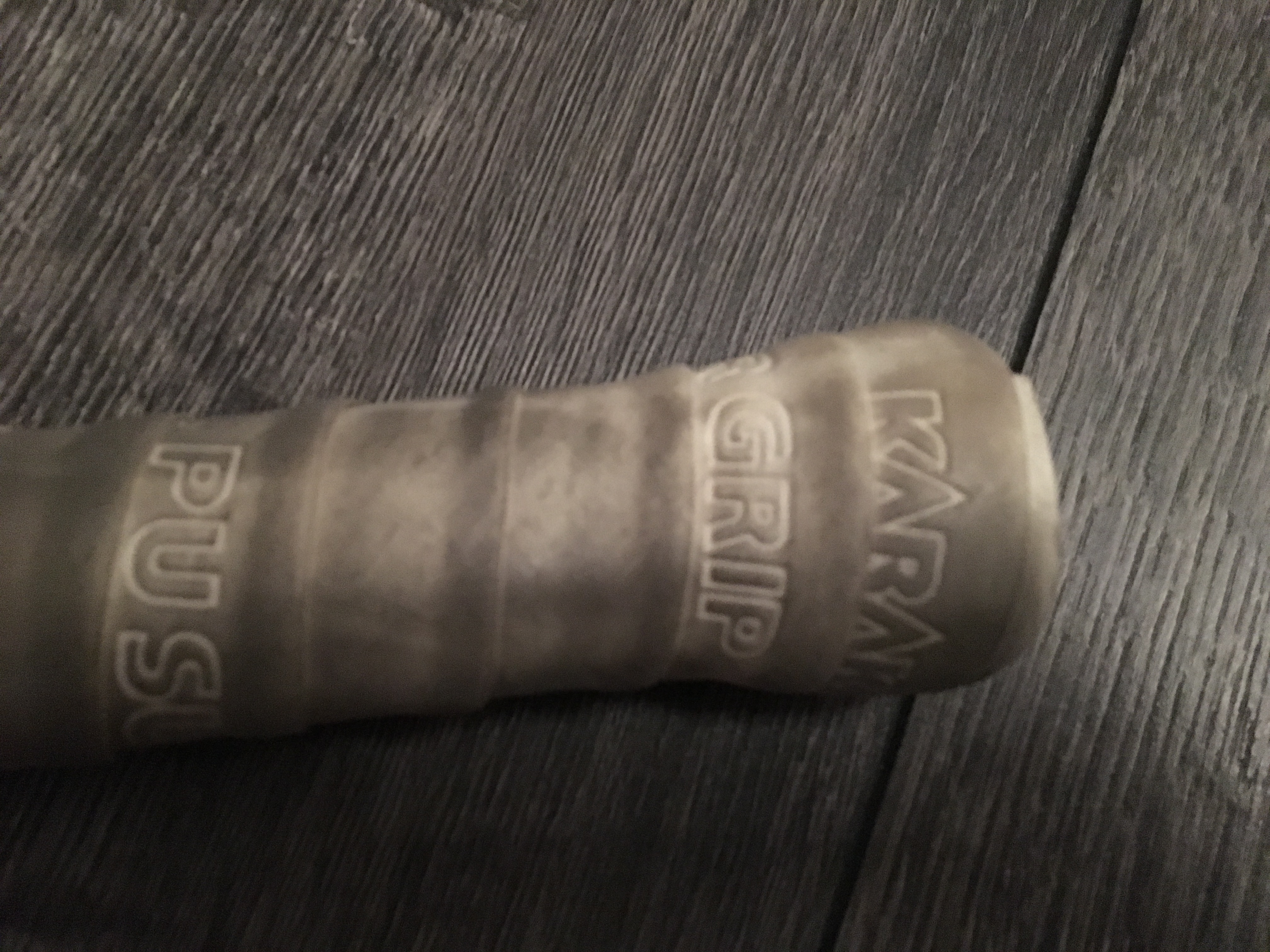
Yuck! 


Regular players – playing three – four times a week 

If you’re playing three or four times a week, you should probably change your grip at least every two weeks, if not earlier, if you want to avoid your grip adversely affecting or distracting you. You can of course hold out for longer, but you may start to find your racket starts to slip at crucial moments, especially when hitting the ball hard. It can also start to feel rough when you’re trying to control drops or drop volleys.

There are a lot of very high level player who will change their grip far more frequently than this even, some even every match! You might be surprised at how much of a difference changing your grip this regularly can make, especially with getting touch shots like drops just right.
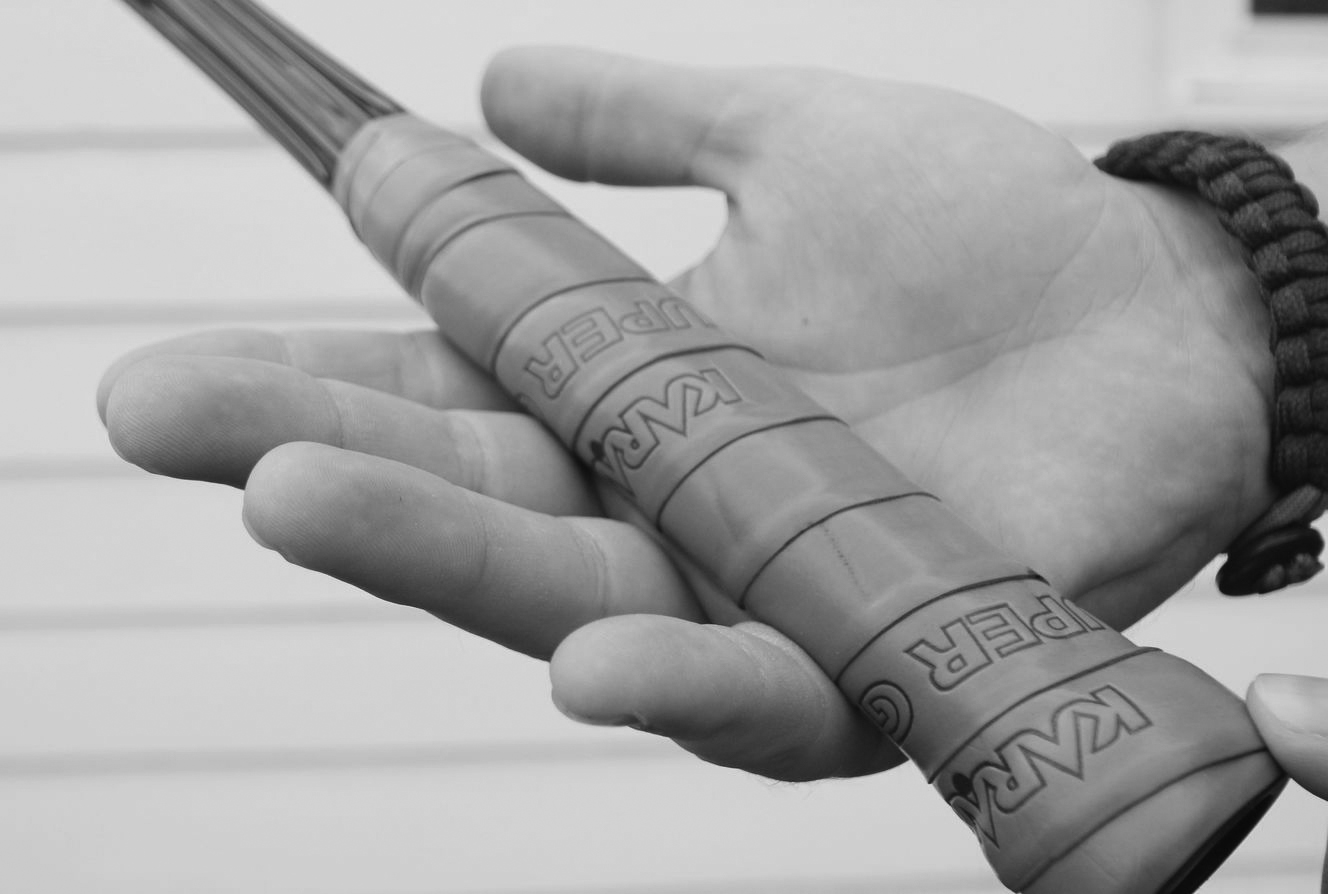
Weekly players – one – two times a week 

If you’re playing once or twice a week, you probably ought to change your grip once every month, although this it does depend on you and how much you sweat and how sensitive to change your hands are.

Irregular players – one – two times a month or less

It often seems that players who play less need a new grip the most. It can be easy to think given you’ve not played for a while that you don’t need a new grip. Often this is not the case though as the ravages of time can take their toll on your grip! If you’ve left your racket in your garage for a while you might find the grip starts to colour in your hand!

Telltale signs that death has come for your grip 

  • If your grip is a light colour and is starting to go dark or is black!
  • The racket slips out of your hand. This is usually more obvious when you try to hit the ball hard.
  • You’re finding it difficult to get a high level of control on touch shots, like the drop or drop volley.
  • If the grip is fraying or is starting to flake or colouring your hands; how did you let it get to that stage?!
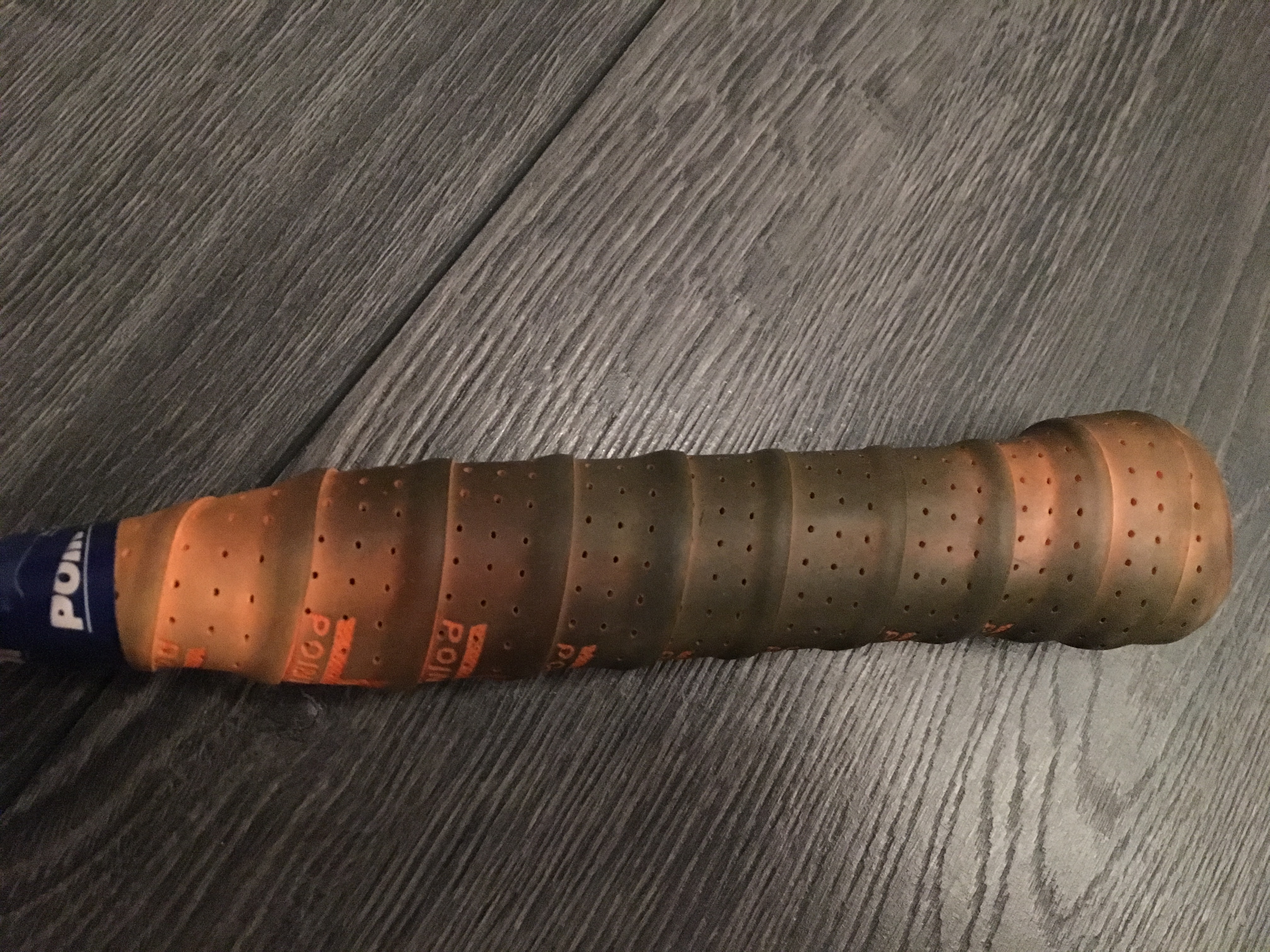
A new grip is long overdue! 

As with everything, it does vary from player to player. If you sweat a lot or play lots of intensive games, you will undoubtedly go through grips quicker than someone who plays the same amount as you but at a lower level. Keep an eye on your grip and watch out for the telltale signs and go with what keeps you feeling consistent with your hitting. It won’t make you the best player at the club (if you weren’t the best already!), but it is part of making sure you are well prepared and have everything in place to perform at your best, which certainly adds up and creates a platform to be the best.

Check out our posts on balls, rackets and strings for how get the best out of your equipment. 


Filed Under: Equipment, Grip, Tips Tagged With: change your grip, equipment, grip, karakal, pointfore

A guide to squash strings 

The Squash Company’s complete guide to squash strings

In most cases a racket will come with poor quality factory squash strings which don’t have the performance of squash strings purchased from a stringer. Some players will even have their rackets re-strung as soon as they’ve bought them without even using the default strings.

There are some manufacturers who have deals in place with major string manufacturers. Black Knight rackets often come pre-strung with Ashaway strings and Tecnifibre rackets utilise their own popular strings.

String type and tension is, however, very important in the performance and style of a racket.


Which strings should you buy?

The strings you should buy depend on how much you play and what you prefer. The best performance strings are Ashaway and Tecnifibre, but these are also the most expensive and are typically less durable than cheaper options.

Unless you are playing to a high level, or are not bothered by the extra cost, it is probably better to go for the mid-range options, which are typically labelled as ‘synthetic gut’ and similar names. Most stores and stringers have their own preferred, mid-price string that they use.

What tension should you get?

The tighter your strings, the easier it is to get control and the looser your strings, the easier it is to get power. Of course, any accomplished player should be able to achieve both power and control with any reasonable string tension! It mostly comes down to preference in the end. You also might find as you become more experienced, that a higher tension suits a racket more than a lower one or vice versa.

The most common string tension is usually around 26Ibs, which is fairly middling and neither too tight nor too loose.

Higher tension – 28Ibs or above

Tension around 28Ibs is typically the highest you want for a racket. Any tighter than this, and you will be putting quite a lot of pressure on your frame. You are also going to make it hard to achieve power with your shots and you will also make it a bit more likely your strings will snap or wear away a bit quicker.

Medium tension – 24-27Ibs 

As mentioned above, 26Ibs or thereabouts is the typical tension favoured by most stringers. If you haven’t got a particular preference or are unsure what to get, this is the best range to go for.

Loose to medium tension – 22-24Ibs

Having your racket strung between 22-24Ibs is on the loose side of normal but isn’t out of the ordinary. If you wanted to try having looser strings, this would be the tension range to go for to get a feel for it without doing anything too drastic. This might be worth considering if you thrive on a hard-hitting game to try and maximise your strength.

Very loose tensions – 21 lbs or under

Having your racket strung at 21Ibs or lower is quite uncommon and this is typically only used by very particular players or professionals who know exactly what they want. It is believed that Gregory Gaultier has his racket strung at 14Ibs, which beggars belief! Maybe he knows something we don’t!

When you have your strings strung this loose, you may find it more difficult to achieve accurate drop shops and ‘touch’ at first.

String gauge/thickness

Squash strings only come in 17 or 18 gauges. If yours is different to this, you may have been given strings intended for racketball, or tennis if they are around 15, and badminton if they are around 20 gauge.

The 17 gauge is slightly thicker than an 18 gauge – typically 1.25mm vs. 1.15mm or thereabouts – and so will last longer. However, you will get slightly more power with an 18 gauge to make up for the slightly reduced durability. Much like other things involving your racket, it’s down to your needs and personal preference.


How your racket can affect your strings – minimising the risk of snapping

The effect of racket shape on strings

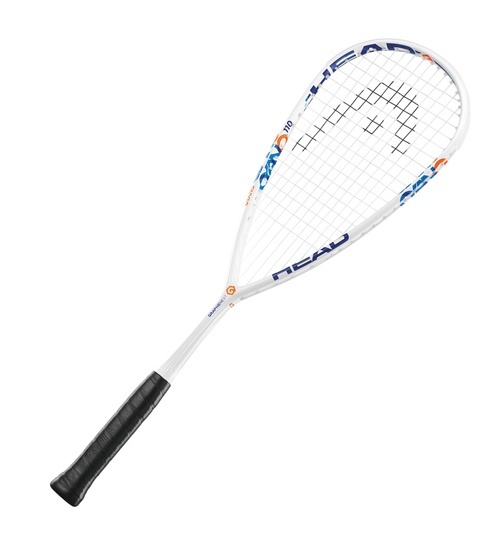
The shape of the racket can have an impact on the life of your strings, as some rackets put more tension on certain areas of the string, which can cause strings to snap or wear quicker. Unfortunately, with tear-drop shaped rackets, the strings tend to break earlier, as the string bed is very long and so the strings are pulled tight over a longer area, which means the vertical strings are more prone to snapping.

Tear drop squash rackets tend to work through strings quicker but make up for it in the quality of their sweet spot.

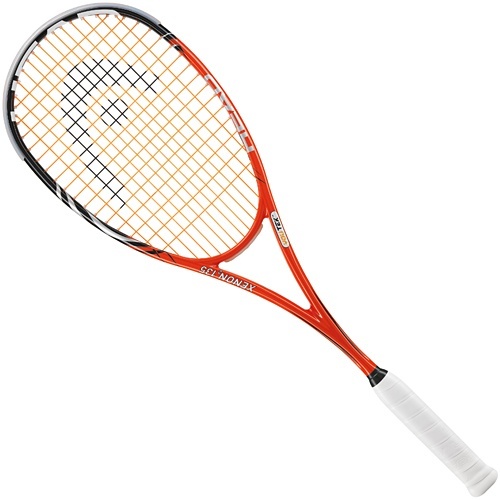
Round headed rackets tend to last a bit longer as the vertical strings aren’t pulled down over such a long area and so are less prone to snapping.

The round headed frame.

Grommets

Grommets protect your strings from being cut into by the frame and so if they are damaged or missing, strings may break sooner than expected. This can really put your strings at risk of snapping if you hit an off-centre shot.

Mis-hitting the ball and off-centre shots

If you typically hit the ball in the middle of your strings, you will most likely get the best out of your strings. If used correctly, strings should eventually break around the centre due to the repetitive impact of the horizontal and vertical strings when you hit the ball, resulting eventually in one of the strings cutting deep enough into another to snap it.

However, be warned: if you mis-hit the ball frequently or maybe even just hit the ball off-centre once, you may snap the strings. This is not because of faulty strings or a poor stringing job and it is usually not the racket (though as mentioned elsewhere in the article you want to check on the grommets, bumper and frame!), but because the strings can’t properly absorb an impact around the edges of the string bed. Ordinarily when you hit the ball in the middle of the strings, the surrounding strings around the ball will absorb the impact. When you catch the ball on the strings near the frame, the strings can’t stretch around the entirety of the ball and so the strings on one side of the ball take the brunt of the impact, which can result in them snapping.


Damaged bumper strips

If you have a damaged bumper strip, you may find that strings snap etc., when your racket hits the floor or wall. Hitting the floor or wall can be rather hard to avoid and so if you have a racket with a damaged bumper, it is worth putting electrical or racket tape over the top of the racket to protect the strings until you can get a new one when you have your racket re-strung. If your bumper strip is damaged, you need to make sure that there are no sharp bits of plastic attached or hanging off which could hurt your opponent. It is your responsibility to remove these bits and put tape over the affected areas.

If you have a racket model which doesn’t come with a bumper strip, you might also want some electrical or racket tape for extra protection, although this may alter the balance of the racket slightly.

Miscellaneous points about strings 

Stringing your racket with cracks in the frame

If your frame has a crack, your stringer might refuse to string the racket as it is quite possible the frame will crack when the pressure and tension needed to string the racket is applied. You might be able to get them to re-string the racket in spite of this, but be warned you’ll need to pay extra and there is no guarantee your racket will make it through the process without breaking completely.

Buying a reel of string

If you do have a favoured brand of string and you play a lot, it is worth your time and money to buy a reel of string. You can then leave this with the stringer when you get your racket restrung and they will only charge you for labour, which will save you money in the long run.

For more information about what equipment to use, we also have detailed guides on rackets and balls. 

Filed Under: Equipment

Annoying Habits I: Don’t Spin your racket 

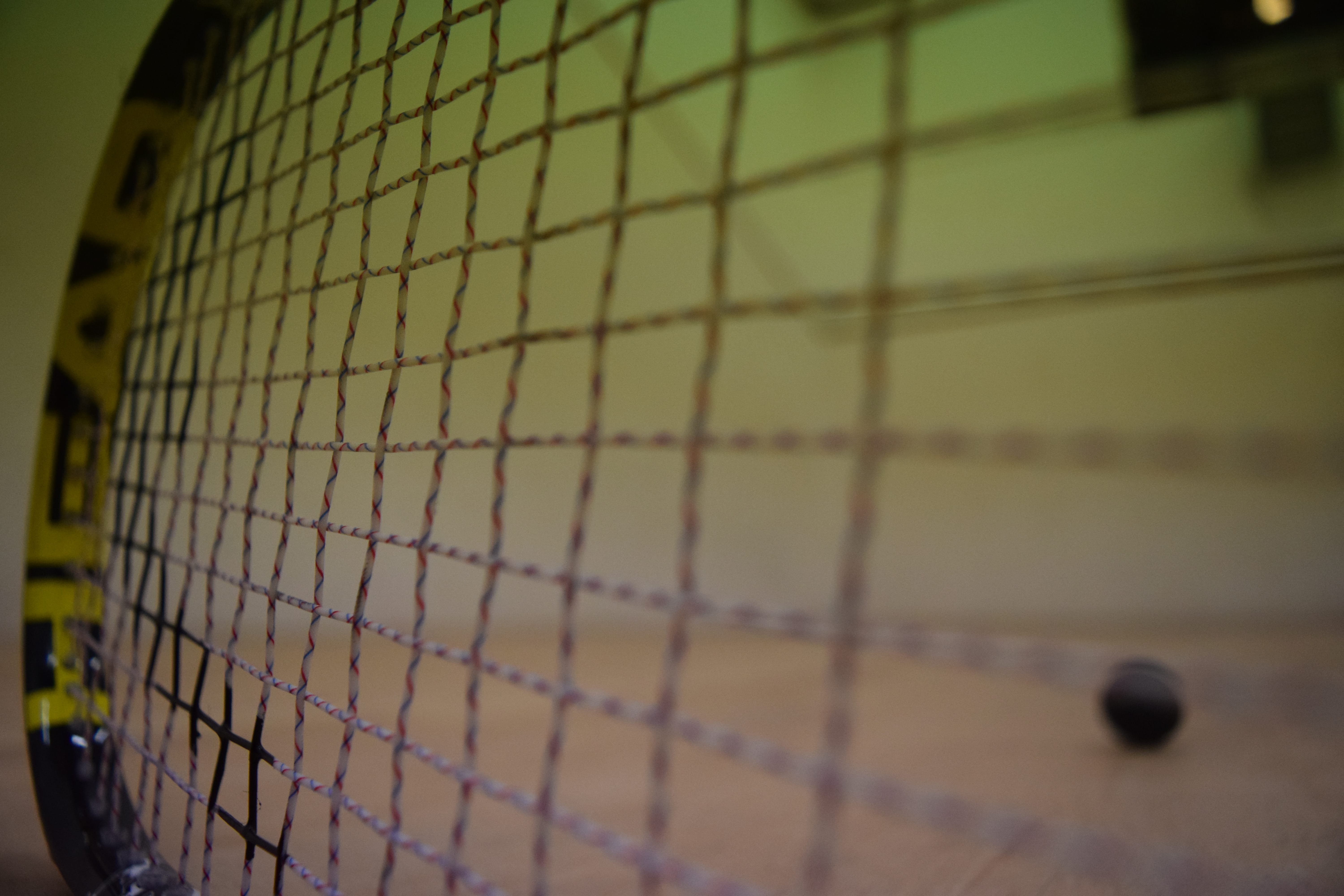
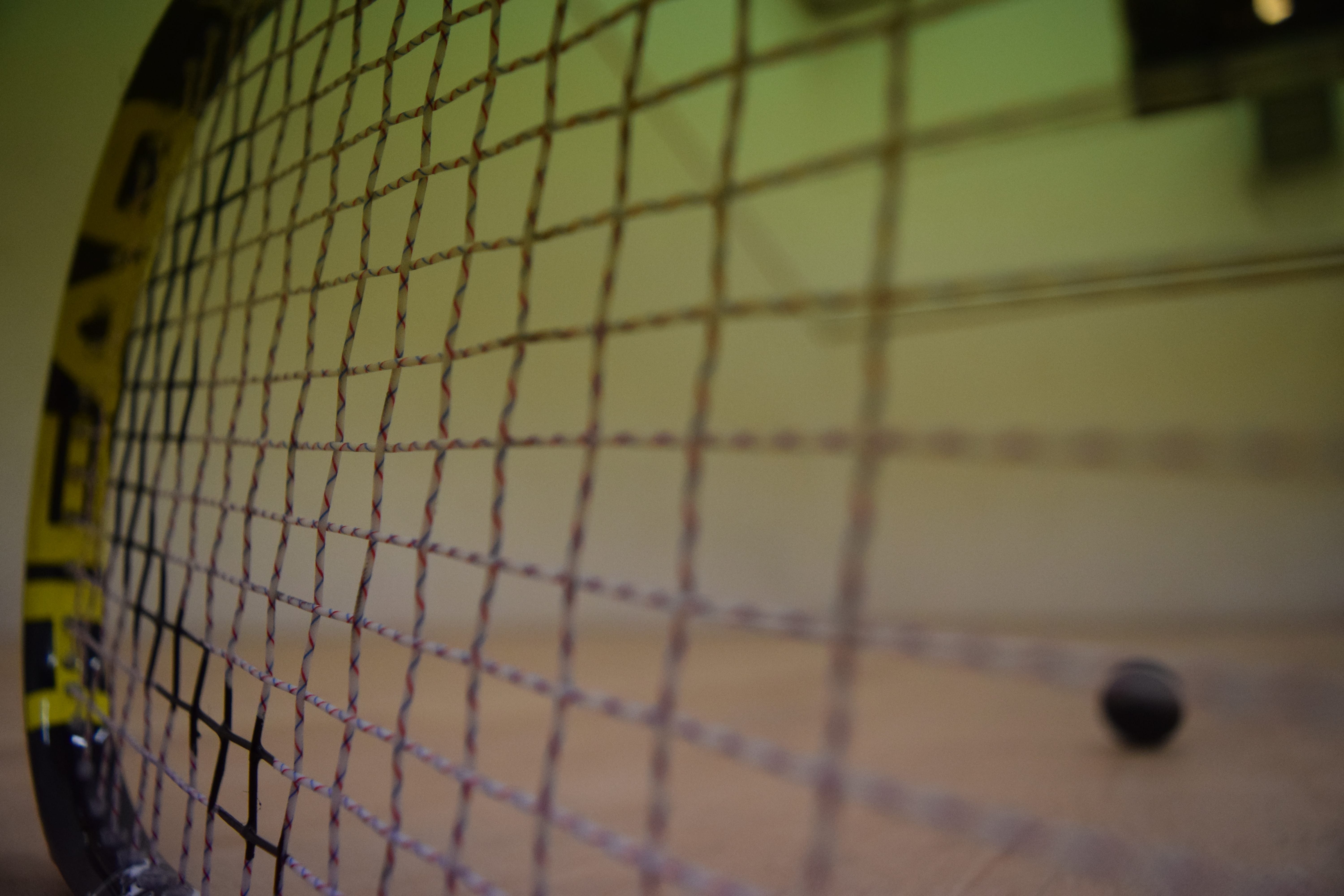
Ruining the groove of your strings  Don’t spin your racket in your hand between rallies. It’s a habit more common in tennis players but it’s something that does your shots and strings no good. Like how a table tennis bat has a red side and a black side, you should aim to use one side of your strings for forehand shots and the other side for backhand shots. If you spin your racket, you’ll end up hitting the ball with both sides of the strings when hitting forehand shots and using both sides of the strings when you play backhand shots. Sometimes you’ll notice immediately that you’ve flipped the racket and hit the ball with the opposite side of the racket face to usual, as the connection will feel ‘off’ or almost wrong. Other times, you might do it without noticing and suddenly find the contact when you strike the ball doesn’t feel right. DSC_0577-min When you play with strings they start getting into a groove and players who play with a lot of spin or slice will notice their vertical strings starting to go a little bit curved or wavy to one side. If you twist you racket and start hitting forehand shots with the face you’ve been using for backhand shots, this can start affecting your contact with the ball as the strings start pulling in different directions. Having an allocated side of the strings for forehand shots and backhand shots won’t take you to the next level but you may find you strike the ball cleaner and more consistently.

Filed Under: Equipment, Tips

Squash balls explained: what do the dots mean?


What is the difference between squash balls?

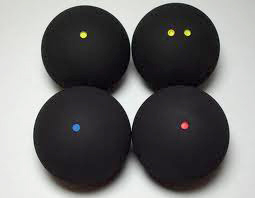
Squash balls for senior players come in six varieties, each with different levels of ‘bounce’. The level of bounce is denoted by coloured dots on the ball. For younger players, there are a number of ‘Mini-Squash’ balls available which have a very high, prolonged bounce.

Colour

Bounce

Speed (hang time)

Suggested player level
Orange Super low Super low  High altitude play
Double yellow Slow Very low Experienced squash players
Yellow Slow Low Advanced
Green  Medium/slow Average Advanced
Red Medium High  Beginners
Blue Fast Very high Juniors and new players

* please note: the colours can vary depending on the brand, so make sure you check when purchasing. Also, please feel free to ask us any questions in the comments below. 

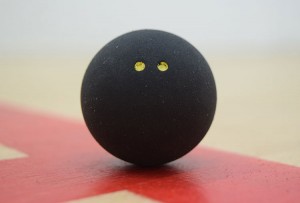
The standard ball for professional competitions is the double yellow according to the World Squash Federation. This has been the case since 2001. The bounce of a squash ball also varies as a function of temperature, which is why it is recommended that a squash ball is warmed up before use.

Before 2001, the single yellow dot ball was the competition standard.

Squash balls - two yellow dots

How to choose a squash ball

The four most common kinds of squash balls are red, blue, single yellow and double yellow. When starting out blue or red balls are best (unless as previously mentioned it is a very young player, in which case ‘Mini-Squash’ balls are preferable, with the orange one being the best). These allow for players who are still developing their hand-eye-coordination to learn techniques without slow reaction times halting progress. Some manufacturers also offer slightly larger balls for new players – for instance the Dunlop ‘Intro’ ball is 12% larger than the standard size, making the ball slower.

Unless you are a good player it is best to play with a blue or red ball while you improve, as more advanced balls require long rallies and regular hard hitting in order to stay sufficiently warm.

The four most common squash balls

As you get better at squash you can move on to single yellow dot balls, but don’t be tempted to move to double yellow balls immediately. Playing with a more difficult ball prematurely can hinder your performance. Hitting a boast shot for instance, is easier with a single dot ball as the ball sits up a bit higher. Double yellow squash balls are typically used by advanced players.

If you are playing against someone who is at a lowel level than you, play with a ball that is appropriate for his/her skill level.

The temperature of the court should also be taken into account, as some courts are colder than others and you will therefore find it easier to play with bouncier balls. In the winter on colder courts, we frequently use single dot balls even for advanced players, as the double dot balls simply don’t bounce enough. It often simply makes for a far more enjoyable game to avoid the double dot.

The altitude of a court should also influence your ball choice. In high altitude areas with lower air pressure, it is necessary to use a ball that has even less bounce. A high altitude ‘orange dot ball’ is often used in places such as Mexico City, Johannesburg and Calgary, while a ‘Dunlop green dot’ ball is commonly used in North America.

Using different squash balls in training

There is a bit of egotism in using a double dot ball but there really shouldn’t be at all. It’s a great training exercise to use different balls, especially for advanced players. If you want to focus on volleying, it can be a great exercise to use a much bouncier single dot ball to test an advanced player’s reactions, as the ball will rebound off of the front wall faster. You’d be amazed as well at how difficult it can be to control a very hot single dot or red dot ball when hitting length or short shots. It’s a great ball control exercise to get players seeing if they can still hit dying lengths – length shots which don’t come out of the back corners – with a single or red dot ball. Equally, if you want to work on finishing rallies or hitting better drop shots, use bouncier balls. Anyone can learn to hit a drop shot with a lukewarm double dot ball but can you hit a winning drop – or indeed any winning shot – with a piping hot red dot ball?

Happy playing! If you have any questions or further insights feel free to leave a comment below.

For more information about what equipment to use, we also have detailed guides on rackets and strings. 


Filed Under: Equipment, Tips Tagged With: colored dots, coloured dots, double yellow, single yellow, squash, squash balls


Terms | Privacy policy | Contact | About us
Web Development By S G Barker.