Squash Company

Squash coaching with passion

  • Squash School
  • Blog
  • Videos
  • Shop

How to win at squash: Technical, mental and physical victories

How do you win squash matches? If only there was a clear-cut answer you could bottle up. Most victories though do fall into one of three types; technical, mental or physical.

Victories often consist of mixes of two or all three of these things, and often a superiority in one area will lead to a superiority in another, but it is good to have a rough idea of which major area of the game you can earn an advantage over your opponent in.

Beating your opponent technically

A technical victory is where one player’s shots are so superior to the other’s that the receiving player just can’t get in themselves in a position hit shots that will do any damage. Technical victory are most common when there is a huge gulf in class between the two players.

Having been a coach and practiced relentlessly for years, it’s not often I feel out of my depth technically. Sometimes people will tire me out, and I’ll lose shot quality because of that, but it’s rare for me to feel like I just can’t deal with someone’s shots even when I’m fresh. When it happens though, you can just feel helpless.
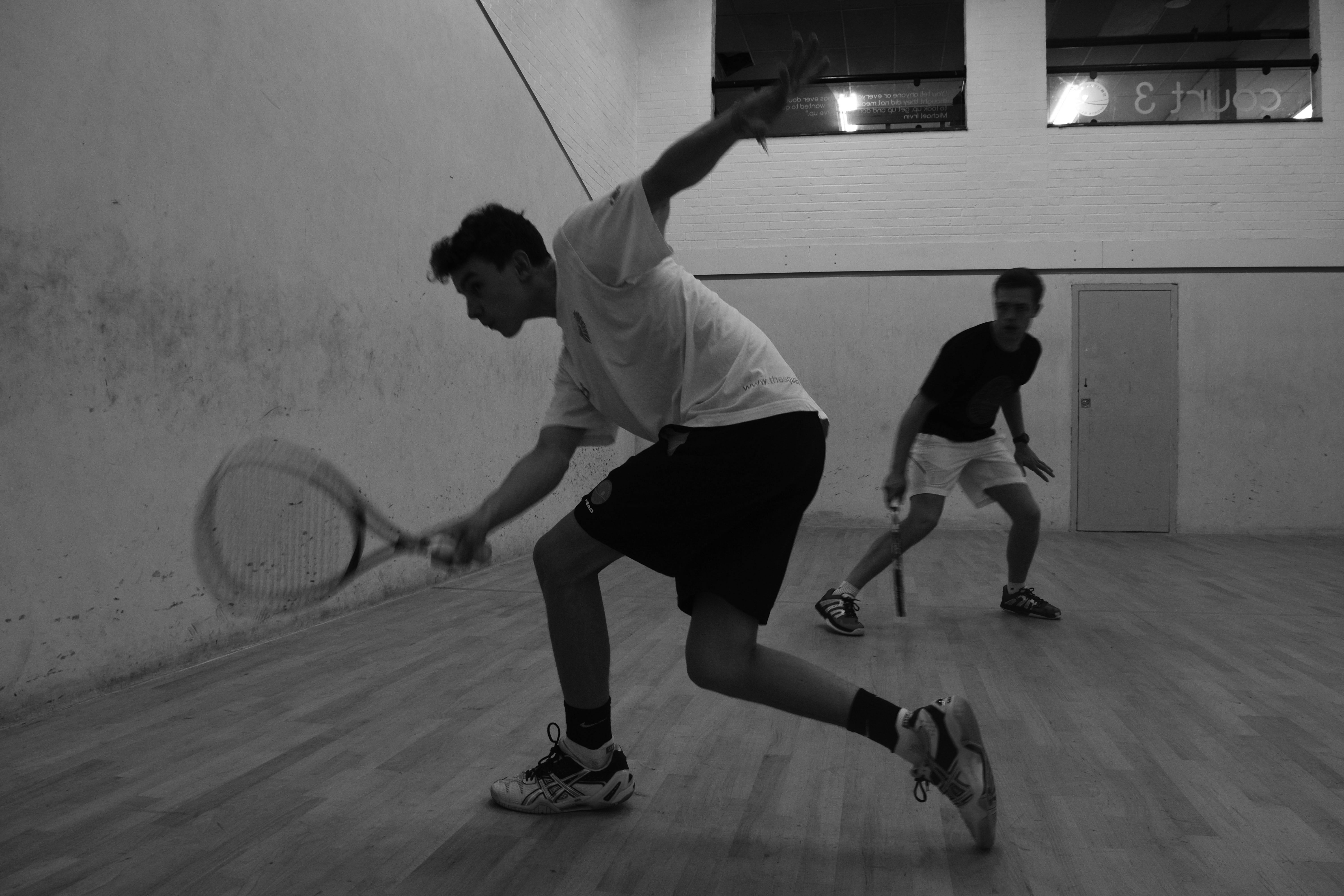
There was a player who everyone said had the greatest length shots they’d ever seen, and even knowing his reputation it didn’t prepare me for the actual match. I’d never felt so helpless. The ball just didn’t come out of the back corner, or off the back wall. The second bounce was always on the back wall, and so my only option was to intercept the ball before the back wall. This was easier said than done though as his length was also low and very tight, and so quite often my shot wasn’t as accurate as his, leaving him room to use his disguise and attacking shots to increase the pressure on me and win rallies. It was also really hard work trying to intercept his shots before the back wall the majority of the time.


He beat me technically. I wasn’t even particularly tired. I’d had far harder games physically, but I just couldn’t return his shots with the quality necessary to compete with him, and so he beat me fairly comfortably despite me having age, fitness and determination on my side. I could compete in the mental and physical battle, but I just wasn’t able to compete on the same plane as him technically.

If you have great ball control, you might look to beat people through the accuracy of your play and keeping your shot selection very precise.

If you are playing someone who has great control, you might need to try to overwhelm them physically or mentally.

Beating your opponent mentally

Mental victories in squash can sometimes come out of nowhere. It can be hard to gage where the other player is at sometimes – although sometimes they’re making so much noise it is obvious – and you can almost forget that they might be struggling mentally and physically through your own internal struggles.

In a close match, a mental victory might come from avoiding mistakes and rash decisions in the latter stages of games. This comes down to making composed shot choices shots during the important points, and if you’re playing against someone who is agitated and frustrated or tiring, keeping the rally going with simple shots might be the best tactic for a mental victory.

Conversely, if you’re playing someone who is fit and gets the ball back a lot, and isn’t particularly mentally flustered, being a bit braver and going for more attacking shots might be the difference if you are able to win rallies and they are not. This is not just a matter of skill. A lot of players will shy away from playing an attacking shot out of fear even though they are perfectly capable of playing it.

One common form of mental victory comes when one player imposes his style on another. This is most common when an older player is able to dominate a younger, fitter one with high, accurate serves and soft drops and drop volleys.

Beating your opponent physically

A physical victory is one of the most common squash victories at club level. Sometimes it’s blatant with one player clearly falling away in the fourth or fifth game. Other times it’s much more subtle with one player just not able to attack the ball as early as they were in the first game, not playing at the same tempo or able to get their feet in the right place to find the quality of shot needed.

If one player is slightly weaker than the other either technically, starting to lose the physical edge can spell the end, as when you’re playing a skilful player you need to keep your shot accuracy high and this is difficult when you’re tired. Even where players are of similar fitness, one is often wearied by the match more than the other and so finds themselves struggling to compete technically, mentally and physically by the end.

If you’re playing someone who is fit, you might need to concentrate on the accuracy of your shots, your shot selection and your use of disguise, deception and hold.

If you are physically fit, be sure to use this in an attacking sense and not just to retrieve shots. Use fitness and speed to attack the ball high up the court on the volley and to intercept the ball before the back wall.

Filed Under: Matchplay, Tactical

Practice playing in different environments

Playing on cold courts and with skiddy balls

It’s important you practice under varying conditions and in different court environments if you want to play competitively at a high level. Courts can vary massively from club to club. If you’re playing in a County League or tournaments you’ll play on all sorts of courts at different clubs. Therefore, if you want to be successful it’s important you practice on different courts and in different circumstances so that you are prepared for abnormal situations. 

The court

The most common variation is temperature. Often clubs will have courts that are warmer than others, and so players will be familiar with the fact that the ball bounces a bit higher on warmer courts. It’s important you develop your ability to play on warmer and colder courts, as you’ll play on all sorts of courts temperature wise, and you want to have the experience to be able to make little changes to your game and not be thrown mentally by a different court temperature. 

How weird are your home club’s courts?

It’s not just temperature that can make playing on a particular court unique. Most of us won’t play on full glass courts very often – which really is a different experience – but playing on even just a glass-back court is slightly different. The bounce off the back wall is slightly different and the added distraction of people behind the court and/or being able to see through at what’s going on behind can be off-putting if you haven’t played on a glass-back court very often. 

You might also occasionally play on courts where the front walls are not covered in the typical plaster and are actually covered in boards which make a really loud bang when they are hit by the ball. They can be very distracting at first; the ball doesn’t rebound off them anywhere near as much as you would expect, or as much as the sound it makes would suggest. Sometimes the ball won’t rebound off standard walls as much as you would expect, as it’s not uncommon for the front wall to be colder than the rest of the court because it is an outside wall.

Sometimes even on a warm court the ball may not bounce very high because the floor is older and ‘dead’. This may even cause the ball to ‘skid’ and have a quicker, longer and lower bounce. It’s therefore important you practice on courts which have different floors. If the ball is skidding, play lots of boasts and kills! 


The ball 

The best way to familiarise yourself with different bounces of the ball is to play with different balls. Use single yellow or red dot balls to simulate a really bouncy ball or summer climate. This is also a great ball control exercise. Be sure to also use balls of different ages. Brand new balls tend to bounce a bit more, and so again might be good for simulating hot weather or bouncy courts, but it’s also a good exercise to use really old balls that will skid more and bounce differently, as you never know when you might get a funny ball or end up on a strange court where the ball behaves as if it were old.

Preparing yourself for anything 

The idea is to be ready for anything. There’s a general belief that both players have to cope with any situation such as a dodgy ball, cold court or whatever else, but the truth is that more often than not the conditions favour one player. On the outside courts in Egypt there were complaints about the wind, and while both players had to put up with the wind, there’s no doubt if your game involved a lot of high shots it was going to be affected more than someone who played a very low, attacking game. The same is true of colder or warmer courts. It is likely to naturally suit one player more than the other, and maybe even disadvantage one player. 

So, the message is to be the player who has the advantage on as many courts and in as many situations as possible. Start by varying the court you play on at your local club. If you are able, try to player at other nearby clubs where the conditions are likely to be different still. Use different balls of varying ages and bounce so that you are prepared for all sorts of bounces. 

If you are familiar with playing on difficult courts and lots of different balls, you are likely to have more confidence and a composure that you can’t teach or fake, because you know that you have been in this situation many times before, and that is half of the battle. With your self-assuredness, you can adapt your game to cope with whatever the different conditions are for the match. We won’t go into detail about what you changes you can make in colder or warmer weather, as we do that in our guides to adapting your game in warmer weather and colder weather. 


Filed Under: Game Management, Matchplay, Mental, Pre-match, Tips Tagged With: adapting, cold court, hot court, skiddy ball, warm court

Who can handle the oxygen debt best?

When you play someone who is at a similar or higher standard of ability and fitness to you, you will often spend much of the match in oxygen debt.

What is oxygen debt?

Oxygen debt occurs when your body isn’t able to get sufficient oxygen around the body quickly enough. The main symptom of oxygen debt is heavy and quick breathing, and unfortunately in squash you don’t get much time to let your breathing calm down. Soon after a tough rally is finished, the next one begins. 

How will it affect the match?

You’ll never quite become comfortable physically in a tough match, which means a lot of the game becomes about who can cope with their oxygen debt the best. This is especially important the better a player you become and at a high club or county level. At this level, the match can often become a question of who can maintain their skillset, shape, technique and shot selection best under the pressure. Naturally, a big part of playing at a high level is learning how to handle and adapt to being in oxygen debt.

Recognising when you need to change your game

It sounds obvious that everyone should know when they are tired, but quite often players will go into oxygen debt on auto-pilot, and start playing sloppily without really knowing it. They’ll instinctively be tempted to start going for ultra-attacking shots and try to cut rallies off early, which can be effective if you are still able to move your feet sufficiently to get into a good position. Quite often though, positional play becomes really sloppy when you are tired and so forcing an attacking shot isn’t a good idea. More subtle signs of oxygen debt include your length often starts bouncing shorter, which will create other problems if you are unable to get the T-Position back and giving your opponent a chance to attack. 

Signs you have become affected by oxygen debt include:

  • Not recovering to the T-Position, or not recovering the T quickly enough 
  • Length shots bouncing short
  • Trying to win the rally really quickly
  • Attempting to play spectacular shots that aren’t really an option 
  • Slow recovery between rallies
  • Sustained heavy breathing
  • Hitting the ball out more than normal
  • Shots losing accuracy

Some of these are very obvious, but you must act the moment you notice one of these things, or any other symptom of tiredness, affecting your game. 

How to adapt – using the height of the court 

  • Mentally re-focus, and remind yourself what you want to achieve: 
    • Hitting length higher and slower
    • Attacking earlier in the rally, but still not forcing attacking shots

The first thing is to stay calm, which can take a bit of doing, and avoid trying to win rallies immediately. After that, it’s important you focus on your length shots, as accurate length which gets your opponent behind you will help you to handle a lot of the problems that oxygen debt brings. 

Start by aiming a bit higher on the front wall with your length – hit slower drives and go for more lob shots – as this will help you still get your length shots to the back of the court, but also give you a bit more time to recover to the T-Position. This deals with two of the major problems of oxygen debt. If you are managing to get the ball to the back of the court with high slow shots, and therefore get your opponent behind you, you will also typically get more opportunities to attack and intercept their shots, which means you don’t need to force attacks and take big risks in the pursuit of winning rallies.

When you are tired, you can and should try to win rallies when the opportunity arises. Trying to play lots of winners can be a very good strategy when it works, but it is high risk when you’re tired and not moving your feet well. The key to getting the right balance with winning shots is to attack earlier in the rally where possible, but not to force opportunities. Try to ensure that you are going for the majority of these winning shots once you have moved your opponent behind you – ideally with your high, slow lob – as you would in the majority of the match. The aim is to try and take the first or second opportunity you get, perhaps a loose length shot from your opponent that you can volley, rather than being more patient and waiting to see if you can create a better opportunity. You need to stop trying to keep moving your opponent and instead focus on being clinical as soon as a chance presents itself. This doesn’t mean forcing a winning shot, as it might take dozens of shots for you to get an opportunity, but don’t pass that opportunity up when it does come, be it the fourth or fiftieth shot of the rally. 

Start by recognising you are in oxygen debt, stay calm, aim to get the ball to the back of the court in any which way, and then go from there. Let us know how it goes below! 

Filed Under: Matchplay, Physical, Tactical, Tips


Terms | Privacy policy | Contact | About us
Web Development By S G Barker.