Squash Company

Squash coaching with passion

  • Squash School
  • Blog
  • Videos
  • Shop

The dangers of being over-motivated Part II

How to deal with over-motivation during a match


This is our second post on how to deal with over-motivation, this week focusing on what the symptoms of over-motivation are during a match and how you can deal with them.

Check out Part I: How to deal with over-motivation before a match for more on how to make sure you are balanced mentally before the match.

Signs of over-motivation during a match

Symptoms of over-motivation can include:

  • Silly mistakes
  • Nervousness or lack of conviction in hitting the ball (most commonly players who are over-motivated won’t follow through long enough and will cut off their swing early)
  • Swinging through the ball too fast or without control
  • Attempting to win the rally very early or when the chance of hitting a winning shot is very slim
  • Nervousness or lack of conviction in shot selection
  • Erratic movement and/or positioning – often getting too close to the ball
  • Poor temperament (especially if a player’s temperament is worse than usual)
  • Overreacting when hitting a bad shot or when things don’t go as planned
  • Focusing too much on the score

As previously mentioned, all of these are relative, and what you are really looking out for is if you are doing one or more of the above more than usual.
How do you handle over-motivation during a match?

Personally, I think this is perhaps one of the most difficult mental challenges to overcome mid-match. It’s very easy to lurch from over-motivation to anger, or another destructive emotion.

You need to hit reset as quickly as possible, and you might have to wait until the end of the game to do this properly. I would go away from the court and go to a corridor, changing rooms, toilet or other area that is removed from the courts. Breathe deeply, and try to ground yourself in the moment by focusing on the feeling of your feet in your shoes and the feeling of the ground beneath them.
Once you start to calm down, focus on what you want your new goal or target to be. When over-motivated, I find it is best to focus on removing the pressure from yourself. You can do this by acknowledging to yourself that all you can do is your best, and even if you play your best, you cannot control the score and you still might lose. Tell yourself to focus instead on something you can control, such as making sure you get back to the T-Position as quickly as possible or doing your best to volley as much as possible. Your new focus could also be about desire and mindset, telling yourself to think of the next game as a best of one or of doing your best to prevent your opponent winning two rallies in a row.

If you can grab a quick bit of fresh air – make it quick if it’s cold and don’t ruin your shoes! – that can work wonders.

I also find changing my shirt is a great way of refreshing myself, and always try to have a spare one. If you can change your shirt, do that too.

As we said last week, you need to take all of this advice and apply it to your personality and style. You will need to adapt some of our tips to work for you, and perhaps even disregard some bits altogether if they don’t work for you. The key is to experiment and pursue what does work for you through trial and error!

Best of luck from The Squash Company in keeping it together!

For more thoughts on how you can improve your mental game, click on the word ‘Mental’ in the ‘Tags’ section below – or click here – to see all of our posts on the mental side of the game. 


Filed Under: Mental, Tactical Tagged With: concentration, focus, match, Mental, Mental preparation, motivation, over-motivation, under-motivation

The dangers of being over-motivated – Part I

How to deal with over-motivation before a match

Like too much of anything in life, too much motivation can be bad for you. Being under-motivated is rarely good for you but being over-motivated can be worse. People in an over-motivated state are often more easily swayed by their emotions and their temper, which only makes the situation harder to turn around.

Motivation is different for everyone and is relative to each individual. For some people, they play their best squash when they psych themselves up before a match, whilst others perform better when they relax. These players will have different thresholds at which they become ‘over-motivated’. What might make the player who prefers a more relaxed pre-match atmosphere over-motivated might barely register with the player who works themselves into a frenzy pre-match. However you prefer to prepare pre-match, being over-motivated is still a danger.

Before the match is the best time for keeping an eye on your motivation levels, as you have time to make a difference.

Key signs to watch out for include: 

  • Being more energetic or excitable than normal
  • Mind and thoughts are racing
  • More intense feelings or thoughts about results or performance – particularly expectations
  • More intense feelings of nervousness than normal


If you are prone to being over-motivated and have some of the symptoms above, you might want to design a pre-match routine for yourself. Even if you aren’t particularly prone to over-motivation, it might be worth building pre-emptive habits into your preparation.

To handle over-motivation before a match, try to:

  • Relax in the build-up to a match by doing something completely non-squash related, and ideally not in the club or centre.
  • Avoid thinking about the result or potential outcomes.
  • Not start preparing for a match too early. If you start listening to music to psych yourself up hours before your match, you may find you mis-time your mental peak and arrive on court off-kilter.
  • Develop mental cues in your pre-match routine – we talk about this in a lot more detail in ‘Getting in the zone’ – in the way you get dressed or pack your bag, your warm-up routine, or getting on court early to hit the ball a bit to help your rhythm.

Everyone is different and something that may work for me, or another person, may not work for you. All you can do is realise the situation you are in and acknowledge it, and then experiment with different things to see what has the best effect for you.

Look out soon for Part II: How to deal with over-motivation during a match.

You can see all posts on our site about the mental side of the game by clicking on the ‘Mental’ tag below next to the ‘Filed Under’ heading. Other related posts you may want to look at include:

Knocking-up with purpose – Part 2: The Mind
‘Win’ the warm-up in squash
Fear of failure
Getting in the ‘zone’
Belief 


Filed Under: Mental, Pre-match Tagged With: Mental, Mental preparation, mindset, motivation, over-motivation

What to do when the game tied at 1-1

We’ve previously written about handling a match when you are leading 2-0, and another really common and pivotal situation during a match is when the match is tied at 1 game each.

Knowing when to push

When the match is tied at 1-1, the third game becomes vital for both players. Lose, and you need to win 2 games in a row for the first time in the match in order to win. It’s not just a physical challenge but a mental one as well. If the player losing 2-1 is also struggling physically or not as fit as the other player, the disappointment of losing the third and facing up to needing to win two games in a row might be too much for them and they might struggle to find anything like their best.

This is why you need to throw everything you’ve got at your opponent at the start of the third game.  Before you go on court for the third game, set targets for yourself or remind yourself of how you want to play. Remind yourself, and force yourself if necessary, to push high up the T-Position, to volley and take the ball early, and tell yourself that you will not let them win two rallies in a row or allow the ball to bounce twice. If you work better with targets, aim to keep them at 0-0 for as long as possible, or see how few points you can limit them to. Once you are in the game, remind yourself of your goal or target between rallies but do not dwell on the actual score – let that take care of itself.


Even doing this just for the first half of the third game might be enough to demoralise your opponent or give you an unassailable lead.

Investing in the third for reward in the fourth 

If you don’t go on the offensive in the third, and instead maintain a steady level – or worse drop off – you will give your opponent a big chance to go 2-1 up if they come out attacking, which is a position you really don’t want to allow them to get into. Working yourself as hard as possible in the third is often a good investment, as if you can win a really tough third game to go 2-1 up, the extra effort will be rewarded when your opponent is worn out physically, and therefore not capable of being truly competitive or dangerous in the fourth game.

If you are in a match poised at 1-1, double your efforts. Every game is always important but leaving yourself needing to win back to back games deep into the match is not a position you want to be in. You can also deal a devastating blow to your opponent and leave them physically unable to put as much into the fourth game, which when combined with the disappointment of losing the third, can allow you to ease to victory in the fourth providing you maintain your concentration.


Related posts:

Being 2-0 up: The 2-0 up syndrome

Don’t wait for the ball – hit it early

What to do at match ball 

Play like it’s a best of one

Complacency

Filed Under: Mental, Physical, Tactical, Tips

Play like it’s a best of one

Ignoring the bigger picture

Are you facing up to a tough opponent? Are you feeling tired? Or maybe just a bit nervous? Or even complacent? Tell yourself that the match you are playing is just a best of one game. Convince yourself. This mindset can help to keep you in the moment, and not be distracted by the match as a whole, and can also help you to put all your energy into the moment.

Winning three games might seem inconceivable in some situations, or against some opponents, but playing in a best of one; well, who knows what might happen?

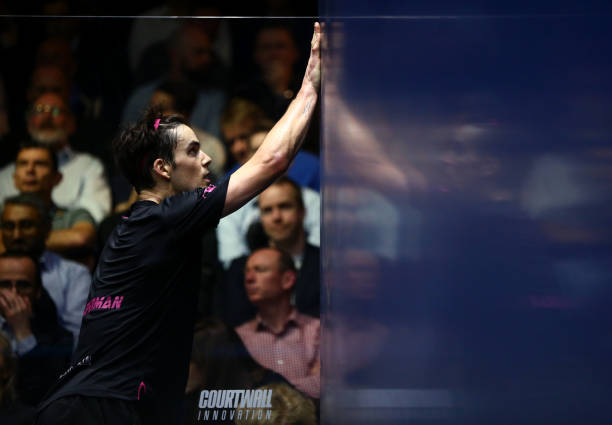
Image result for squash hand wiping on wall

The big picture can be overwhelming in squash, sport and life

This is hardly new advice, as people in sport and in life have often known the wisdom of ignoring the bigger picture if the size of the challenge or task might overwhelm someone. Sometimes, it’s counterproductive to be mindful of the whole task, and better to break things down into smaller goals.


Legendary football manager Sir Alex Ferguson spoke in his book Leadership about how he would always tell his team when they were losing to aim to get a goal back and then see where it took them. Rather than focusing on overturning a big deficit of 2-0 or 3-0, which might have seemed impossible, Ferguson had his players focus on the rather smaller and easier task of just scoring one goal.

Alex Ferguson.jpg

Sometimes winning in squash is about putting one foot in front of the other, playing a game step by step and shot by shot. If you are feeling slightly overawed going into a match, maybe because of the ability or reputation of your opponent or because you don’t feel great yourself, try to adopt the ‘best of one game’ mentality and see where it takes you. You can nick one game, can’t you?

We’ve also written a lot of other posts on ways to improve the mental side of your game, including getting in the zone, how to develop belief, how to cope with fear of failure, how to deal with complacency, avoiding thinking about the score and ignoring bad shots. 


Filed Under: Mental, Tactical, Tips

What to do at match ball


How to adjust your play to help you win a high-pressure point.

Players are often able to conjure up amazing feats of energy and fitness at match point that make spectators and coaches wonder why they didn’t play like that earlier in the match. Today we’re going to discuss how you can adjust your tactics and play on important points, such as game balls and match balls, to help you be more successful in converting match balls or saving them if you are on the receiving end.

Match ball up

The first thing is to ignore it. Ignore the score. Even the best intentioned of players can start to become sloppy, even while being focused. It’s very easy to drop a bit deeper on the court and hit the ball a bit later and all of a sudden the quality of shot, intensity and movement isn’t there and the other player is closing in. Make sure you focus on putting pressure on your opponent with each shot you play and ensuring that whatever you do, you don’t let your opponent’s shots bounce twice. Always make sure you fight tooth and nail when at match ball – do not let the ball bounce twice. While the ball is in play, your opponent is under immense pressure, so bust a gut to keep your opponent under that pressure as you never know when it might get to them.
Second of all, similarly to what we will discuss when match ball down, you should try to be more disciplined when closing the match out. Don’t attack half-chances or go for short shots unless you are sure it is on and you are in a strong position. This will likely result in you playing a lot more length shots, which is fine so long as you hit them accurately and at a good tempo, which means taking them early where possible and not letting the ball hit the back wall. By doing this, you might even panic your opponent, who at match ball down, might be feeling the need to try something spectacular and so might do something rash out of frustration in response to your disciplined play.

Match ball down

When match ball down, there is an argument to say you should just go gung-ho and spectacular but most comebacks I’ve ever achieved have started, and often finished, with very boring, predictable lengths. I don’t like the idea of playing not to lose very often during matches but at match ball down, it is in my opinion the best tactic. You can make yourself very hard to beat and also really test your opponent’s mindset, as if they’ve lost a tiny bit of focus or are a bit hasty in wanting to finish you off, lots of length shots might make it impossible for them to break you down. This can start to put them under pressure as they start to worry about you catching up, which in turn plays into the tactic of keeping it long, as they may become increasingly edgy and impatient and start attempting shots that aren’t viable.
You need to hit your length shots early though. If you play at a really slow, steady rhythm you can allow them to attack you and give them an advantage. Make sure you try to step forwards and hit the length shots somewhere around the back of the serve box so that you are not only hard to break down, you are also hard to break down at a high tempo, doubling your defences.

Next time you are game or match ball up or down, have a go at the suggestions made here and see if you are able to be more successful in winning these crucial points. Best of luck!


Filed Under: Mental, Tactical, Tips

  • « Previous Page
  • 1
  • 2
  • 3
  • 4
  • …
  • 7
  • Next Page »


Terms | Privacy policy | Contact | About us
Web Development By S G Barker.