Squash Company

Squash coaching with passion

  • Squash School
  • Blog
  • Videos
  • Shop

Snatching defeat from the jaws of victory


Not converting easy chances.

The biggest instance of snatching defeat from the jaws of victory in squash is when players dominate a rally and do all of the work to get in a great position, or are gifted a great opportunity, and then become casual and make a mess of what should’ve been the winning shot.
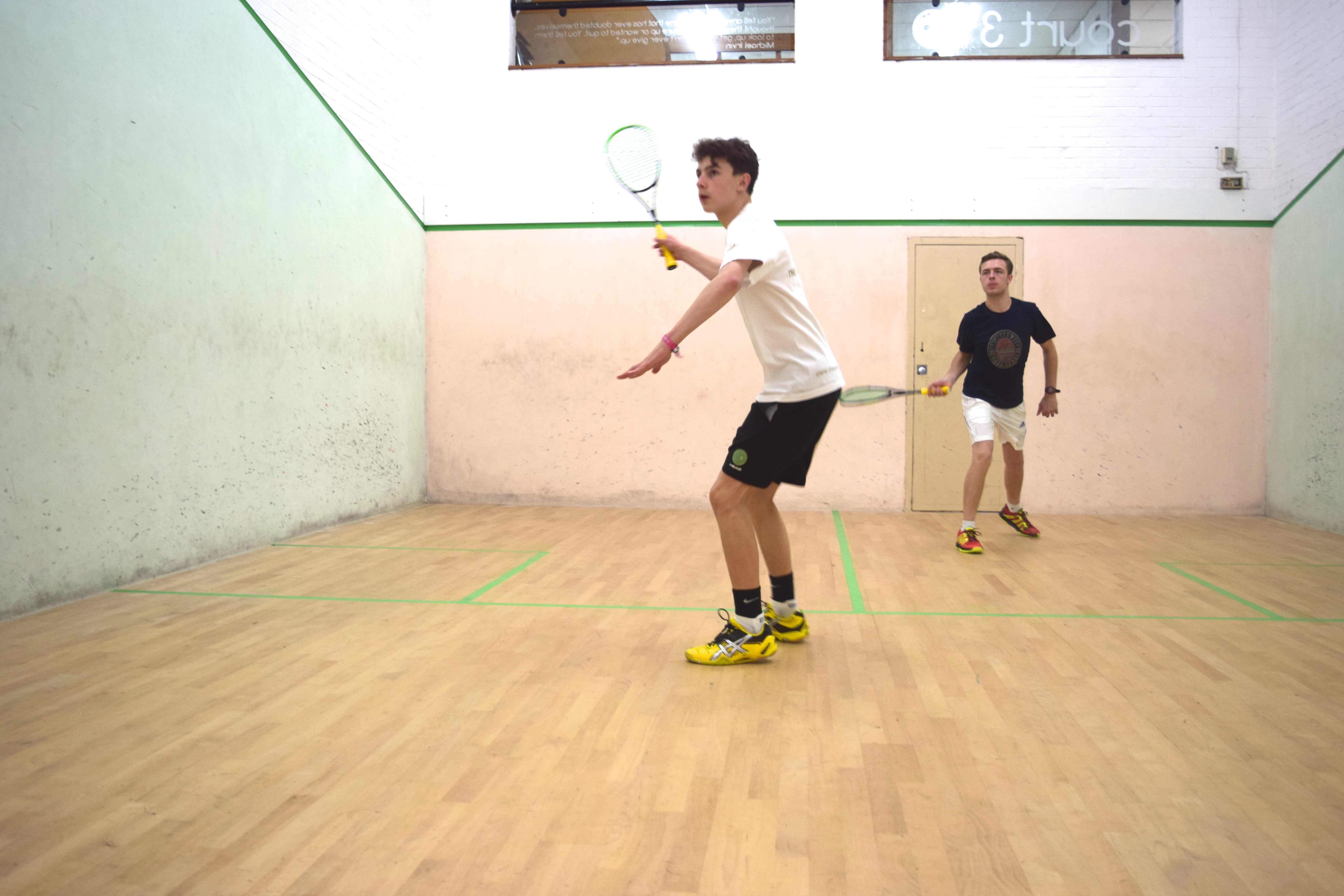
Loose, awkward balls down the middle 

It happens a fair amount when a player is on the T-Position and forces a wild, loose shot towards the middle. Instead of giving this shot the treatment it deserves, lots of players will flail at the ball and throw away the opportunity to attack a loose ball. While these shots are often awkward to deal with, we have to be prepared for them as they often present a fantastic opportunity to attack. If you are struggling with shots that are coming at your body or close to you, try to practice improvising. You can do this simply by working on your racket head speed, which can be as simple as hitting volleys to yourself as fast as you can from very close to the front wall  (see video below). Exercises like this help you develop dexterity with your racket, which is important when the ball is in an awkward position.

Alternatively, you can have a partner play loose cross-courts at you which you aim to drop volley tight to the side wall. Figure of 8’s (see video below) are also a great way of developing speed of racket, feet and thought when done in challenging circumstances.

Always play as if the ball will be returned

Often though, defeat is snatched when the ball isn’t even coming awkwardly at the hitter. Players frequently act as if they have won the rally after their opponent hits a weak shot. This is a terrible attitude to have as you lose the positioning and quality on your shot, and then the movement out of the shot, all of which can cost you dearly. If your opponent has hit a weak shot, it is time to up your game, not relax and put your feet up. Receiving a weak shot should be like the moment a shark smells blood – it should be the moment you go gung-ho. There’s nothing worse than playing a drop shot too high because of casualness, or worse, managing to still play an accurate drop shot but not moving back to the T-Position properly and so being caught out when your opponent scrapes an awful shot back. Always play as if your opponent will return every shot you play, that way you can stay focused.

When you are playing, notice if you are converting and capitalising on the chances you create and the chances you are given. Or does your profligacy hold you back and possibly even cost you a match in which you dominated the majority of the rallies?

Filed Under: Mental, Tips, Volley

Play it simple


Often the obvious shot is the best one. 

It’s very easy to get carried away and overcomplicate any sport in the modern era with all the analysis software, video footage and media platforms available. As coaches, who may be paid to make a living, it is very tempting and perhaps even expected, to build complex webs, terms and concepts around a discipline. Squash doesn’t always get the same level of analysis as some sports, but it is still a simple game which can be easily complicated. It’s actually oh so simple.

Play the obvious shot

If someone is behind you, play it short. If they are in front of you, play it long. Don’t be worried that they will know what you are doing. The real question is, will they get it back? And even if they do get it back, did they have to work hard to get it back?

It’s very easy to try and be too clever and look to start bluffing and double bluffing, but on the majority of occasions, you should just play the obvious shot that they know you are going to play and you know you are going to play.

I’ve talked before in the post ‘Skilled Player Problems’ about how I’ve been in situations where I’ve overcomplicated rallies. I’d put someone in the front corner, they’d play a loose cross-court length to me and rather than just playing a straight length shot and making them run, I tried to be clever. I would attempt to delay my shot, trying to get them to start moving to cover the straight length shot and then suddenly play it cross-court so that they would get their legs all in a tangle. I often either played a poor cross-court, played a cross-court to a strong volleyer or just allowed them time to get back on the T and get settled. If I’d just pushed it to length rather than trying to humiliate them, I might have won the rally instantly.

Make an educated guess about your opponent’s location 

You won’t always know exactly where your opponent is, but you can always make an educated guess. Usually you will be relying on where they were most recently. For example, if you played a straight drive to the forehand back corner and your opponent scraped back a boast to the opposite front quarter, you will know your opponent must be somewhere between the forehand back corner and the T-Position. If they are particularly fast or hasty, they might even be rushing toward the forehand corner. You need to make a quick, educated guess on their rough location and then put the ball somewhere else. In this instance, the straight drop shot is still the best option in the majority of situations, as it’s going to make them run hard. Occasionally, maybe two or three of every ten shots, you might play a drive, lob or another shot to keep them on their toes. You won’t always get the educated guess right no matter how good you get, but you will learn the more you try. The most important thing is you make a quick and clear decision about what shot you are going to hit.

Squash is easy but it is also easy to overcomplicate it. Keep it simple and make quick judgements about where your opponent is or should be and then hit a shot into where the empty space will be on court.


Filed Under: Mental, Tactical

How do you create gaps on the court to hit the ball into?


Using the four corners to create gaps.  

We’ve discussed in a previous blog the importance of using the four corners of the court for defensive reasons, where you seek to stop an opponent’s attack and stop running by getting the ball to one of the four corners.

Today though we’re going to look at using the four corners as a means of building attacks, which perhaps suggests that you should build all of your rallies on shots to the four corners!

Disciplined attacking

I’m all for attacking squash, as you may have noticed on this site, but the key is to be disciplined when attacking and only go for the real attacking shots when the opportunity arrives and you’ve built up pressure. The opportunity might come when returning your opponent’s serve or it might not come until the hundredth shot of the rally. The important point is that it must be at the right time, which is when you are in a strong position and you have worked or been gifted an opening.

In order to create these opportunities and gaps on the court which you can exploit with your attacking shots, you should look to attack the two back corners and the two front corners. When I say corners in this instance I mean deep in the corners. Reaching the front corners would require soft drops or drop volleys and not kills or stuns or overhit drops. The same goes for the back corners; you need to achieve good length with your lobs and drives which actually get the ball right into the back corner on the second bounce.

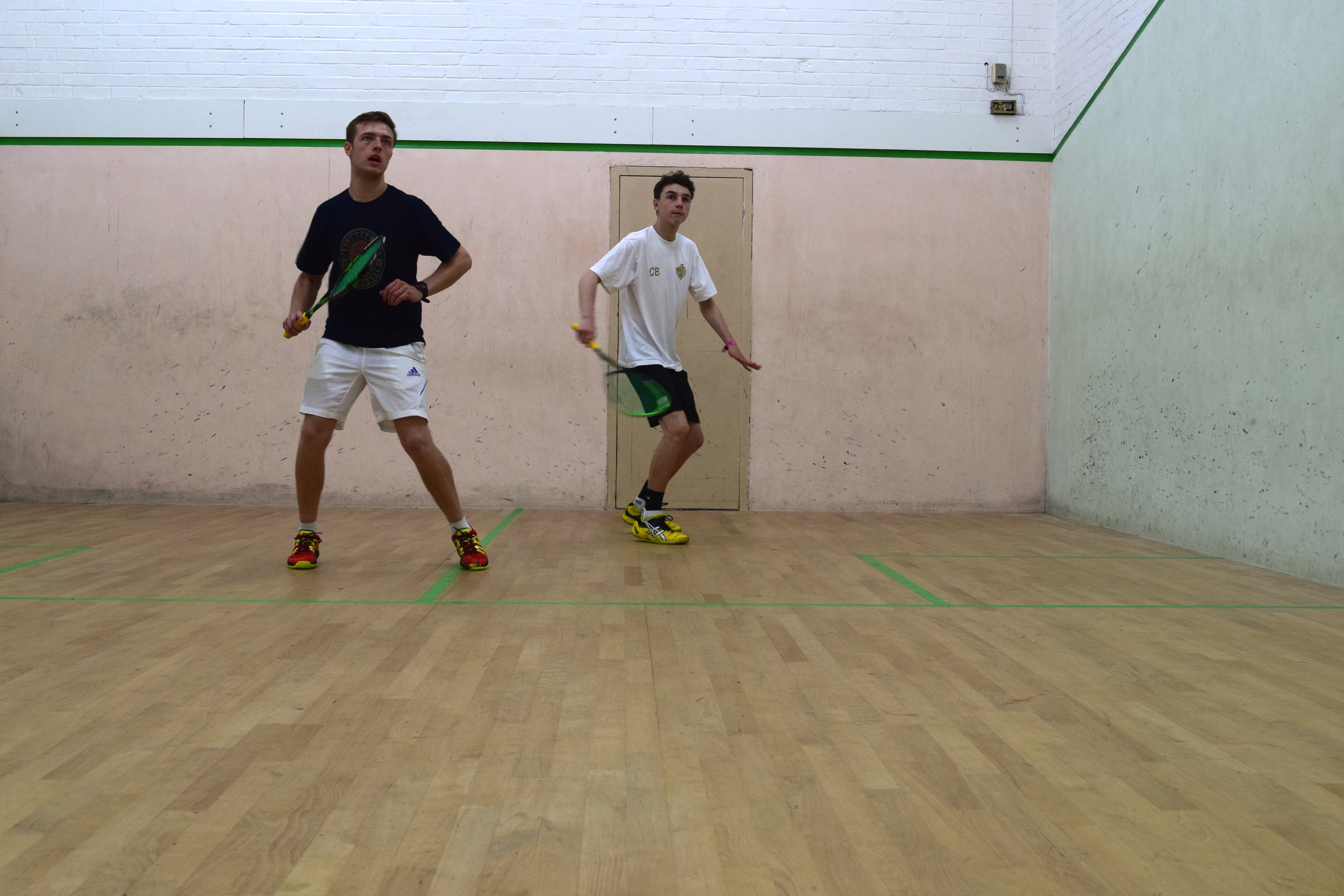
DSC_0169-min

If you attack these four areas of the court, primarily using straight shots, you will tend to force weaker shots from your opponent if you’re accurate, especially if you keep your play simple and just keep hitting the ball away from your opponent. Once you’ve drawn out a weaker shot, you can then attack with a variety of other shots. By attacking in this way, you are also covering yourself defensively, as it’s very hard to attack shots in the four corners and so your opponent will have far fewer opportunities to attack you. It’s when we play loose shots, particularly weak cross-courts or ambitious mis-timed attacking shots, that we tend to lose rallies as we give our opponent the opportunity to attack. By following this disciplined build-up, hopefully you can restrict their opportunities while working your own.

If it’s on, it’s on

Just to reiterate – if you get the chance to attack you should take it. If your opponent leaves a gap for a boast, you should play a boast. However, over the course of games and matches, try to build your attacks primarily using the four corners so that you consistently force weaker shots from your opponent, whilst simultaneously preventing them from getting too many opportunities to attack as your shots will all be in the very corners of the court.


Filed Under: Mental, Physical, Positional, Tactical, Tips

Playing against big or tall players


The low to high tactic. 

If you find yourself up against big, tall rangy players there are different things you can do tactically to try and spin things to your advantage.

Sure tall players can dominate the T-Position if they’re good on the volley and reach the front and back of the court with a few effortless strides if their movement is good. There is no shortcut though for them in bending down low, especially if they then have to reach up high again after.

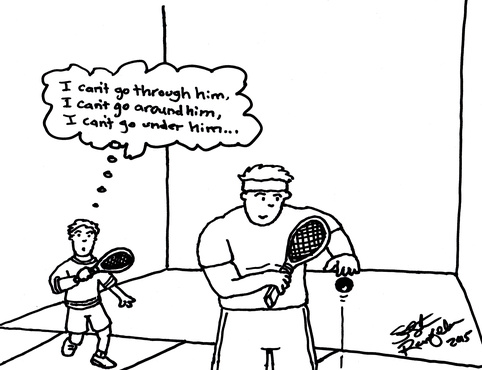
A good tactic for testing taller players is to play a high shot and then a low shot and vice-versa. Try abandoning all middling height shots and aim to use only the lower and upper parts of the front wall. By doing this you can force your taller opponent into a cycle of constantly bending and stretching, which can be very tiring and tough on the legs. The best combination of shots to use is going in short with a drop, boast or kill and the following up with a lob.

Clearing the ball

It’s not uncommon for tall players to get in your way as they clear the ball and return to the T-Position after playing their shot. If they are in your way and blocking your path to the ball, do not be afraid to call a Let-Ball no matter what their size. A lot of players will attempt to play on as they are scared to call a Let-Ball and end up being bullied off court. This is not to say you should beat them by calling huge amounts of Let-Balls to disrupt play, but that you shouldn’t be afraid if you are genuinely unable to get to the ball cleanly, even if it happens a lot during the course of a match.

How to use your body for deception

Seeing the ball 

At times, you might actually have problems seeing the ball due to them clearing the ball badly or just in general due to their size! This can often be intentional though, as players can use their body to hide their intentions and disguise what shot they will play.

However, if you’re doing the right things you shouldn’t have too many problems too often seeing the ball. If you are moving them around and getting them off the T-Position, you should generally be able to see the ball. A lot of the time tall or big players are difficult to get off the T-Position, so your shots have to be good to move them away from it, especially as they’ll be aiming to stay there to maximise the use of their reach. If your shots are loose or into the middle, they will quite literally be able to swat them away easily.

When you next play the big player, see if you can work them hard with the high then low tactics, but make sure you move them around enough to prevent them hogging the T-Position and using their body to disguise their shots.


Filed Under: Mental, Tactical

Being 2-0 up: The 2-0 up Syndrome 


The most dangerous scoreline in squash. 

It should be good to be 2-0 up. After all, you’d rather be 2-0 up than 2-1 up and it’s certainly better than being in a losing position. Yet I don’t think there is a more dangerous position to be in than 2-0 up. I’d go as far as to say when players are 2-0 up, they tend to play their worst squash. Even when players go and win the third, they frequently make the third game harder than it needs to be.

How do you handle being 2-0 up? 

We’ve talked before about ignoring the score and that is something you have to do again here. You really have to treat every point like it’s 0-0. When you’re winning you will often find yourself slipping into bad habits subconsciously, even when you have no intention of doing so. Your movement becomes a bit slack and you’re less alert and naturally everything else quickly follows suit until your play is unravelling. You have to do your best to focus only on the game in hand and ignore all that has come before.

DSC_0552

Challenging yourself

It might be advisable when 2-0 up to even set yourself a challenge. Avoid thinking about scores if you can but instead focus on seeing how long you can go without losing a point. Simply bust a gut and do your best to see how far you can go without letting the ball bounce twice. This is a good mindset to have in general; if you lose a rally in the third game, or at any time, go flat out to win the next rally. If you have an attitude of preventing your opponent winning two rallies in a row, you will be able to re-focus more successfully and also when successful, you’ll stop your opponent building up too much momentum and racking up a run of points.

When you’re 2-0 up in a game, recognise and understand that you are 2-0 up. Really acknowledge it and plot how you’re going to beat the ‘2-0 up syndrome’. Give yourself something to focus on, whether it be the mantra, such as running yourself into the ground to stop your opponent winning the next point after they have already won a point, or an action, such as making sure you Volley everything you can or get back to the T-Position after every shot. Being 2-0 up should lead to positive squash, not bad squash.


Filed Under: Mental Tagged With: Mental

  • « Previous Page
  • 1
  • 2
  • 3
  • 4
  • 5
  • …
  • 7
  • Next Page »


Terms | Privacy policy | Contact | About us
Web Development By S G Barker.