Squash Company

Squash coaching with passion

  • Squash School
  • Blog
  • Videos
  • Shop

Moving around the ball instead of backwards


How to deal with loose shots using your feet 

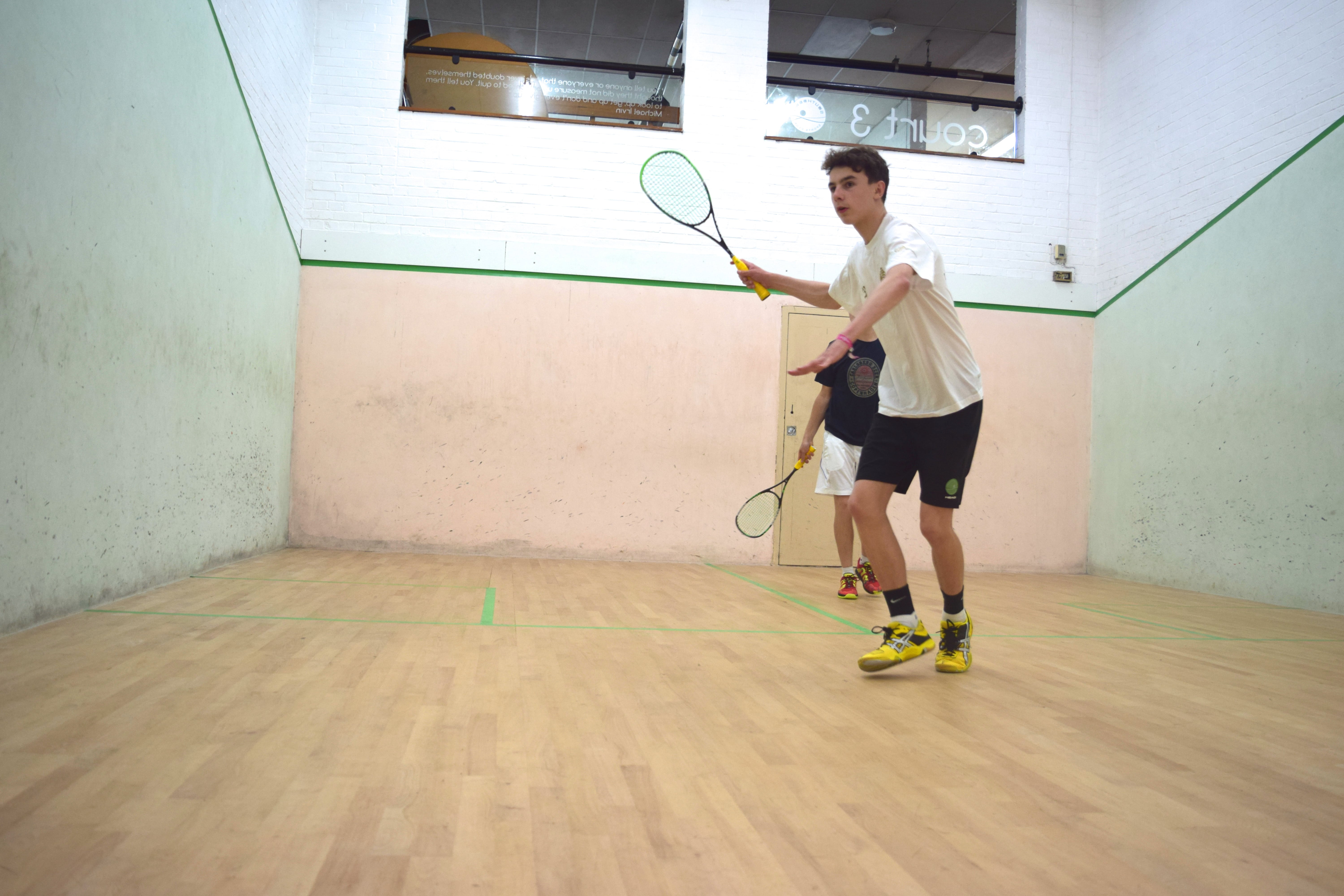
When the ball is coming towards you – perhaps at an awkward or unexpected angle – do you step backwards or do you move more sideways and around the ball?
Getting your weight through the ball and staying central 

Moving backwards can be detrimental as since you and your body are now going backwards, it can be difficult to transfer your weight forwards again and through the ball when you hit your shot. This might mean you end up stretching forwards or flicking your racket at the ball, resulting in a weak or inconsistent shot.

Instead, when the ball is coming towards you, try to move ‘around it’ – moving towards the centre of the court in order to create space for the ball to the side of you, rather than in front of you. Think of how a matador tries to get a bull to run towards the red cape to the side of his body as opposed to having the red cape directly in front of his body.


Turning or rotating to create the angle 

Getting around the ball might involve a couple of small, quick steps or maybe even a larger step depending on your movement style, but it almost always involves some rotation to turn your body towards the side wall. This turn is the key, as if you are able to turn your body towards the side wall, you have more ability to guide the ball towards the corners of the court.

Another benefit of this sideways movement and turning is it can also keep you closer to the T-Position, resulting in less time and movement required to get back to the T-Position. It can even create a better angle for hitting the nick!

Have a look at how you are dealing with loose shots and balls in the middle of the court and see if you can rotate, turn or move sideways quickly in order to generate a more accurate, tighter shot.
Filed Under: Movement, Physical, Positional, Tips

Alignment between feet and racket


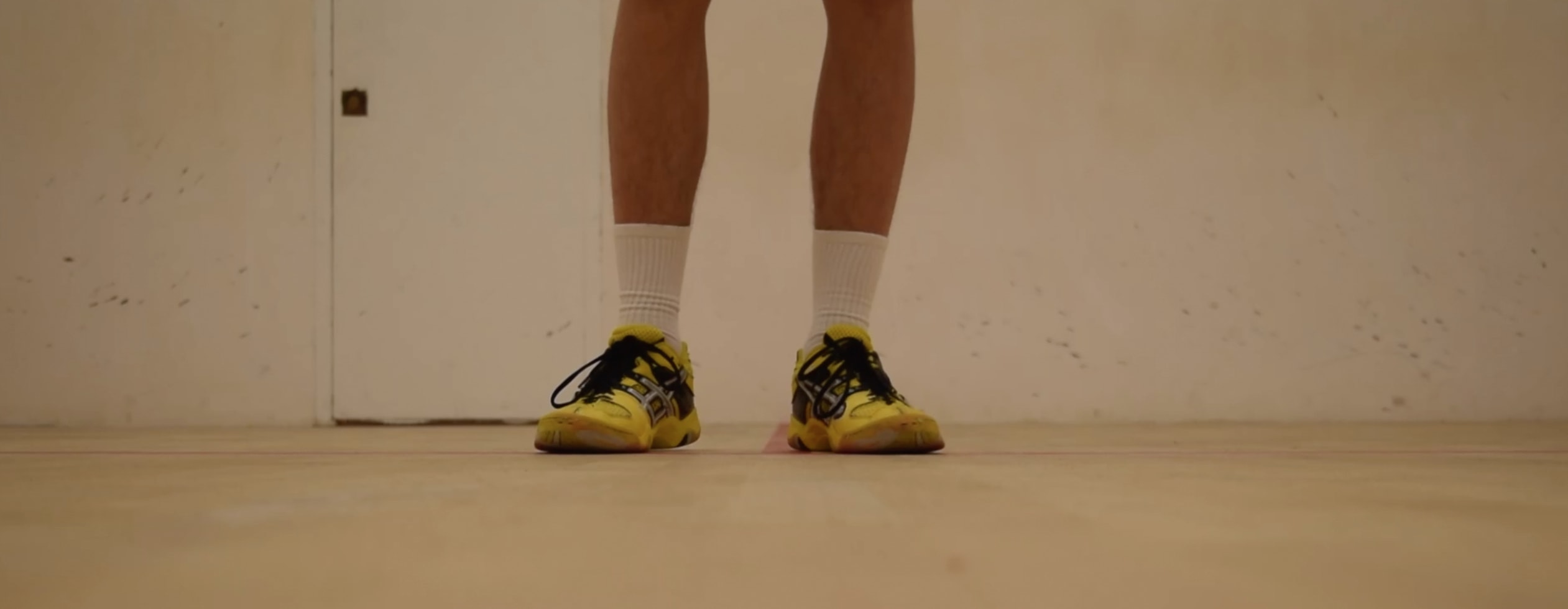
Your shot must follow your feet.

Footwork is often the root cause of unwanted shots. If you don’t get your feet in the right place, any racket skills will count for little and you can find your straight drives bouncing off the side wall first and various other shots behaving badly. Perhaps more importantly, if you end up with your feet in a less than perfect place – which will happen frequently – work with this and don’t try and do something silly like smashing the ball.

Trying to get the feet in position

People will often try to go for shots that their feet simply haven’t put them in a position to play and this usually leads to mis-hits or unintentional shots. It is perhaps most common in the back corners of the court, where players are unable to get around the ball, and therefore get their weight behind the ball, which often means the shot is lacking both power and control. The ball often ends up in the middle via the side wall through being under-hit.

Whenever you go for the shot, first make sure you sort your feet out. You are always aiming to get as much of your body weight as you can into your shot, which might mean moving quickly to get your body behind the ball, preferably with your feet pointing straight towards the side wall so that you can get all of your bodyweight behind the ball.

When it isn’t possible to get around the ball or have your feet pointing straight towards the side wall with the body in a side-on position, you may need to try leading with your back leg or use a small jump or hop to generate momentum.

When you try your best but you don’t succeed…

Sometimes you just can’t get your feet into the position you desire no matter what you do and in these situations it is important to make sure you accept the position you are in and be realistic about your options. Don’t try to go for a normal shot if you are in a difficult position, instead try to play a shot that will help you get out of this position. The most common shots to play in such a position are the boast or lob, with the lob being the preferred option. The lob gives you a better chance of re-taking the T-Position, as well as giving you a great deal of time to sort yourself out. It also gives you the opportunity to trade places with your opponent and get them behind you, whereas the boast will always leave an opponent in front of you, which might be undesirable against some players.

Always listen to your feet. If you’re in a difficult position, play a defensive shot that reflects that and try to use this to get into a better position from which you can start to build attacks. Don’t try and hammer the ball!


Filed Under: Physical, Positional, Technical, Tips

Facing the front wall when hitting


A balance between speed, accuracy and recovery.

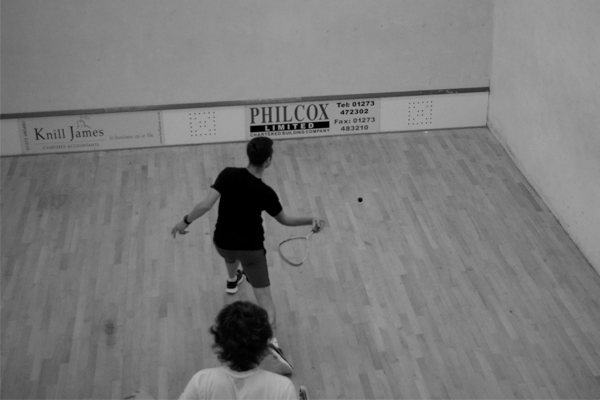
Body positioning in squash is ever evolving with the pace of the professional game with many of the traditional techniques and ideas being revised to cope with the new tempo. Positioning when hitting the ball has really changed at professional level, as players now need to be in position faster to get the ball back and this has been trickling down to all levels of the game over the past few years. Traditionally, players were almost universally coached to be ‘side-on’ when hitting the ball – having their chest and body facing the side wall – but now shots are played a lot more from a ‘front-on’ position with the body facing the front wall.

Speed vs. accuracy vs. balance

Facing the front wall can have great advantages in a game as it is a quicker position to get into than being side-on. It is also typically more deceptive, as when a player is hitting the ball in this position it is harder to tell what shot they will play.

When someone is ‘front-on’ – facing the front wall – it can be very hard to anticipate their shot.

The downside though is that your shot accuracy can suffer and in some cases players lose balance or are unable to recover to the T-Position quickly.

Avoiding loss of accuracy through improvisation  

When you hit the ball from a front-on position, your arm and racket naturally want to hit the ball across the court to the other side, which is why players often hit the ball down the middle or a looser shot when they get front-on. In order to avoid this (assuming you want to hit straight), you need to really control your follow through and your hand and ensure that they are exaggerated and go outwards – away from the body – and towards the front corner of the side you are on. If you don’t really control your hand and follow through, the width of your shot will suffer.

If you do want to play cross-court from a front-on position, still make sure you really control your follow through, especially the direction your hand goes in, as the width and direction of your shot can still be disrupted by being completely front-on.

Balance – bending the knees

 It has been traditionally recommended that players play shots from a side-on position, as well as leading with their left leg on the right hand side of the court and their right leg on the left hand side of the court, because this is the most stable position from which to play shots. When you go for a front-on position, it can be easy to lose some of this balance unless you take steps to counteract it. Try to ensure that even though you are front-on, you still bend your knees. Some players stand very upright and or lean back slightly when front-on and this reduces the weight in their legs, which disrupts their stability and therefore ball control. As long as you are aware and in control of where your body weight is and transferring it to your legs and thereby grounding yourself, you can play accurate shots from a front-on position reliably with practice.

Try to weigh up if it is worth being front-on for the shot you are playing. If your shot is accurate and you are able to get into and out of the shot quickly, you probably made the right decision. If you lose one of these three things, you may need to try something different.


Filed Under: Physical, Positional, Technical

Don’t wait for the ball – hit it early


Don’t gift your opponent time

A foot is a huge distance in squash. A second is a long time. If you stand a foot higher up the court or hit the ball a second earlier, even a half-second, it has a huge knock-on effect and changes the pace of the game. If you hit the ball level with the T-Position, as opposed to being nearer the back of the service box, that might be the difference between catching your opponent unaware and unprepared and catching them perfectly calm and positioned on the T-Position. Both of these scenarios would lead to drastically different rallies and outcomes for you and your opponent.

Doing everything earlier or higher up the court

The big opportunity that lots of people miss on court is when their opponent plays a long shot from the front of the court. Rather than stepping forward and volleying, many will move back and let the ball bounce. Some will volley, but often they’ll do so well behind the short line and T-Position or not volley as early as they could have because they were sloppy in recovering the T-Position.

If there’s ever an opportunity to hit a shot earlier or higher up the court do it, take it. If you let the ball bounce or travel further down the court, you are allowing your opponent time. It might be a small amount but it could make all the difference. Hitting the ball an inch higher up the court might leave them with too much ground to make up. Not hitting the ball that inch higher up may result in them scraping your shot back with their frame.

If you are struggling with hitting the ball early or being ready to hit the ball early, try practicing the volley exercises below:

As with any sport or pursuit, you really need the margins in squash. Any marginal gain is worth fighting for and time and distance are the biggest of them all. Don’t allow your opponent any time you don’t have to give them – play every shot as early and high up the court as you are able to do.


Filed Under: Physical, Positional, T-Position, Tactical, Volley

Moving back to the T after a drop shot


Being ready for the long return. 

I’ve heard quite a few people say before that they won’t play drop shots when they’re at the front as they’re worried their opponent will smash their drop shot to the back. This should be seen as a positive outcome though, because if your opponent is just smashing your drop to the back they’re giving you a great opportunity to make them run.

You can read more about playing a drop shot here. 

Why is my drop setting up my opponent? 

There are many reasons why your drop shot might lead to your opponent winning the rally but most commonly it is because players don’t recover the T-Position properly after playing a drop shot. If you’re standing at the front, it won’t even take a very long shot to put you under pressure. It’s not even uncommon for players to linger at the front without moving back towards the T-Position at all. This means that even if your  is effective, you may not be ready to return your opponent’s shots, let alone attack the shot. If you are back near the T-Position, you’ll be in a prime position to volley any loose length and at least return any length with a counter length of your own, forcing your opponent into a sprint from front to back.

dsc_0051-min

How to move back to the T

After playing a drop, it is important you start to move backwards to the T-Position. If your lunge technique is correct, you will be able to remain balanced and ready to make a quick and smooth exit from the shot, pushing off using the momentum of the lunge itself.

As you move towards the T, keep your steps small and stay low and with your upper body crouched forwards slightly, as you want to make sure you can cover a counter drop if need be.

Quality of the shot itself

If it’s the quality of your drop shots that are lacking, it could be a few different things. The most common problem I see though is people not getting down low enough, which you can read more about here. 

If you get lower, you can be closer to the ball, allowing you greater control and more options and a quicker route back to the T-Position by exiting your lunge.

If your opponent is attacking your drop and winning the rally or putting you under pressure, see if your movement back to the T-Position is of the standard it should be.


Filed Under: Drops, Movement, Physical, Positional, T-Position

  • « Previous Page
  • 1
  • 2
  • 3
  • 4
  • 5
  • Next Page »


Terms | Privacy policy | Contact | About us
Web Development By S G Barker.