Squash Company

Squash coaching with passion

  • Squash School
  • Blog
  • Videos
  • Shop

Getting the correct spacing for your shots


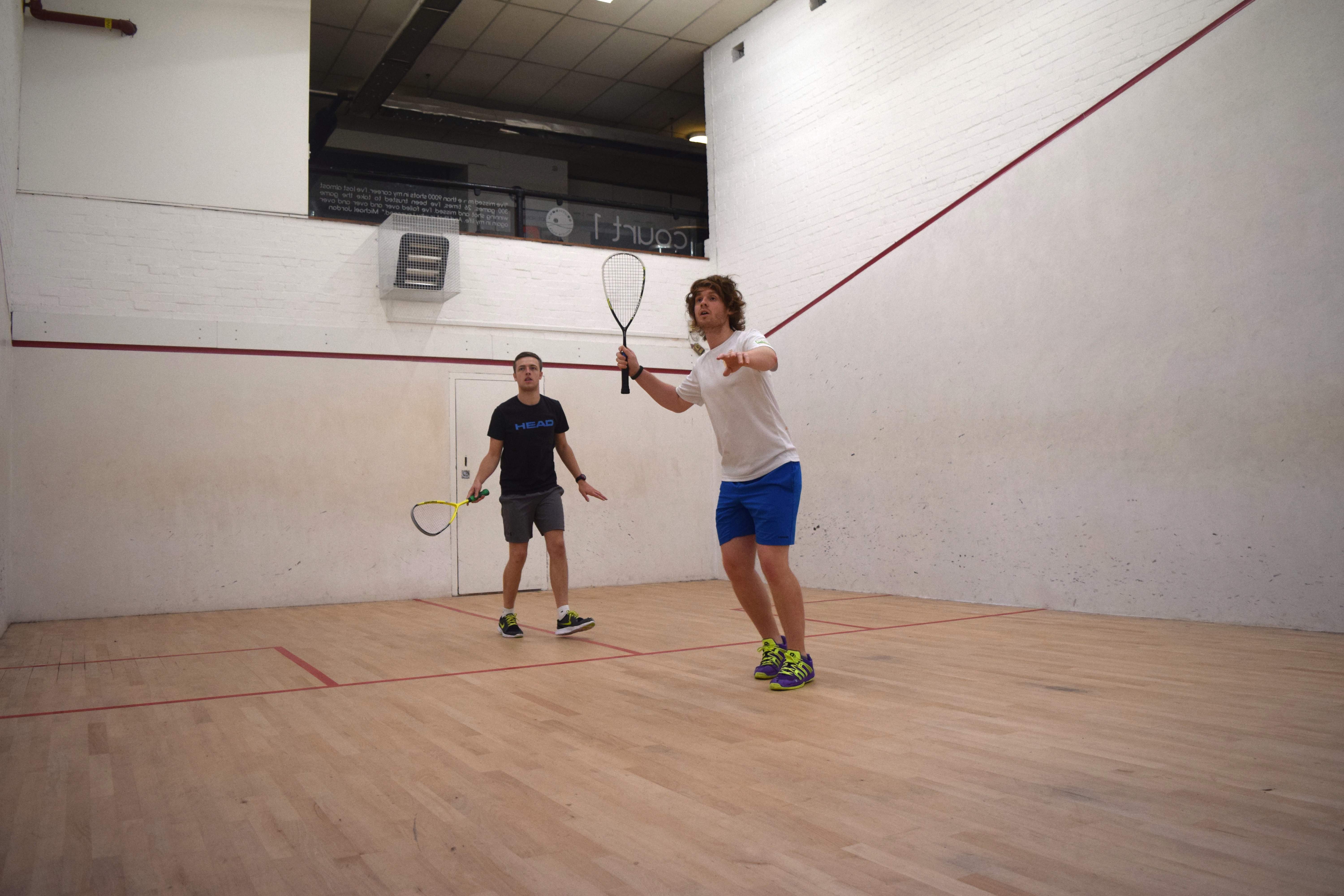
An arm’s-length between you and the ball. 

Spacing is incredibly important in squash. It affects the quality of your shot and it will also have a huge bearing on the quality of your next shot and the one after because if you’re too close to the ball, you’ll be in a weaker position to return your opponent’s next shot.

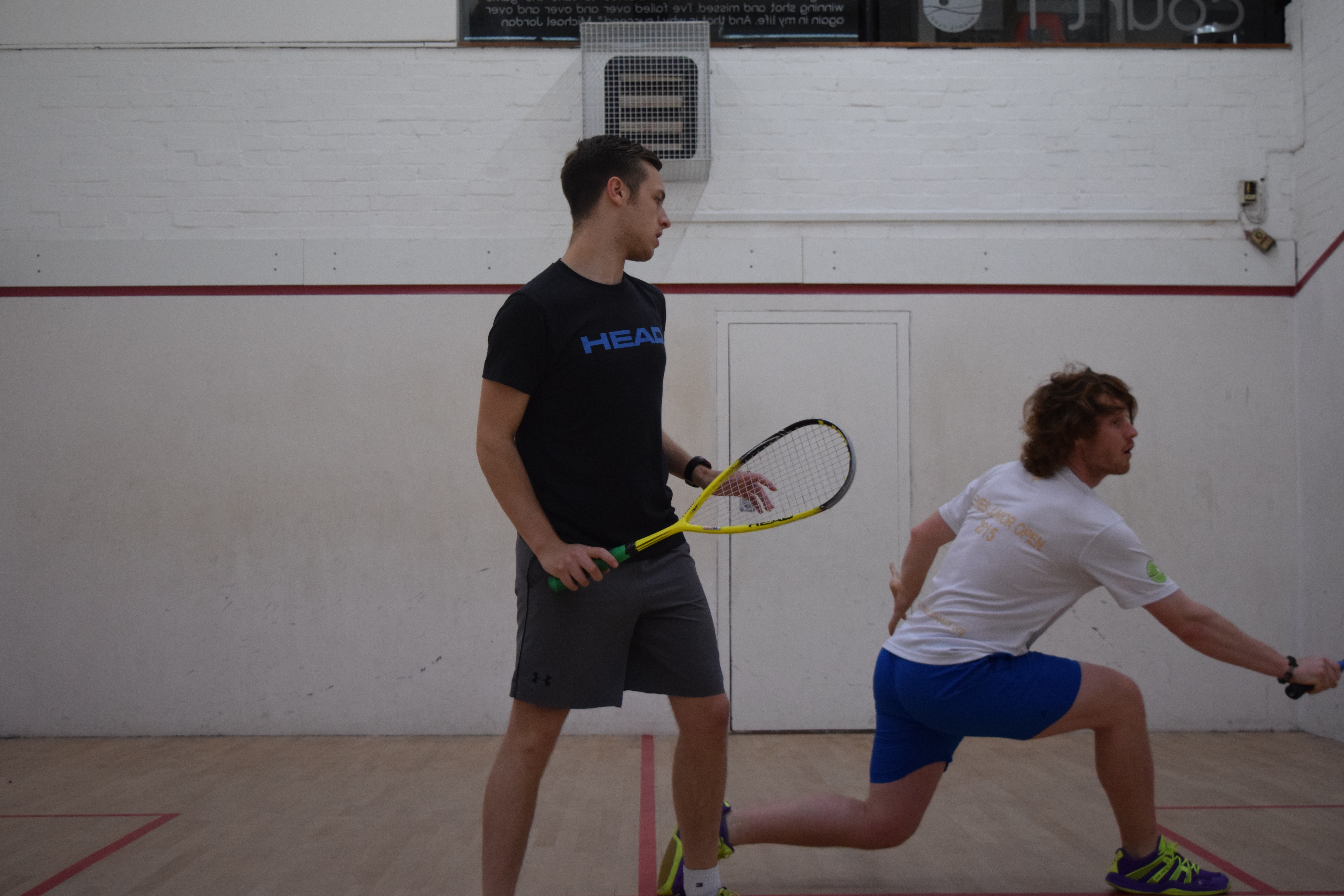
Getting an arm’s-length between you and the ball

As a general rule of thumb, you want to make sure that the ball is about the length of your arm away from you when you hit it. You can get an idea for the distance by stretching your non-playing arm out in front of you. A lot of players – including myself – will actually have their other arm and hand outstretched as they play, which not only helps for spacing but can also aid balance and provide momentum for recovering from a shot.
DSC_0073Min

You may not even notice it…

A lot of good players can still play good shots when they’re a bit close to the ball and so may not even notice there is anything to improve or anything going wrong. Unfortunately though it’s something that can be exposed when playing better players, as by being too close to the ball they’ll be further away from the T-Position. It might not be much but by leaving a bigger gap for their opponent to hit into, they are offering their opponent a more obvious shot to hit and the increased gap can easily be enough to leave them under pressure and chasing the ball.

Once you reach a certain level, squash becomes all about the very small details; the inch closer to the T-Position you could be, the inch shorter your drop shot could be and the second faster you are able to take the ball.

Check and see if you can play your shots from closer to the middle of the court without losing any quality. These inches can add up over the course of a game and make a huge difference.
Filed Under: Physical, Positional, Technical, Tips

Facing the front wall when you move


How should you position your body as you move? 

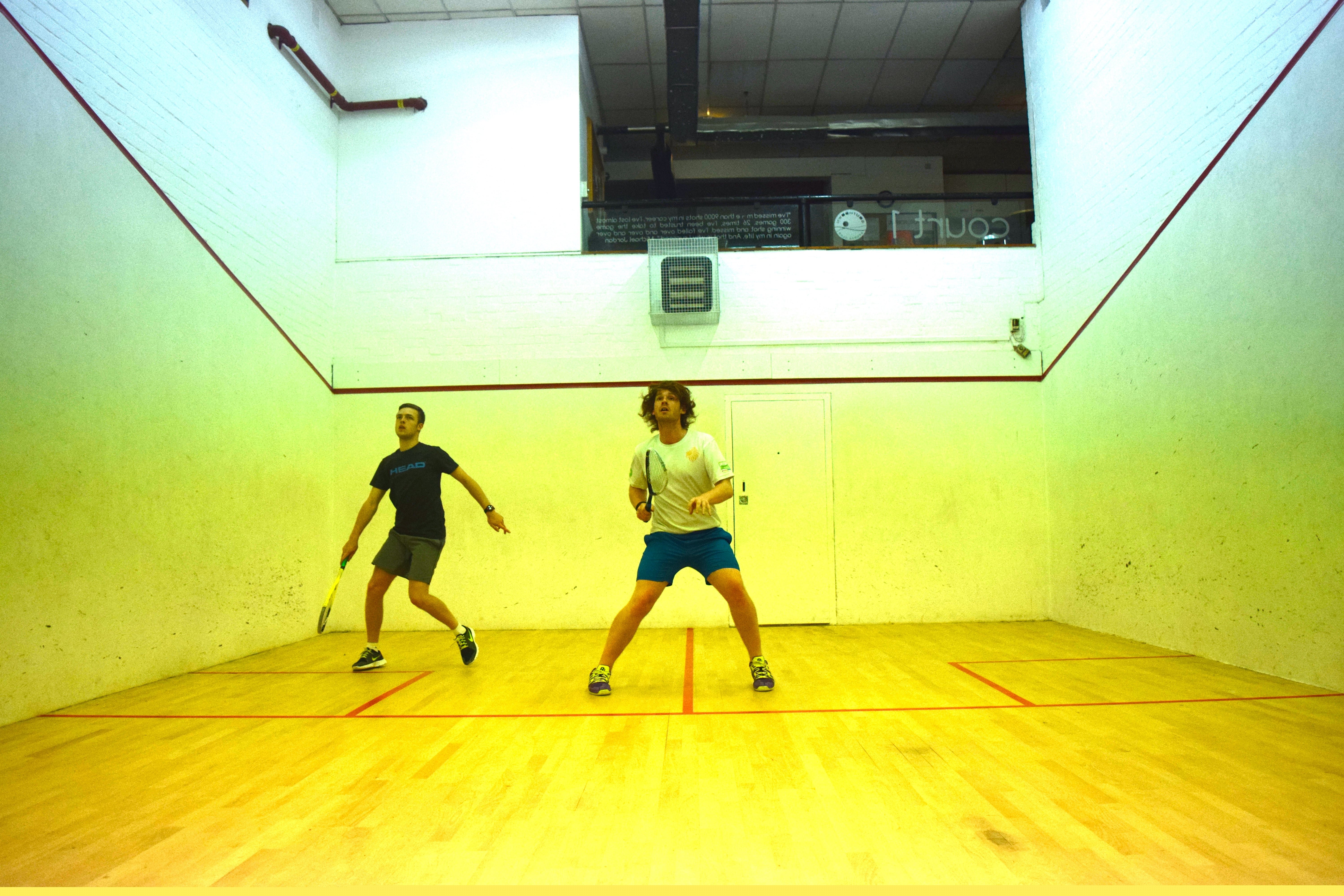
Whenever you move in squash, you should strive to keep your body facing the front wall where possible, particularly in the back corners. In doing this, you keep your options open as from this position you can easily change direction if you need to, as sometimes you will over anticipate or simply guess your opponent’s shot wrong. If you start to turn too much to face a particular part of the court, you begin to commit and this can be spotted and acted upon by a clever opponent. It can also leave you struggling to return a shot played in an unexpected direction, as that split-second it takes to stop and change direction is often too long.

Moving backwards

It is very tempting and easy to turn and run towards the back corners when moving in squash but if you do this, you will find yourself getting closer and closer to the side wall and worse – chasing the ball. Once the ball gets behind you, you need to do your best to stay composed and try to get around the ball again or use your ‘wrong’ leg as a way of shifting weight behind the ball again. If you turn and run, you will find yourself having to stretch and try and flick a weak shot back from a very awkward position.

DSC_0270-min

Do your best to stay as close as you can to the middle of the court and move backwards first, before turning in to face the side wall only as you begin to stretch in to play your shot.

The idea is never to over commit to anything when it comes to movement. Always be ready and in position to change direction at any moment.

This is something that’s quite small and easy to incorporate into your game which could save you lots of points and mileage! Take a look at your game and see where your body faces as you move into the shot.


Filed Under: Movement, Physical, Positional, Tips

Knocking-up with purpose – Part 1: The body 


Warming-up the body 

Welcome to Part One of a special series of blog posts on warming-up or knocking-up before a squash match.

Out of the all the people that play squash, very few warm-up. Most people will knock-up and hit the ball to each other for a couple minutes at best but Squash and warming-up are much more complex than this though.

A thorough warm-up should not only touch upon your hitting but it should also warm you up mentally, get your movement up to scratch and also sharpen your racket speed and skills. If you cover these four major areas, you will find you are able to start the match at a high tempo, fully focused and playing good squash, rather than having to wait until the second game to get into it.

Hitting the ground running – literally. 

In this post, we will be considering how to warm-up physically so that we can start the game fast and ready to move around the court as quickly as possible.

SAM_0703-min

Moving dynamically

Getting the heart rate up is just the beginning. Whilst you need to get the blood pumping, you need to also really get warmed-up for squash-specific movements. There’s twists, turns, take-offs, quick steps and last ditch sprints and you need to be prepared to do all of these.

Quite often, you won’t be able to get on court before a match if you’re playing at busy times, in a team match or at an event so any sort of space you might find near the court will do. Once you’ve got the heart rate up with a bit of gentle jogging up and down (if you are able to access a gym bike, this is a great warm-up for a couple minutes), start working in more dynamic movements very quickly. Skipping is always a good one to do but only in short sharp bursts for no more than 30 seconds as you don’t want to wear yourself out! If you haven’t got a rope, any other kind of quick jumps will suffice. If you can find some stairs, some short, sharp bursts of step-ups are also good.

Next, start looking to up the intensity with some short sprints. You only want to sprint 5-10m though as this is the sort of distance you will cover regularly during a game. After doing a few sprints, look to make the sprints a bit more squash specific by decelerating and lunging on alternate legs at the end as if you were getting down low to play the ball. If you are able to get access to a court pre-match, doing 30-60 seconds of ghosting is a great way to get into squash patterns of movement.

Try carrying this onto the court during the knock-up if you can. Perform small jumps or hops whilst your opponent is hitting the ball to keep yourself primed and whilst you’re hitting the ball, try and incorporate some movement. Perhaps you’ll boast to your opponent’s side and then play a straight drive to them. If you can get on court by yourself, have a mini-match with yourself and run around the court chasing your own shots. It’s a great way of playing a variety of shots and getting the hear rate up.

However you do it make sure that when you start your match your heart rate is up and your body is raring to go.

Look out for the next instalment of our special series of posts on the warm-up in squash, where we will discuss warming-up mentally.


You can find out more about how to get yourself ready for your big match on our page on ‘Getting in the Zone’.


Filed Under: Mental, Physical, Pre-match, Tips

Staying as close as possible to the T-line


If you never leave the T-Position how will your opponent get you off it?

When playing squash, if you’re not careful it’s very easy to get dragged around and made to run all over the court like a headless chicken. Once you start sprinting around, it’s very hard to stop as you’ll typically be rushing your shots or playing weaker shots as a result of all the running you’re doing, which only makes things worse and leads to more running if not the end of the rally.

Minimising the amount of time you’re off the T

The idea is to reduce the time you spend away from the T-Position as much as possible. The more time you spend on the T-Position with and without the ball, the better your chance of winning.

Consequently, whenever you’re moving around the court or playing a shot, you should seek to stay as close as you can to the T-Line. When I say the ’T-Line’, what I mean is the vertical line that starts with the T-Position and carries onto the back of the court. The T-Line also includes an imaginary line that would go from the T-Position all the way to the front wall if the previously mentioned vertical line carried on going. If you stay near the line, it will always be a shorter journey back to the T-Position.

DSC_0016-min

There are numerous benefits to being able to play your shots from the ’T-Line’ or as close to it as possible. Of course you will have to leave the line and at times you will have to abandon it completely but if you strive to stay as close to it as possible at all times, you’ll find your game will improve positionally, tactically, physically and technically.

If you hold the T-Line or stay close to it, you will be very difficult to dislodge from the T-Position as you will spend more and more time there, as you will either be on it or very close by and so able to recover to the middle quickly. This will leave fewer gaps for your opponent to hit the ball into. This is really important, as the less time to you are away from the T-Position, the harder it will be take make you run. You need to minimise the time you spend away from the T-area to be successful.

The psychological T

The mental aspect of being in the vicinity of the ’T-Line’ should not be underestimated either. Seeing your opponent hold the central areas of the court no matter what you throw at them is incredibly disconcerting and can lead players to getting frustrated, which in turn leads to errors and poor judgement. Secondly, you will also save energy over the course of the game as you will be moving that bit less with every shot, which could make a big difference in the later stages of the game.

Thirdly, from a technical point of view, you will also always have sufficient space to play your shots and swing properly and won’t get caught out getting to close and therefore hindering the quality of your shot.

DSC_0460

Keep an eye on how much you leave the ’T-Line’ when playing your shots and ask yourself if you could be closer to the centre. The most common time people leave the ’T-Line’ more than necessary is whilst exchanging length shots with their opponent. The best mover of all time in my opinion was Jansher Khan. Just watch the way he moves and how economic he is. 

See if you can’t trim a few steps off your shots and reap all of the aforementioned benefits and more.


Filed Under: Movement, Physical, Positional, Tips

The Ready position – Part 2: The body


Prepared to turn anywhere and change direction at any moment.

Welcome to part two of The Squash Company’s three-part special blog post on ‘The Ready Position’. ‘The Ready Position’ encompasses your racket, body and feet and is the position you should adopt between every one of your shots to give yourself the best possible chance of retrieving your opponent’s shot. Last time we looked at the role of the feet. In today’s post, we will be looking at the role of the body in ‘The Ready Position’ and how you should position yourself between shots.

Your body positioning between shots is something that is largely left alone but it is something that can provide a small advantage if done well and conversely it can leave you at a disadvantage if done badly.

The ‘Neutral Position’

People know you should recover the T-Position or T-Zone between shots, as it is the central area of the court and from here you can also control the game. It’s important to occupy the T-Position in the right way though.

Whilst on the T-Position, you should ensure that your body is facing the front wall in a neutral position. Obviously, you don’t want to lose track of the ball though, so you must turn your head so you can watch what’s going on behind you over your shoulder.
If your body is facing the front wall, it is very easy for you to go in any direction at any time as you aren’t overcommitted. Lots of people will turn and face the back corner and their opponent or pre-empting a straight drive, will drift away from the T-Position and get caught facing the side wall. When this happens, they are very susceptible to getting caught out by a well placed boast or cross-court shot. No matter how good your anticipation (or your shot), you need to be ready for anything and by keeping your body facing the front, you are keeping open the option to move anywhere.

DSC_0391-min
It is no good taking the T-Position so that you can cover all areas of the court if you actually physically can’t cover the all areas because of your body positioning! Just make sure that you do turn your head and watch over your shoulder – you need at least one whole eyeball on the ball at all times!

Keep an eye out for part three of this series of blog posts in which we will look at what you should do with your racket between shots.


Filed Under: Mental, Physical, Pre-match, Tips

  • « Previous Page
  • 1
  • 2
  • 3
  • 4
  • 5
  • Next Page »


Terms | Privacy policy | Contact | About us
Web Development By S G Barker.