Squash Company

Squash coaching with passion

  • Squash School
  • Blog
  • Videos
  • Shop

The Ready Position – Part 1: The Feet


Prepared to go anywhere and do anything at any moment.

Welcome to The Squash Company’s three-part special blog post on ‘The Ready Position’. ‘The Ready Position’ encompasses your racket, body and feet and is the position you should adopt between every one of your shots to give yourself the best possible chance of retrieving your opponent’s shot. In this first post, we will be looking at the role of the feet in ‘The Ready Position’. You can check out Part 2 on the body here, and Part 3 on the racket here.

In squash, footwork can be one of the hardest things to master. We’re going to look at a phase of movement and footwork that lots of people don’t even know exists, while others do it without ever realising. It takes place just before you start to move off to your next shot and is part of the ‘Pre-Flight  Stage.’

The ‘Pre-Flight Stage’

Between your shots, most players know you should aim to get back to the T-Position or T-Zone, as it is the central area of the court and a place from which you can move anywhere and also control the game. Once back on the T-Position though, there’s an important step (literally a step!) before you begin moving to the next shot and this step is very difficult to do well.

This step is the ‘Pre-Flight’ stage and to some it comes naturally, while others have never even considered it or paid it any mind.

It’s that split-second on the T-Position between the movement back from playing your shot and the movement into your next shot. That gap can be virtually non-existent or it can stretch to a couple seconds if the rally is slow paced or your opponent is delaying playing their shot to try and catch you out. What you do with this time is important to the outcome of the rally. Get it wrong and you may well find yourself chasing the ball or at worst, out of the rally in one shot.
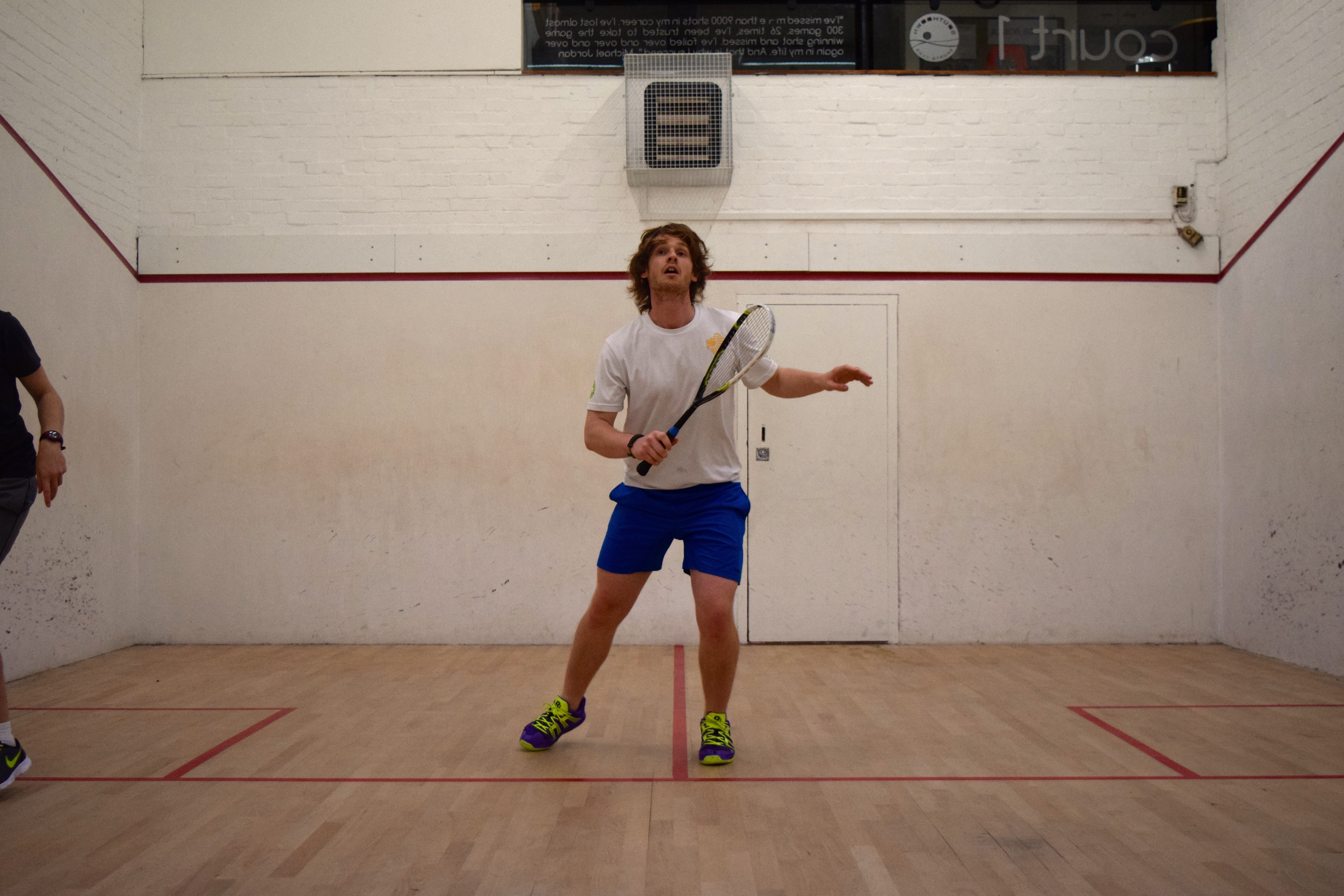
DSC_0480

The ‘Split-Step’

You should aim to time your arrival back at the T-Position so that you are landing on the T as your opponent is about to start their swing. On your toes with your feet comfortably apart, you should then look to ‘split’. The split-step or split is simply splitting your legs apart by dropping into your legs, so that they are wider apart. As you land from this split, you look to push off in the direction of your opponent’s shot.

The reason players use the split-step is so that they can move in any direction once they land on the T-Position. If you arrive at the T-Position flat on your feet or try to push off from a standing start, you will find it very difficult to push off or change direction at speed. Whereas, if you arrive on your toes and then split-step, you can move in any direction at that moment. As you split, any movement in any direction has to be possible.
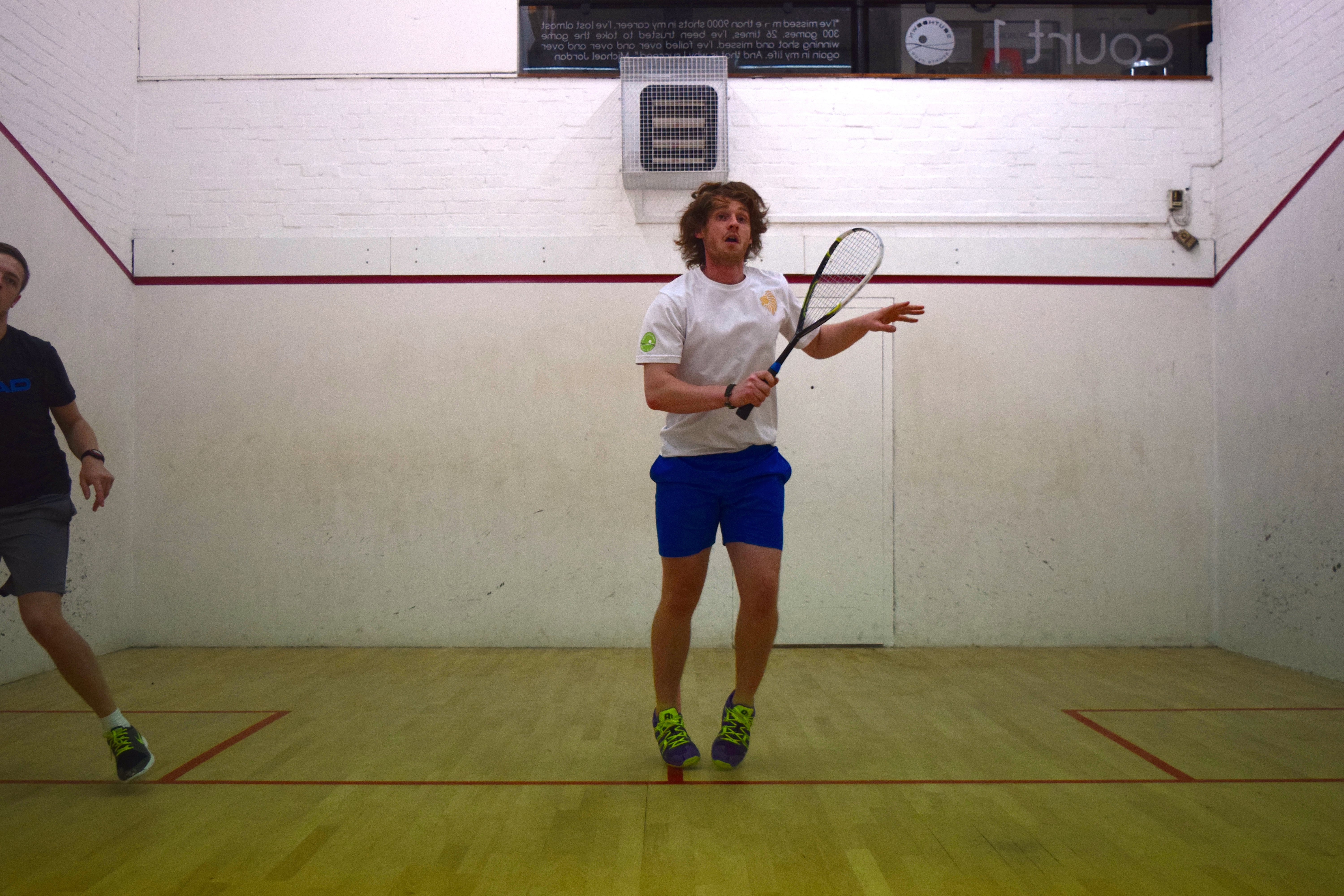
DSC_0481-min

Prolonged ready position

Sometimes, you’ll spend a longer time than normal on the T-Position despite your best efforts to time your movement to your shot. If this is the case, try your best to keep calm on your toes with your heels firmly off the floor and your feet poised gently apart. Avoid moving too soon or letting your feet go flat, as both of these will make it easier for your opponent to make you run or win the point.

Look out for part two of this series in which we will look at how you should position your body between shots, and Part 3 on what to do with your racket. 


Filed Under: Mental, Movement, Physical, Positional, Pre-match, Tips

‘Keep the ball up one shot longer than your opponent’


A Primitive playing style but sometimes that last ditch shot is the winning one. 

I didn’t like the phrase when I first heard it and I still think it’s a rather crude and primitive way of playing the game. I’m not a big fan of attritional squash and I don’t think it’s a long-term way of playing personally but it does have a time and a place.

One of my early coaches imparted this one liner to me and whilst I can be pompous about it, it is undeniably true. No one who has kept the ball up one shot longer than their opponent, at least in the eyes of the marker, has ever lost a rally.

A focus when lacking sharpness 

I was reminded of that line this week as I returned to court for the first time in nearly a month after holiday and found myself making a lot of poor decisions and not hitting my target areas of the court. Despite a poor first game riddled with errors and sloppy movement, I decided that it would be better to keep going and practice my aggressive play, as I judged it would just take me time to get sharp again and I should play through it, which is a fair argument. It didn’t stop me from losing the match soundly that day though or the next day as I was beaten again in similar circumstances. Without much court time behind me, I just wasn’t finding the touch or accuracy I needed with any of my short shots or length on a consistent basis.

It’s amazing how many times you retrieve a good shot by just getting your racket on the ball or with a loose shot at full stretch, which  your opponent should put away, but instead they hit the ball in the tin because they got sloppy thinking they’d won the rally.”

It wasn’t too much of a problem, as it was just a training game after all. However, thinking more pragmatically, in order to improve my chances of winning the game, I should have adopted a more pragmatic approach and focused on keeping the ball alive. I just wasn’t sharp enough to get in the proper positions necessary to attack effectively, which meant I essentially forcing my shots and naturally made a lot of unforced errors. Cutting out the errors, I might well have won the match.

Secondly, if I’d kept the ball up more, I would have had more shots in general during the rallies, which would’ve also been significantly longer. The more shots I had, the more practice I would’ve got and the sharper I would’ve been from the practice. After all, the best practice is the practice that provides you with the most chances to hit the ball. With a few more shots under my belt, I might well have found myself starting to find my range and accuracy a bit more.

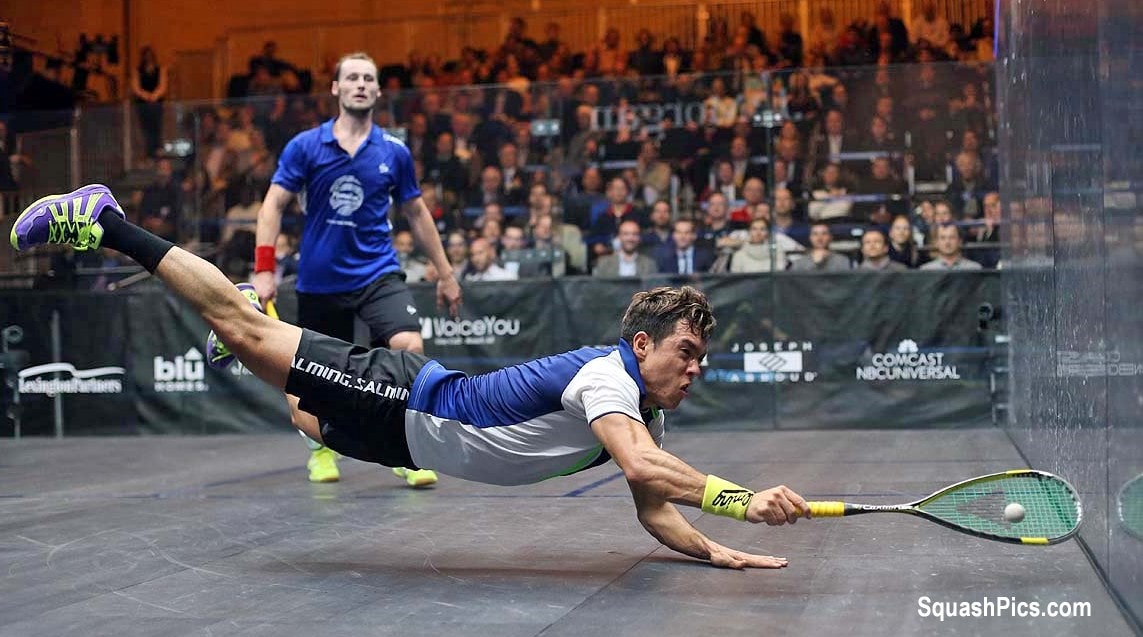
SH13068-min

Everyone has got to have that steel about them no matter how skilful a player they are and there are always times when you simply need to keep the ball up and keeping that ball up just once more can often prove the difference.

It’s amazing how many times you retrieve a good shot by just getting your racket on the ball or with a loose shot at full stretch, which  your opponent should put away, but instead they hit the ball in the tin because they got sloppy thinking they’d won the rally.

Sometimes, you just need to keep that ball up one shot longer than your opponent.


Filed Under: Physical, Tactical, Tips

Keeping hydrated when playing squash


Are poor hydration levels impacting your performance?

Hydration impacts significantly on sporting performance. Lots of people skip the subject saying they ‘don’t drink water’ or they ‘don’t need to drink’ and many players will go through matches without having anything more than a sip of water from a water fountain. Whether or not your realise it, it has a huge impact on your performance, especially in the latter stages. If you start hydrating yourself properly, you’ll be amazed at just how much your physical and mental performance can improve.

One very important thing that a lot of people don’t realise is that once you feel thirsty, it’s already too late. Feeling thirsty is a sign of the onset of dehydration, albeit not at a serious level which will affect your health, but at a level significant enough to impact your performance. If you feel thirsty, your concentration and physical performance will already be suffering.

Pre-Game

Before a game, it’s important to start making sure you’re well hydrated in advance. To achieve optimal performance, you need to start preparing 2 to 3 hours before that match.

The drinking during this time should be in gradual doses and you should look to consume around 400-500ml of water. This sounds like a lot but isn’t all that much when spread out across 3 hours, particularly if you are about to embark on an intense match. Just make sure you’re close to the toilet in the lead up to a match!

As well as getting in a habit of drinking sufficiently, it’s also important to take steps pre-match towards aiding your concentration and getting in the zone.

Try having a 500ml bottle with you before you play a match which you can swig from. It’s a small and easy thing to do which will make a lot of difference to your quality of performance. If you’re really serious keep a 1l bottle with you at all times!

In-Game

You only need glance down at your shirt to see how much water you’ve lost during a match. This water must be replenished. Ideally, you’ll be able to drink smaller amounts gradually after each game, rather than necking a bottle every couple of games or when you feel thirsty.

It is estimated that both the average male and female need to drink just shy of 500ml per 30 minutes of intense exercise and I would class most squash matches as intense exercise. If your match is lasting nearer to an hour, then you’ll need over 900ml of water in order to maintain peak performance, which you don’t need telling is a lot!

This amount will vary of course on how long and intense the rallies are and also will change if you are smaller than the average male or female. You’ll need to drink significantly more if you’re bigger or if you’re playing high-level matches.. These are all rather generic figures though, as some people will sweat more than others or need more water irrespective of body size and it also varies depending on several other factors, so use what works for you. What is clear though is you need to drink a lot.

I’d recommend getting a 1 litre sports bottle right away and keeping it close by during matches.

Are electrolytes real? Is Lucozade Sport really better than water?

You might be surprised (or not surprised) to find that water isn’t actually enough on its own to rehydrate properly during and after intense exercise, as you lose lots of different minerals in sweat and during exercise. ‘Electrolytes’ is a term generally used to describe potassium and sodium, amongst a few other things.

Lucozade isn’t better than water, as their slogan suggests but it does have some important properties that water lacks, although it is no good on its own and not great in pure form.

Sports drinks are important for replacing the electrolytes which your muscles will need to function but most of them contain so much sugar that they will detract vital bodily energies away from the muscles. You need sufficient amounts of these electrolytes so that the Sodium-Potassium pumps in the cell membranes of your muscles can make your muscles contract effectively. These pumps rely on keeping a higher concentration of potassium outside the cell and sodium inside the cells to make muscles contract. During the more intense rallies, potassium can move out of the cells so rapidly that there isn’t a high enough concentration in the cell to maintain balance and the muscles gradually contract with less and less power until you’re fatigued.

You need to be able to replenish the stores of these electrolytes regularly during a match in order to keep your muscles contracting efficiently, which requires a sports drink of some kind. As I just mentioned, sports drinks have too much sugar in them on their own, which is detrimental to your performance. The best way forward is to have a diluted sports drink, i.e. put some water in your Lucozade, which will help you completely rehydrate.

If you don’t replace your fluids properly with a combination of diluted sports drink and water, you will not only find that your performance suffers but also that you’ll get muscle cramps and pains a lot more readily. Being properly hydrated goes a long way in staving off these aches and pains with some research suggesting that lactic acid may not actually be the cause of the muscle ache, but too much potassium building up outside of the cell membranes of muscle cells.

So make sure you bring a diluted sports drink with you alongside your barrel of water!

Post-match

There is a reason a lot of people drink milk based drinks after exercise and that is to help rebuild muscle fibres as well as provide carbohydrates, sodium and calcium, which are all important to recovering physically from exercise. Some of the protein drinks you’ll find will often advertise an excessive amount of protein though. As with all figures it varies a lot depending on your size, gender and a few other things, but generally you only need to take in around 20g of protein and any excess tends not to be processed by the body.

However, having a big glass of milk or healthy milkshake is a good idea to boost your recovery, particularly if you are at a tournament or playing again in a short space of time e.g. within 24-48 hours.

As always, you need to drink plenty of water too.


Filed Under: Mental, Nutrition, Physical, Tips Tagged With: hydration, sports hydration, squash coaching, water

Using the ‘wrong’ leg when the ball gets behind you


Cheating the back corners

I’m a bit of stickler when it comes to movement and I’m incredibly fussy when it comes to ghosting and movement training. Whilst you’ll end up in all sorts of unplanned positions in a game, I like to always strive for perfection. However, when you are in a bad position you still have to be able to play a good quality shot or you won’t last a single rally.

When you are in a bad position, one of the best things you can do is to use the ‘wrong’ leg. By the term ‘wrong’ leg, I mean the leg which you won’t see used in the text book on how to play squash. On the right hand side of the court, the ‘wrong’ leg would be the right leg and on the left hand side, the ‘wrong leg’ would be the left leg.

Anyone who has had coaching will be familiar with the idea of using the left leg on the right hand side and the right leg on the left hand side to maintain a position facing the side wall and stay balanced.

This shouldn’t be treated as dogma though. If you watch any high level squash you’ll see all sorts of leg positions being used for different shots and this should be encouraged and practiced. It can be a quicker option and even a necessity in the heat of a match.

It’s in the back corner though that I find the ‘wrong’ leg is most useful. Inevitably, you’ll find the ball getting past you on occasion and you’ll have to hit it when it’s behind you to stay in the rally. It’s not ideal but you have to make the best of this bad situation. The best thing you can do at this point is to lead with the wrong leg. By doing this, you can shift your weight so that it is behind the ball again, which will give you a decent amount of energy to transfer through the ball when you strike it and you’ll consequently have more options and won’t have to resort to flicking the ball back with your wrist. If you try to lead with the ‘correct’ leg, the right leg on the left hand side and left leg on the right hand side, you’ll find yourself having to really flick the ball with your wrist, which is rarely consistently reliable or accurate.

When you are in a bad position, one of the best things you can do is to use the ‘wrong’ leg. By the term ‘wrong’ leg, I mean the leg which you won’t see used in the text book on how to play squash. On the right hand side of the court, the ‘wrong’ leg would be the right leg and on the left hand side, the ‘wrong leg’ would be the left leg.”

It will feel very weird at first if you’re not used to doing it but you should practice it regularly as part of ghosting and hitting drills or match play. One easy game you can do to practice this is to play all to length on one side of the court with a partner and just practice using the wrong leg so it starts to feel a bit more normal. Equally, when you do ghosting or movement practice, practice leading with both feet and also with the feet together.

Dealing with shots in the back corner is always a mountain for any improving player, so get out there and take the first step by using the wrong foot! You can also find more tips about dealing with shots in the back corner using your racket face and spin in the post ‘How to deal with back corner shots in squash’.


Filed Under: Physical, Positional, Racket Manipulation, Technical

  • « Previous Page
  • 1
  • …
  • 3
  • 4
  • 5


Terms | Privacy policy | Contact | About us
Web Development By S G Barker.