Squash Company

Squash coaching with passion

  • Squash School
  • Blog
  • Videos
  • Shop

Is your long shot actually long? 


Does your length shot get your opponent behind you?

It can be very easy to get caught up in whacking the ball to the back of the court with little regard for accuracy and thought for why you actually did it. The whole point of playing a long shot is to get your opponent behind you so that you can take the T-Position. Do your length shots actually have this purpose?  

Getting the first bounce behind the serve box

In general, you need the first bounce of your shot to be behind the serve box. The exact area of the ideal first bounce will vary though depending on the court, the ball and what shot you are playing. It’s wise to spend a bit of time during the warm-up trying to figure out where the ideal first bounce is to get the ball bouncing twice right in the back corner. Sometimes it will need to be a good foot behind the service box or possibly even further back that that if the ball is cold or your are playing a slower shot, such as a lob.
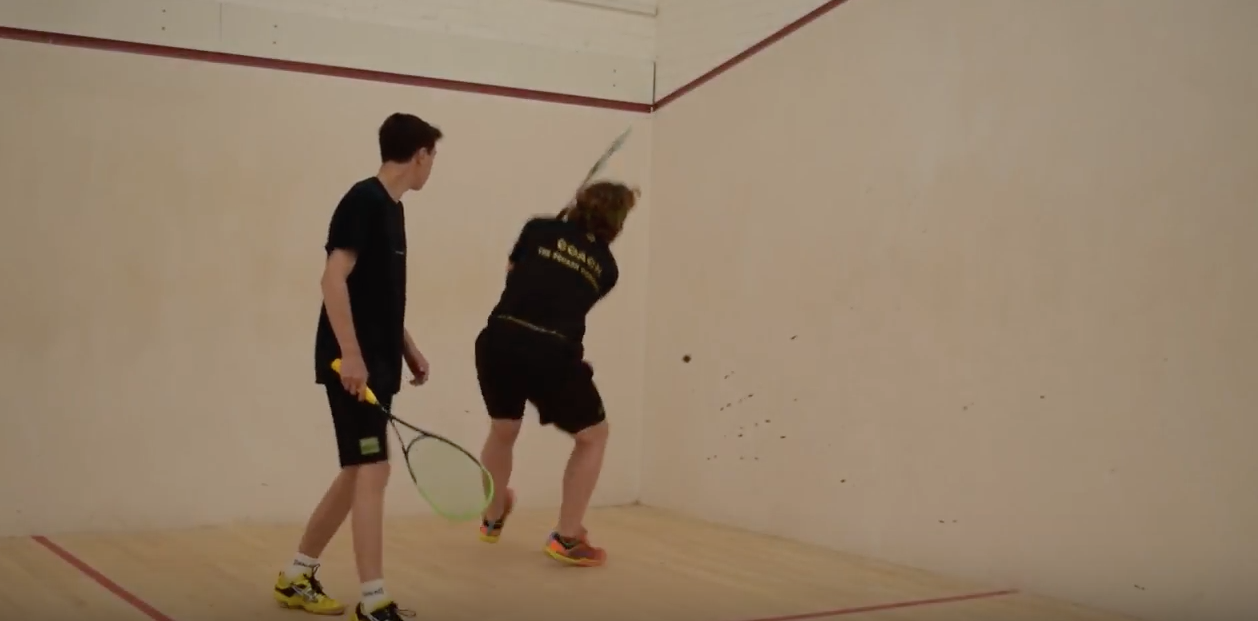
Even on the hottest courts, you will usually need the ball to bounce behind the serve box to get your opponent off the T-Position. If it doesn’t get beyond the box, you will usually find your opponent is able to cut the ball off. It might mean the ball comes off the back wall a bit but this is definitely worth it to get your opponent off the T-Position (so long as your length shot isn’t coming off the back wall a long way!).

Most matches are won by the player who gets their shots into the corners of the court the most and if your length is getting your opponent to the back more than their length shots are able to get you to the back, you will have a great chance of emerging victorious in the match.

Ways of getting the ball behind the service box

If you’re struggling to get the ball behind the serve box it can be for a number of reasons. Typically people could do with opening their racket face more, which you can do by rotating your forearm. You can find out more about this here.

It might also be your positioning and/or footwork is preventing you getting enough power or leverage on the ball, in which case you might need to ensure your feet are pointing towards the sidewall or even a touch forwards, which might mean moving around the ball more to ensure you are more ‘side-on’ to the front wall. You might even use a little jump. You can find out more about positioning and footwork here.

You could also try putting more weight into your legs by bending your knees more and squatting slightly or lunging, although this lunge needs to be directed by your feet and body pointing towards the side wall as much as possible as previously mentioned.

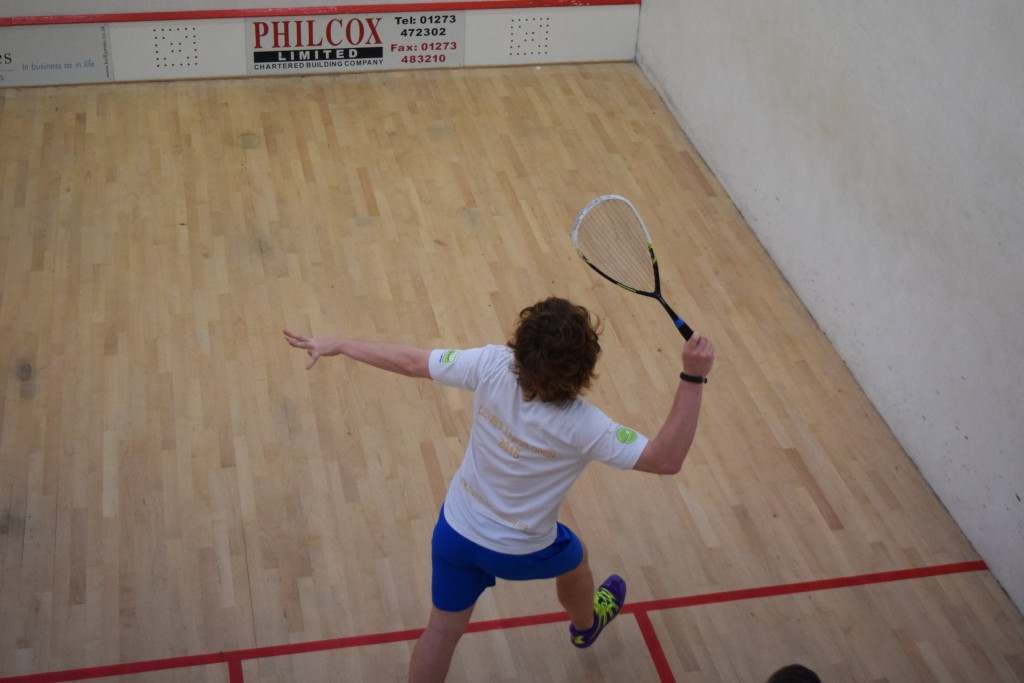
During your next few matches, check if your length shot actually gets past the service box. The player whose length is weaker and shorter typically loses the match, as they don’t get possession of the T-Position as much and provide their opponent with more opportunities to attack.

Filed Under: Drives, Lobs, Positional, T-Position, Tactical

Don’t wait for the ball – hit it early


Don’t gift your opponent time

A foot is a huge distance in squash. A second is a long time. If you stand a foot higher up the court or hit the ball a second earlier, even a half-second, it has a huge knock-on effect and changes the pace of the game. If you hit the ball level with the T-Position, as opposed to being nearer the back of the service box, that might be the difference between catching your opponent unaware and unprepared and catching them perfectly calm and positioned on the T-Position. Both of these scenarios would lead to drastically different rallies and outcomes for you and your opponent.

Doing everything earlier or higher up the court

The big opportunity that lots of people miss on court is when their opponent plays a long shot from the front of the court. Rather than stepping forward and volleying, many will move back and let the ball bounce. Some will volley, but often they’ll do so well behind the short line and T-Position or not volley as early as they could have because they were sloppy in recovering the T-Position.

If there’s ever an opportunity to hit a shot earlier or higher up the court do it, take it. If you let the ball bounce or travel further down the court, you are allowing your opponent time. It might be a small amount but it could make all the difference. Hitting the ball an inch higher up the court might leave them with too much ground to make up. Not hitting the ball that inch higher up may result in them scraping your shot back with their frame.

If you are struggling with hitting the ball early or being ready to hit the ball early, try practicing the volley exercises below:

As with any sport or pursuit, you really need the margins in squash. Any marginal gain is worth fighting for and time and distance are the biggest of them all. Don’t allow your opponent any time you don’t have to give them – play every shot as early and high up the court as you are able to do.


Filed Under: Physical, Positional, T-Position, Tactical, Volley

Moving back to the T after a drop shot


Being ready for the long return. 

I’ve heard quite a few people say before that they won’t play drop shots when they’re at the front as they’re worried their opponent will smash their drop shot to the back. This should be seen as a positive outcome though, because if your opponent is just smashing your drop to the back they’re giving you a great opportunity to make them run.

You can read more about playing a drop shot here. 

Why is my drop setting up my opponent? 

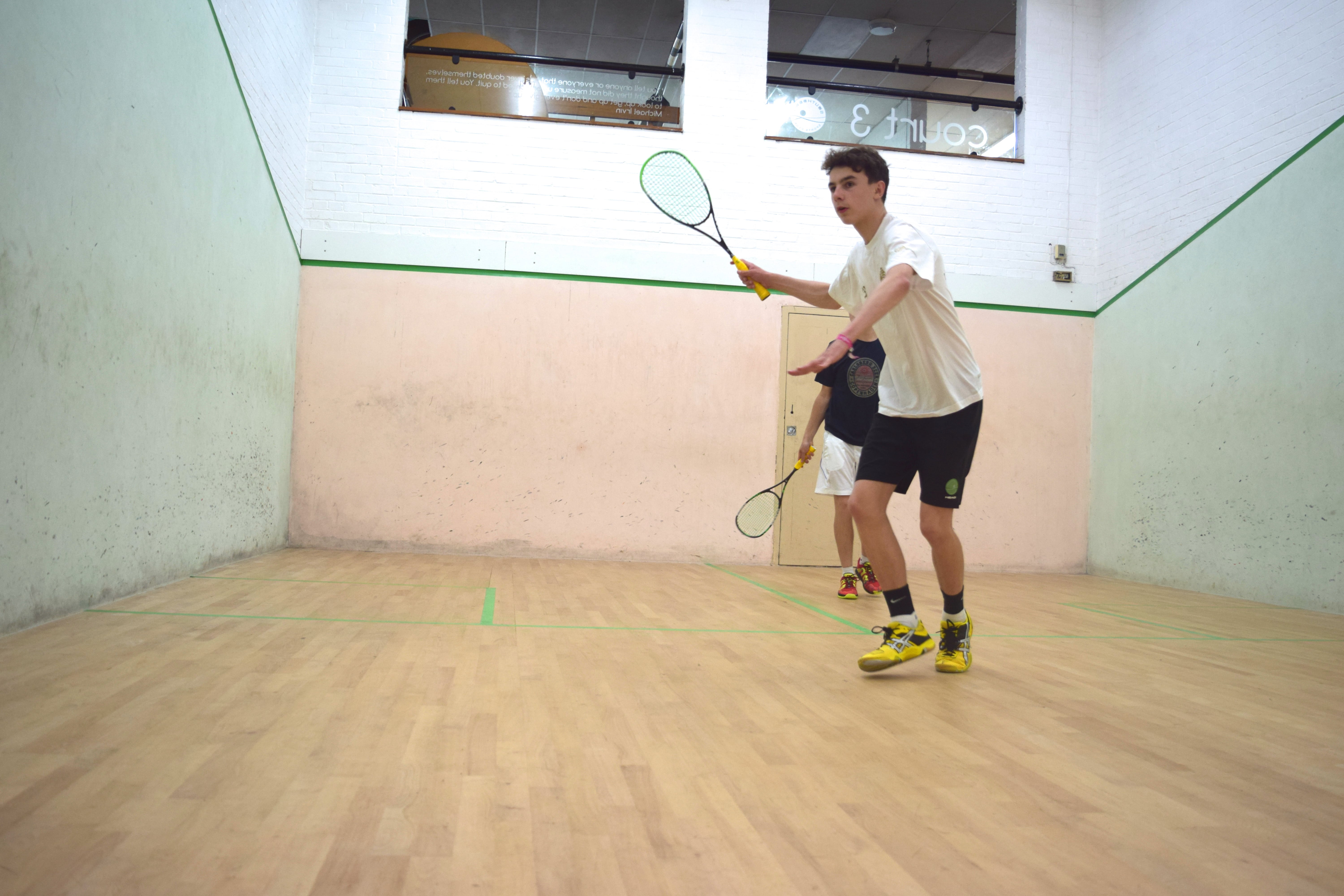
There are many reasons why your drop shot might lead to your opponent winning the rally but most commonly it is because players don’t recover the T-Position properly after playing a drop shot. If you’re standing at the front, it won’t even take a very long shot to put you under pressure. It’s not even uncommon for players to linger at the front without moving back towards the T-Position at all. This means that even if your  is effective, you may not be ready to return your opponent’s shots, let alone attack the shot. If you are back near the T-Position, you’ll be in a prime position to volley any loose length and at least return any length with a counter length of your own, forcing your opponent into a sprint from front to back.

dsc_0051-min

How to move back to the T

After playing a drop, it is important you start to move backwards to the T-Position. If your lunge technique is correct, you will be able to remain balanced and ready to make a quick and smooth exit from the shot, pushing off using the momentum of the lunge itself.

As you move towards the T, keep your steps small and stay low and with your upper body crouched forwards slightly, as you want to make sure you can cover a counter drop if need be.

Quality of the shot itself

If it’s the quality of your drop shots that are lacking, it could be a few different things. The most common problem I see though is people not getting down low enough, which you can read more about here. 

If you get lower, you can be closer to the ball, allowing you greater control and more options and a quicker route back to the T-Position by exiting your lunge.

If your opponent is attacking your drop and winning the rally or putting you under pressure, see if your movement back to the T-Position is of the standard it should be.


Filed Under: Drops, Movement, Physical, Positional, T-Position

Slowing down as you approach the ball


Smooth movement for improved shot and recovery. 

If you find you are having to rely on your speed and make a lot of sprints to retrieve the ball, or that you are rushing your shots, it may be because you are not decelerating properly. You are also not decelerating properly if your shoes make a lot of screeching sounds on the floor!

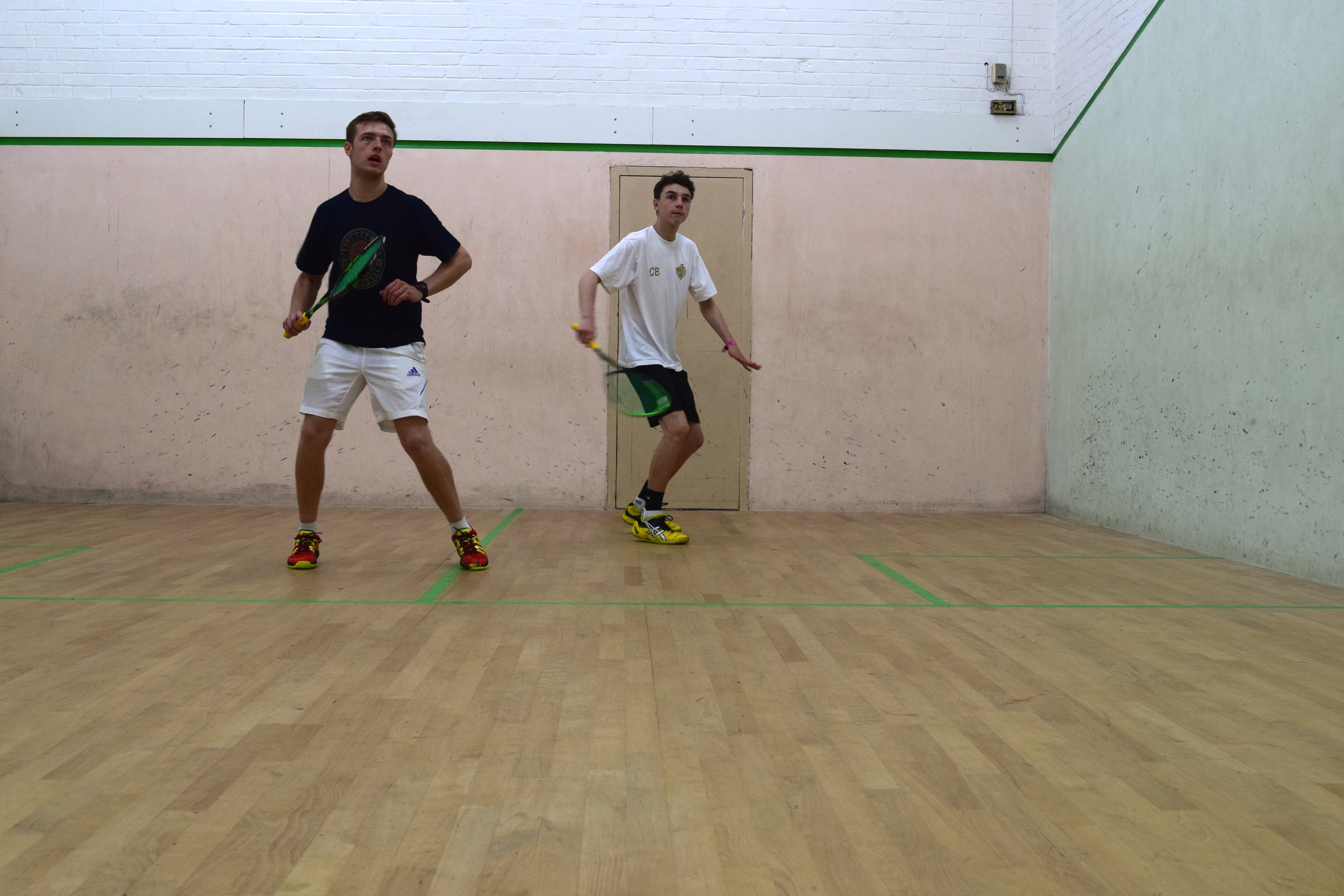
Deceleration is an important part of movement into any shot and should occur as a player starts to get close to the ball they are retrieving. Once a player is a couple of strides away, they should start slowing down their steps by changing their stride length so that their last step will be a stable lunge. This lunge will allow them to transfer their weight for a successful shot but also allow them to push off back to the T-Position using the momentum of the lunge.

Smooth movement for body and game

Deceleration as part of movement can be described using a simple analogy for anyone who drives. Decelerating is like slowing down and going into second gear and rolling gently, before moving off again. Not decelerating is like screeching to an abrupt stop, having to drop to first gear and then having to start back off again from zero. All drivers know which one is safer, healthier for your car and most comfortable!

dsc_0016-min

If you go charging into the ball without slowing down, you will have to slam on the brakes (which won’t be good for your body) and you will not only limit your positioning, you will make it more difficult to recover from your shot. Running at full speed and stopping suddenly is not good for your body. Your knees and Achilles tendons are absorbing that shock and they won’t thank you for it.

If you decelerate as you get to the ball, you are able to slow yourself down and achieve optimal positioning for your shot and lunge in to the ball. Importantly, by slowing down you also aid your movement back to the T-Position, as you are able to push back out of the shot more efficiently, which will help you to get back in position and make it harder for your opponent to make you run. If you come to a complete halt, you have lost momentum and so will have to create new momentum to start moving again and return to the T-Position.

Starting with small strides and increasing the length

The easiest way to decelerate in squash is by taking longer strides. To make achieving longer strides easier, you should look to start your movement with smaller, quicker steps. Players who struggle to slow down and screech all over the court often start off with long steps, which is why they struggle to slow down smoothly. It can also mean they’ll overcommit to shots and so may be vulnerable to sudden changes in direction or disguised shots.

If your shoes are making lots of screeching sounds or you are rushing onto the ball, try to see if you can work in shorter strides to the start of your movement and then increase the stride length to slow down as you get closer to the ball. This should mean you are able to control games more and make your opponent do the running for a change!


Filed Under: Movement, Physical, Positional, Tips

How do you create gaps on the court to hit the ball into?


Using the four corners to create gaps.  

We’ve discussed in a previous blog the importance of using the four corners of the court for defensive reasons, where you seek to stop an opponent’s attack and stop running by getting the ball to one of the four corners.

Today though we’re going to look at using the four corners as a means of building attacks, which perhaps suggests that you should build all of your rallies on shots to the four corners!

Disciplined attacking

I’m all for attacking squash, as you may have noticed on this site, but the key is to be disciplined when attacking and only go for the real attacking shots when the opportunity arrives and you’ve built up pressure. The opportunity might come when returning your opponent’s serve or it might not come until the hundredth shot of the rally. The important point is that it must be at the right time, which is when you are in a strong position and you have worked or been gifted an opening.

In order to create these opportunities and gaps on the court which you can exploit with your attacking shots, you should look to attack the two back corners and the two front corners. When I say corners in this instance I mean deep in the corners. Reaching the front corners would require soft drops or drop volleys and not kills or stuns or overhit drops. The same goes for the back corners; you need to achieve good length with your lobs and drives which actually get the ball right into the back corner on the second bounce.

DSC_0169-min

If you attack these four areas of the court, primarily using straight shots, you will tend to force weaker shots from your opponent if you’re accurate, especially if you keep your play simple and just keep hitting the ball away from your opponent. Once you’ve drawn out a weaker shot, you can then attack with a variety of other shots. By attacking in this way, you are also covering yourself defensively, as it’s very hard to attack shots in the four corners and so your opponent will have far fewer opportunities to attack you. It’s when we play loose shots, particularly weak cross-courts or ambitious mis-timed attacking shots, that we tend to lose rallies as we give our opponent the opportunity to attack. By following this disciplined build-up, hopefully you can restrict their opportunities while working your own.

If it’s on, it’s on

Just to reiterate – if you get the chance to attack you should take it. If your opponent leaves a gap for a boast, you should play a boast. However, over the course of games and matches, try to build your attacks primarily using the four corners so that you consistently force weaker shots from your opponent, whilst simultaneously preventing them from getting too many opportunities to attack as your shots will all be in the very corners of the court.


Filed Under: Mental, Physical, Positional, Tactical, Tips

  • « Previous Page
  • 1
  • 2
  • 3
  • 4
  • Next Page »


Terms | Privacy policy | Contact | About us
Web Development By S G Barker.