Squash Company

Squash coaching with passion

  • Squash School
  • Blog
  • Videos
  • Shop

Staying as close as possible to the T-line


If you never leave the T-Position how will your opponent get you off it?

When playing squash, if you’re not careful it’s very easy to get dragged around and made to run all over the court like a headless chicken. Once you start sprinting around, it’s very hard to stop as you’ll typically be rushing your shots or playing weaker shots as a result of all the running you’re doing, which only makes things worse and leads to more running if not the end of the rally.

Minimising the amount of time you’re off the T

The idea is to reduce the time you spend away from the T-Position as much as possible. The more time you spend on the T-Position with and without the ball, the better your chance of winning.

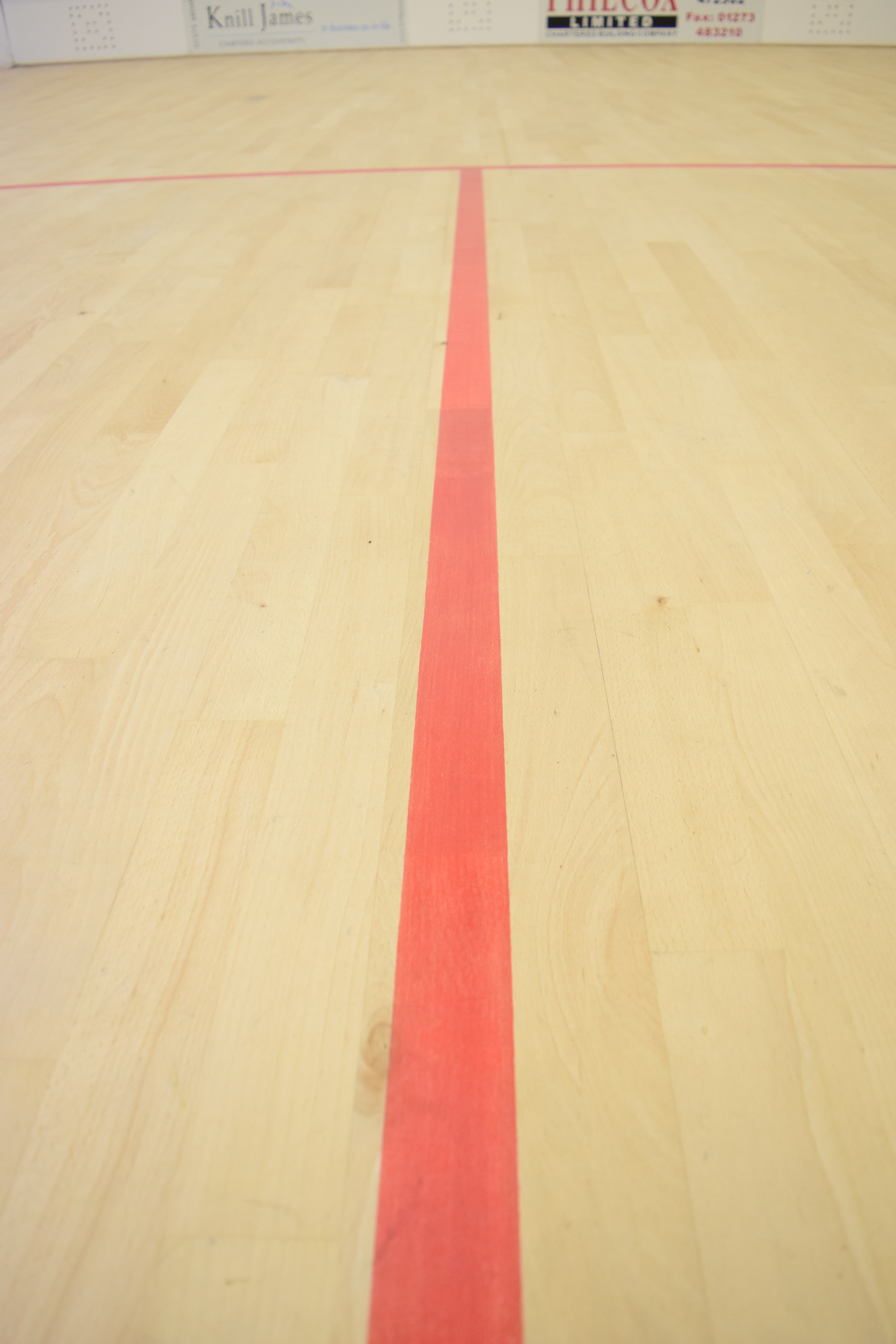
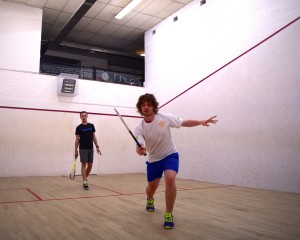
Consequently, whenever you’re moving around the court or playing a shot, you should seek to stay as close as you can to the T-Line. When I say the ’T-Line’, what I mean is the vertical line that starts with the T-Position and carries onto the back of the court. The T-Line also includes an imaginary line that would go from the T-Position all the way to the front wall if the previously mentioned vertical line carried on going. If you stay near the line, it will always be a shorter journey back to the T-Position.
DSC_0016-min

There are numerous benefits to being able to play your shots from the ’T-Line’ or as close to it as possible. Of course you will have to leave the line and at times you will have to abandon it completely but if you strive to stay as close to it as possible at all times, you’ll find your game will improve positionally, tactically, physically and technically.

If you hold the T-Line or stay close to it, you will be very difficult to dislodge from the T-Position as you will spend more and more time there, as you will either be on it or very close by and so able to recover to the middle quickly. This will leave fewer gaps for your opponent to hit the ball into. This is really important, as the less time to you are away from the T-Position, the harder it will be take make you run. You need to minimise the time you spend away from the T-area to be successful.

The psychological T

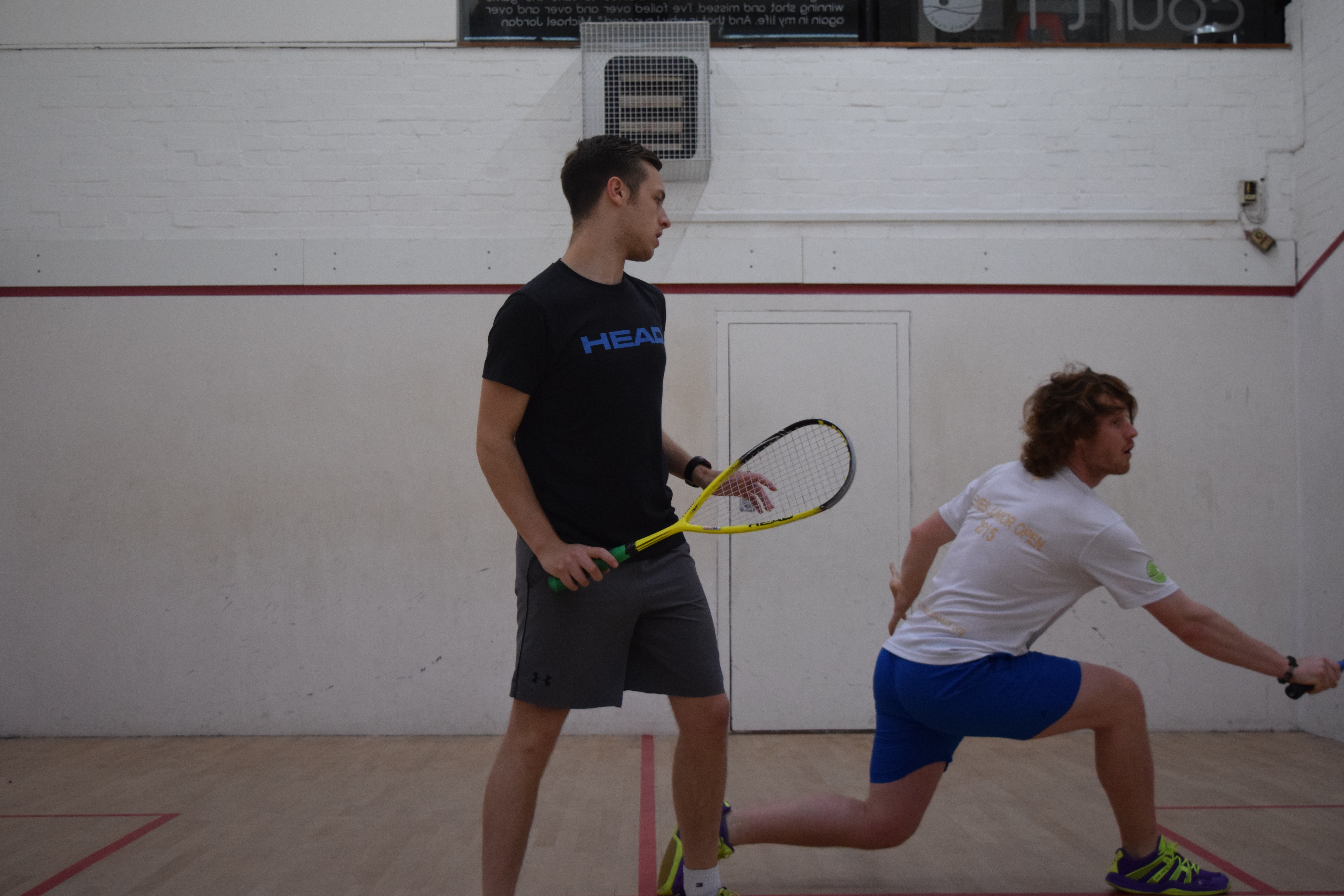
The mental aspect of being in the vicinity of the ’T-Line’ should not be underestimated either. Seeing your opponent hold the central areas of the court no matter what you throw at them is incredibly disconcerting and can lead players to getting frustrated, which in turn leads to errors and poor judgement. Secondly, you will also save energy over the course of the game as you will be moving that bit less with every shot, which could make a big difference in the later stages of the game.

Thirdly, from a technical point of view, you will also always have sufficient space to play your shots and swing properly and won’t get caught out getting to close and therefore hindering the quality of your shot.
DSC_0460

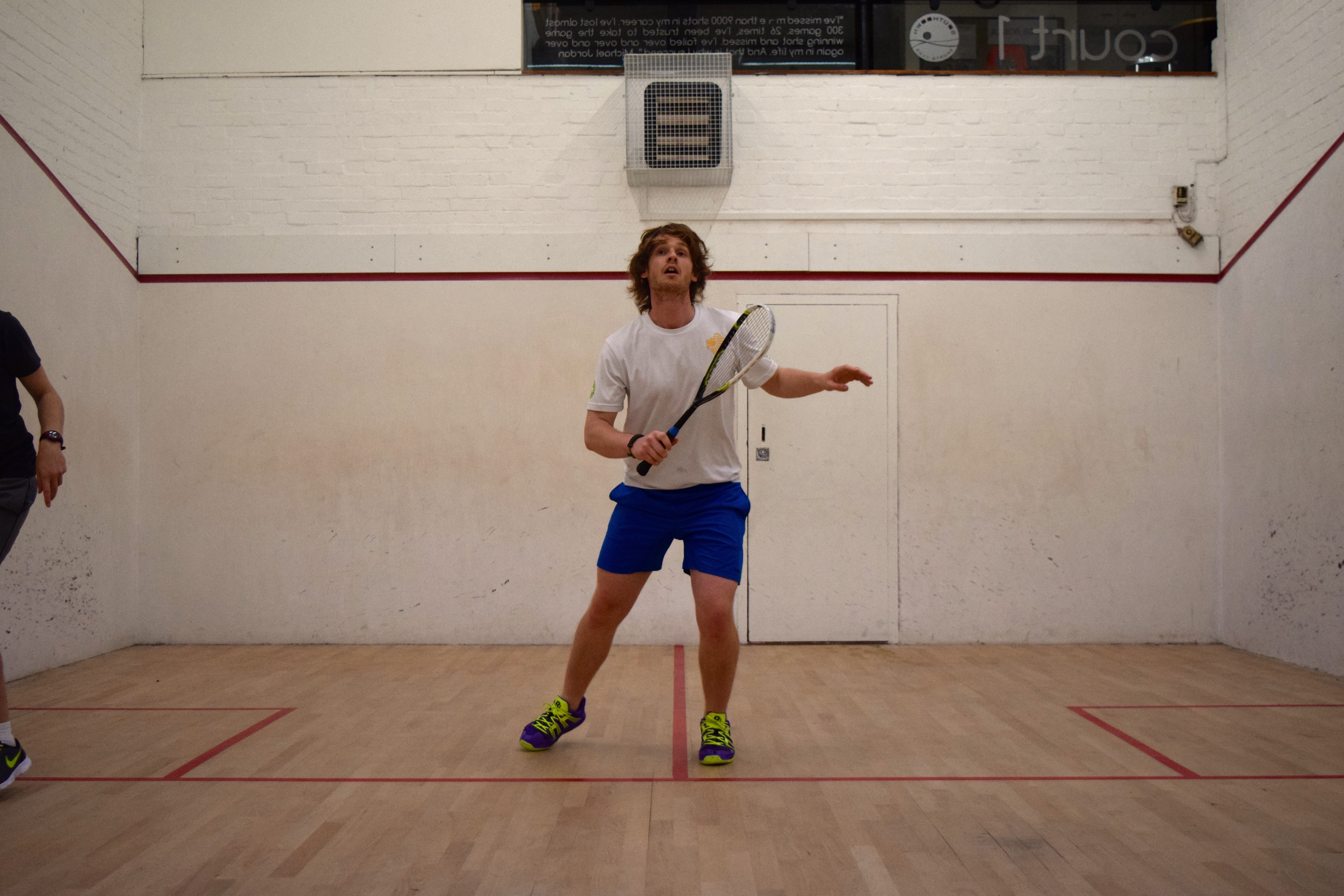
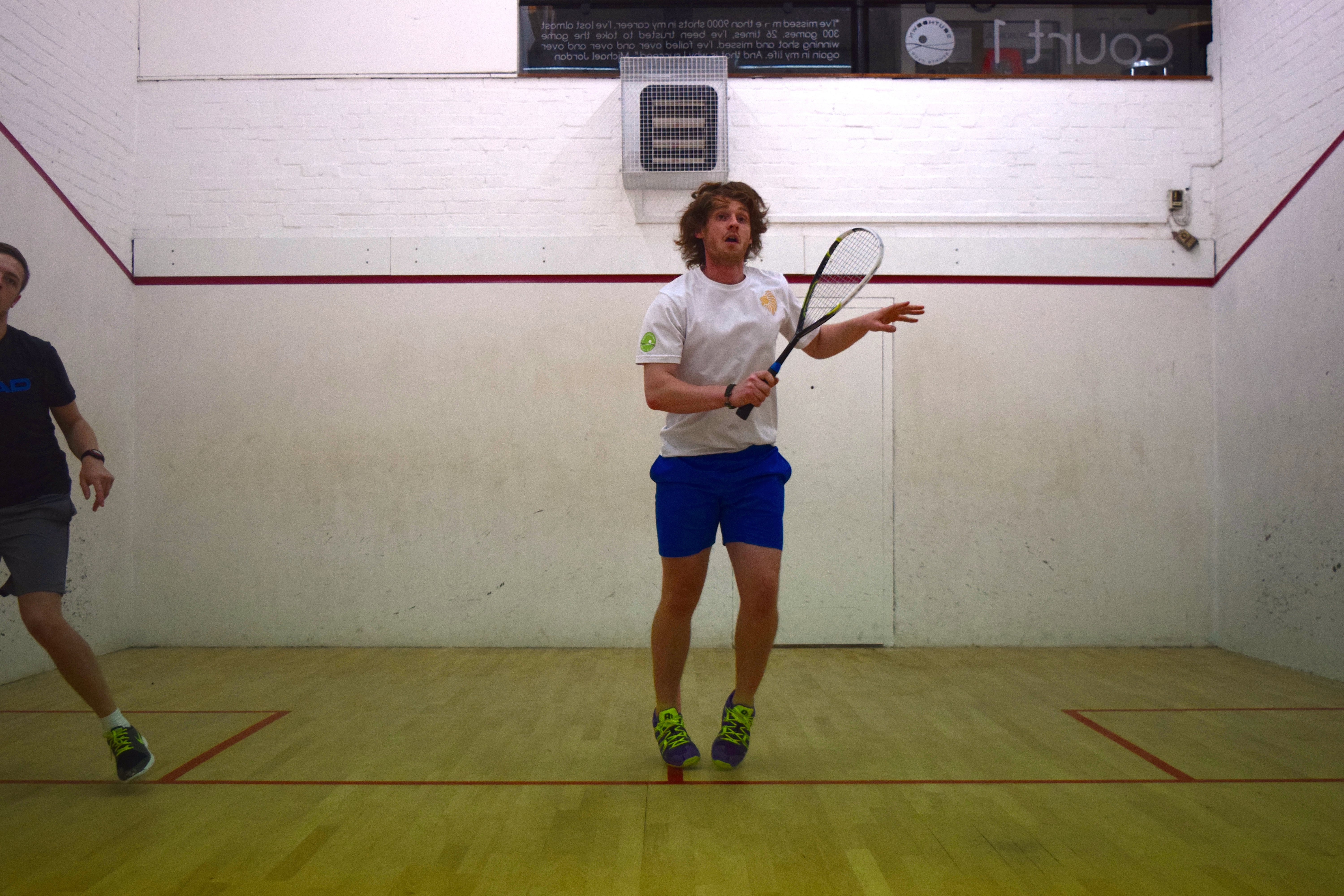
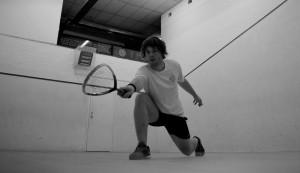
Keep an eye on how much you leave the ’T-Line’ when playing your shots and ask yourself if you could be closer to the centre. The most common time people leave the ’T-Line’ more than necessary is whilst exchanging length shots with their opponent. The best mover of all time in my opinion was Jansher Khan. Just watch the way he moves and how economic he is. 

See if you can’t trim a few steps off your shots and reap all of the aforementioned benefits and more.
Filed Under: Movement, Physical, Positional, Tips

The Ready Position – Part 1: The Feet


Prepared to go anywhere and do anything at any moment.

Welcome to The Squash Company’s three-part special blog post on ‘The Ready Position’. ‘The Ready Position’ encompasses your racket, body and feet and is the position you should adopt between every one of your shots to give yourself the best possible chance of retrieving your opponent’s shot. In this first post, we will be looking at the role of the feet in ‘The Ready Position’. You can check out Part 2 on the body here, and Part 3 on the racket here.

In squash, footwork can be one of the hardest things to master. We’re going to look at a phase of movement and footwork that lots of people don’t even know exists, while others do it without ever realising. It takes place just before you start to move off to your next shot and is part of the ‘Pre-Flight  Stage.’

The ‘Pre-Flight Stage’

Between your shots, most players know you should aim to get back to the T-Position or T-Zone, as it is the central area of the court and a place from which you can move anywhere and also control the game. Once back on the T-Position though, there’s an important step (literally a step!) before you begin moving to the next shot and this step is very difficult to do well.

This step is the ‘Pre-Flight’ stage and to some it comes naturally, while others have never even considered it or paid it any mind.

It’s that split-second on the T-Position between the movement back from playing your shot and the movement into your next shot. That gap can be virtually non-existent or it can stretch to a couple seconds if the rally is slow paced or your opponent is delaying playing their shot to try and catch you out. What you do with this time is important to the outcome of the rally. Get it wrong and you may well find yourself chasing the ball or at worst, out of the rally in one shot.

DSC_0480

The ‘Split-Step’

You should aim to time your arrival back at the T-Position so that you are landing on the T as your opponent is about to start their swing. On your toes with your feet comfortably apart, you should then look to ‘split’. The split-step or split is simply splitting your legs apart by dropping into your legs, so that they are wider apart. As you land from this split, you look to push off in the direction of your opponent’s shot.

The reason players use the split-step is so that they can move in any direction once they land on the T-Position. If you arrive at the T-Position flat on your feet or try to push off from a standing start, you will find it very difficult to push off or change direction at speed. Whereas, if you arrive on your toes and then split-step, you can move in any direction at that moment. As you split, any movement in any direction has to be possible.

DSC_0481-min

Prolonged ready position

Sometimes, you’ll spend a longer time than normal on the T-Position despite your best efforts to time your movement to your shot. If this is the case, try your best to keep calm on your toes with your heels firmly off the floor and your feet poised gently apart. Avoid moving too soon or letting your feet go flat, as both of these will make it easier for your opponent to make you run or win the point.

Look out for part two of this series in which we will look at how you should position your body between shots, and Part 3 on what to do with your racket. 


Filed Under: Mental, Movement, Physical, Positional, Pre-match, Tips

Being ‘front-on’ in the front of the court


In squash, it’s important to have different shot options wherever you find yourself on court and perhaps even more important to make your opponent think you have multiple shot options.

The front of the court 

Being in front of your opponent in the front half of the court is one of the most advantageous positions to be in, in squash. From here you have the entire court open to you and you also have your opponent’s full attention, which enables you to use deception and disguise to great effect.

There are numerous ways of being more deceptive but one quick way is to play as many shots as you can from a ‘front-on’ position. To be ‘front-on’ in the front corner means to have your body and chest facing the front wall as you strike the ball, in contrast to the traditional ‘side-on’ position where your body is facing the side wall as you strike the ball.

DSC_0043

Being ‘front-on’ has numerous advantages. Typically, it is quicker to get into this position but perhaps more pertinently, from this position it is easier to play cross-court shots meaning you can play to the whole court with greater ease than when side-on. With this in mind, it is very difficult for your opponent to anticipate what your shot will be, which will leave them under increased pressure.”

The other major benefit for deception and disguise is that it makes you physically bigger, as we talk about in another blog post ‘Using your body to disguise shots’. By being front on, you are capable of blocking your opponent’s view of the ball, which means they can quite literally lose track of the ball, which is of course a major advantage.

It isn’t all positive though, as the reason players are encouraged to be ‘side-on’ is for improved control. When you are front on, it is often far more difficult to control the ball and keep your shots accurate, particularly when going for a straight shot, so there is some trade-off to playing a shot from a ‘front-on’ position. At times, this trade-off is worth it, especially if you’re short on time or if your opponent plays a weak shot and you can hide the ball from their view but at other times, you can’t beat being side-on.

Have a few goes on it and see when and how being front on at the front works for you!


Filed Under: Disguise, Positional, Tactical, Tips

Using the ‘wrong’ leg when the ball gets behind you


Cheating the back corners

I’m a bit of stickler when it comes to movement and I’m incredibly fussy when it comes to ghosting and movement training. Whilst you’ll end up in all sorts of unplanned positions in a game, I like to always strive for perfection. However, when you are in a bad position you still have to be able to play a good quality shot or you won’t last a single rally.

When you are in a bad position, one of the best things you can do is to use the ‘wrong’ leg. By the term ‘wrong’ leg, I mean the leg which you won’t see used in the text book on how to play squash. On the right hand side of the court, the ‘wrong’ leg would be the right leg and on the left hand side, the ‘wrong leg’ would be the left leg.

Anyone who has had coaching will be familiar with the idea of using the left leg on the right hand side and the right leg on the left hand side to maintain a position facing the side wall and stay balanced.

This shouldn’t be treated as dogma though. If you watch any high level squash you’ll see all sorts of leg positions being used for different shots and this should be encouraged and practiced. It can be a quicker option and even a necessity in the heat of a match.

It’s in the back corner though that I find the ‘wrong’ leg is most useful. Inevitably, you’ll find the ball getting past you on occasion and you’ll have to hit it when it’s behind you to stay in the rally. It’s not ideal but you have to make the best of this bad situation. The best thing you can do at this point is to lead with the wrong leg. By doing this, you can shift your weight so that it is behind the ball again, which will give you a decent amount of energy to transfer through the ball when you strike it and you’ll consequently have more options and won’t have to resort to flicking the ball back with your wrist. If you try to lead with the ‘correct’ leg, the right leg on the left hand side and left leg on the right hand side, you’ll find yourself having to really flick the ball with your wrist, which is rarely consistently reliable or accurate.

When you are in a bad position, one of the best things you can do is to use the ‘wrong’ leg. By the term ‘wrong’ leg, I mean the leg which you won’t see used in the text book on how to play squash. On the right hand side of the court, the ‘wrong’ leg would be the right leg and on the left hand side, the ‘wrong leg’ would be the left leg.”

It will feel very weird at first if you’re not used to doing it but you should practice it regularly as part of ghosting and hitting drills or match play. One easy game you can do to practice this is to play all to length on one side of the court with a partner and just practice using the wrong leg so it starts to feel a bit more normal. Equally, when you do ghosting or movement practice, practice leading with both feet and also with the feet together.

Dealing with shots in the back corner is always a mountain for any improving player, so get out there and take the first step by using the wrong foot! You can also find more tips about dealing with shots in the back corner using your racket face and spin in the post ‘How to deal with back corner shots in squash’.


Filed Under: Physical, Positional, Racket Manipulation, Technical

Using the racket face for back corner shots in squash


Opening your racket face for back corner shots

Nobody really likes playing in the back corners, especially when first learning to play squash. There’s barely space to move and you find yourself with your racket jammed in the corners and your face plastered against the back wall.

Taking the ball before the back wall

No matter how good you get, you will still struggle to do much with a shot that’s been hit well and is dying (bouncing twice) in the back corner. If you can see the ball isn’t going to come back off the back wall, you’ll need to intercept it reaches the back.

There’s not much room near the back corners so you won’t be able to use your normal swing, which means you need to get the ball out of the corner and to the back of the court using a different method. One thing to try is opening your racket face a lot more than you usually would. Of course, providing your grip is correct your racket face should already be open to some degree.

Now though have a go at rotating your forearm in an anti-clockwise direction so that more of your palm is facing the floor if you’re on the backhand side and rotate clockwise so more of the back of your hand faces the floor on the forehand side.”

This opens up your racket face further and allows you to apply more spin to the ball, which in this case is called ‘bite’. If you use more ‘bite’, you’ll find you can get very good length and often at decent power without the need for much backswing, which is particularly important when hitting a ball in the back corner.

In general, if you’re struggling to return a ball from the back, you should aim to play a straight lob shot. 
back corner shots squash

Have a go during the warm-up or if you can for a few minutes on your own just rotating that forearm and opening your grip more before playing your straight drives and see how it affects the shot. That extra ‘bite’ has quite an effect and is well worth mastering for those occasions when you’re forced deep without a lot of space.

You can also find out more about how to position yourself in the back corners in the post ‘Using the ‘wrong’ leg when the ball gets behind you’.


Filed Under: Positional, Racket Manipulation, Tips

  • « Previous Page
  • 1
  • 2
  • 3
  • 4


Terms | Privacy policy | Contact | About us
Web Development By S G Barker.