Squash Company

Squash coaching with passion

  • Squash School
  • Blog
  • Videos
  • Shop

Knocking-up with purpose – Part 2: The Mind


Welcome to Part Two of a special series of blog posts on warming-up or knocking-up before a squash match. A thorough warm-up should not only touch upon your hitting but it should also get you warming-up mentally, get your movement up to scratch and also sharpen your racket speed and skills. Today we will be focusing on warming-up mentally.

You can re-visit Part 1: Warming-up the body here.

If there is no enemy within, the enemy without can do you no harm. 

What we are going to discuss today though is how you can use the knock-up and warm-up to prepare mentally for the match so that you start brightly. Getting mentally ready for squash is probably the warm-up step that is skipped most often. This is a heinous crime as the mental warm-up is probably the most important. There’s nothing you can’t do if you are in a good place mentally and there is very little you can do if you’re not.
DSC_0565-min

Pre-court 
Always do your best to get to your game a little bit early so you have time to mentally prepare. If you have to rush in from the car or anywhere else, you’ll find yourself underprepared. Make sure you have at least a few minutes before you need to go on court in which you can start getting yourself mentally warmed-up.

One of the things I most like to do is to find somewhere private or dark and sit, close my eyes and breathe slowly and deeply. It helps to centre you and bring you into the moment, helping to release thoughts and everyday life which are racing through your mind. Relax your muscles while you do this to further help you leave normal life behind. Keep this breathing going for as long as it takes to start to feel in the moment.

At this point, visualisation is also an option and something that can bring a lot of benefit. Picture yourself playing shots from inside your body like you were playing a first person shooter game and then imagine yourself playing shots whilst you watch as if watching on television.

On court knock-up

One thing you can do as we discuss in ‘Getting in the Zone’ is to select your shots as you knock-up. Don’t just leather the ball up and down. Have a go at playing a series of different shots e.g. lob, drive, kill or even have a bit of a game with yourself. Play your best drives and see if you have to return them with a lob. If you play a weak or loose shot, look to put it away with a kill or drop.

You should also have a target you’re aiming for with your shots. With your drives, you could aim for the serve line or below it. Small things like this cause you to really focus and forget the world around you. They mean that you won’t have to spend the first part of the match battling for concentration as you are already building towards it.

Please do have a go at some of the suggestions above and do your own research and try different things and see what works for you. Try things that help you relax, things that get you fired up and see how it affects your performance. Some people play better relaxed, others play better when really fired-up.

You can also read more in-depth analysis of ways to get in the zone and get mentally ready in the knock-up on our page ‘Getting in the Zone’.

Look out for the next instalment of our special series of posts on the warm-up in squash, where we will discuss getting your racket head speed and racket skills firing. 


Filed Under: Mental, Pre-match, Tips

Knocking-up with purpose – Part 1: The body 


Warming-up the body 

Welcome to Part One of a special series of blog posts on warming-up or knocking-up before a squash match.

Out of the all the people that play squash, very few warm-up. Most people will knock-up and hit the ball to each other for a couple minutes at best but Squash and warming-up are much more complex than this though.

A thorough warm-up should not only touch upon your hitting but it should also warm you up mentally, get your movement up to scratch and also sharpen your racket speed and skills. If you cover these four major areas, you will find you are able to start the match at a high tempo, fully focused and playing good squash, rather than having to wait until the second game to get into it.

Hitting the ground running – literally. 

In this post, we will be considering how to warm-up physically so that we can start the game fast and ready to move around the court as quickly as possible.

SAM_0703-min

Moving dynamically

Getting the heart rate up is just the beginning. Whilst you need to get the blood pumping, you need to also really get warmed-up for squash-specific movements. There’s twists, turns, take-offs, quick steps and last ditch sprints and you need to be prepared to do all of these.

Quite often, you won’t be able to get on court before a match if you’re playing at busy times, in a team match or at an event so any sort of space you might find near the court will do. Once you’ve got the heart rate up with a bit of gentle jogging up and down (if you are able to access a gym bike, this is a great warm-up for a couple minutes), start working in more dynamic movements very quickly. Skipping is always a good one to do but only in short sharp bursts for no more than 30 seconds as you don’t want to wear yourself out! If you haven’t got a rope, any other kind of quick jumps will suffice. If you can find some stairs, some short, sharp bursts of step-ups are also good.

Next, start looking to up the intensity with some short sprints. You only want to sprint 5-10m though as this is the sort of distance you will cover regularly during a game. After doing a few sprints, look to make the sprints a bit more squash specific by decelerating and lunging on alternate legs at the end as if you were getting down low to play the ball. If you are able to get access to a court pre-match, doing 30-60 seconds of ghosting is a great way to get into squash patterns of movement.

Try carrying this onto the court during the knock-up if you can. Perform small jumps or hops whilst your opponent is hitting the ball to keep yourself primed and whilst you’re hitting the ball, try and incorporate some movement. Perhaps you’ll boast to your opponent’s side and then play a straight drive to them. If you can get on court by yourself, have a mini-match with yourself and run around the court chasing your own shots. It’s a great way of playing a variety of shots and getting the hear rate up.

However you do it make sure that when you start your match your heart rate is up and your body is raring to go.

Look out for the next instalment of our special series of posts on the warm-up in squash, where we will discuss warming-up mentally.


You can find out more about how to get yourself ready for your big match on our page on ‘Getting in the Zone’.


Filed Under: Mental, Physical, Pre-match, Tips

The Ready position – Part 3: The Racket Ready Position


Prepared to hit any ball and play it anywhere at any moment.

Welcome to the final edition of The Squash Company’s three-part special blog post on ‘The Ready Position’. ‘The Ready Position’ involves not only your feet and your body but also of course your racket. It is the position you should adopt between every one of your shots to give yourself the best possible chance of retrieving your opponent’s shot. In today’s post, we will be looking at the very important role of the racket in ‘The Ready Position’ and how you should hold your racket whilst awaiting your opponent’s shot.

Are you Racket Ready? The ‘Neutral Position’ for your racket

Squash is littered with missed opportunities. There are countless openings and chances to apply pressure and perhaps even win the rally wasted all the time because people simply aren’t ready to play their opponent’s shot.

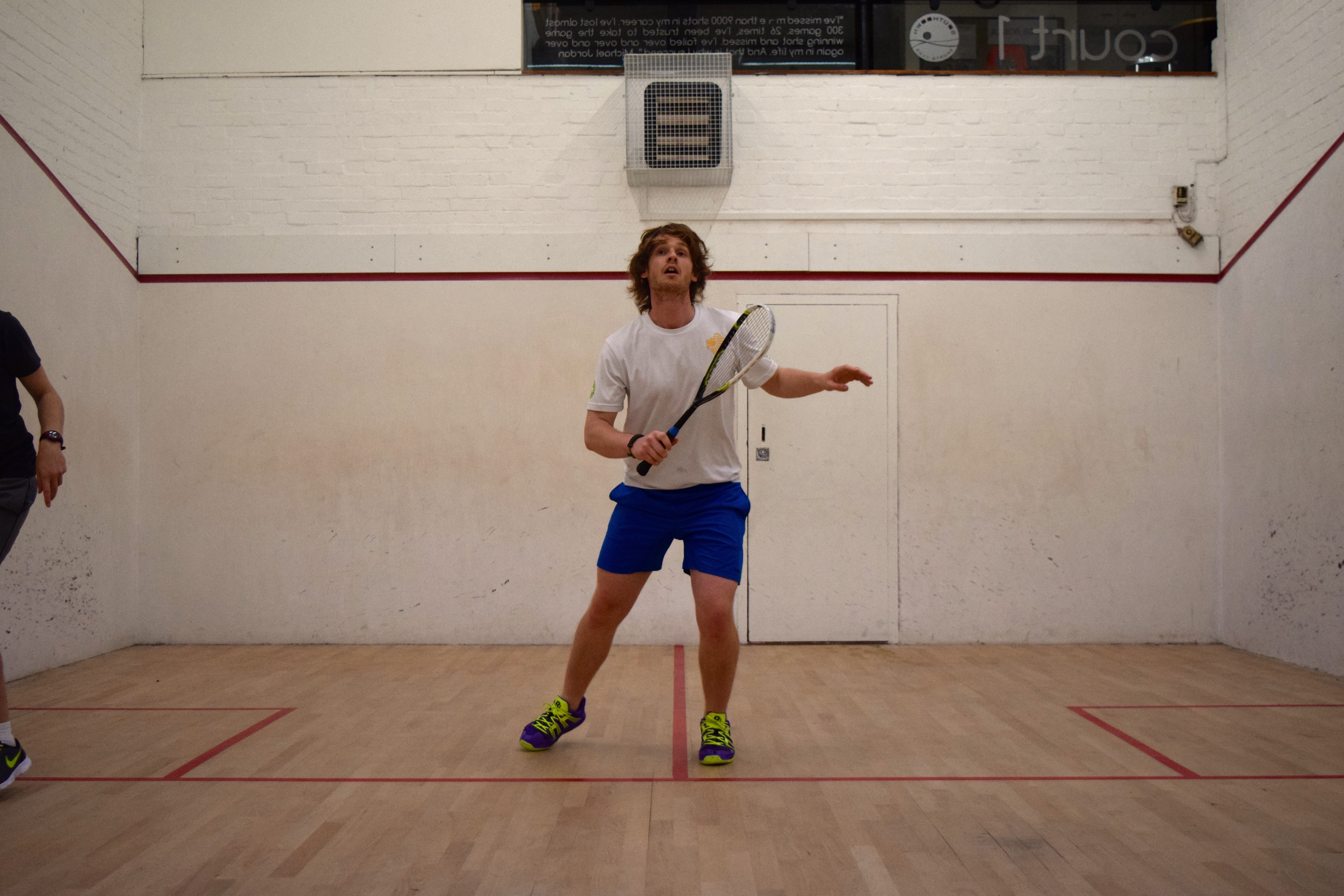
Between your shots, your should get your racket up to around chest height at a backhand angle.

DSC_0475-min
From this position, it is easy to manoeuvre your racket into a forehand or backhand position and your racket is already at a decent height making a reaction shot very feasible. These reaction shots are perhaps where players are commonly caught out the most, with opponents playing weak or loose cross-courts from the front which players aren’t able to intercept cleanly or at all due to their lack of preparation. If these players simply had their racket in the ready position, they would be able to attack the weak cross-court and quite probably win the rally.

The racket is also not far away from being around shoulder height if you need to carry out a full swing, meaning you can save yourself valuable seconds whatever shot you’re going to play, simply by getting your racket up to chest height.

It is a small thing but a very useful habit which can be done almost at all times. Anything that can save you a few seconds is worth doing, especially when you can use those seconds to take time away from your opponent by taking the ball early because you are ready to play the ball that bit quicker.


Filed Under: Mental, Pre-match, Tips

The Ready position – Part 2: The body


Prepared to turn anywhere and change direction at any moment.

Welcome to part two of The Squash Company’s three-part special blog post on ‘The Ready Position’. ‘The Ready Position’ encompasses your racket, body and feet and is the position you should adopt between every one of your shots to give yourself the best possible chance of retrieving your opponent’s shot. Last time we looked at the role of the feet. In today’s post, we will be looking at the role of the body in ‘The Ready Position’ and how you should position yourself between shots.

Your body positioning between shots is something that is largely left alone but it is something that can provide a small advantage if done well and conversely it can leave you at a disadvantage if done badly.

The ‘Neutral Position’

People know you should recover the T-Position or T-Zone between shots, as it is the central area of the court and from here you can also control the game. It’s important to occupy the T-Position in the right way though.

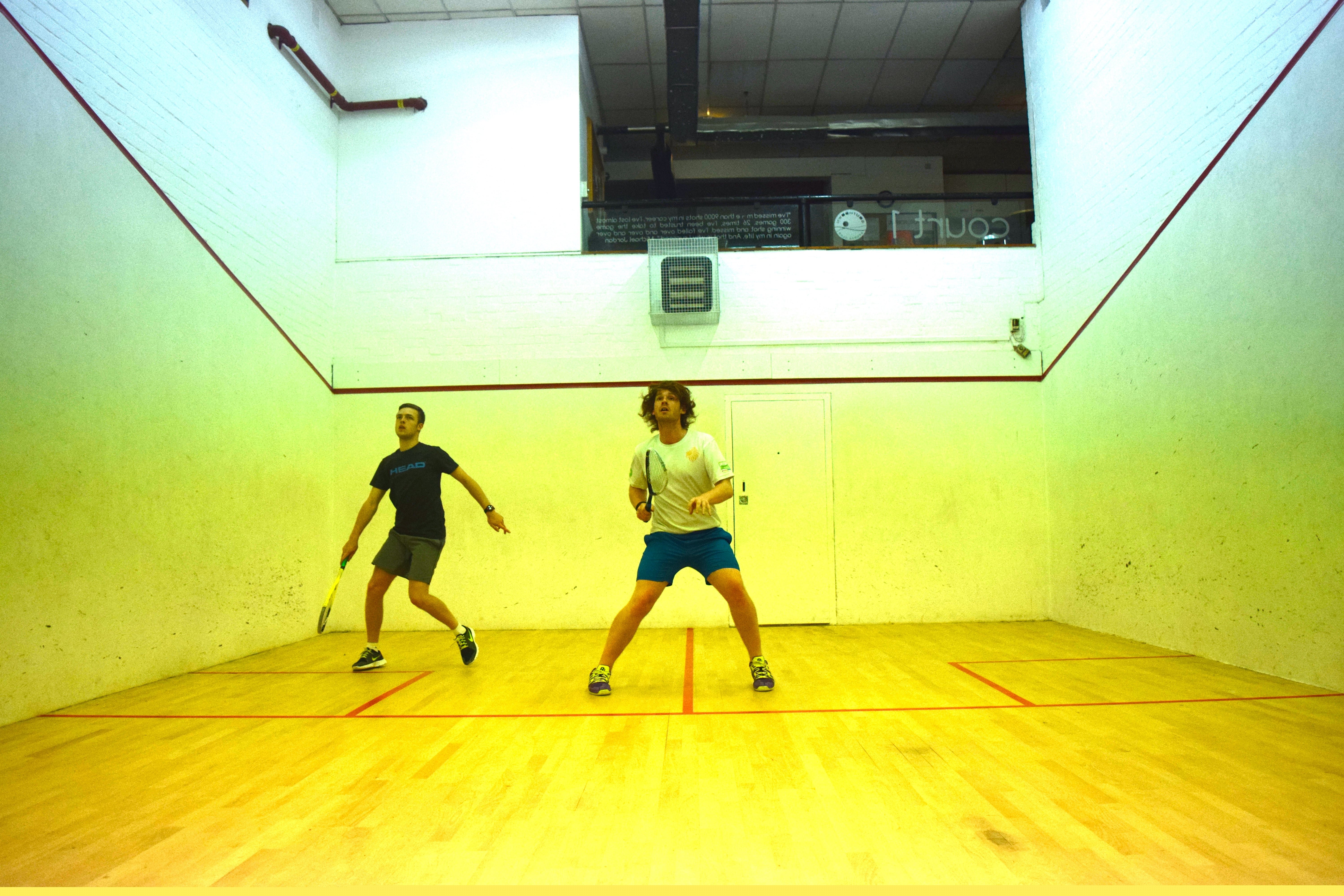
Whilst on the T-Position, you should ensure that your body is facing the front wall in a neutral position. Obviously, you don’t want to lose track of the ball though, so you must turn your head so you can watch what’s going on behind you over your shoulder.
If your body is facing the front wall, it is very easy for you to go in any direction at any time as you aren’t overcommitted. Lots of people will turn and face the back corner and their opponent or pre-empting a straight drive, will drift away from the T-Position and get caught facing the side wall. When this happens, they are very susceptible to getting caught out by a well placed boast or cross-court shot. No matter how good your anticipation (or your shot), you need to be ready for anything and by keeping your body facing the front, you are keeping open the option to move anywhere.

DSC_0391-min
It is no good taking the T-Position so that you can cover all areas of the court if you actually physically can’t cover the all areas because of your body positioning! Just make sure that you do turn your head and watch over your shoulder – you need at least one whole eyeball on the ball at all times!

Keep an eye out for part three of this series of blog posts in which we will look at what you should do with your racket between shots.


Filed Under: Mental, Physical, Pre-match, Tips

The Ready Position – Part 1: The Feet


Prepared to go anywhere and do anything at any moment.

Welcome to The Squash Company’s three-part special blog post on ‘The Ready Position’. ‘The Ready Position’ encompasses your racket, body and feet and is the position you should adopt between every one of your shots to give yourself the best possible chance of retrieving your opponent’s shot. In this first post, we will be looking at the role of the feet in ‘The Ready Position’. You can check out Part 2 on the body here, and Part 3 on the racket here.

In squash, footwork can be one of the hardest things to master. We’re going to look at a phase of movement and footwork that lots of people don’t even know exists, while others do it without ever realising. It takes place just before you start to move off to your next shot and is part of the ‘Pre-Flight  Stage.’

The ‘Pre-Flight Stage’

Between your shots, most players know you should aim to get back to the T-Position or T-Zone, as it is the central area of the court and a place from which you can move anywhere and also control the game. Once back on the T-Position though, there’s an important step (literally a step!) before you begin moving to the next shot and this step is very difficult to do well.

This step is the ‘Pre-Flight’ stage and to some it comes naturally, while others have never even considered it or paid it any mind.

It’s that split-second on the T-Position between the movement back from playing your shot and the movement into your next shot. That gap can be virtually non-existent or it can stretch to a couple seconds if the rally is slow paced or your opponent is delaying playing their shot to try and catch you out. What you do with this time is important to the outcome of the rally. Get it wrong and you may well find yourself chasing the ball or at worst, out of the rally in one shot.

DSC_0480

The ‘Split-Step’

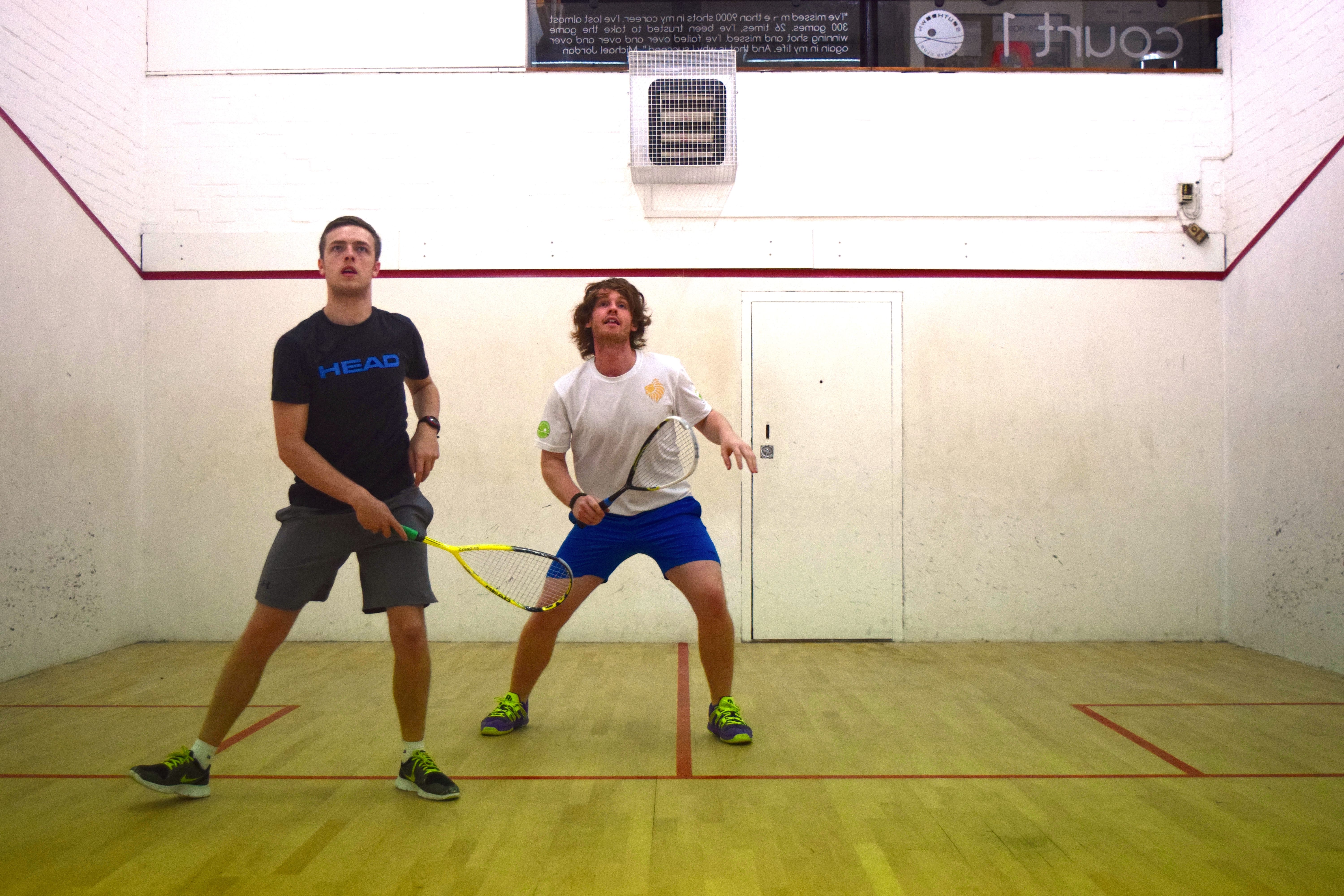
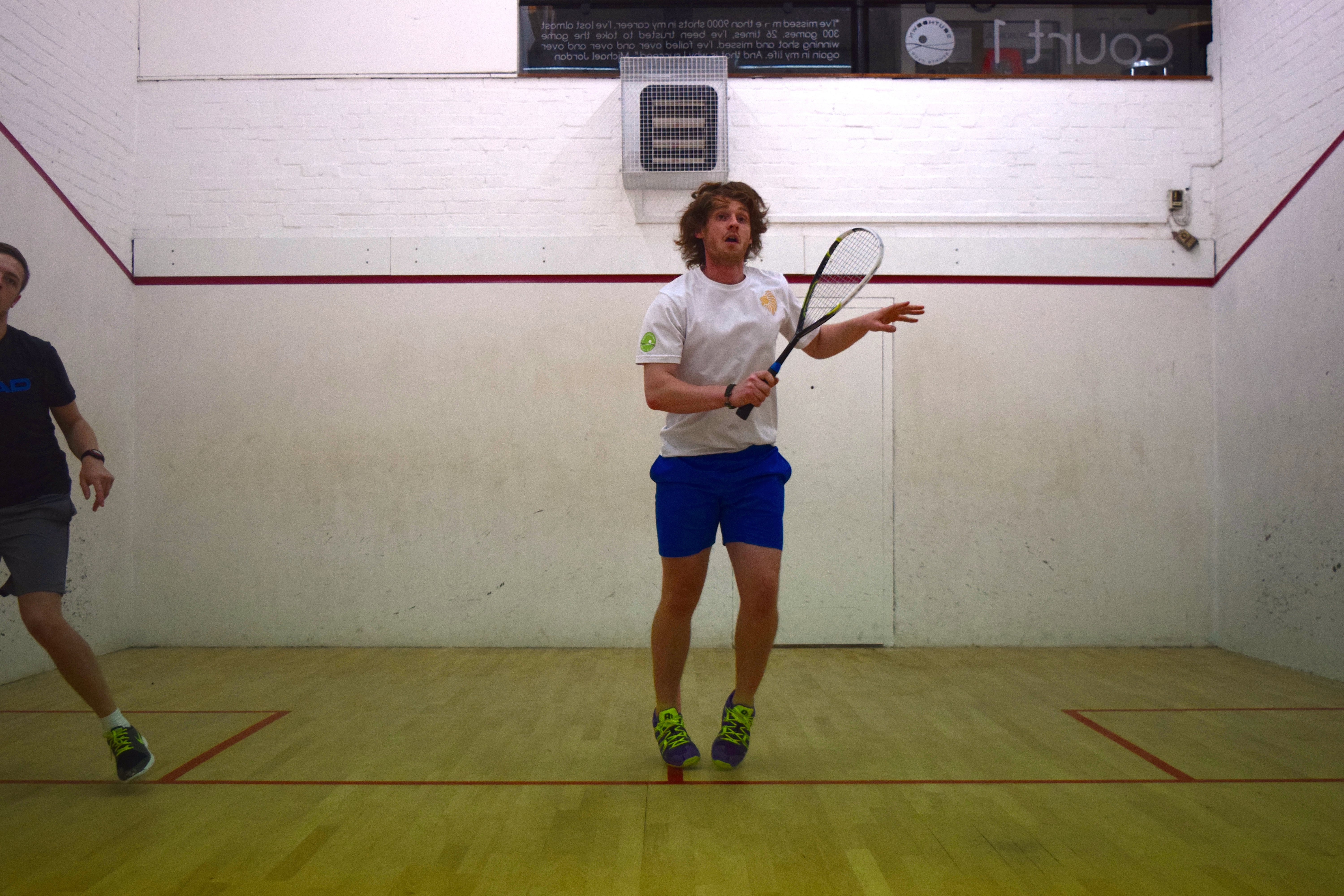
You should aim to time your arrival back at the T-Position so that you are landing on the T as your opponent is about to start their swing. On your toes with your feet comfortably apart, you should then look to ‘split’. The split-step or split is simply splitting your legs apart by dropping into your legs, so that they are wider apart. As you land from this split, you look to push off in the direction of your opponent’s shot.

The reason players use the split-step is so that they can move in any direction once they land on the T-Position. If you arrive at the T-Position flat on your feet or try to push off from a standing start, you will find it very difficult to push off or change direction at speed. Whereas, if you arrive on your toes and then split-step, you can move in any direction at that moment. As you split, any movement in any direction has to be possible.

DSC_0481-min

Prolonged ready position

Sometimes, you’ll spend a longer time than normal on the T-Position despite your best efforts to time your movement to your shot. If this is the case, try your best to keep calm on your toes with your heels firmly off the floor and your feet poised gently apart. Avoid moving too soon or letting your feet go flat, as both of these will make it easier for your opponent to make you run or win the point.

Look out for part two of this series in which we will look at how you should position your body between shots, and Part 3 on what to do with your racket. 


Filed Under: Mental, Movement, Physical, Positional, Pre-match, Tips

  • « Previous Page
  • 1
  • 2


Terms | Privacy policy | Contact | About us
Web Development By S G Barker.