Squash Company

Squash coaching with passion

  • Squash School
  • Blog
  • Videos
  • Shop

Swinging towards the front corner

A small change to your swing to boost your accuracy

It’s just a short post today to discuss a small tip that can help you to get the ball a bit tighter to the side wall from both the front and the back of the court. Sometimes it can be hard in a match to keep straight shots tight to the side wall, especially if the tempo is high. We’ve talked before about following through with your racket beyond the point of contact, but it’s also important to note that when you play a straight shot you should try to swing outwards and away from your body slightly. Doing this, you will be swinging towards the front corner of the court on the side which you’re playing the straight shot. This causes your shot to get that little bit tighter towards the side wall, and is particularly necessary if the ball is in the middle of the court.
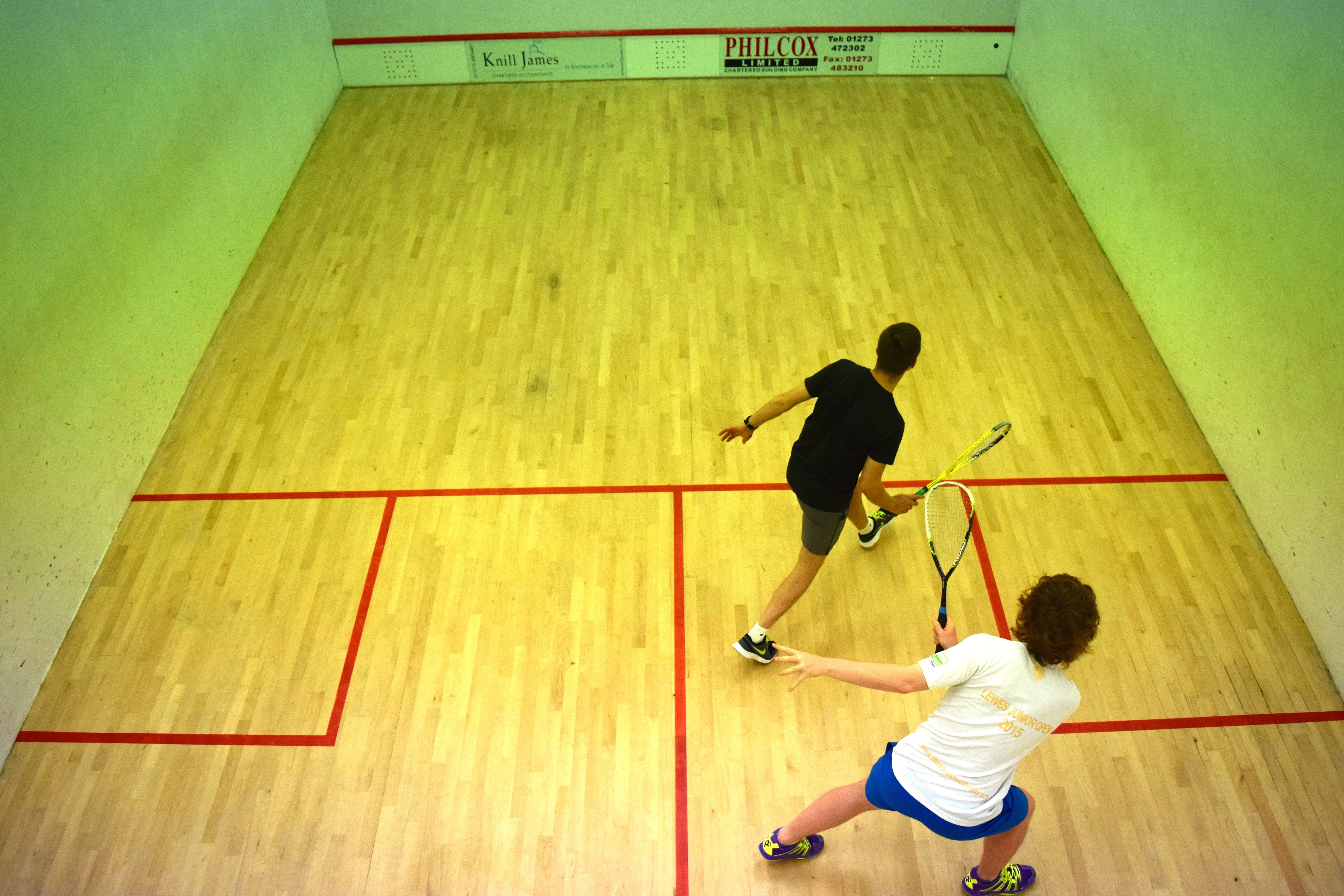
What is an outward swing?

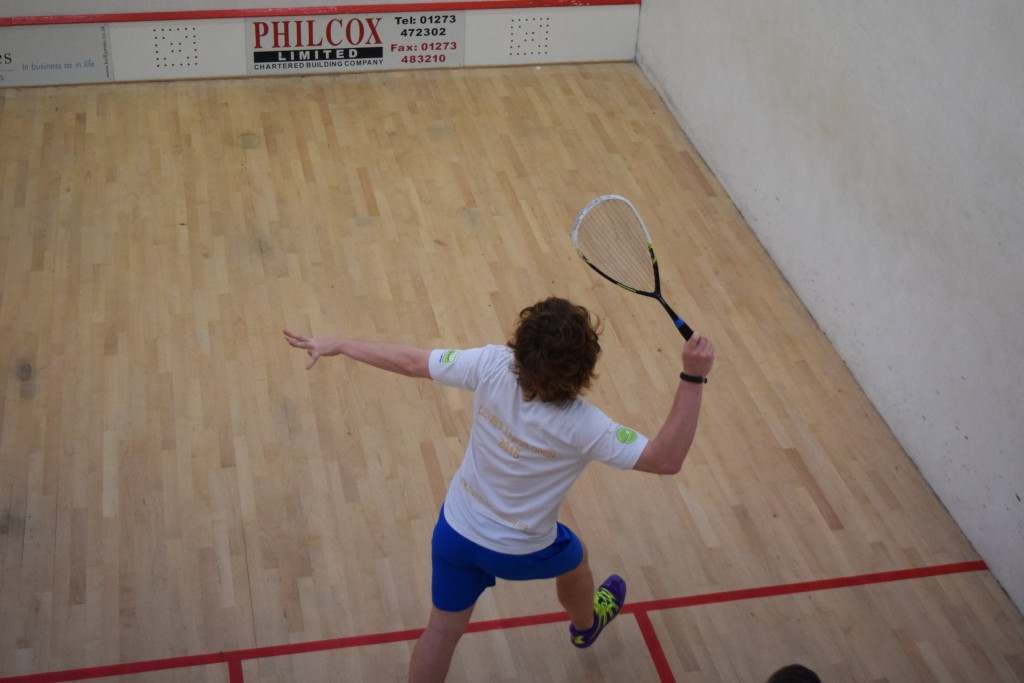
The outward swing should be led by your lower arm as you follow through a shot, and should end with your racket almost pointing towards the front corner of the court at the end of the follow through. Just as you are striking the ball, control your forearm so that your hand points towards the corner as you finish striking the ball and following through your shot.


The swing’s outward direction is usually quite subtle, as if you overdo it the ball can end up hitting the side wall too early, or even hit the side wall first. Although, it might need to be less subtle if you are in a central area of the court because your opponent has played a loose shot.

It can take a little bit of practice to judge how much you need to swing your racket towards the corner. Fortunately, given the amount of straight shots we play, it’s very easy to practice swinging outwardly towards the front corner during the warm-up or knock-up, most training exercises and matches. So, make sure you have a go and see if you can use an outward follow-through to make your straight shots tighter to the side wall.
Filed Under: Racket Manipulation, Technical, Tips

Swapping the frying pan swat for a high to low chop

A small tip for improving your forehand volley

When hitting a forehand volley above the head, it is a very common but lazy technique for players to ‘swat’ at the ball with a frying pan style. By this, I mean starting with the racket face and inside of your wrist and palm directly facing the front wall and swinging downwards by bringing your hand straight towards the floor, not unlike a tennis smash. This style can be effective from time to time in hitting the ball hard and bringing it low but it can also result in errors and is rarely as accurate or consistent as an overhead volley hit with proper technique.

Opening the racket face and chopping

The way to achieve greater accuracy with overhead forehand volleys is to really open the racket face. For these forehand volleys, you can open your racket face by rotating the forearm clockwise (right handed players) or anti-clockwise (left handed players) so that the edge of your racket goes towards the ball first. If you can hit the ball with an open racket face, even when the ball is up high you will have much greater control over the shot. To bring the ball low, you will need to swing the racket from high to low, almost in a chopping motion. This ‘chopping’ motion as part of a high to low swing with an open racket face gives you far greater fine control over the ball than using a flat, frying pan swat swing.


This chopping motion can be particularly useful when dealing with a high serve or when you are presented with an opportunity to attack a ball in the middle of the court, so have a go and see if you can improve the quality and consistency of your overhead volleys.

Filed Under: Racket Manipulation, Technical, Tips, Volley

Swinging towards the ball with the edge of your racket

A tip for getting an open racket face 

Sometimes in coaching you hear another coach, or even someone you are teaching, explain something in a way that you’ve never thought of and the way they explain it is better than you could have put it yourself. I had one such experience recently when at a coach workshop regarding playing with an open racket face that I think is worth sharing.


Explaining how to hit the ball with an open racket face 

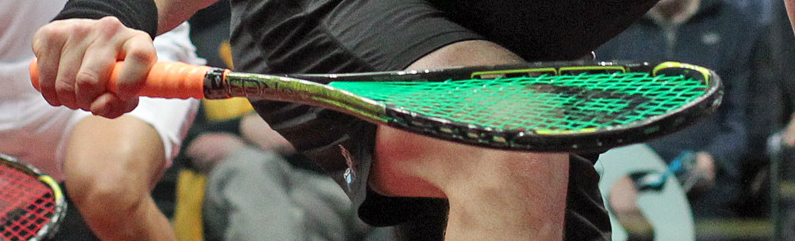
While discussing developing an open racket face (an open racket face in squash means having the side of the racket you will strike the ball with tilted up slightly. For more information check out our page on the grip), one coach described hitting the ball with an open racket face as swinging towards the ball with the edge of your racket. I thought this phrasing offered a really clear and simple way of not only describing hitting the ball with an open racket face, but also giving listeners a clear and easy target to aim for. When hitting with an open racket face, you are swinging edge first towards the ball. Just to be clear, the ‘edge’ mentioned in this phrase is the bottom edge of the racket, which is the side of the frame that is closest to the floor when you hold the racket in your hand.

Swinging towards the ball with ‘the edge of your racket’.

This way of visualising the swing could help you particularly if you struggle with getting the correct grip, or with hitting drop shots, lobs or getting the ball out of the back corner. These areas all rely on a strong grip and an open racket face to achieve an accurate and quality shot consistently.

If you are someone that struggles with either your grip or the idea of hitting the ball with an open racket face, see if you can use the idea of swinging with the ‘edge of your racket’ to help you achieve your aim.

Check out our other posts on racket faces, which include the importance of manipulating your racket face for different shots, how it can improve your cross-courts and its usefulness in the back corners.


Filed Under: Racket Manipulation, Tips

Using the ‘wrong’ leg when the ball gets behind you


Cheating the back corners

I’m a bit of stickler when it comes to movement and I’m incredibly fussy when it comes to ghosting and movement training. Whilst you’ll end up in all sorts of unplanned positions in a game, I like to always strive for perfection. However, when you are in a bad position you still have to be able to play a good quality shot or you won’t last a single rally.

When you are in a bad position, one of the best things you can do is to use the ‘wrong’ leg. By the term ‘wrong’ leg, I mean the leg which you won’t see used in the text book on how to play squash. On the right hand side of the court, the ‘wrong’ leg would be the right leg and on the left hand side, the ‘wrong leg’ would be the left leg.

Anyone who has had coaching will be familiar with the idea of using the left leg on the right hand side and the right leg on the left hand side to maintain a position facing the side wall and stay balanced.

This shouldn’t be treated as dogma though. If you watch any high level squash you’ll see all sorts of leg positions being used for different shots and this should be encouraged and practiced. It can be a quicker option and even a necessity in the heat of a match.

It’s in the back corner though that I find the ‘wrong’ leg is most useful. Inevitably, you’ll find the ball getting past you on occasion and you’ll have to hit it when it’s behind you to stay in the rally. It’s not ideal but you have to make the best of this bad situation. The best thing you can do at this point is to lead with the wrong leg. By doing this, you can shift your weight so that it is behind the ball again, which will give you a decent amount of energy to transfer through the ball when you strike it and you’ll consequently have more options and won’t have to resort to flicking the ball back with your wrist. If you try to lead with the ‘correct’ leg, the right leg on the left hand side and left leg on the right hand side, you’ll find yourself having to really flick the ball with your wrist, which is rarely consistently reliable or accurate.

When you are in a bad position, one of the best things you can do is to use the ‘wrong’ leg. By the term ‘wrong’ leg, I mean the leg which you won’t see used in the text book on how to play squash. On the right hand side of the court, the ‘wrong’ leg would be the right leg and on the left hand side, the ‘wrong leg’ would be the left leg.”

It will feel very weird at first if you’re not used to doing it but you should practice it regularly as part of ghosting and hitting drills or match play. One easy game you can do to practice this is to play all to length on one side of the court with a partner and just practice using the wrong leg so it starts to feel a bit more normal. Equally, when you do ghosting or movement practice, practice leading with both feet and also with the feet together.

Dealing with shots in the back corner is always a mountain for any improving player, so get out there and take the first step by using the wrong foot! You can also find more tips about dealing with shots in the back corner using your racket face and spin in the post ‘How to deal with back corner shots in squash’.


Filed Under: Physical, Positional, Racket Manipulation, Technical

Using the racket face for back corner shots in squash


Opening your racket face for back corner shots

Nobody really likes playing in the back corners, especially when first learning to play squash. There’s barely space to move and you find yourself with your racket jammed in the corners and your face plastered against the back wall.

Taking the ball before the back wall

No matter how good you get, you will still struggle to do much with a shot that’s been hit well and is dying (bouncing twice) in the back corner. If you can see the ball isn’t going to come back off the back wall, you’ll need to intercept it reaches the back.

There’s not much room near the back corners so you won’t be able to use your normal swing, which means you need to get the ball out of the corner and to the back of the court using a different method. One thing to try is opening your racket face a lot more than you usually would. Of course, providing your grip is correct your racket face should already be open to some degree.

Now though have a go at rotating your forearm in an anti-clockwise direction so that more of your palm is facing the floor if you’re on the backhand side and rotate clockwise so more of the back of your hand faces the floor on the forehand side.”

This opens up your racket face further and allows you to apply more spin to the ball, which in this case is called ‘bite’. If you use more ‘bite’, you’ll find you can get very good length and often at decent power without the need for much backswing, which is particularly important when hitting a ball in the back corner.

In general, if you’re struggling to return a ball from the back, you should aim to play a straight lob shot. 
back corner shots squash

Have a go during the warm-up or if you can for a few minutes on your own just rotating that forearm and opening your grip more before playing your straight drives and see how it affects the shot. That extra ‘bite’ has quite an effect and is well worth mastering for those occasions when you’re forced deep without a lot of space.

You can also find out more about how to position yourself in the back corners in the post ‘Using the ‘wrong’ leg when the ball gets behind you’.


Filed Under: Positional, Racket Manipulation, Tips


Terms | Privacy policy | Contact | About us
Web Development By S G Barker.