Squash Company

Squash coaching with passion

  • Squash School
  • Blog
  • Videos
  • Shop

Do you vary your serve in squash?


Vary your serve to disrupt your opponent’s momentum with your service in squash.

When it comes to practice and training in squash, serves are almost always neglected. Think about it: this is absurd. The serve begins the rally. It is possibly the most important shot in the game; it determines whether you will be on the front foot or the back foot at the start of the rally, which often defines the course of that rally.

The serve is also unique. Unlike any other shot in the game, you can take your time with a serve. You can take a few seconds to pick your spot and line up your shot and that little bit of thinking time can be crucial.

My question to you is do you vary your service? Most players tend to have one serve they favour the majority of the time they serve, usually either a smash serve (a fast, low serve) or a lob serve (slow, high serve).

Whilst serving doesn’t directly provide points in the same way it does in sports like Tennis, we all have experienced a player with a tricky serve that makes life uncomfortable for us. Often it is the older gentleman with the awkward lob serve that seems to just drop in the back corner never to be seen again. Even against these lob serve merchants though, we gradually adapt. We get to the stage where we are able to handle and deal with their serves. We might not like it but we are able to eventually produce efficient returns, unless there is a gulf in playing standard.

No matter how good your serve, if it becomes predictable, people will learn to deal with it. Of course, if you have a great lob service, you should make it the staple of your service game but every now and then, throw in a few smash or body serves just as your opponent is starting to come to grips with the height and pace.
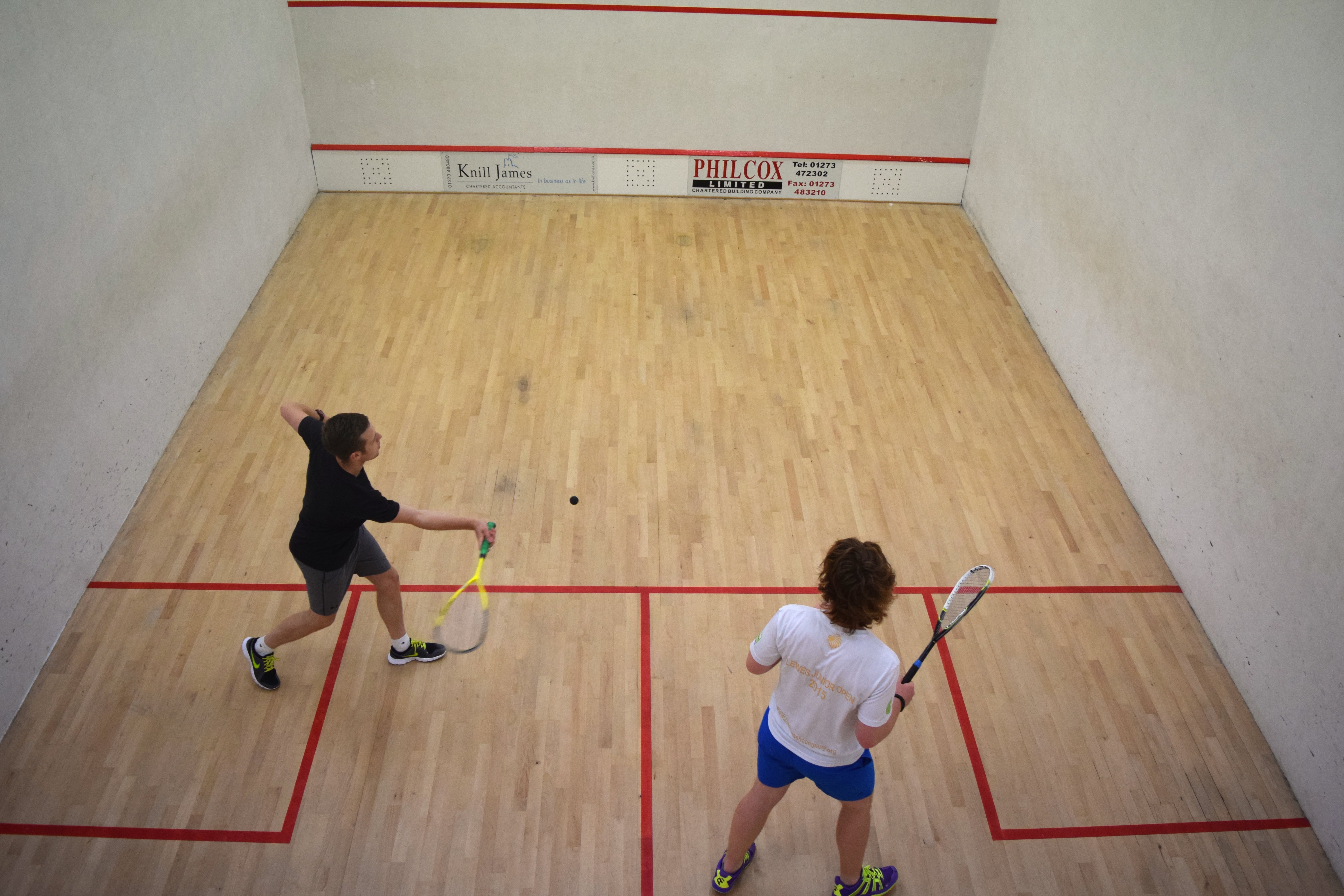
serve-5-min

If you watch your opponent’s positioning as they await your serve, you will notice it is very pragmatic. They will adjust based on your most recent service patterns. If you have been serving high and slow, they may push forward looking to volley it high up or they may drop back looking to take it lower if they have been struggling to cope with the height of the ball.

No matter how good your serve, if it becomes predictable, people will learn to deal with it. Of course, if you have a great lob service, you should make it the staple of your service game but every now and then, throw in a few smash or body serves just as your opponent is starting to come to grips with the height and pace.”

Look for these subtle adjustments and when you spot them, change your serve again to catch your opponent cold. The aim is to keep pulling the rug from under their feet every time they think they are getting a stable footing with your serve. This can keep them perpetually defending with their first shot of the game, which is a massive advantage for you. An old adversary of mine saw me moving too early preparing for a volley return on my forehand and so he used to elect to serve to my forehand first and drill the serve down the middle and it caught me out. It just goes to show you need to consider the angle of your serve based on your opponent’s positioning and vary it accordingly.

It is particularly important you vary your serve against players who look to win points regularly with their serve return. These are typically players with a strong drop volley or nick-shot and are often able to score several points a game with their shot. If you keep varying your serve and use a good dose of all of the three major types of serve – the lob, smash and body (when the serve is played down the middle towards your opponent) – you will severely limit this weapon and frustrate them. It disrupts their rhythm, as a few awkward serves can lead to a few scrappy rallies and cheap points, which can derail an opponent who previously had the momentum.

In the post ‘Which side should you serve to first?’, we discuss another thing you can do to vary your serve, which is serving to different sides to gain an advantage. Give it a go! See what benefits can be had from trying to vary your serve.


Filed Under: Return of Serve, Serves, Tactical, Tips

Which side should you serve to first?


Should you serve to your opponents backhand? 

Whenever we play squash, we almost always serve to our opponent’s backhands and make a point of doing so. If we see a left-hander, we almost immediately proceed to the left hand service box and begin our service. Is this right though and which side should you serve too?

At a lesser level, players tend to be weaker on their backhand so it makes sense to try and get an easy point by serving to an opponent’s backhand, particularly when playing English Scoring to 9, where you need to be serving to score a point.

I challenge you to think before you automatically plump for serving to your opponent’s backhand.

So at a lower level, serving to the backhand seems a sensible idea. At many levels PAR (Point-A-Rally) scoring is now universal and this diminishes the importance of being the server – though not the importance of the quality of the serve.

Regardless of the scoring system, players still serve to their opponent’s backhand, despite the fact there is no real logic to this at a good playing standard except for custom, as there is less difference between the backhand and forehand of a player. In fact, many players become better at hitting touch shots on their backhand.

With this in mind, I challenge you to think before you automatically plump for serving to your opponent’s backhand. First, consider your own service. Is your service stronger when serving to the backhand side or the forehand side?

I challenge you to think before you automatically plump for serving to your opponent’s backhand.”

Which side should you serve to first
Make sure you consider the pace, angle, height, etc., of your serve based on your opponent’s positioning.

Secondly, what sort of positioning does your opponent take up when waiting for the serve? One player I played regularly thought he saw me moving too early preparing for a volley return on my forehand and so he used to elect to serve to my forehand and drill the serve down the middle, towards my body and it caught me out. Now though, I pretend to drift over as if I’m moving in too quickly, only to shuffle back waiting for his loose serve when he’s not looking!

Make sure you also consider the pace, angle, height, etc., of your serve based on your opponent’s positioning.

Thirdly, consider your opponent’s strengths. Some players attack and volley better on their backhand than their forehand. So why would you serve to their stronger volleying side?

Lastly, consider the mental effect this can have on your opponent. Whenever someone served to my forehand with their opening serve, I was curious and almost lost concentration. ‘Why is he doing that? My forehand is stronger than my backhand… isn’t it?’. ’What has he seen? He must have seen something on my forehand that he thinks he can exploit. What does he know?’. ’Is his serve stronger on that side?’.

Consider your opponent’s strengths. Some players attack and volley better on their backhand than their forehand. So why would you serve to their stronger volleying side?”

It might even lead other dangerous thoughts; ‘Right, my forehand is stronger than my backhand. I’m going to smash this into the nick to show him just how wrong he is to challenge me on this side.’ Whatever the reaction was, it was just that, a reaction. Even if it didn’t show outwardly, I was at least slightly distracted inwardly. It is worth serving from different sides every now and again in a match just to psych-out your opponent. This is particularly effective against players with strong return of serves and players who are reliant on them (the serve & drop volley merchants!). Disrupt their rhythm by keeping them guessing about the serve.

Next time you serve, don’t just head for the same box as always. Think about it. The serve gives you the time unlike any other shot to do just that. You can also read more about service in the post ‘Do you vary your serving?’.


Filed Under: Return of Serve, Serves, Tactical, Tips

  • « Previous Page
  • 1
  • 2


Terms | Privacy policy | Contact | About us
Web Development By S G Barker.