Squash Company

Squash coaching with passion

  • Squash School
  • Blog
  • Videos
  • Shop

Using your body to hide shots in Squash


We’ve all played squash against one of those big guys. They stand on the T-Position and are almost impossible to dislodge. Any attempt and you seem to bounce off them towards the back corners.

You could cope with that though. That would be bearable if it wasn’t for the fact they obscure your vision of the ball with their body so that you can’t actually see the ball as they are about to play their shot. It might be a little morally grey but is there a better disguise? Imagine your opponent not actually being able to see the ball or your hand in your shots first moments.

This would leave them well off the pace and lagging behind. If there is no way of seeing the ball, it’s almost impossible to anticipate what will happen next.
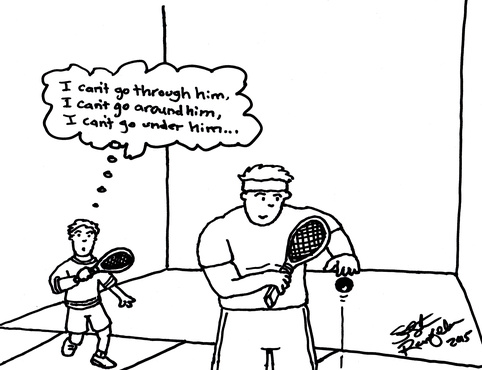
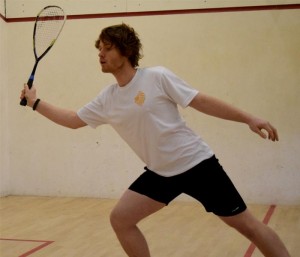
How to use your body for deception

Try playing a ball from the front whilst ‘front on’ – facing the front wall with your body rather than the side wall as is traditional for most squash shots. This will make you bigger and obscure your opponents vision slightly. It can be challenging to maintain ball control from this position but it opens up a plethora of options. It requires dexterity as you will usually have to play the ball quite close to your body, so you may need to use a your wrist from this position.

“It might be a little morally grey but is there a better disguise? Imagine your opponent not actually being able to see the ball or your hand in your shots first moments.”

Quite often the ball will be flying past your opponent before they are even able to move. Immoral? Just a touch perhaps, but boy is it effective! Give it a try and see what you think!

Filed Under: Disguise, Tactical, Tips

The Importance of lobbing


Squash’s unsung shot?

I’m on a crusade. A lob shot crusade. The purpose of this post is simply to raise awareness of the lobbing and to encourage you to do it more!

Why? It is a neglected shot, particularly at junior and club level. Judging the right height and width to avoid your opponents volley is tough at first but this is often due to a lack of practice. We simply don’t play the lob as often as we ought to, resorting to whack the ball to length frequently because we lack the composure to slow ourselves enough to play a lob or simply not trusting in our ball control.

The Advantages

In many ways this rarity is to your advantage though. As they are uncommon, players are often ill-prepared to deal with lob shots. Make them your secret weapon. If it’s played well, the lob is often an outright winner as it can just dribble into the back corners leaving opponents with no room to swing and a ball with no momentum. Even a wild swipe won’t save someone from a well executed lob shot.

The Importance of lobbing
Do you lob enough? Do you even lob?

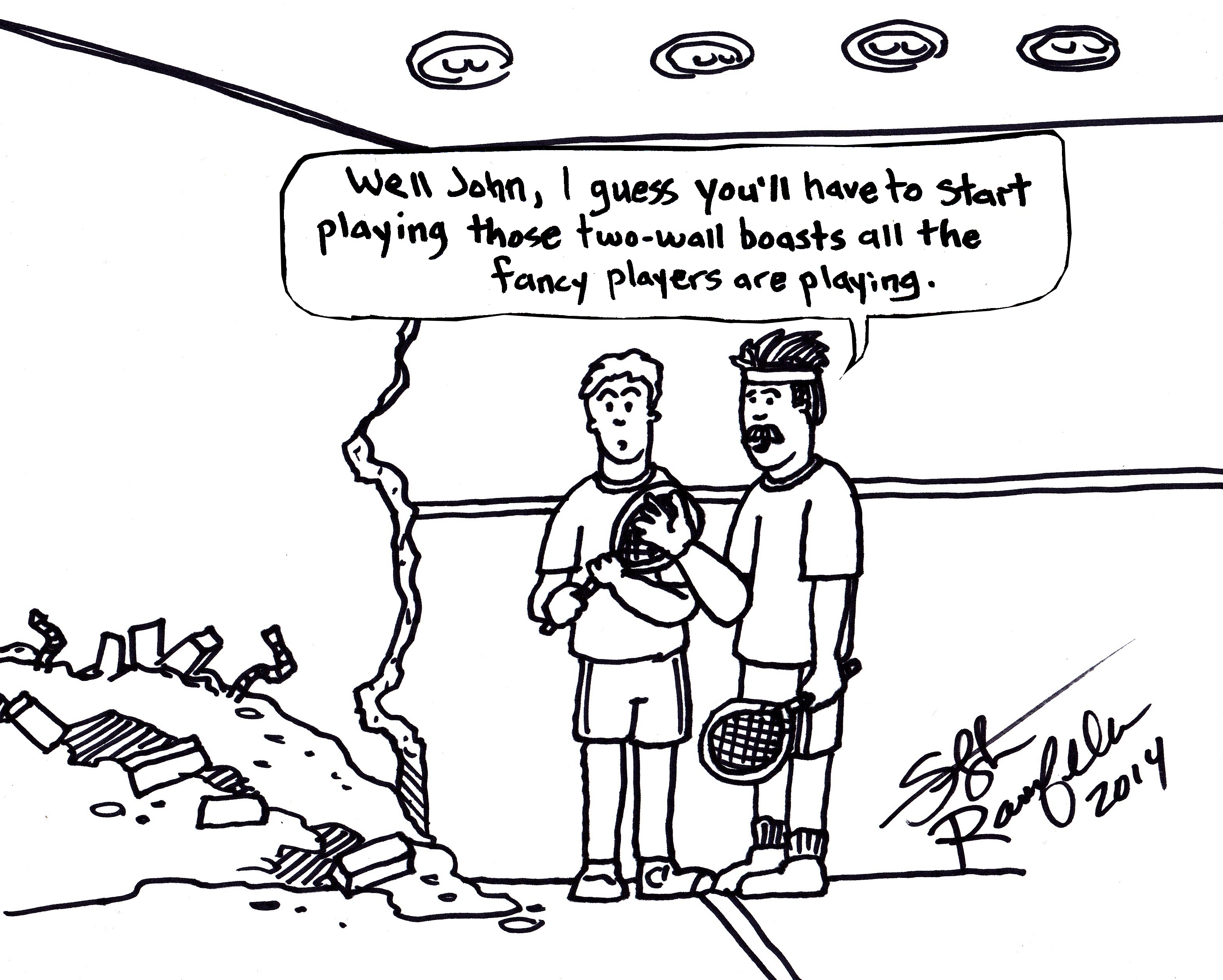
Additionally the lob is a great counter-attacking shot, a bit like the two wall boast I’ve talked about before, and can help you go from chasing the rally to being in control in just one shot. The cross-court lob from the back of the court can be challenging to judge but it is such a good shot for catching an opponent out, as is the straight lob from the front, a favourite of mine.

Lob shots slow the pace of the match and can be particularly effective against players who like to hit the ball hard and run a lot, as they will disrupt the faster pace they enjoy and ruin their rhythm. This strategy of changing the pace is something you should be able to do if you have aspirations in the game, as it is the sort of tactic that can change the course of a game. Lobs are also useful against smaller players, which is particularly poignant at junior level. Although, they are also effective against tall players, where a drop and lob game can make the tallest player exhausted from lunging down and then standing up high repeatedly!

When you practice lobbing, really go for the height. Forget all else – just ensure you get the lift. From there you can learn to control the angle and the pace.

Next time you play, just see if you play a single lob shot. If you don’t or only play a lob rarely, your game is missing a vital dimension.


Filed Under: Tactical, Technical, Tips

The rise of the two wall boast


In squash, when you think of a boast you tend to conjure up an image of a shot hitting three walls; the side wall you’ve hit the ball into, the front wall and then the side wall on the far side. This boast is a fairly defensive shot and in many ways fairly limited shot, as it often sits up quite nicely for the opponent to attack.

At the top level, three wall boasts are becoming few and far between. They are something of a last ditch shot on the majority of occasions with almost all boasts now being played with the aim of bouncing twice before the far side wall, making them only two wall boasts.

The reason the two wall boast is becoming so prominent is because it can put immense pressure on your opponent.

two or three wall boasts

If a two wall boast is played correctly (this is not always easy), the ball will hit the middle of the front wall and bounce twice before the far side wall, meaning your opponent will have to lunge down low to recover the ball, which will require significant speed and energy and leave them awkwardly placed.

Not that the three wall boast’s obituary should be written just yet – it can be better to play a three wall boast than attempt a weak length shot from a tight position in the corner and it can give you time if you are in trouble. A few are even playing the three wall boast at an incredible pace to make it bounce back to the middle so it is more awkward for the opponent, which we talk about in another blog post.

What makes the two wall boast an effective weapon is that you can be in a bad position at the back of the court and still have the opportunity to play it. In just one shot, you can go from being under pressure to being the player on top.

It’s a fantastic combination shot and if your opponent is deep and not covering the T properly or has started to drift towards one side of the court expecting a straight drive,  it can be a useful winning shot to have up your sleeve.

If played correctly (this is not always easy), the ball will hit the middle of the front wall and bounce twice before the far side wall, meaning your opponent will have to lunge down low to recover the ball, which will require significant speed and energy and leave them awkwardly placed.”

It’s also a shot you can experiment with and vary. A two wall boast can be played soft like a drop or fizzed in hard and low and can also be played at an angle so narrow that is stays on the same side as which it was hit.

Lastly, it is also useful as a combo shot as more often than not players will respond to a two wall boast by going to length with the next shot, often a cross-court lob, leaving you with a volley opportunity.

Try it and see if you can catch your opponent cold with a few two wall boasts.


Filed Under: Boasts, Tactical, Technical, Tips Tagged With: boast, boast shot, three wall boast, two wall boast

The Squash Evolutionary Race


Constant Evolution

You can think of a squash match as being a bit like a Darwinian squash evolutionary race. It is almost akin to the race between humans and bacteria. Humans use a Antibiotic A, the bacteria is badly beaten but eventually emerges stronger and immune to Antibiotic A, so the scientists bring out Antibiotic B.

In squash, you are constantly aiming to stay one foot ahead of your opponent just as humans look to stay ahead of the constantly adapting bacteria.

If you play a lot of drop shots – watch how your opponent will start to move higher up the court before your shot, anticipating your next drop. If you hit it hard, harder and then harder still, watch how your opponent sinks back deeper on the court, below the T-Position expecting your next drive, making them vulnerable to a vicious two-wall boast. You need your game to be constantly evolving during a match to stay on top.

The-Squash-Evolutionary-Race

What you need to do is always try and stay one step ahead of your opponent. Once they start dropping deep after your onslaught of lengths, go for a quick boast or a long drop. That will catch them out and them leave them unsure of your next move again.

If you’ve played a lot of drops from the forehand front corner, go through a stage of playing more cross-court lengths from the same position. Again, they will be caught out. Much like the bacteria though, your opponent will eventually adapt and evolve again and look for a cross-court drive from the forehand front corner.

If you play a lot of drop shots – watch how your opponent will start to move higher up the court before your shot, anticipating your next drop. If you hit it hard, harder and then harder still, watch how your opponent sinks back deeper on the court, below the T-Position expecting your next drive, making them vulnerable to a vicious two-wall boast. You need your game to be constantly evolving during a match to stay on top.”

My advice for you is to make sure that you mix up your game frequently and keep evolving. This is not to say every single shot should be played to a different corner – that is unlikely to create sustained pressure (although playing a game like that is a worthwhile exercise*). You might just alternate between a drop and a drive from the forehand front corner (though I would recommend a little more variation!). What it does mean though is that once you have had success with a particular tactic or shot, you need to be ready to change that before your opponent gets in rhythm with it too easily. As with many things, you need to strengthen while you are ahead. You need to sense that point when your opponent starts to predict that cheeky boast you’ve been playing and swap it for a straight shot. Make your opponent think they are on to you and just as they are catching up, pull the rug out from under their feet by changing your tactics again.

Your Plan A from the forehand front corner might be to play a cross-court drive low and hard. If it is, make sure you have a Plan B and even a Plan C, which might be a straight drop and lob respectively. Whatever your plans, make sure you are able to switch between these plans and to do so at the right time. Eventually, your opponent will adapt to your Plan A no matter how good it is. Even alternating a Plan A and a Plan B again and again can make a real difference.

Make sure you are the one that is ahead in the squash evolutionary race!

*As an exercise, play a match where both players have to play every shot to a different quarter of the court than the last shot they played. Both players could play to the same quarter but an individual’s shot must go to a different quarter than their own last shot. See what patterns of play it creates and how it effects your opponent’s anticipation. It’s also good for making players think about their shot selection.


Filed Under: Tactical, Tips

On the importance of playing with purpose


It’s very rare that a talk from a team mate or coach has ever had any real effect on me on any level, which really doesn’t bode well for me as a coach now desperately trying to get my point across to players mid-game.

One talk though really sticks in my mind. I got what it meant straight away and it set me off thinking a lot in the aftermath of the match.

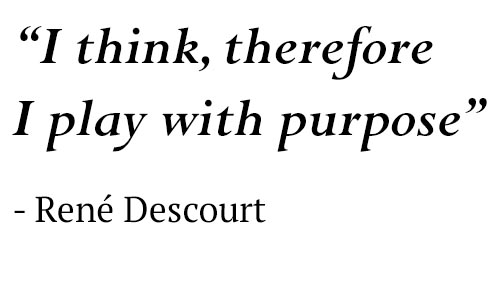
‘You need to play with purpose, Nic.’ said my team mate, friend and one time mentor Hany Abou-Taleb. “There was no real direction or aim behind any of the shots you were playing, your were just going through the motions.”

It wasn’t that I wasn’t trying. Far from it. My shots were just harmless and my game not applying any mental or true physical pressure to my opponent.

It made me realise just how often people go through games without actually considering what the idea behind the shot being played is. I realised how many players (myself included) neglected to show any real intelligence on the court and hit shot after shot without regard for what they were trying to achieve with it. Often, they played like they were happy to settle for just keeping the rally going.

Playing with purpose
Ha.

There was no real direction or aim behind any of the shots you were playing, your were just going through the motions.”

Nowadays before we practice or focus on any shot, I insist on the individual or group thinking about why they are playing the shot.

I even invented a rather crude game where I’d play against them and stop the rally if I wasn’t satisfied with a shot choice they had made and demand an explanation. ‘Why did you play a straight drive?’ I’d yell. If I wasn’t satisfied with their explanation, they did court sprints. ‘I don’t know really, it’s the easiest shot to play’ they’d reply. ‘Wrong answer’ I’d bark, ‘A straight drive is played to get the T position back.’ Eventually, I had the squad sit in on each others games and stop the rally if they believed a player had made the wrong shot decision or worse, hadn’t thought at all. Like a jury, they would proceed to question the accused. It wasn’t the most inventive game but it got everyone thinking about what shots they played and why.

One of the most common examples of lacking purpose in our play is when players repeatedly hack the ball down the line or cross-court with lots of power. Are these shots contributing towards winning the rally? Unless the opponent is inferior physically, this style of play lacks real merit. The number of opportunities to tighten the screw or win the rally by volleying or going in short that are passed up is staggering.

The player who I always thought played with the most purpose was Jansher Khan. Take a few minutes to watch some of his best rallies on YouTube. It’s like his opponent is a puppet. His shot selection is second to none. He always seems to pick the shot that will make his opponent suffer most. He’s always hitting into open spaces.“

Occasionally squash players can be guilty of enjoying the rush that the intense sprints of squash provide too much. Almost everyone can recall rallies or games where they just enjoyed bounding about after the ball hitting it as hard as they could, playing out lung-busting rally after lung-busting rally. Sometimes we love the rush more than taking advantage of an opening to go in short on the drop.

The player who I always thought played with the most purpose was Jansher Khan. Take a few minutes to watch some of his best rallies on YouTube. It’s like his opponent is a puppet. His shot selection is second to none. He always seems to pick the shot that will make his opponent suffer most. He’s always hitting into open spaces.

Whenever you go on court, ask yourself if you are playing with purpose. Why did you choose to play that shot? What purpose has it served? That purpose may be defensive or offensive but it should exist. If you have just played a shot for the sake of playing a shot, you are allowing your opponent off the hook and neglecting to apply any mental pressure.


Filed Under: Mental, Tactical

  • « Previous Page
  • 1
  • …
  • 8
  • 9
  • 10


Terms | Privacy policy | Contact | About us
Web Development By S G Barker.