Squash Company

Squash coaching with passion

  • Squash School
  • Blog
  • Videos
  • Shop

How to play against good retrievers

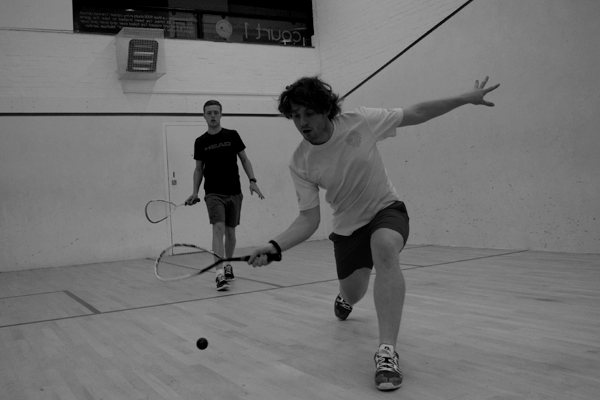
The key thing when playing someone who retrieves the ball very well is patience. It is very natural to try and make your shots even better and go for the spectacular ones to win the rally; to try and hit drops a little lower, or attempt shots that aren’t really on. However, this strategy will typically lead to errors and therefore increased frustration for you. 

Expect them to return your shots

The mindset necessary to beat someone like this is to expect them to get all of your shots back. Do not be disturbed if they retrieve a shot which would normally win a rally. If they return your shot, then you simply play another one, and another one, and another one, until the rally is over. Be prepared for this to last several games; if they are retrieving a lot, it is likely they retrieve a lot in matches in general and so they will have a high level of fitness from all the running they do. 

Your aim is to keep them moving. You need to keep playing quality shots and going short when the time is right – as you need to make the court big for good retrievers by hitting the ball into open spaces – but without trying to hit the winning shot. This can be a fine balance though, as you don’t want to play drops or other attacking shots too high either in attempting to avoid making a mistake. 

Deal them a mental blow by remaining unbothered by their retrieving 

If you expect them to return every shot, you will not only prepared for them to return the shot mentally, you would also be prepared positionally as you’ll already be moving ready for them to get the ball back. If they don’t return the ball, it is a bonus, but always expect them to. This way you will not be rattled or concerned, which helps you mentally during the match and will also damage them mentally if they don’t think you are threatened by their retrieving. 

A lot of fitness is mental, and if they start to feel mentally concerned or wearied by you prolonging the rallies and not being affected by their retrieving, it may take the energy out of them and they might struggle to keep retrieving the ball as well. As mentioned earlier, this might take one, two or even three games or more to achieve against very fit retrievers, but most players have a point where their fitness will be sapped by their mind if you can reach it. 


Are their shots as strong as yours?

This is a bit of a generalisation, but if a player is relying on retrieving, they are likely to not be as accurate with their shots as other players playing at a similar level, otherwise they wouldn’t be relying on speed and fitness. If this is the case, be sure to push home your advantage. The key to this, as with a lot of things in squash, is to make sure your length is accurate and clears the service box every time. You should do this with a combination of straight drives, lobs and straight long volleys, and not rush to go short until the moment is right. This might mean not taking the earliest opportunity, but waiting for a better one to present itself, which it will if you are more accurate than them, and you allow this to show by being patient.

Using delay and putting the ball back from where it came 

Good retrievers often sprint a lot, and you can use this against them. If they are sprinting a lot to get back to the T-Position, their weight will be fully committed in the direction of the T-Position, and this will make it very hard for them to slow down and change direction. For example, if they retrieve a drop shot, they will often turn and sprint back towards the T-Position, meaning they will find it very difficult to turn around and retrieve another drop shot if you play it. If they are sprinting to the T-Position from the back of the court, they will often find it hard to return to the back if you play a length again, especially if you play a long volley, which is why using that straight long volley mentioned in the last paragraph is important.

Try out our tips and let us know how you get on!


Filed Under: Mental, Physical, Tactical, Tips Tagged With: fit, fit players, retriever, retrieving, squash tactics, tactics

Watching for signs your opponent is tired

When to go in for the kill

We’ve discussed a little bit on the site before about when the crucial moments are in a match, and examined the need to come out flying at the start of the first game, the benefits of putting your all into the third game when the score is tied at 1-1 and how to see out the match when you have a 2-0 lead in games.

Today more generally we are going to discuss how to identify potential turning points in matches and how you can take advantage of them.


Looking for signs

Looking for signs your opponent is tired is a big part of knowing when to go on the attack, and changing your style accordingly to take advantage of that weakness. Signs of tiredness in your opponent can include obvious things like hearing them breathing harder, watching them pretend to tie their shoe laces or take an elaborate route to the service box between rallies, but sometimes they can be more subtle, especially if the player is fit. Other signs may include:

  • Moving into the front court slower
  • Volleying less
  • Trying to slow the pace
  • Trying to win the rally quicker than normal
  • Playing short shots earlier than normal
  • Length shots bouncing shorter than usual

What to do with this information 

So you’ve spotted your opponent is tired, what do you do? Sometimes they’re tired because you’ve had a gruelling game, and so you are also tired. Now is the time to dig deep and show you want it more: if you can press ahead and go on the attack at this point you are likely to overwhelm them into submission before you become exhausted yourself. It is better to be the one on the attack as tiredness sets in, as you’d be surprised at how many people lose hope if they come under a renewed attack when they are tired. They will rarely stop to think whether you are also tired, and will mostly believe that you must be still going strong. It is a bluff of sorts. If you’re not as tired, then it’s not a bluff and you need to really up the intensity.

The best ways of going on the attack in this instance are:

  • Keeping your opponent moving, without aiming to hit the winning shot. This is a delicate balance, as you want to take opportunities that come your way but most importantly, you want to keep making your opponent run and not give away errors. Hitting into empty space is the best way to achieve that. This is a good strategy against a player who is quick or who is very fit, as even though they’re tired, they’re likely to still be reliant on their physicality and are probably experienced enough to be able to draw on it even when tired. Hitting into open spaces keeps the pressure on them and keeps them moving. 


  • Taking the ball earlier wherever possible. Look to volley and make use of the half-volley, and hit the ball as high up the court as possible to give your opponent less time to recover between shots. This point is a great strategy if you know you are fitter than your opponent, or you have enough energy. It’s also good if they are starting to make mistakes, as it will increase the likelihood of them making even more. 
  • Making sure you get your own length shots past the serve box. This point is particularly important if you are playing a highly experienced player, as they will likely be able to cope with their own fatigue and still produce decent play. This keeps them pinned behind you, which means you will get more opportunities to attack, and they will be less able to attack, giving them no respite. Win the length battle.

Be on the lookout for the various signals your opponents give off during your next few matches, and see if you can work out how best to take advantage and improve your game management.

Filed Under: Game Management, Mental, Tactical, Tips Tagged With: fatigue, game management, is your opponent tired, squash tactics, tactical tips, tactics, tiredness, watching for signs your opponent is tired, what to do when your opponent is tired

The dangers of being over-motivated Part II

How to deal with over-motivation during a match


This is our second post on how to deal with over-motivation, this week focusing on what the symptoms of over-motivation are during a match and how you can deal with them.

Check out Part I: How to deal with over-motivation before a match for more on how to make sure you are balanced mentally before the match.

Signs of over-motivation during a match

Symptoms of over-motivation can include:

  • Silly mistakes
  • Nervousness or lack of conviction in hitting the ball (most commonly players who are over-motivated won’t follow through long enough and will cut off their swing early)
  • Swinging through the ball too fast or without control
  • Attempting to win the rally very early or when the chance of hitting a winning shot is very slim
  • Nervousness or lack of conviction in shot selection
  • Erratic movement and/or positioning – often getting too close to the ball
  • Poor temperament (especially if a player’s temperament is worse than usual)
  • Overreacting when hitting a bad shot or when things don’t go as planned
  • Focusing too much on the score

As previously mentioned, all of these are relative, and what you are really looking out for is if you are doing one or more of the above more than usual.

How do you handle over-motivation during a match?

Personally, I think this is perhaps one of the most difficult mental challenges to overcome mid-match. It’s very easy to lurch from over-motivation to anger, or another destructive emotion.

You need to hit reset as quickly as possible, and you might have to wait until the end of the game to do this properly. I would go away from the court and go to a corridor, changing rooms, toilet or other area that is removed from the courts. Breathe deeply, and try to ground yourself in the moment by focusing on the feeling of your feet in your shoes and the feeling of the ground beneath them.
Once you start to calm down, focus on what you want your new goal or target to be. When over-motivated, I find it is best to focus on removing the pressure from yourself. You can do this by acknowledging to yourself that all you can do is your best, and even if you play your best, you cannot control the score and you still might lose. Tell yourself to focus instead on something you can control, such as making sure you get back to the T-Position as quickly as possible or doing your best to volley as much as possible. Your new focus could also be about desire and mindset, telling yourself to think of the next game as a best of one or of doing your best to prevent your opponent winning two rallies in a row.

If you can grab a quick bit of fresh air – make it quick if it’s cold and don’t ruin your shoes! – that can work wonders.

I also find changing my shirt is a great way of refreshing myself, and always try to have a spare one. If you can change your shirt, do that too.

As we said last week, you need to take all of this advice and apply it to your personality and style. You will need to adapt some of our tips to work for you, and perhaps even disregard some bits altogether if they don’t work for you. The key is to experiment and pursue what does work for you through trial and error!

Best of luck from The Squash Company in keeping it together!

For more thoughts on how you can improve your mental game, click on the word ‘Mental’ in the ‘Tags’ section below – or click here – to see all of our posts on the mental side of the game. 


Filed Under: Mental, Tactical Tagged With: concentration, focus, match, Mental, Mental preparation, motivation, over-motivation, under-motivation

The importance of deception in the long run in a game

It’s so important you develop deception and/or disguise as part of your game. If your opponent is always fairly comfortable with what you are going to do, they will always feel confident and calm even if your shots move them around the court. What causes a player to become uncomfortable and creates mental pressure is leaving them guessing about which corner you will play your next shot to.

What are deception and disguise? 

People use these words in different ways sometimes in squash, so to clarify, in this instance deception means positioning your body or racket in such a way that someone is completely unsure of what shot you are going to play. Our definition of disguise is pretending to specifically play one shot when in fact you are going to play another, e.g. having a high racket and pretending to play a hard drive shot when you play a drop.


The long game: creating doubt, disrupting rhythm and seizing control

Even if the deception doesn’t result in a winning shot or even a shot which puts your opponent under a great deal of pressure, it’s still a warning to them and will almost certainly sit uncomfortably in the back of their mind. Let’s say for example you play a straight drop from the back of the court after lining up as if you were going to play a straight drive (or even just out of the blue when your opponent is expecting another straight drive because there’s been a series of straight drives or you’ve almost always picked that shot). Even if your opponent gets the drop back, they will be more wary next time you are in the back corner as they know you might well go for the straight drop, as well as the more typical choice of a long shot. With this in mind, watch to see if they move higher up the court than normal. This is a very common, instinctive move and it leaves a bit more of a gap for you to play a length shot into at the back of the court, which makes your length shot more dangerous. They may then become frustrated when the drive is played and catches them out, which can cause further frustration and lead to them dropping deeper again if they don’t keep their composure. Once that process has started in your head, you have them. If you can keep creating situations like this from all over the court through simple shot rotations – drops and drives or boasts and drives – you can really exert pressure on their mind. They will be forced to react to whatever you do, making it hard for them to take control of the game.

When players are uncertain of what shot they will face, they can resort to over-anticipating, guessing and making rash decisions. Not all players will but it’s worth testing your opponent’s defences for weaknesses, and seeing if they can handle the mental strain of facing deceptive shots. Additionally, if they are unable to anticipate your shot they won’t be able to start moving before you hit the ball and so will have to rush towards the ball quickly after you’ve played it and thereby waste energy. With this, the mental pressure starts to become physical too.

The easiest people to play against 

There is nothing easier than playing against someone who is predictable, even if they are very accurate. In your mind, you know exactly where you need to move to and you can establish a rhythm, which means you will feel comfortable and at ease, even if you are having to work very hard. You need to do all you can to ensure that people aren’t thinking like this when they play you! If instead you move into the back corner and your opponent doesn’t know whether you are likely to play a drive or a drop, or better, starts guessing, then you have a major advantage.


Even if you don’t get the winning shot or set yourself up for a winning shot or create pressure, the deceptive or disguised shot will still play a very important role both mentally and physically. It creates doubt, disrupts rhythm and takes its toll on your opponent’s fitness. If you can tire your opponent both physically and mentally, you can defeat them.

Filed Under: Disguise, Tactical, Tips Tagged With: deception, disguise

What to do when the game tied at 1-1

We’ve previously written about handling a match when you are leading 2-0, and another really common and pivotal situation during a match is when the match is tied at 1 game each.

Knowing when to push

When the match is tied at 1-1, the third game becomes vital for both players. Lose, and you need to win 2 games in a row for the first time in the match in order to win. It’s not just a physical challenge but a mental one as well. If the player losing 2-1 is also struggling physically or not as fit as the other player, the disappointment of losing the third and facing up to needing to win two games in a row might be too much for them and they might struggle to find anything like their best.

This is why you need to throw everything you’ve got at your opponent at the start of the third game.  Before you go on court for the third game, set targets for yourself or remind yourself of how you want to play. Remind yourself, and force yourself if necessary, to push high up the T-Position, to volley and take the ball early, and tell yourself that you will not let them win two rallies in a row or allow the ball to bounce twice. If you work better with targets, aim to keep them at 0-0 for as long as possible, or see how few points you can limit them to. Once you are in the game, remind yourself of your goal or target between rallies but do not dwell on the actual score – let that take care of itself.


Even doing this just for the first half of the third game might be enough to demoralise your opponent or give you an unassailable lead.

Investing in the third for reward in the fourth 

If you don’t go on the offensive in the third, and instead maintain a steady level – or worse drop off – you will give your opponent a big chance to go 2-1 up if they come out attacking, which is a position you really don’t want to allow them to get into. Working yourself as hard as possible in the third is often a good investment, as if you can win a really tough third game to go 2-1 up, the extra effort will be rewarded when your opponent is worn out physically, and therefore not capable of being truly competitive or dangerous in the fourth game.

If you are in a match poised at 1-1, double your efforts. Every game is always important but leaving yourself needing to win back to back games deep into the match is not a position you want to be in. You can also deal a devastating blow to your opponent and leave them physically unable to put as much into the fourth game, which when combined with the disappointment of losing the third, can allow you to ease to victory in the fourth providing you maintain your concentration.


Related posts:

Being 2-0 up: The 2-0 up syndrome

Don’t wait for the ball – hit it early

What to do at match ball 

Play like it’s a best of one

Complacency

Filed Under: Mental, Physical, Tactical, Tips

  • « Previous Page
  • 1
  • 2
  • 3
  • 4
  • …
  • 10
  • Next Page »


Terms | Privacy policy | Contact | About us
Web Development By S G Barker.