Squash Company

Squash coaching with passion

  • Squash School
  • Blog
  • Videos
  • Shop

Play like it’s a best of one

Ignoring the bigger picture

Are you facing up to a tough opponent? Are you feeling tired? Or maybe just a bit nervous? Or even complacent? Tell yourself that the match you are playing is just a best of one game. Convince yourself. This mindset can help to keep you in the moment, and not be distracted by the match as a whole, and can also help you to put all your energy into the moment.

Winning three games might seem inconceivable in some situations, or against some opponents, but playing in a best of one; well, who knows what might happen?
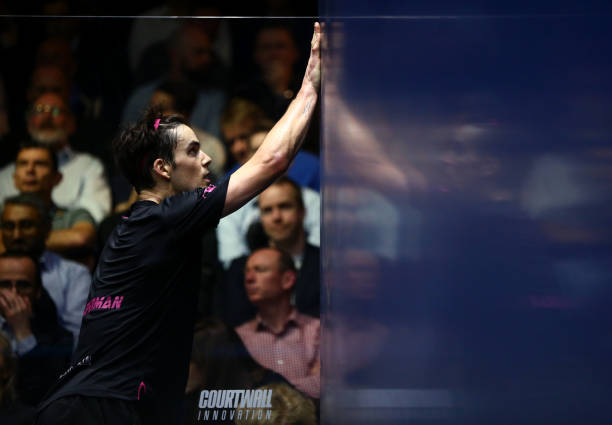
Image result for squash hand wiping on wall

The big picture can be overwhelming in squash, sport and life

This is hardly new advice, as people in sport and in life have often known the wisdom of ignoring the bigger picture if the size of the challenge or task might overwhelm someone. Sometimes, it’s counterproductive to be mindful of the whole task, and better to break things down into smaller goals.


Legendary football manager Sir Alex Ferguson spoke in his book Leadership about how he would always tell his team when they were losing to aim to get a goal back and then see where it took them. Rather than focusing on overturning a big deficit of 2-0 or 3-0, which might have seemed impossible, Ferguson had his players focus on the rather smaller and easier task of just scoring one goal.

Alex Ferguson.jpg

Sometimes winning in squash is about putting one foot in front of the other, playing a game step by step and shot by shot. If you are feeling slightly overawed going into a match, maybe because of the ability or reputation of your opponent or because you don’t feel great yourself, try to adopt the ‘best of one game’ mentality and see where it takes you. You can nick one game, can’t you?

We’ve also written a lot of other posts on ways to improve the mental side of your game, including getting in the zone, how to develop belief, how to cope with fear of failure, how to deal with complacency, avoiding thinking about the score and ignoring bad shots. 


Filed Under: Mental, Tactical, Tips

Tips for playing in colder weather

How to take advantage of the colder weather and negate the disadvantages.

Following on from our blog about how you can adapt your game in warmer weather, we will now look at how you can make small alterations to your game to be effective on a cold court, which is very relevant with autumn underway and winter on the horizon.

Negating the disadvantages

Stepping higher up the court

One very important thing you’ll need to do is to step higher up the court. The ball won’t come off the back wall as much in cold weather – if at all – and so you need to make sure that you are in a position to intercept the ball before the back wall, or before it loses too much energy and starts to drop.


You’ll also be in a better position to take advantage of the increased number of volley opportunities, which come more frequently on colder courts as the ball comes off the front wall slower.

Volleying serves

As well as getting more opportunities around the middle of the court, you need to be looking to volley serves as a necessity as you cannot afford to let ball drop in the back corner. This is especially the case if you are returning a lob serve. Do your best to to stand higher up the court when returning serves and volleying as much as possible, because if you let the ball drop in the back corner, you’ll find your options very limited as the ball will have almost no energy on it. Additionally, you’ll have very little space to generate any energy with your swing. If you do find yourself in this situation you can check out our tips for using your feet to deal with such a situation here and your racket here.

Aiming higher up the front wall & opening the racket face more to get length

During cold weather you may find it harder to hit an accurate length when playing drives or lobs. Naturally, the colder weather can make the walls as cold as the ball which means your shots may not come back off the front wall as much as you would think. In order to ensure your length shots are still long enough to get into the back corners and force your opponent off of the T-Position, you may need to either aim higher on the front wall or open your racket face more than usual. You could of course try hitting the ball harder, but in cold weather this can have mixed success. Depending on the temperature, you may have to hit your normal straight drive at the very least one foot higher on the front wall than you would in warmer weather.
Rotating your forearm will help you to further open your racket face and will also help you with getting the angle for extra height on the front wall and more importantly, give you some cut. This cut will give the ball a bit of extra momentum off the front wall, helping the ball to come back slightly longer.

Taking advantage of the colder weather

Capitalising on drop shot (and two wall boast) opportunities

We’ve talked a lot about the negatives of a colder court, but of course it can have major advantages too – most notably when playing drops. In cold weather even the most average drop shot can become a winner because of how much the front wall slows down the ball and how much lower the ball bounces when it is cold. Therefore, it goes without saying that you should go for drop shots more often than you would normally in warmer weather, especially when in front. Just be wary of the counter drop though as that can be just as slow or slower than your original drop! You can cover this eventuality by taking very small backwards steps towards the T-Position – but not going all the way back – so you can change direction and push forwards again quickly. The slower ball off the front wall also means you do not need to get all the way back to the T-Position, as you’ll have a bit more time to react if your opponent does respond with a reasonable length shot, but also you will still be able to cover the counter drop if it comes.


Using lob serves and lobs

We’ve mentioned how you should aim to volley all lob serves without fail during such weather and you might also like to dish out some tricky lob serves. Like the rest of your long shots, you may need to hit the ball a bit harder, as well as higher, to achieve length and you might really need to open your racket face to get extra cut and the little bit of momentum this can bring to your shot.

For similar reasons, it might be very effective to play more lob shots from the front of the court, especially if you are able to disguise it as a drop shot and lure an opponent forwards into the front, leaving space at the back. With the ball dropping like it does in cold weather this can be an unstoppable outright winner.

LAST BUT NOT LEAST – Warm-up!

You really need to warm-up thoroughly. Even putting potential injuries to one side, you generally need to get down lower in winter as the ball is bouncing lower. This is very hard to do if you don’t warm up and it’s very hard to volley more and position yourself higher up the court if you’re cold.
We’ve written several detailed posts here at the Squash Company on how to warm-up properly including a series covering warming up yourself, your hitting, your racket speed and your mind, as well as a post on trying to ‘win’ the warm-up.

There you have it! Hopefully you will now have a fantastic winter season and dominate your boxes, leagues and friends! Additionally, for your enjoyment, you may wish to use a bouncier ball in winter. Check out our guide and our video on all of the different balls in squash and advice on which one is best for you and your circumstances.

Filed Under: Tactical, Tips

Whose game do you play: yours or your opponents? 


Changing the rhythm on your opponent. 

Quite often squash matches can become battles of charisma. Whose game style is stronger? Most players will have experienced playing someone who plays a really slow tempo and style with lots of high, slow serves, drops and boasts. Everyone will have also played someone who ran around and hit the ball so hard it’s a wonder the floor and the walls are still intact. These are extreme examples though as quite often playing styles aren’t as easy to pinpoint as this. This can be bad news for you as you may be unable to work out what your opponent is doing and how to change it and worse, you may find yourself ‘playing their game’.

Synchronising with your opponent’s game 

When you play someone who plays slowly and slows the game down with lots of lobs or drops, it can be very easy to be sucked in to their game and way of playing. Typically players will also start playing more drops and boasts etc, as it can be easier to play at this pace than to change it. The real damage isn’t done though in the slowing of the shots played but in the effect it has on movement, positioning and urgency. It is very common for a player to move a bit slower, drop deeper on the court and lose attacking intent when playing someone who plays lots of slow shots. This does a lot more than any shots to create a very slow tempo, which usually worked out better for the player who wants to play slow shots. The slow tempo is their arena, their home ground and you’re the one out of place.

Equally, it’s very easy to get caught up in a ‘hitting contest’ with someone who likes to hit the ball hard. Before players have noticed what is happening, if they ever notice, they might find they have been caught up trying to hit the ball harder and faster than their opponent and ended up losing all accuracy and control of the ball and the game. This can create a tempo and situations where you are rushing into the shot in order to try and make it faster, which can be just as bad as losing urgency in a slow tempo game.

What to do?

The most important thing is awareness. It’s very easy to fall in sync with your opponent’s style without realising anything has happened. The first thing to do is to be aware of whether you are playing the game you want to play or whether you have started playing the game your opponent wants to play. At the end of a rally, think whether you were playing to your strengths and hitting the shots you want to play in the manner you want to play them, or whether your opponent had it their way or you had played shots or a style that played into their hands. At first, you are just trying to look retrospectively at what has just happened. If you keep practicing this, in time you will be able to start recognising the signs of getting pulled into your opponent’s game while it’s happening or without having to stop and think about it. Once you are able to do this, you can start to actively resist them with your play, stepping forwards and taking the ball earlier and giving a slower paced opponent less time or slowing down and focusing on accuracy – perhaps by using the height of the front wall – against a fast and furious opponent.

Ask yourself between rallies and games if you were playing how you wanted to play or if you were playing how your opponent wants you to play. If it’s the latter, see if you can make positive changes and counteract their style.


Filed Under: Tactical, Tips

The importance of the serve in attack (and defence!)


It’s very easy for the serve to get sidelined in squash. It’s not very fancy and has never been described as spectacular and no one is ever overly enthusiastic about improving or developing their serve. It’s just something you have to do to start a rally of squash. I can’t think of a shot people like to practise less and in truth, it’s not always very fun or energetic to coach, as even with jazzing it up it still basically involves lots of serving and not much else at times.

The serve as a creator of chances

 Spectacular or not, you should ask yourself what your serve adds, or possibly takes away, from your game. Does it create chances for you to apply pressure to your opponent or even set you up for a winning shot opportunity? Worse, does it do this for your opponent? I guarantee there is at least one player at your club or in your leagues who wins the majority of the points from serving and then puts away a weak return with a drop, drop volley or little boast. Typically this person is older and needs the serve – commonly a lob serve – to create chances for them as they can’t compete physically and win points through retrieving or through creating opportunities with consistent driving. Why though can’t even the fittest and accomplished players extract weak returns with their serves? The serve should be seen as a shot with the potential to start off an attack. If your serve is hard to return, you can force a weak shot so you can start attacking to apply pressure immediately, maybe even win the rally. Why waste such an opportunity to create an opening? The serve is a great opportunity due to its unique nature in giving you the time to line up your shot and play it exactly as you wish without pressure.

Take a moment to reflect on your game and think about whether the serve creates any chances for you to attack or if it actually gives your opponent an opening. If it is giving your opponent a chance to attack or isn’t creating anything for you, it’s worth taking some time to practise your serve.

You can check out our pages on the serve for tips on different types of serves you can play and how you can make them more effective.


Filed Under: Serves, Tactical

Disciplined drop play


Only dropping when you are ready to combine it with another shot.

It is important you get into a stable, balanced position before playing a drop shot, as you need to be ready to follow up whatever shot your opponent hits in response to your drop. Sometimes of course the drop can be the correct shot choice, even when you’re out of position or off-balance, if your opponent is also in trouble. In general though, I believe it is best to go short from a position of strength.

Do you have the ability to hit an accurate shot?

It is easy to try and force a drop shot because your opponent is behind you, but if the there is something making it hard to control a drop shot, it might be best to wait. Perhaps the ball is coming towards you at an awkward angle or it is getting behind you or your body positioning isn’t great for whatever reason. Maybe you can still go short with a less risky short shot such as a kill, but it might be best to use a lob or another length shot to work a better position for the drop.
This is not to say you want to hit the ball back to a player who is behind you but rather that you don’t want to rush an attack prematurely and end up carelessly gifting them an opportunity to attack, thereby wasting the early ground work you have put in building the rally.

This is especially important in the heat, as it reduces the potency of drop shots. It will rarely be your first or most attacking shot that wins you the rally most of the year, but this is particularly true in summer.

Ability to recover the T-Position

It’s really important you play the drop when you are also able to get back to the T-Position quickly, as quite often an opponent will get your first, second and maybe even third attacking shot back. You often win the rally with an easy shot once your opponent is well out of position because of your initial accurate, attacking shots. This is particularly true of the drop shot, as a lot of the time the winning shot comes not through the drop itself, but the shot you play to the back when your opponent is now stuck in the front of the court.

A lot of players play an accurate drop shot, only to be caught out by a horrible, loose length shot because they stayed at the front or were unable to get back to the T-Position quickly enough. If you are back on the T-Position quickly after the drop, you can easily intercept any weak length shot your opponent plays. This might not be the case if you are unable to get back to the T quickly. Therefore, you want to play that drop shot only when it can help to put your opponent under pressure as part of a sequence of shots, not on its own in isolation. If you are not in a position to get back to the T-Position and play plenty more attacking shots after your drop, it might be best to use a shot to buy a bit more time – like the lob shot – and wait for another opportunity.

We all love short shots at The Squash Company so don’t be discouraged from playing short shots when they are on; just make sure when you play a drop shot that you are in a position which won’t negatively impact the quality of your shot or your ability to get back to the T-Position when you play it.


Filed Under: Drops, Tactical

  • « Previous Page
  • 1
  • 2
  • 3
  • 4
  • 5
  • …
  • 10
  • Next Page »


Terms | Privacy policy | Contact | About us
Web Development By S G Barker.