Squash Company

Squash coaching with passion

  • Squash School
  • Blog
  • Videos
  • Shop

What to do at match ball


How to adjust your play to help you win a high-pressure point.

Players are often able to conjure up amazing feats of energy and fitness at match point that make spectators and coaches wonder why they didn’t play like that earlier in the match. Today we’re going to discuss how you can adjust your tactics and play on important points, such as game balls and match balls, to help you be more successful in converting match balls or saving them if you are on the receiving end.

Match ball up

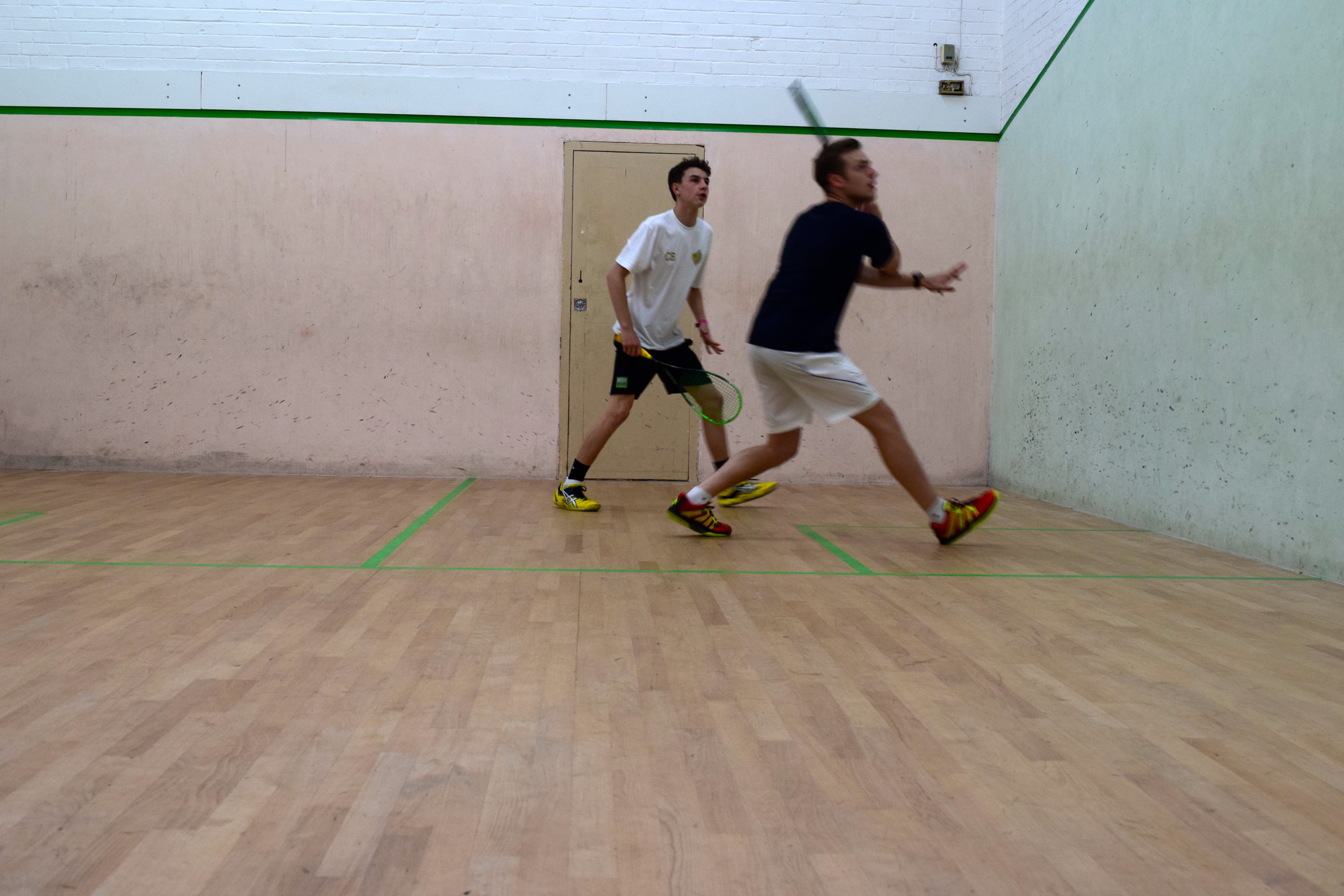
The first thing is to ignore it. Ignore the score. Even the best intentioned of players can start to become sloppy, even while being focused. It’s very easy to drop a bit deeper on the court and hit the ball a bit later and all of a sudden the quality of shot, intensity and movement isn’t there and the other player is closing in. Make sure you focus on putting pressure on your opponent with each shot you play and ensuring that whatever you do, you don’t let your opponent’s shots bounce twice. Always make sure you fight tooth and nail when at match ball – do not let the ball bounce twice. While the ball is in play, your opponent is under immense pressure, so bust a gut to keep your opponent under that pressure as you never know when it might get to them.
Second of all, similarly to what we will discuss when match ball down, you should try to be more disciplined when closing the match out. Don’t attack half-chances or go for short shots unless you are sure it is on and you are in a strong position. This will likely result in you playing a lot more length shots, which is fine so long as you hit them accurately and at a good tempo, which means taking them early where possible and not letting the ball hit the back wall. By doing this, you might even panic your opponent, who at match ball down, might be feeling the need to try something spectacular and so might do something rash out of frustration in response to your disciplined play.
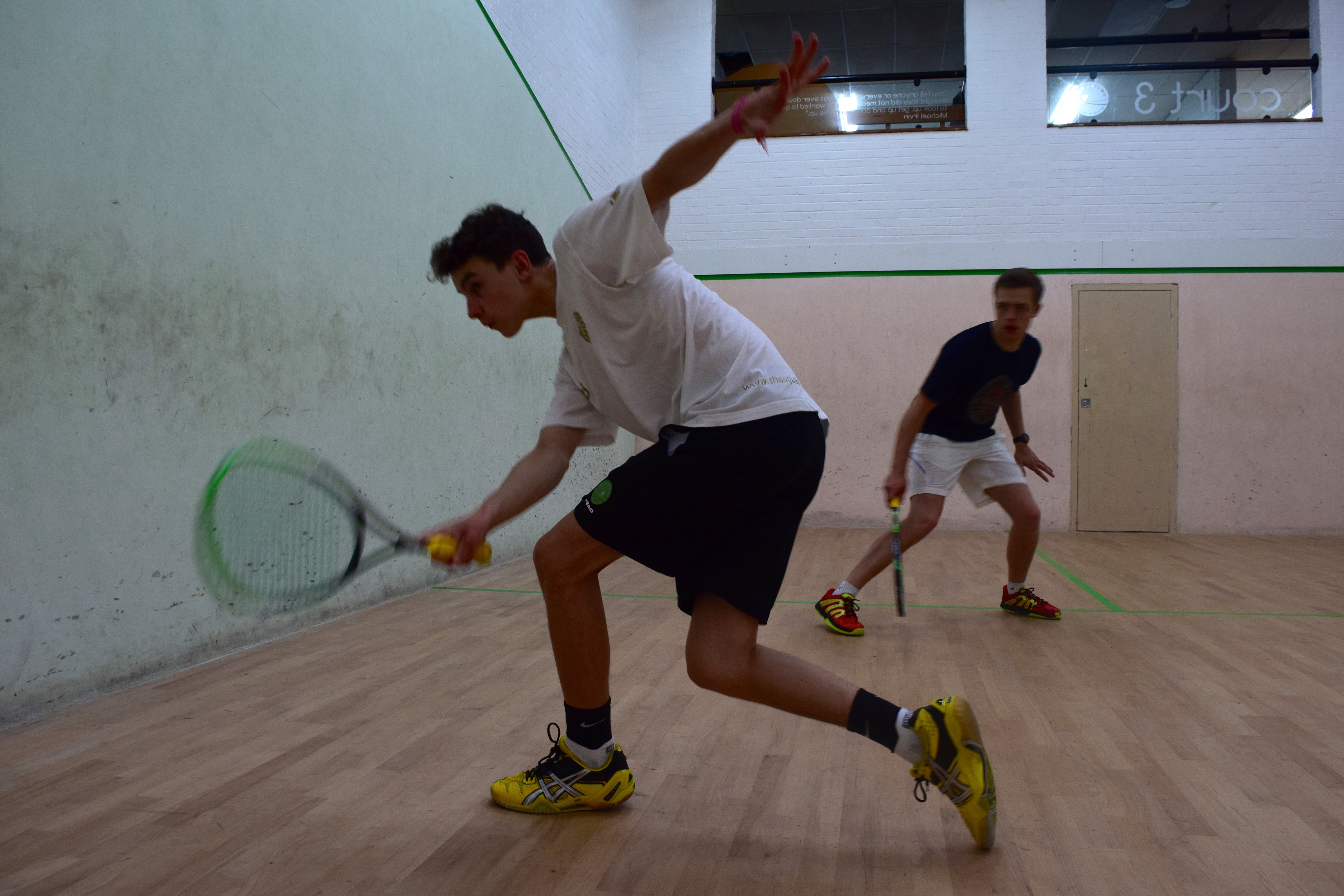
Match ball down

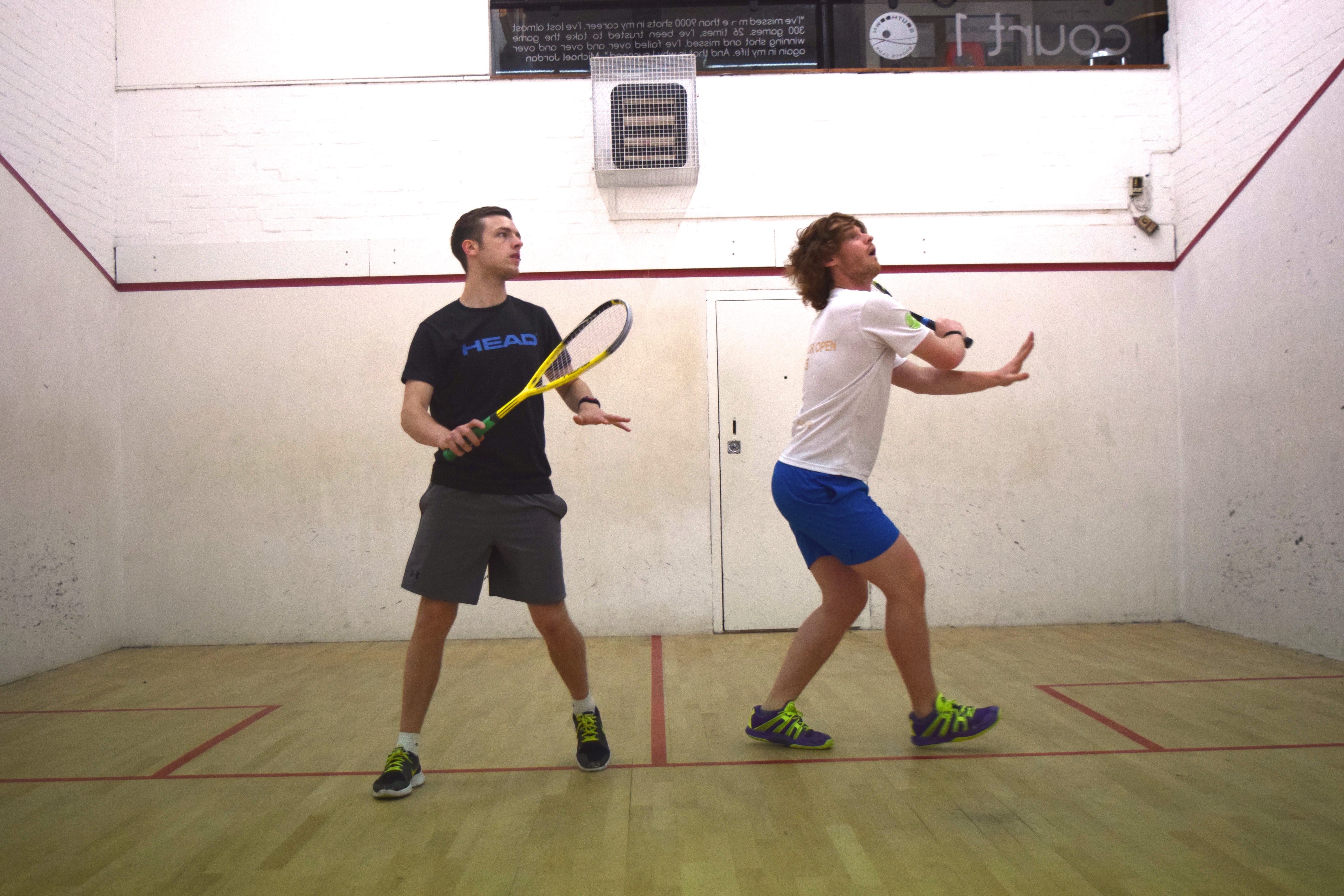
When match ball down, there is an argument to say you should just go gung-ho and spectacular but most comebacks I’ve ever achieved have started, and often finished, with very boring, predictable lengths. I don’t like the idea of playing not to lose very often during matches but at match ball down, it is in my opinion the best tactic. You can make yourself very hard to beat and also really test your opponent’s mindset, as if they’ve lost a tiny bit of focus or are a bit hasty in wanting to finish you off, lots of length shots might make it impossible for them to break you down. This can start to put them under pressure as they start to worry about you catching up, which in turn plays into the tactic of keeping it long, as they may become increasingly edgy and impatient and start attempting shots that aren’t viable.
You need to hit your length shots early though. If you play at a really slow, steady rhythm you can allow them to attack you and give them an advantage. Make sure you try to step forwards and hit the length shots somewhere around the back of the serve box so that you are not only hard to break down, you are also hard to break down at a high tempo, doubling your defences.

Next time you are game or match ball up or down, have a go at the suggestions made here and see if you are able to be more successful in winning these crucial points. Best of luck!
Filed Under: Mental, Tactical, Tips

Tips for playing squash in warmer weather


Four small suggestions for being more effective in the summer.

It has felt like summer is on the way in the last few days and the courts have been warmer and the ball bouncier, which does change the game quite substantially. Below are our top tips on how you can effectively adapt your game for playing squash in warmer weather.

Patience – working your opponent

One of the most important things to remember when playing squash in warmer weather is that very few of your shots will be winning shots. The rallies will typically go on longer as the ball bounces more and so you will need to be more patient in going short; only going for the drop or other short shot when you have a real opening. If you lose your patience and try to force a short shot, you may find that you lose accuracy and the bouncier shot sets your opponent up at the front. Focus instead on really moving them around the court and when the looser ball comes, then go short.


Avoiding the smallest margins

 It can be tempting to start really going for the lowest and tightest shots because the ball is bouncing around so much and refuses to bounce twice, but typically this just leads to an increase in unforced errors, which can be compounded by the heat going to your head!

In any case, with the ball bouncing so much, even your lowest and softest shots might not be enough to win the rally, which means the risk isn’t as worthwhile as it is when the temperature is lower, as the likelihood of reward is less. As mentioned above, I also think it’s very easy to start getting frustrated in warmer weather and allowing yourself to start attempting more and more perfect shots in a quest to make the ball bounce twice or roll out of the nick.

Boasting and killing

I tend to like playing more boasts, kills and stuns than drops when going in short in warmer weather, as I find they sit up a bit less than drops, especially when the boasts are played off just two walls. They also enable you to maintain a higher tempo, which can work well in hotter temperatures as it can work very nicely with the heat to tire people out. You still of course need to go short in order to move your opponent around, so don’t cut out drops completely as no shot moves an opponent to the front quite like a drop.

Using disguise and deception

Another effective way of trying to win rallies and attack in warm weather can be to use more disguise or deception. Typically, the bounces are a bit higher, giving you a bit more time and space and thereby a few more opportunities to disguise your shot – for example lining up as if to play straight and then hitting cross-court. If you are able to disguise your shot and send your opponent the wrong way, you are able to negate the effect of the weather somewhat as they’ll be going in the opposite direction. Of course, if the ball really is bouncing they might be able to still recover in time.

Have a go and let us know below what you think and if you have any other suggestions for playing squash in warmer weather or on bouncier courts.


Filed Under: Tactical

Hitting the ball overly hard and low against good volleyers


Trying something different to gain the advantage

A tactic that has been successfully deployed against me in the past – and which I still haven’t managed to deal with – is to hit all long shots (i.e. drives) excessively hard, as well as low where possible, although the low part doesn’t seem to be a requirement!

A player did this to me after I steamrollered them in the first game taking the ball so early they couldn’t cope with it and they gradually turned the game around. When they were hitting traditional straight drives or playing lob shots, I was controlling the game on the volley. Even when they went short earlier with drops, boasts or kills, I was able to stay in front of them and control the game. The excessively hard drives worked perfectly as the ball was simply too fast and a bit too wild for me to volley. It came off the back wall more than normal drives would have done but this was a worthwhile trade off for stripping me of my volley attacks. It meant he could actually get in front of me, which was also a positive for him as he had a very good attacking volley himself.

Not overhitting the ball

While he was hitting the ball very hard, he was still making sure he didn’t drastically overhit it. The ball was still bouncing before the back wall and was also being hit with a downward angle, which meant he was able to reduce the amount the ball would rebound off the back wall. I had more freedom than I would typically get at the back but I wasn’t able to control the pace of the game as I did on the T-Position. I also typically had to go long from this position in spite of having extra time as the ball came off the back wall, as he was now in front of me and had the pace to get most short shots back unless I made it roll out of the nick!

If you’re playing someone who is exceptional at volleying, this might be a tactic worth trying out. It also just goes to show that sometimes you’ve got to break out of your normal style and perhaps even conventional style to get the upper hand against some types of players.


Filed Under: Drives, Tactical, Volley Tagged With: drives, low drives, tactics, volleys

Use your natural advantages


When I was growing, up a very good player who played at our club was also a great badminton player. He had great ability on the volley and he would be able to pick things out the air, especially lob serves on the cross-court drop volley, which most players had no chance of dealing with. As well as this, he also used his body very well to disguise shots from the front. He certainly wasn’t textbook in many areas of his game but he was very effective.

I distinctly remember him going to get some coaching from a coach in the area to help him get into the over 45’s county team now that he had turned 45. The coach, however, focused mainly on improving his technique and making it more effective in a squash sense.

Whilst he looked more graceful on the court, and some of his drives were more accurate, he lost a lot of his edge and effectiveness. He was now a lot easier to play against and actually suddenly very beatable, whereas before he had been able to take lots of points off the very best at the club and in the county leagues even if he wasn’t as good as them.

I think the coach made a mistake here, because although he certainly improved this player’s technique, he actually took away from his game and his natural effectiveness.

I think any individual style which can provide something different should be embraced. I always encourage badminton players to use their volley skills on the squash court, because they see things and are able to do things players who’ve played only squash are unable to do. The same goes for any unique tendencies too. I know several players who played to a good level with very open stances on the forehand. Typically players are encouraged to face the side wall but these players had great deception and speed by playing facing the front wall, which won them a lot of points.

The only question you have to ask yourself is whether the ‘mutation’ or unique style is advantageous to your game and consistent under pressure. If the style breaks down under pressure, it may be something you have to consider changing or you may need to develop a second option that you can use when your normal style isn’t enough. It is also something for coaches to consider as well; perhaps an odd style is more effective in some instances than a traditional style.

For more thoughts on using or avoiding natural aspects of your game, check out our Squash Player Problems posts for fast players, skilled players and tall players. 


Filed Under: Disguise, Tactical, Tips

Is your length shot coming off the back wall too much?


Allowing your opponent more time and space. 

I posted not too long ago about whether people are actually achieving anything when they try to play a length shot, particularly drives (or rails in US parlance). Continuing with that theme, it’s also vital players monitor their length shots to see if they are coming off the back wall too much.

When the ball bounces off the back wall 

Lots of players overhit their length and allow their opponent a good deal of space and time when the ball comes off the back wall. At worst, the ball should come off the back wall no more than a rackets length, which isn’t as much as it sounds. Even when it is coming off the back wall as much as this though, it allows an opponent increased time to get to the ball, they have to move slightly less and they will also have more room to swing as the ball is no longer trapped in the corner. All of this adds up over the course of a game and leaves your opponent feeling fairly comfortable. Contrast this with making them rush towards the back corner as they know your shot isn’t coming off the back. Firstly, they are rushing, which is physically demanding, especially if repeated. Secondly, because they are rushing, they will tend to have weaker decision making and therefore their shot choices may suffer. Lastly, they are under pressure technically, as they have to find a way to get the ball out of the back with two walls in the way.

Balance between overhitting and under-hitting 

On hot days or with a hot ball it can be tough to find a balance between length and overhitting the ball, as it it is just as easy to under-hit the ball and play a short length as it is to overhit. First and foremost make sure your length shot gets your opponent off the T-Position, which usually means getting the first bounce of your shot behind the serve box. However, be keenly aware of how much your shot is coming off the back wall. Do your best to retain your length whilst making sure the ball is bouncing twice right in or near the back corner. The best way to achieve this is to get your racket above the ball, Amr Shabana style, so that whenever you hit the shot it is going downwards. It might also mean hitting the ball lower or even hitting the ball a touch slower. Usually, accuracy is more important than power when hitting drives, although this is not always the case.

During your next few games, see if your length shots are coming off the back wall a lot and if you can do anything about this.


Filed Under: Drives, Lobs, Tactical, Tips

  • « Previous Page
  • 1
  • 2
  • 3
  • 4
  • 5
  • 6
  • …
  • 10
  • Next Page »


Terms | Privacy policy | Contact | About us
Web Development By S G Barker.