Squash Company

Squash coaching with passion

  • Squash School
  • Blog
  • Videos
  • Shop

Squash Player Problems Part III: Tall player problems 


Making your height work for you.

Welcome to part three of our squash player problems posts! This week we’ll be looking at how tall players can and need to use their height for them in order to be more effective players.

You can see Squash Player Problems Part I: Fast player problems here and Part II: Skilled player problems here.

Controlling the T-Position 

Tall players typically aren’t the most mobile around the court and rarely have the pace of smaller players, so relying on retrieving shots isn’t really the best way for a tall player to go about playing squash.

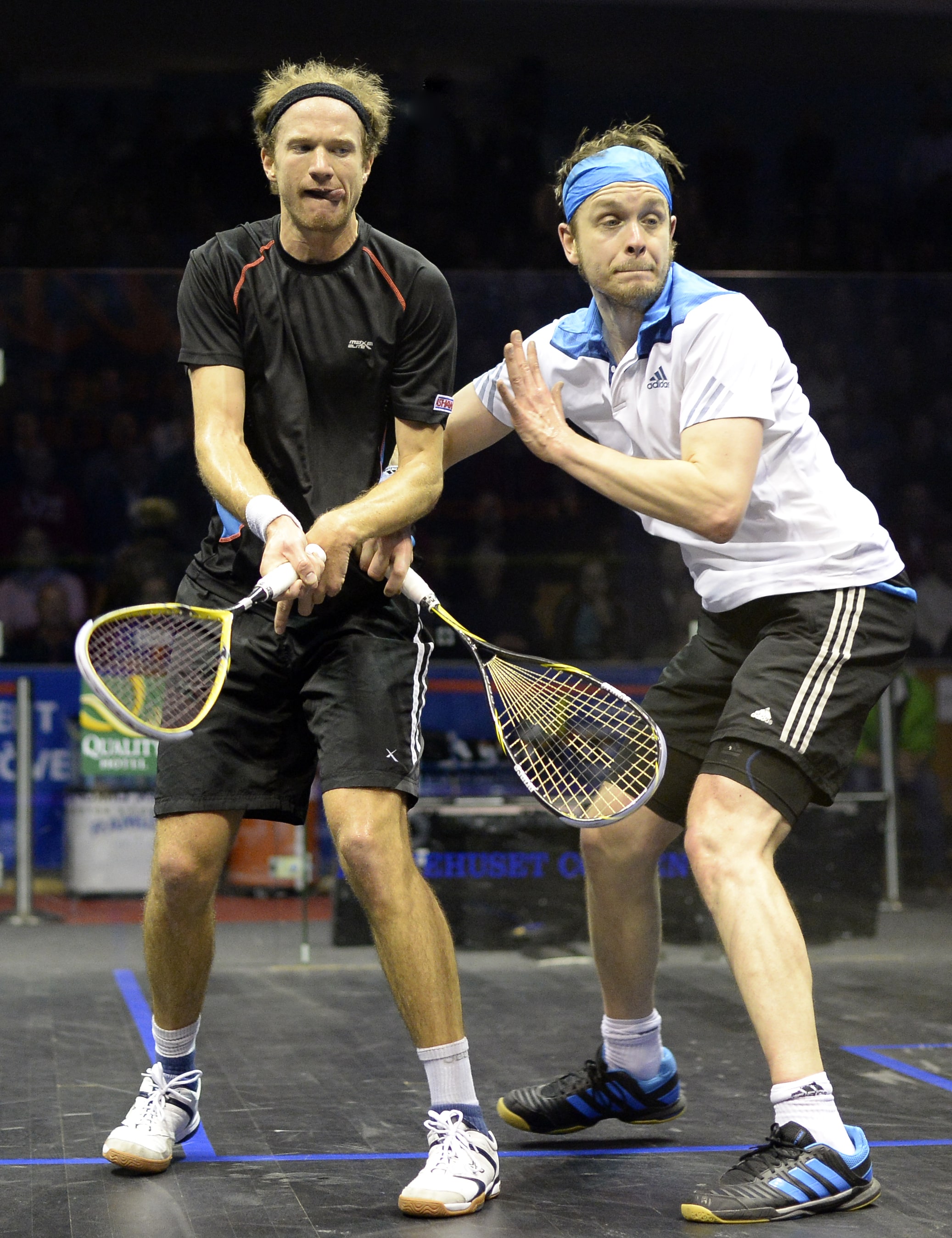
Instead, taller players should look to use their height in order to control the T-Position and the game. If a tall player maximises their control of the T-Position, they can control the pace of the game, volley when they want, dominate the central areas of the court and prove very hard to dislodge.
coppwill-min

Therefore tall players should really work on developing their volley skills and ball control on the volley. If they do this, they can become an immovable object on the T-Position. Everyone has played against someone they found next to impossible to remove from the T-Position. This person can be you if you are a tall player; it needs to be you. Tall players are typically less able to rely on retrieving the ball and using pace to stay in the rally and so must seek to be more proactive in the rally than reactive. Reacting to their opponent’s play doesn’t tend to get the same success as with players who have lower centres of gravity.

If you are a tall player, I really recommend developing your volley lob, which you can use to intercept your opponent’s shots and hold onto the T-Position and the drop volley, which is a really flexible attacking shot you can use without too much risk.

Moving as little as possible 

If you’re a tall player, focus on seeing how close you can stay to the central areas of the court. Test yourself and see how far you can stretch into shots. This will enable you to always be very close to the centre of the court and make it very hard for your opponent to find easy gaps to hit the ball into and therefore very hard for them to make you run.

If you are on the taller side, use your height and reach to your advantage; stretch in as much as possible and volley anything and everything you can. Become an immovable object on the T-Position and do your best not to get into a running contest!

Filed Under: Tactical, Tips

Squash Player Problems Part II: Skilled player problems 


Welcome to part two of our posts on squash player problems! This week we’ll be looking at how skilled players need to handle their ability. Is it possible for a player to have too many options and too much skill?

You can see Squash Player Problems Part I: Fast player problems here. 

Skilled player problems 

I suppose it’s a luxury problem to have, but quite often players with great ball control or racket skills go through phases (sometimes never overcoming these phases) where they play very erratically, as they have so many options on the ball. Their attacks and play can become a bit scatter-gunned and their general play loses focus, which leads to them never really building pressure consistently or putting the finishing touches on their build-up play. Although this can result in a spectacular winner, more often than not it results in giving loose balls to the opponent or letting them back into the game. These are skilled player problems.

Keep it simple and be decisive

One thing players with lots of shot options can find is that because they always have plenty of options, they often neglect to play the simplest and most effective shot. Players should always look to be creative and adventurous in their play, but sometimes this can translate into trying to be over-elaborate when a simply drop would suffice.

DSC_0008-min

I’ve been guilty of this plenty of times before and often tried to be too clever, only to find my opponent wasn’t smart enough or quick enough to fall for my trap! I frequently find this happens when an opponent has played a long cross-court shot from the front corner and I’m ready to attack it. Rather than going for the simply straight length, I’ve often attempted a cross-court shot thinking that it would catch them out and send them the wrong way as they moved back to the T-Position. Instead, they’re usually too slow in getting back to the T-Position and so the cross-court goes straight to them.

If there’s an obvious opening, you should just go for it. It’s easy to overthink things or get carried away with options and bluffing or even double bluffing. Try to be instinctive and pick the shot most likely to make them run.

The beauty of morning squash 

One thing you can do is to play more in the mornings. I hate morning squash personally, but it is very effective. You have to be much more instinctive, as your brain just isn’t as awake as it normally would be later on in the day. In many ways though, this is a good thing as it means that annoying know-it-all voice in your head is quiet.

If you find that you aren’t playing instinctively or have a lot of control over the ball but aren’t able to apply much pressure to your opponent, some regular morning squash could help develop your play.


Filed Under: Tactical

Squash Player Problems Part I: Fast player problems 


Using your pace to attack and not to retrieve. 

Welcome to Part I of our series of posts on ‘Squash Player Problems’. You can find Part II: Skilled player problems here and Part III Tall player problems here.

Everyone would love to have Usain Bolt style pace around the squash court. Whilst no one is probably quite on Bolt’s level, a lot of people are very fast round the court. This of course can and should be a good thing.

As we saw in our previous Squash Player Problems post on ball control, sometimes a great strength can become a weakness if not used in the right way.

Defending with their pace and not attacking 

A lot of fast players get so used to using their pace and speed, that they often stop using it proactively and use it reactively to get out of sticky situations. They don’t necessarily develop the same level of positional play as a slower play would, as out of necessity the slower players need to make sure their positioning is spot on as they are less able to rely on their pace to recover a bad situation.

DSC_0152-min

When fast players stop behaving proactively, they can make it easier for their opponent. Rather than using their pace to move onto the ball and attack it quickly, they tend to start using it simply to retrieve the ball and defend. They then find themselves doing an awful lot of running, which can be effective in some matches but not so often against better players. You are essentially relying on them not being able to finish the rally off or trick you with clever play. Fast players can easily end up becoming players who just defend and retrieve if they are not careful and then end up doing so much running that they get tired quicker than their opponent.

Using pace to attack

Having pace is a great offensive weapon, so make sure that you use your pace to step forwards and take the ball earlier, taking the ball before the back wall and even stepping forwards for the half-volley when you are on the T-Position. By using your pace in this manner, you will be able to take control of the match. Attacking with pace will take away time from your opponent and put them under immense pressure, which is better than relying on them to not be able to hit a ball you can’t return.

If you are a fast player, see if you are using your pace to attack or if you are using it simply to bail you out of trouble and retrieve your opponent’s shots.

Look out for Part II of our series of posts on ‘Squash Player Problems’, where we’ll look at ‘Tall Player Problems’.


Filed Under: Tactical, Tips

How do you create gaps on the court to hit the ball into?


Using the four corners to create gaps.  

We’ve discussed in a previous blog the importance of using the four corners of the court for defensive reasons, where you seek to stop an opponent’s attack and stop running by getting the ball to one of the four corners.

Today though we’re going to look at using the four corners as a means of building attacks, which perhaps suggests that you should build all of your rallies on shots to the four corners!

Disciplined attacking

I’m all for attacking squash, as you may have noticed on this site, but the key is to be disciplined when attacking and only go for the real attacking shots when the opportunity arrives and you’ve built up pressure. The opportunity might come when returning your opponent’s serve or it might not come until the hundredth shot of the rally. The important point is that it must be at the right time, which is when you are in a strong position and you have worked or been gifted an opening.

In order to create these opportunities and gaps on the court which you can exploit with your attacking shots, you should look to attack the two back corners and the two front corners. When I say corners in this instance I mean deep in the corners. Reaching the front corners would require soft drops or drop volleys and not kills or stuns or overhit drops. The same goes for the back corners; you need to achieve good length with your lobs and drives which actually get the ball right into the back corner on the second bounce.

DSC_0169-min

If you attack these four areas of the court, primarily using straight shots, you will tend to force weaker shots from your opponent if you’re accurate, especially if you keep your play simple and just keep hitting the ball away from your opponent. Once you’ve drawn out a weaker shot, you can then attack with a variety of other shots. By attacking in this way, you are also covering yourself defensively, as it’s very hard to attack shots in the four corners and so your opponent will have far fewer opportunities to attack you. It’s when we play loose shots, particularly weak cross-courts or ambitious mis-timed attacking shots, that we tend to lose rallies as we give our opponent the opportunity to attack. By following this disciplined build-up, hopefully you can restrict their opportunities while working your own.

If it’s on, it’s on

Just to reiterate – if you get the chance to attack you should take it. If your opponent leaves a gap for a boast, you should play a boast. However, over the course of games and matches, try to build your attacks primarily using the four corners so that you consistently force weaker shots from your opponent, whilst simultaneously preventing them from getting too many opportunities to attack as your shots will all be in the very corners of the court.


Filed Under: Mental, Physical, Positional, Tactical, Tips

How to stop running


DEFENCE! DEFENCE! Using the four corners to stop running around.

The most dangerous position in squash to be in is running around the court, desperately retrieving the ball whilst your opponent stands around and keeps moving you.

It can get seriously out of hand and usually results in you eventually not being able to reach a ball or causing you to making an error. Occasionally, an opponent will be a bit casual or over-eager and make an error, so you should always try to keep the ball up one shot longer, but you’d of course rather be the person standing around than the one doing the running.

Breaking out of the vicious cycle

This sort of rally can become something of a cycle. Once you start running, it can be hard to stop running. This is because your opponent has found a gap on the court between you and the T-Position and they’ve played the ball into it, which has caused you to run more than normal. As you’re running quite a bit, it’s likely your shot will be weaker than normal as the pressure may well affect your technical and mental ability, resulting in weaker shot selection and execution. Of course this then allows your opponent to apply further pressure as the gap between you and the T-Position widens even more, further impacting your shot selection and execution. If you’re fit, you may find this process going on for some time as you fight desperately to survive.

DSC_0256-min

The four corners

The main reason this running cycle is able to continue is because people start playing poor squash under pressure. Most of the time, a bad shot choice is made and then the shot is also poorly executed, which is understandable given the pressure. The worst thing you can do is play the awful cross-court or smash shot that most people attempt to play, which just gives the ball right back to the person making you do all the running. Instead, you need to try and train yourself to produce an almost automatic shot choice for these situations where you aim to get the ball deep into one of the four corners.

In my opinion, the best shots in this situation are the straight drop or a lob shot. The lob will give you time to get back to the T-Position but frequently people are unable to execute it well or the pressure is so great it’s very hard to execute well and so the lob ends up being a feed for the opponent to volley. The straight drop in my opinion is the best option, especially if your opponent is behind you, as it is a counter-attacking shot. If you feel the ball into the front corner, they then have to effectively trade places with you while you can get back towards the middle. The pressure is now on them.

The lob is a great option if they’re high up the court and so vulnerable to a lob if you do have the ability to get your racket under the ball and therefore play a good lob. If you aren’t confident in your lob, I suggest you practice it but make sure this practice is pressurised and not easy to reflect the situation where you’ll need it most.

When you’re in your match, see if you can break your opponent’s attacks up by playing into the four corners, particularly with a straight drop or lob shot, and prevent yourself running around like a headless chicken.


Filed Under: Physical, Positional, T-Position, Tactical, Tips

  • « Previous Page
  • 1
  • …
  • 4
  • 5
  • 6
  • 7
  • 8
  • …
  • 10
  • Next Page »


Terms | Privacy policy | Contact | About us
Web Development By S G Barker.