Squash Company

Squash coaching with passion

  • Squash School
  • Blog
  • Videos
  • Shop

Playing against big or tall players


The low to high tactic. 

If you find yourself up against big, tall rangy players there are different things you can do tactically to try and spin things to your advantage.

Sure tall players can dominate the T-Position if they’re good on the volley and reach the front and back of the court with a few effortless strides if their movement is good. There is no shortcut though for them in bending down low, especially if they then have to reach up high again after.

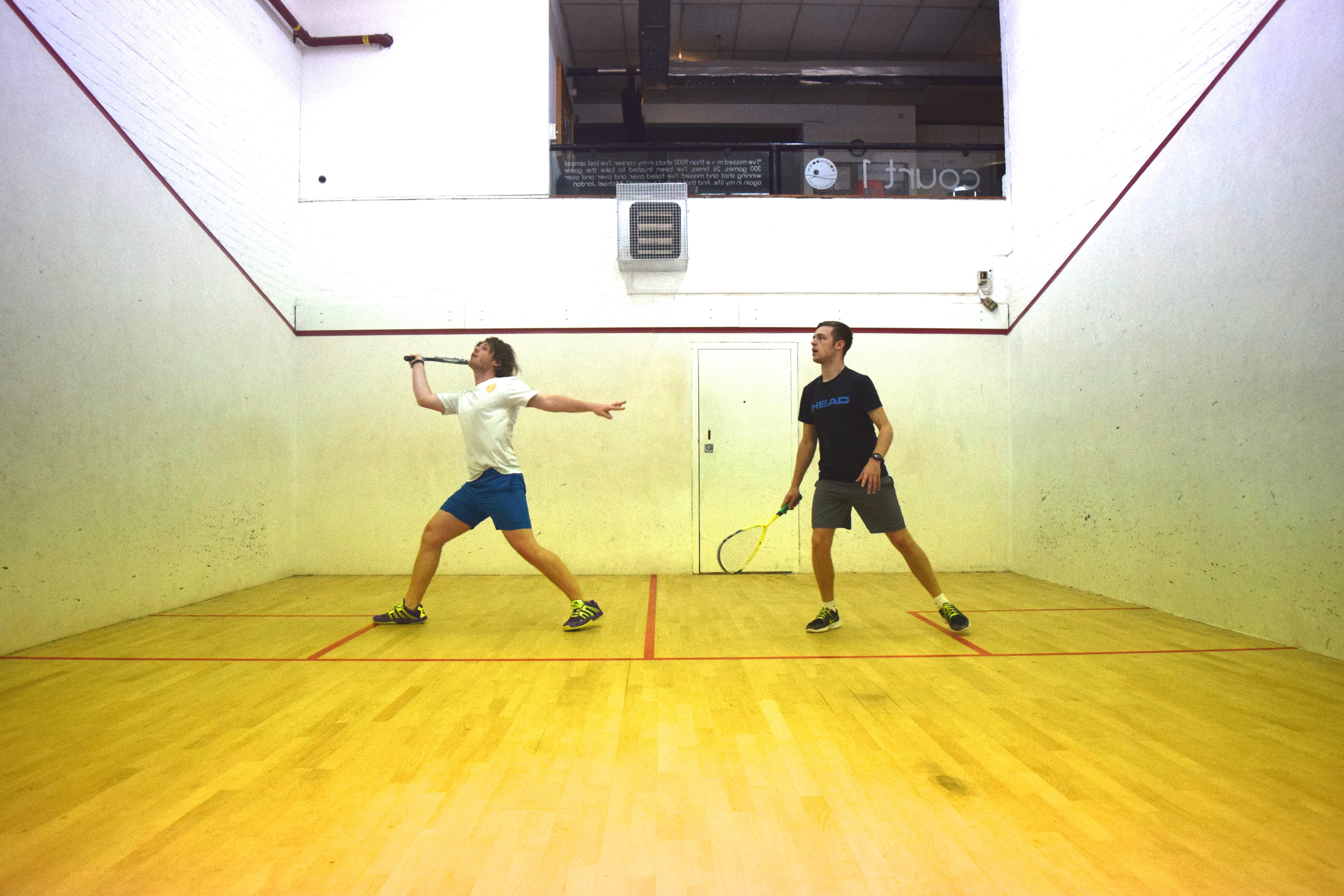
A good tactic for testing taller players is to play a high shot and then a low shot and vice-versa. Try abandoning all middling height shots and aim to use only the lower and upper parts of the front wall. By doing this you can force your taller opponent into a cycle of constantly bending and stretching, which can be very tiring and tough on the legs. The best combination of shots to use is going in short with a drop, boast or kill and the following up with a lob.

Clearing the ball

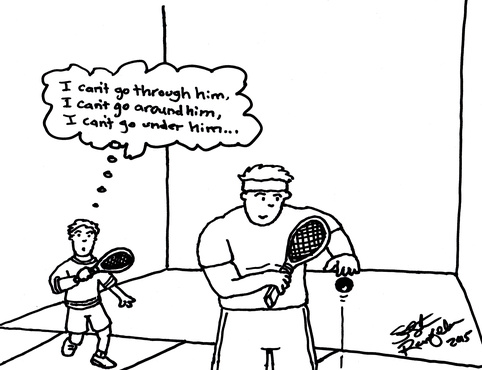
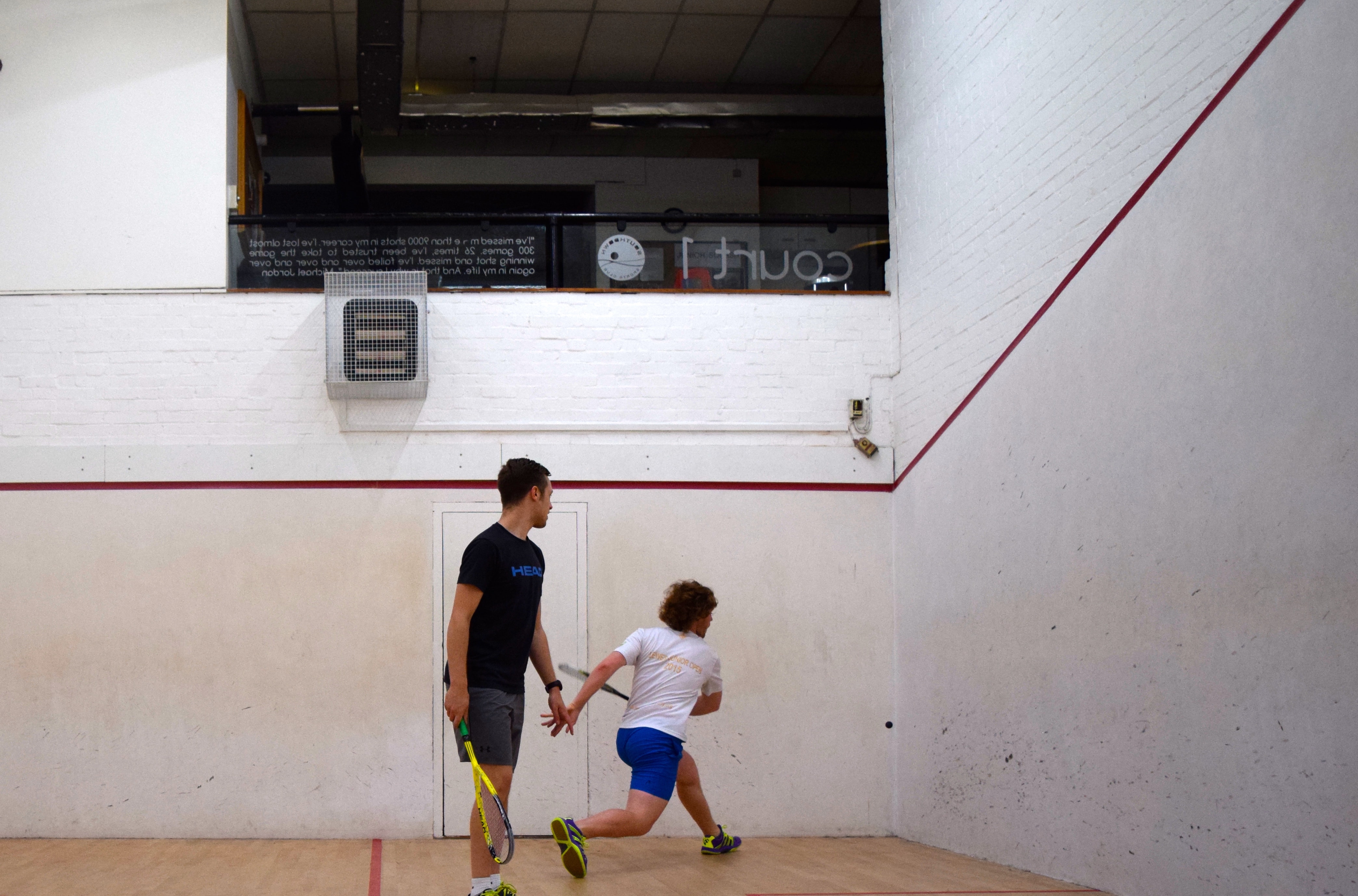
It’s not uncommon for tall players to get in your way as they clear the ball and return to the T-Position after playing their shot. If they are in your way and blocking your path to the ball, do not be afraid to call a Let-Ball no matter what their size. A lot of players will attempt to play on as they are scared to call a Let-Ball and end up being bullied off court. This is not to say you should beat them by calling huge amounts of Let-Balls to disrupt play, but that you shouldn’t be afraid if you are genuinely unable to get to the ball cleanly, even if it happens a lot during the course of a match.
How to use your body for deception

Seeing the ball 

At times, you might actually have problems seeing the ball due to them clearing the ball badly or just in general due to their size! This can often be intentional though, as players can use their body to hide their intentions and disguise what shot they will play.

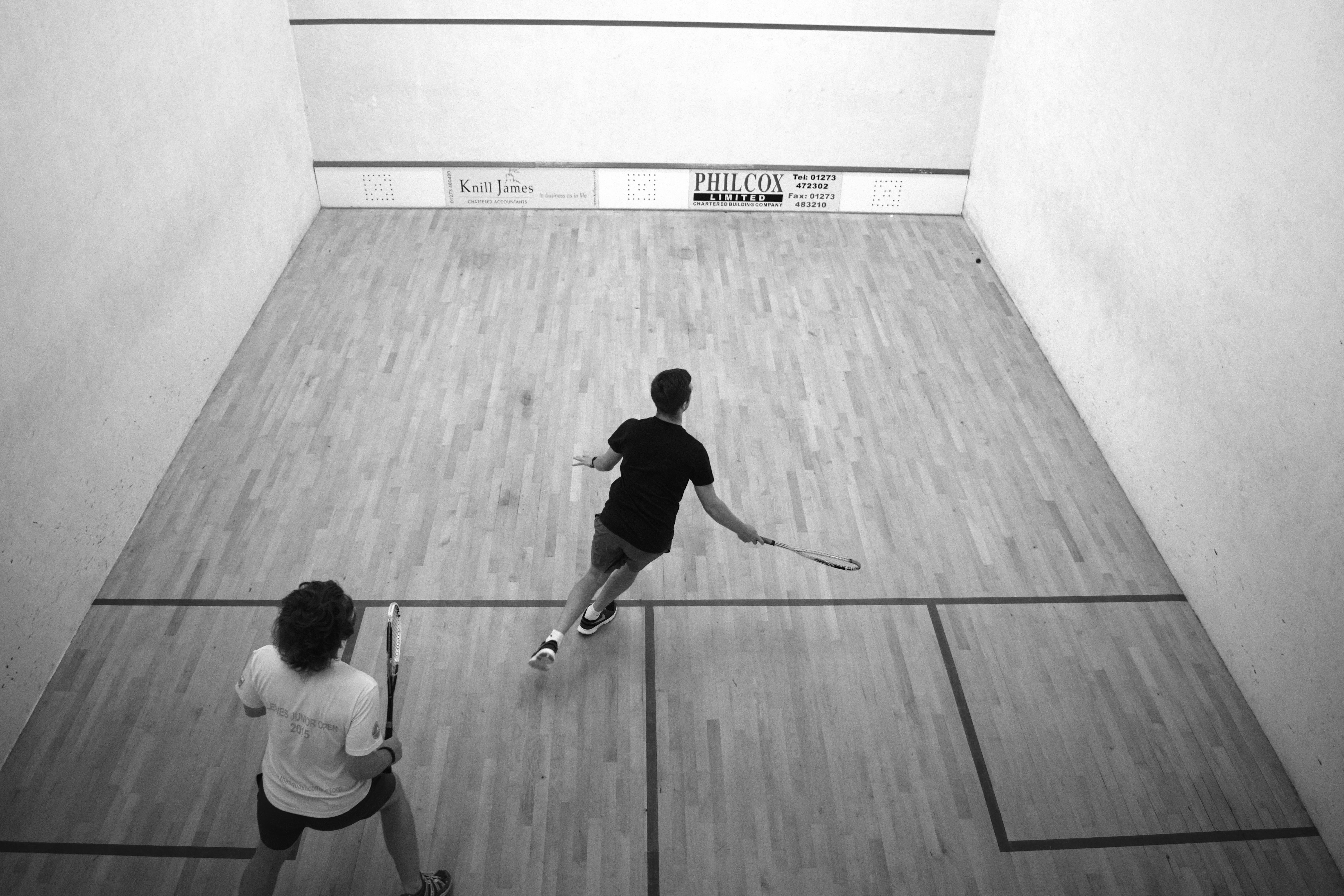
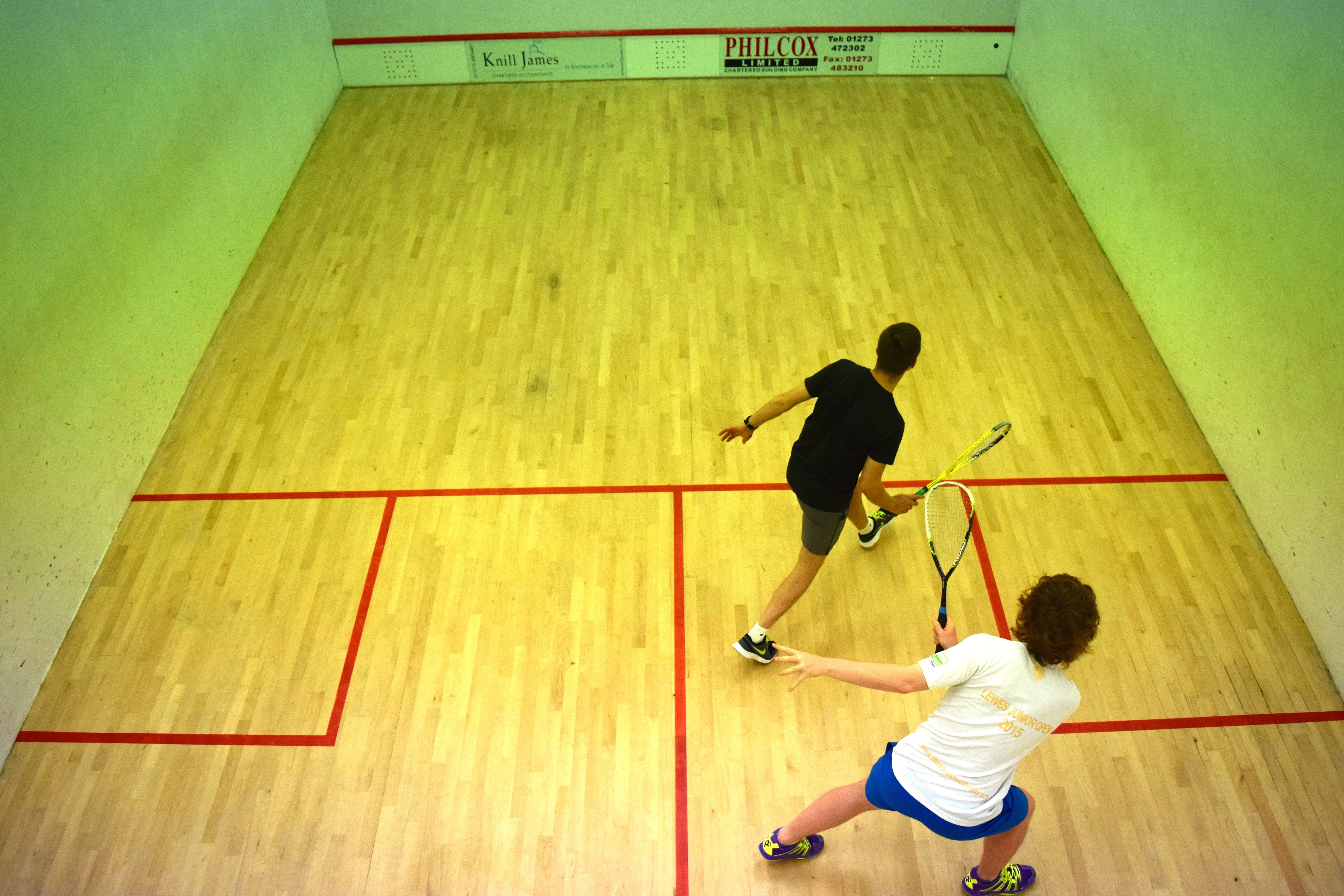
However, if you’re doing the right things you shouldn’t have too many problems too often seeing the ball. If you are moving them around and getting them off the T-Position, you should generally be able to see the ball. A lot of the time tall or big players are difficult to get off the T-Position, so your shots have to be good to move them away from it, especially as they’ll be aiming to stay there to maximise the use of their reach. If your shots are loose or into the middle, they will quite literally be able to swat them away easily.

When you next play the big player, see if you can work them hard with the high then low tactics, but make sure you move them around enough to prevent them hogging the T-Position and using their body to disguise their shots.
Filed Under: Mental, Tactical

Thinking ahead to your next shot. 


Looking for combo moves. 

In some sports you can think several shots or plays ahead but in squash this just isn’t the case. It’s a continually evolving game and the field is constantly changing. Even your best laid plans will need to be constantly adapted depending on how the game is unfolding and there are so many variables. One thing you can almost always do though is look ahead to your next shot based on the previous one.

Did you limit your opponent’s options? 

Anticipation isn’t an exact science. It requires you to watch the ball and the opponent and then your subconscious to instantaneously consult all of your previous experiences to create an idea of what is coming next. The result is a sense of knowing or an instinct of what will happen next.

You can also get an idea of what is coming next based on what options your opponent has available to them. Hopefully, you’ve limited their options with your previous shot, which is the key to allowing you to think in combinations of shots. If I’ve played a tight accurate Drop Shot, I can be fairly sure my opponent is not going to be able to hammer the ball deep to either side of the court. They might attempt it but it is unlikely to get to the back of the court if my ball was tight. Realistically, they’ll be forced to Counter-Drop me or if there is a bit of a gap between the ball and the wall, Lob me. I can use this information to consider my next move. With their long options reduced, I would push high up the court. If they play a Drop, I’ll be there for it. If they do go for Length, it is unlikely they’ll be able to play a great shot and so I’ll be ready to intercept and Volley any loose Length.

DSC_0357-min

Perhaps you’ve played a good Lob Serve and your opponent has let it bounce in the back corner and it’s not coming off the back, so you can push forward knowing they’ll realistically have to either Boast it or dig it out with a weak Lob which you can Volley. The potential scenarios for working out combination plays are plentiful!

Thinking in Combinations

As previously mentioned, it’s the combinations you should be looking for – they come in twos. Long then Short, Straight then Cross-Court, short then long are all simple but very effective examples of shot combinations you might look for.

See if you can string two shots together to make your opponent work hard and where possible, calculate their options so that you can make your combination play stronger and more effective.


Filed Under: Mental, Tactical, Tips

What to do when you can’t run…


There’s always a time. 

I played a match this week when I was recovering from injury and probably wasn’t really fit enough. I don’t recommend playing when you’re injured in the slightest. I’ve done it before and paid, and you will too if you do it. It may seem brave but when you play on through injury, there is a good chance you will make it worse and be out injured for longer.

If you can’t run for other reasons i.e. tiredness, lack of fitness or your opponent is a lot fitter than you, here’s what you do:

The Three Shot Rally Rule 

The last thing you want to do is get caught up in long rallies when you’re tired, so you should aim to change the rules of engagement; try to make the rallies end within three or four shots. This doesn’t mean aiming to outlandish winners from your opponent’s serve or aiming to hit amazing trick shots, but to make sure that every shot is geared towards winning the rally. Every shot should be attacking – your Drives should be low and bouncing twice before the back wall, you should continually look to twist and turn your opponent and you should take any opportunities to go short. Whenever you get an opening or an opportunity, don’t hesitate to take it, even half-chances. If you’re wanting to win still you’ll need to play to win so you’ll need to take a few chances.

Breaking your opponent’s rhythm

Playing three or four shot rallies will upset the rhythm of most players anyhow but it’s worth also doing other small things where you can to break your opponent’s rhythm. By this I mean stopping them getting momentum or getting a run of points. If they do this, it’ll be hard to peg them back if they’re in better shape than you.

photo new -min

Increased importance of Serve and Return

Serve and Return is a big opportunity to stifle their momentum. Try to vary your Serve frequently. Throwing in a few awkward Body Serves is certainly recommended, as these are good for unsettling your opponent. I said earlier that this style isn’t about going for amazing winners on your opponent’s Serve but it is something to consider from time to time. If your opponent has just won the Serve, it can be very effective to go for a Straight or Cross-Court Drop Volley to try and stop them before they put together a sequence of points.

Try out the Three Shot Rule strategy and see how it works for you. It’s a style and tactic worth practicing, as some day you might need it if you come up against an opponent who is a lot fitter or you’re playing your fifth match of the day.


Filed Under: Return of Serve, Serves, Tactical, Tips

Following up short shots from the back & taking the vacant T 


Going short to go long. 

Traditionally the best way to get the T-Position back from an opponent has been to play to length. However, it can also be beneficial to go short before you go long for variation and also to counteract certain styles of play.

This is a tactic that was used to really great effect by James Willstrop in his recent match against Mohamed Elshorbagy https://www.youtube.com/watch?v=r2USpFYYlGQ at the 2015 World Championships where shortly after recovering from his hip problems, he produced a tactical master class to outwit Elshorbagy in the 3rd round.

Taking away options in the middle of the court  

Part of the reason Willstrop went short from the back regularly (I presume – I’m not privy to his tactical and coaching discussions) is that it can be really effective against tall players, players who are very good on the volley and attacking the ball early around the middle of the court especially those who enjoy chopping it downwards. When you go short from the back, you deprive them of a length shot to intercept and you can force them off the middle. Elshorbagy is also very dangerous at chopping the ball downwards, so with the ball already being very low, it limited his options and denied him some of his favoured attacking shots.

When you’re playing a player who is very good at attacking around the middle of the court, this might be a way to turn the game on them.

DSC_0154-min

Following up a short shot

The way to make it really effective though is to make sure you’re pushing up high onto the T-Position, which hopefully your shot has forced them to leave, and looking to attack their next shot. The ideal scenario is for them to return your attacking boast, kill or drop from the back with a weak length shot, which you can pick off with a long volley and thereby force them into an end-to-end sprint.

More composed players may respond by going short or even lobbing the ball to try and deprive you of the volley, so you need to make sure you are on the T-Position with intent so that you can cover the short shot and still move back to cover a good lob or length shot if required.

The bottom line is when you go short from the back, follow it up and push high up the court looking for scraps to feed off. Much like a poacher or striker in football following up looking for a goalkeeper to spill the ball, you need to be pushing up, hunting for any sign of a weak shot you can attack and push to length to get your opponent moving up and down the court at speed. There is nothing worse than playing a great short shot and forcing a rushed return from your opponent, only to be too far back to take advantage of it.

Have a go no matter who you’re playing against. Short and long or long and short is the most simple but effective tactic in the game and this idea of going short first can be useful against any player. If you are playing someone with good ability on the T-Position or taking it early, it’s something to try in order to snatch back control of the middle.


Filed Under: Boasts, Drops, Kills, Stun, Tactical, Tips, Volley

Changing the pace of the game


For tips on playing at a higher tempo, check out our post on it here. 

Changing the pace of the game is among the trickier squash tactics to execute. It’s not easy to achieve the composure and ball control required to suddenly go from playing shots at one pace to playing a completely different type of shot. It is however really effective in disrupting your opponents momentum or when you need to change the game up to keep your opponent subdued and yourself in pole position. It can completely ruin your opponents rhythm and cause them to make mistakes, play weak shots and become frustrated. All of which will increase the number of opportunities you get to attack the ball and increase your points tally.

Playing your opponent’s game 

The pace of the game is something that a lot of people find very difficult to be consciously aware of while playing. Players can go through a whole game or even match without realising they were smashing the ball needlessly and overhitting their shots.

Worse still, many go through matches not realising that they have just played at their opponent’s pace the entire time, which is rarely successful. This is particularly common when first learning the ropes of matchplay at a decent level and finding yourself on the receiving end of inexplicable defeats from men old enough to be your granddad. You tell yourself you’re definitely the better player. You’re quicker, faster and have better technique and yet somehow they spring a lucky victory on you. Most of the time it is because they will play at a slower pace, knowing full well they could never hope to take a younger player on in a contest of pace and power. Without realising, you have slipped into their universe and responded in kind, returning their tricky boasts and drops with boasts and drops of your own and then you’re trapped in their game. You have become part of they reality.

In this situation, the best thing to do is to obviously increase the tempo and the intensity to make it harder uncomfortable for the slower paced player. This can at times be easier said than done, admittedly, as the ball gets colder and you struggle to get warmed up.

Changing the tempo 

There are many ways in which to increase the tempo. It doesn’t necessarily mean hitting the ball harder, although this is of course one way of doing it. Hitting the ball harder can sometimes even make matters worse if the shots are hit loose, as often happens when trying to speed up play. The best way to up the intensity is to simply take the ball earlier. Push up the court and take the ball on the volley or half-volley, move onto the ball like a rash as soon as it has bounced and don’t let it near the back wall. When you’re seeking to change the pace, the shots you play are not as important as when you play them (although they are of course important in that they need to be of reasonable quality and not hit straight back to your opponent…). All this is reducing the time your opponent has on the ball and if they like to play at a slower pace, they will usually also like a good portion of time. Take this away from them and you can turn the match.

DSC_0373-2-3-min

Conversely, if you find yourself up against a player who plays like the cartoon character Taz from Tazmania, and the ball is flying round the court, you could look to slow the pace rather than jumping feet first onboard the runaway train that is their game. This can be incredibly effective at earning a succession of quick points, as players who play at a very high pace often find it difficult to handle shots which don’t have a lot of pace on them. They struggle to deal with shots which fade in the back corners, such as lobs, and that fade in the front corners, such as drops. It is perhaps bordering on unsportsmanlike but you could also take just a little longer between points and when you get the serve, just to really draw the sting from your opponents momentum.

Make sure that you change the pace to peg back your opponent. It could be when they’re on the ascendancy or to snatch back a point if your opponent has the momentum and it could be when you need to change your tactics to make sure you stay on top. Whenever it is, there are few better ways to turn games on their head.

For more tips on playing at a higher tempo, check out our post on it here.


Filed Under: Tactical, Tips

  • « Previous Page
  • 1
  • …
  • 5
  • 6
  • 7
  • 8
  • 9
  • 10
  • Next Page »


Terms | Privacy policy | Contact | About us
Web Development By S G Barker.