Squash Company

Squash coaching with passion

  • Squash School
  • Blog
  • Videos
  • Shop

Bending your knees properly for lob shots


Getting underneath the ball to reach high levels of quality consistently.

Playing lobs in squash is is important but it can be tricky to keep lob shots from going out or coming off the back wall, especially when the ball and or court is warm. Lob shots, particularly straight lobs, can have quite a small margin for error, although this is mostly because people don’t prepare to play lobs correctly!

Getting underneath the ball

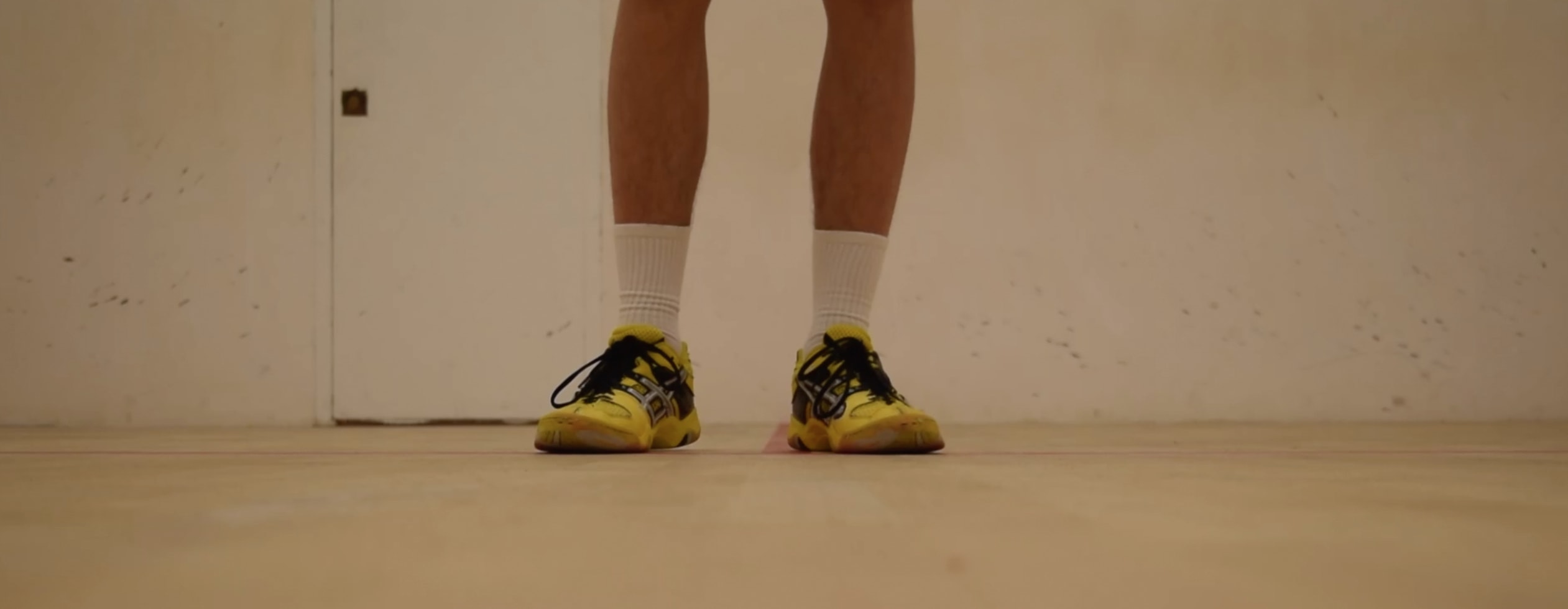
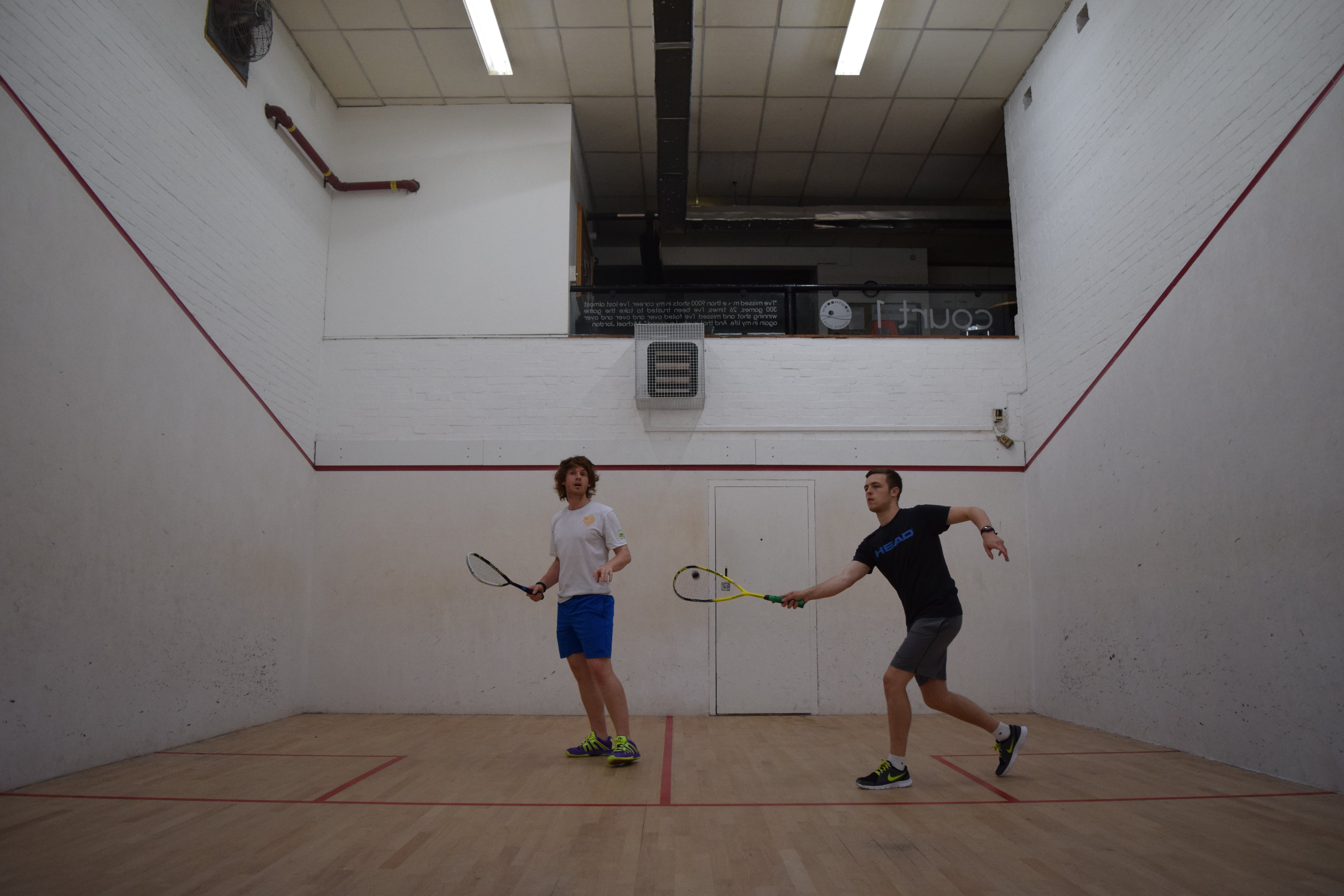
It’s important when you play a lob shot, and indeed many shots (especially the drop), that you get low. When playing a lob, you want to be able to hit the bottom of the ball, as this makes it easier to lift the ball and hit the top area of the front wall. In order to do this, you need to really bend your knees and drop your hips. How low you need to get depends largely on the bounce of the ball but you need to get into a position where you can easily get your racket underneath the ball and hit the bottom of it. If the ball or court is warm, you might not tend to drop your hips or bend your knees all that much to get under the ball but if the ball hasn’t got much energy left on it and is about to bounce twice, you might need to be squatting like people do in the gym.
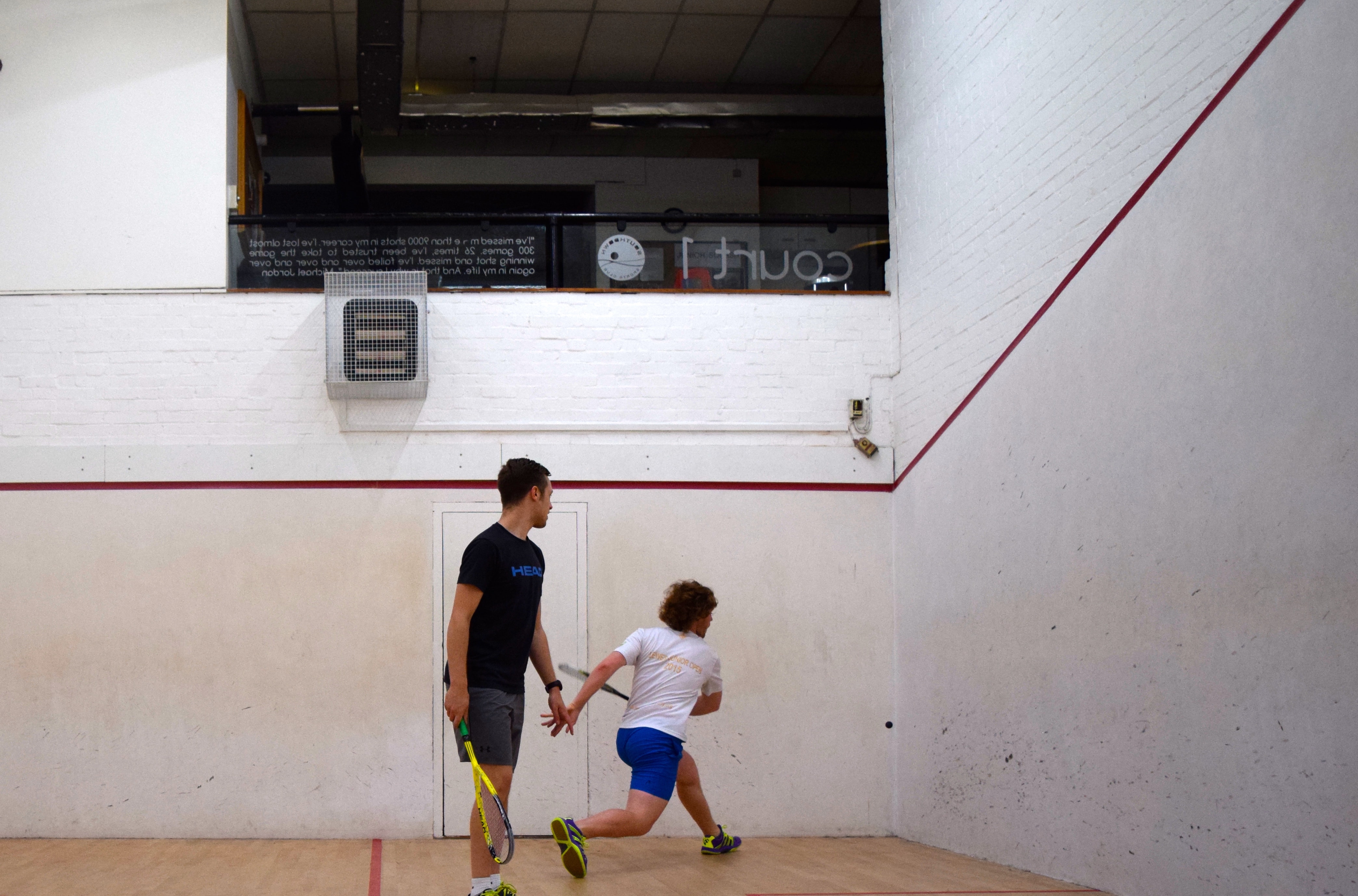
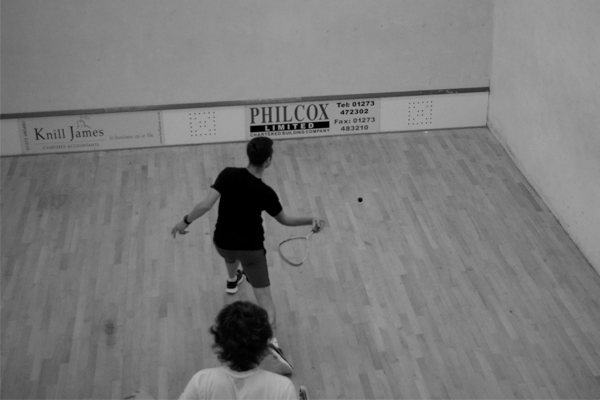
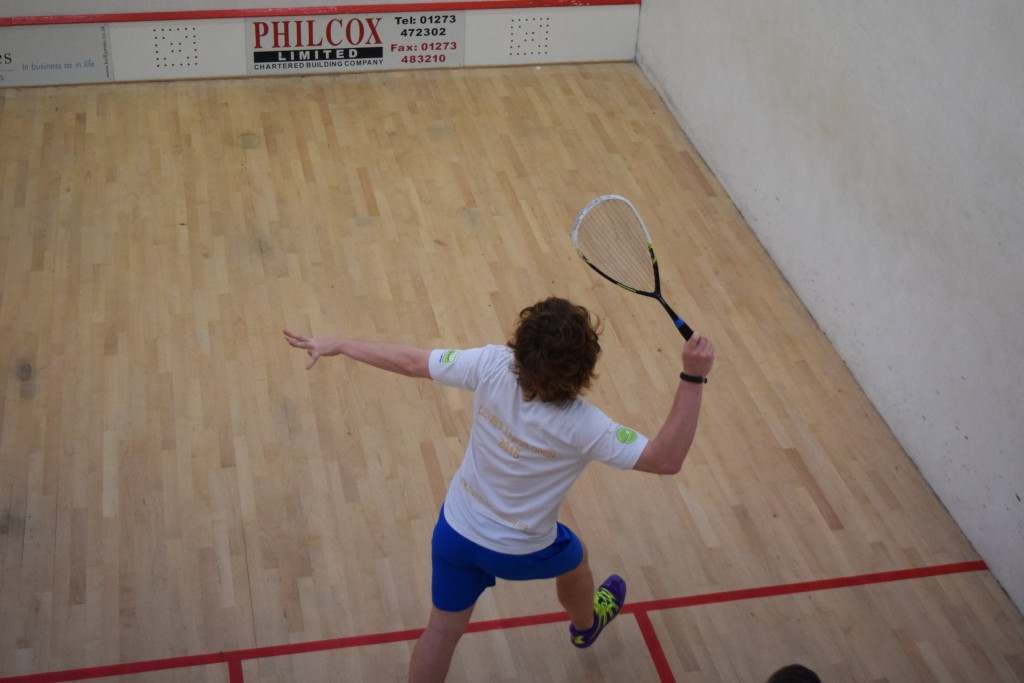
A lot of players will attempt to simply dangle their racket down while remaining fairly upright, which isn’t a recipe for consistency in high quality lobs. Of course dangling your racket will get a few reasonable shots and you may even strike the ball well by doing it, but to achieve the top range of accuracy and the perfect pace – hitting the lob slow and very high on the front wall and very tight to the side wall – you need to get into a low, balanced position.

It’s a really easy thing to practise too as you can do it during the knock-up or warm-up before the match, which is good not only to get some practice in but also for getting you to use your knock-up purposefully by practising hitting shots of different paces and heights, which is particularly good for getting you focused.

If you have problems keeping lob shots in or getting them to the required quality to be useful in your matches, check how low you are getting and start by practising this during the warm-ups before your matches!
Filed Under: Lobs, Technical

Alignment between feet and racket


Your shot must follow your feet.

Footwork is often the root cause of unwanted shots. If you don’t get your feet in the right place, any racket skills will count for little and you can find your straight drives bouncing off the side wall first and various other shots behaving badly. Perhaps more importantly, if you end up with your feet in a less than perfect place – which will happen frequently – work with this and don’t try and do something silly like smashing the ball.

Trying to get the feet in position

People will often try to go for shots that their feet simply haven’t put them in a position to play and this usually leads to mis-hits or unintentional shots. It is perhaps most common in the back corners of the court, where players are unable to get around the ball, and therefore get their weight behind the ball, which often means the shot is lacking both power and control. The ball often ends up in the middle via the side wall through being under-hit.

Whenever you go for the shot, first make sure you sort your feet out. You are always aiming to get as much of your body weight as you can into your shot, which might mean moving quickly to get your body behind the ball, preferably with your feet pointing straight towards the side wall so that you can get all of your bodyweight behind the ball.

When it isn’t possible to get around the ball or have your feet pointing straight towards the side wall with the body in a side-on position, you may need to try leading with your back leg or use a small jump or hop to generate momentum.

When you try your best but you don’t succeed…

Sometimes you just can’t get your feet into the position you desire no matter what you do and in these situations it is important to make sure you accept the position you are in and be realistic about your options. Don’t try to go for a normal shot if you are in a difficult position, instead try to play a shot that will help you get out of this position. The most common shots to play in such a position are the boast or lob, with the lob being the preferred option. The lob gives you a better chance of re-taking the T-Position, as well as giving you a great deal of time to sort yourself out. It also gives you the opportunity to trade places with your opponent and get them behind you, whereas the boast will always leave an opponent in front of you, which might be undesirable against some players.

Always listen to your feet. If you’re in a difficult position, play a defensive shot that reflects that and try to use this to get into a better position from which you can start to build attacks. Don’t try and hammer the ball!


Filed Under: Physical, Positional, Technical, Tips

Facing the front wall when hitting


A balance between speed, accuracy and recovery.

Body positioning in squash is ever evolving with the pace of the professional game with many of the traditional techniques and ideas being revised to cope with the new tempo. Positioning when hitting the ball has really changed at professional level, as players now need to be in position faster to get the ball back and this has been trickling down to all levels of the game over the past few years. Traditionally, players were almost universally coached to be ‘side-on’ when hitting the ball – having their chest and body facing the side wall – but now shots are played a lot more from a ‘front-on’ position with the body facing the front wall.

Speed vs. accuracy vs. balance

Facing the front wall can have great advantages in a game as it is a quicker position to get into than being side-on. It is also typically more deceptive, as when a player is hitting the ball in this position it is harder to tell what shot they will play.

When someone is ‘front-on’ – facing the front wall – it can be very hard to anticipate their shot.

The downside though is that your shot accuracy can suffer and in some cases players lose balance or are unable to recover to the T-Position quickly.

Avoiding loss of accuracy through improvisation  

When you hit the ball from a front-on position, your arm and racket naturally want to hit the ball across the court to the other side, which is why players often hit the ball down the middle or a looser shot when they get front-on. In order to avoid this (assuming you want to hit straight), you need to really control your follow through and your hand and ensure that they are exaggerated and go outwards – away from the body – and towards the front corner of the side you are on. If you don’t really control your hand and follow through, the width of your shot will suffer.

If you do want to play cross-court from a front-on position, still make sure you really control your follow through, especially the direction your hand goes in, as the width and direction of your shot can still be disrupted by being completely front-on.

Balance – bending the knees

 It has been traditionally recommended that players play shots from a side-on position, as well as leading with their left leg on the right hand side of the court and their right leg on the left hand side of the court, because this is the most stable position from which to play shots. When you go for a front-on position, it can be easy to lose some of this balance unless you take steps to counteract it. Try to ensure that even though you are front-on, you still bend your knees. Some players stand very upright and or lean back slightly when front-on and this reduces the weight in their legs, which disrupts their stability and therefore ball control. As long as you are aware and in control of where your body weight is and transferring it to your legs and thereby grounding yourself, you can play accurate shots from a front-on position reliably with practice.

Try to weigh up if it is worth being front-on for the shot you are playing. If your shot is accurate and you are able to get into and out of the shot quickly, you probably made the right decision. If you lose one of these three things, you may need to try something different.


Filed Under: Physical, Positional, Technical

Cross-courting with discipline 


Changing direction at the optimum moment. 

One thing that drives coaches, team mates and spectators batty everywhere is players (usually juniors) hitting the ball cross-court too much. Quite often for squash players, hitting the ball cross-court is the path of least resistance. You don’t need to move your feet as much to play cross-court, which means it is quicker to play the shot and therefore you don’t need as much time.

Players rarely come off better as a result of this trade-off between reduced effort and having to play a cross-court shot. The player may use less energy and save themselves some time but they also typically gift their opponent an opportunity to attack when the cross-court doesn’t reach the required area of the court.

Showing the straight drive

The cross-court length can be one of squash’s great attacking shots when used effectively. The optimum time to use it is when an opponent is anticipating a straight shot, particularly from the back, and so starts to edge towards the back corner to get ready for a straight length shot. At this point, the cross-court length is incredibly damaging, as the player has already begun to move in the opposite direction. The best way to get players to start moving towards the straight length shot is to use the cross-court length sparingly, so that they feel the straight shot will be your most likely shot choice. This naturally then makes your cross-court all the more effective when you do use it.

Cross-courting from a position of strength 

Personally, I think the key to getting the cross-court length right is to play it when you are in a position of strength. Most of the time people flap and play a cross-court shot if they are unsure or under a bit of pressure, because as we mentioned earlier, it is always an easy shot to hit. Logically, this is a disaster as the shot is likely to be inaccurate if played while under pressure, which means it is likely to be looser and in the middle of the court and in an area where the opponent can intercept it comfortably.

Be the one who changes the direction of play with the cross-court, but only on your terms. Only change it when you are in a strong position and preferably when your opponent is vulnerable, as in the previous paragraph where they may be anticipating a straight ball and are already on the move.

Turning your opponent

When playing your cross-court you need to aim to turn your opponent towards the back corners. If your cross-court doesn’t get behind them, then it’s likely to give them an opportunity to volley or put you under pressure. So ensure when you do play cross-court that you get the depth to really turn your opponent towards the back of the court to limit their options significantly.

Never cross-court unnecessarily. Cross-courts are great attacking shots when your opponent leaves a gap but they should be used at the right time and at the right moment; always from a position of strength.


Filed Under: Disguise, Drives, Tactical, Technical, Tips

Using different throws when you serve


Get different effects on your serve. 

We’ve talked before about different ways you can mix up your serve to give yourself a slightly better chance of coming out of the serve and return exchange on top, such as varying the style of serve you hit and changing the side you serve from first from time to time. In this post however, we’ll discuss other small changes you can make by changing the way you throw the ball as you go to serve.

Slightly backwards 

One way of changing the throw I find very useful is to throw the ball backwards slightly as if you were going to catch it with your racket hand. By doing this, you change the angle of your shot and cause the ball to go towards the side wall more. If you can get this timing right, you can get the ball to consistently go like an arrow towards the side wall just behind the service box so that it is hard to volley but also cannot be left to bounce.

Serve-min-2

Spin

No matter what the pace of serve you are hitting, you might find it can be improved by spinning the ball as you throw it. This can add even more spin to your serve, which can improve its depth and also give it a nasty kick off the side wall, both of which can make it more difficult to return.

Dead ball 

Another way of throwing the ball you might consider is to drop the ball almost rather than throwing it. Have a go at literally letting the ball roll out of your hand before hitting a lob serve. This can make your lob serve even slower and help it to die in the back corner, making it even trickier to return.

Many more…

There are a number of ways and effects you can use when you throw the ball to make your serve even more difficult to return, so be sure to experiment with little additions to make your game that little bit better.


Filed Under: Return of Serve, Serves, Technical

  • « Previous Page
  • 1
  • 2
  • 3
  • 4
  • …
  • 6
  • Next Page »


Terms | Privacy policy | Contact | About us
Web Development By S G Barker.