Squash Company

Squash coaching with passion

  • Squash School
  • Blog
  • Videos
  • Shop

Do you get down low enough when you play drops?


Do you get down low enough when you play drop shots? 

Commonly players mess up opportunities to drop at the front because they are too upright and so they end up dangling their racket at the ball rather than playing the shot properly. If you dangle your racket so that it’s hanging down in a straight line, you are unlikely to hit the right part of the ball, which of course doesn’t do your chances of playing an effective shot much good. Usually, the ‘dangle’ results in inconsistent drops with just as many going too high or hitting the tin as going in.

Getting low enough for good technique and to hit the right part of the ball

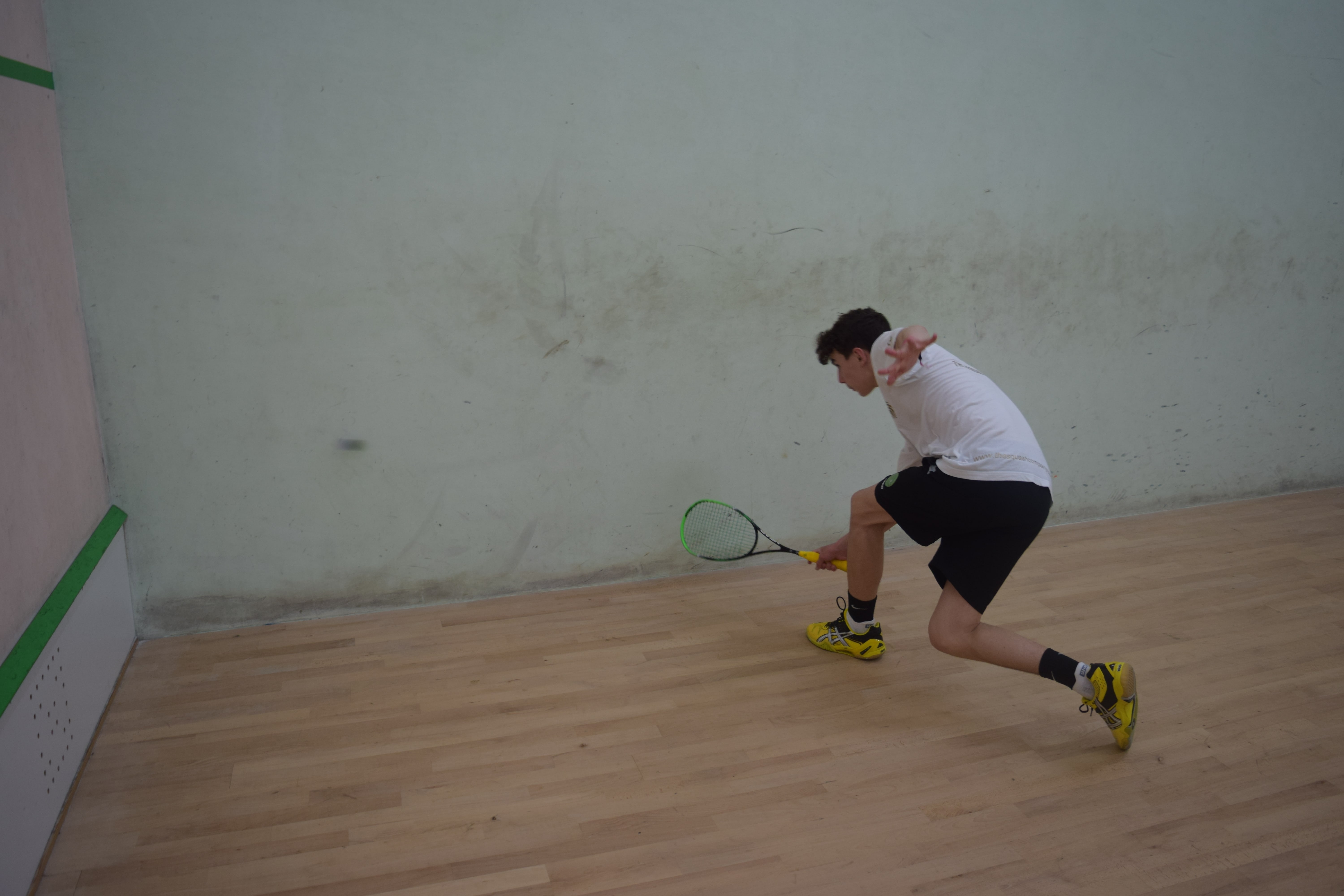
The simple answer to how low you need to get is that it needs to be low enough to get your technique right and be able to hit the bottom of the ball (or any part of the ball) if you need to. If you are going into the ball with your arm hanging straight down, you aren’t going to be able to achieve a consistently good shot as your swing will be ineffective and if you’re doing this because you’re upright, you also won’t hit the right part of the ball.
DSC_0051-min

Presumably if you’re in the front corner retrieving a drop, the ball will be low, which means you’ll need to get low enough to be in a position where you can hit the bottom part of the ball so you can gently lift the ball into the corner or for a counter drop or even play a lob shot if you wish. These will typically be your two best options as they will be the toughest shots for your opponent and allow you more T-Recovery time if you play them well.

Cocking your wrist

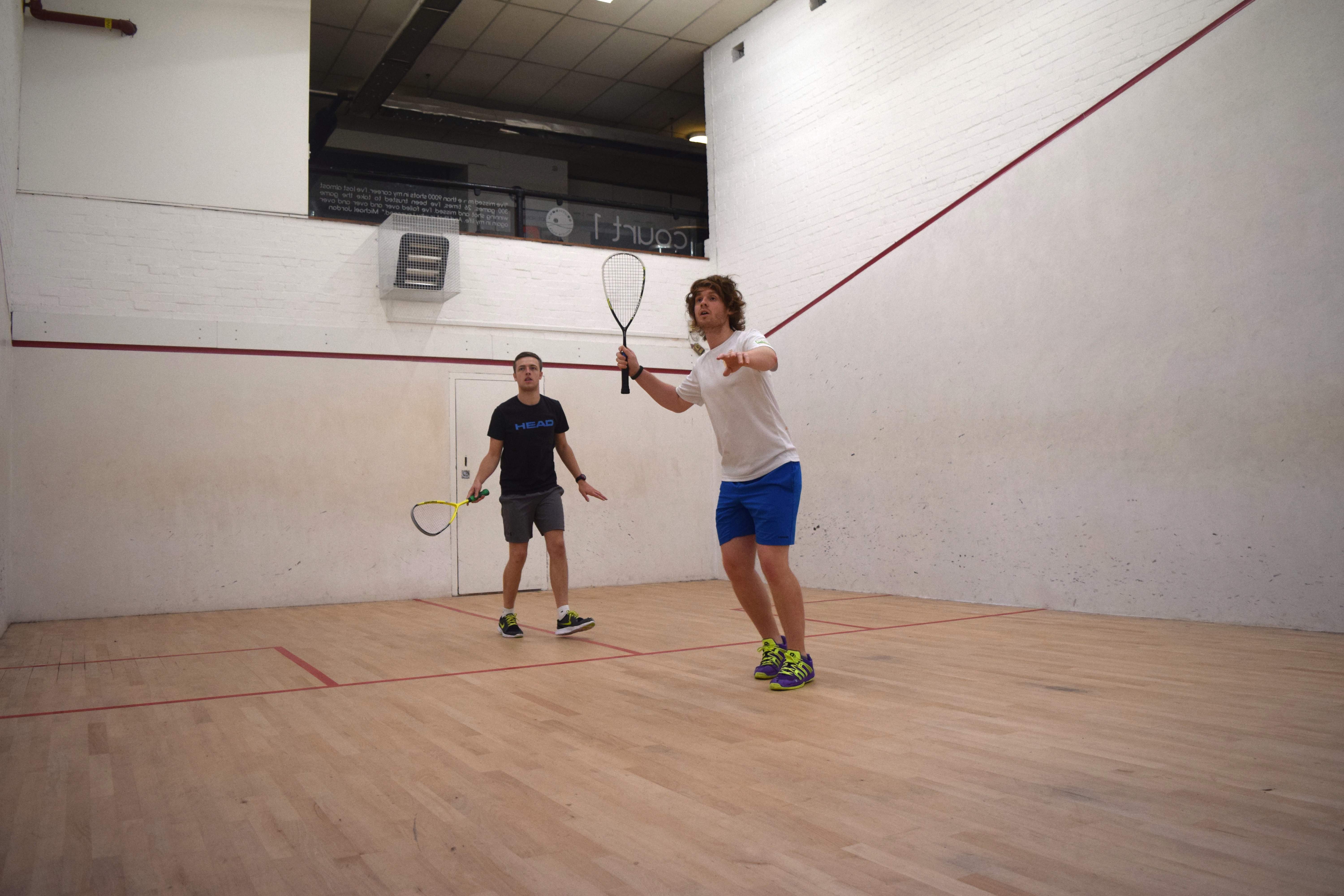
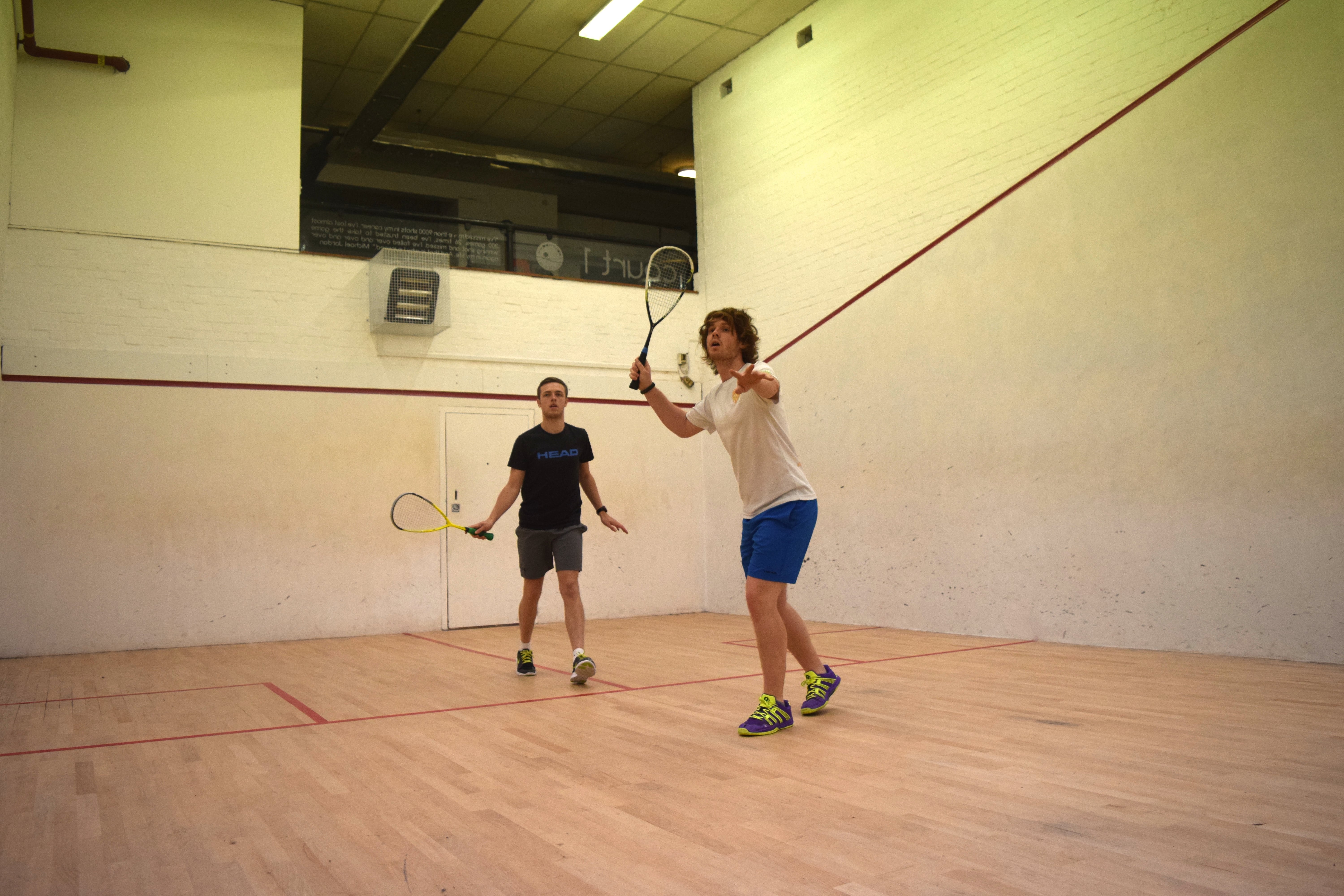
Cocking your wrist is a little bit frowned upon at the moment (especially since Ramy Ashour came along) but it’s important that your keep your wrist up when moving into a drop in the front corner. This doesn’t necessarily mean cocking it in the traditional sense but you need to get your lower arm back enough in that ‘triangle’ shape you would typically use when hitting a forehand shot, as you can see in the picture below. Doing this allows you to get a bit more control over your shot, which is important in this scenario.

DSC_0096-min

How do you get low?

Generally, the best way of getting low in the front is to lunge. If you go in with more of a squat or use your back to get down low, it isn’t very easy to get out of the way or get back to the T-Position, or you may find yourself in trouble if your opponent is quick into the front and looking to play long. If you lunge you can stretch in and recover the T-Position more efficiently, get your weight through the ball and also get down low enough to hit the bottom of the ball and swing with quality.

If your drop shots in the front leave something to be desired, check if you are getting down low enough to give yourself the platform for a good swing and to hit the necessary part of the ball.
Filed Under: Drops, Physical, Positional, Technical, Tips

Getting the correct spacing for your shots


An arm’s-length between you and the ball. 

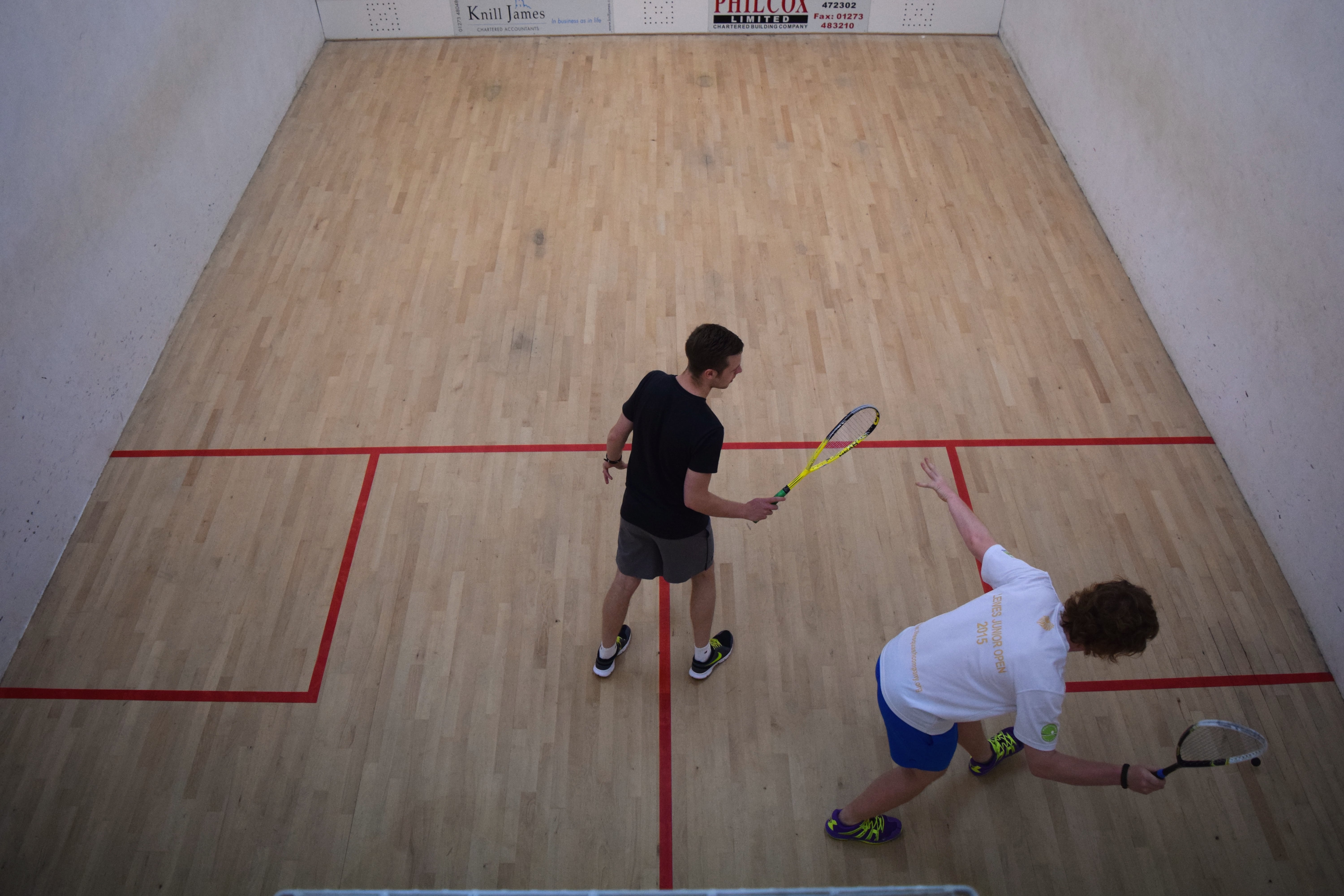
Spacing is incredibly important in squash. It affects the quality of your shot and it will also have a huge bearing on the quality of your next shot and the one after because if you’re too close to the ball, you’ll be in a weaker position to return your opponent’s next shot.

Getting an arm’s-length between you and the ball

As a general rule of thumb, you want to make sure that the ball is about the length of your arm away from you when you hit it. You can get an idea for the distance by stretching your non-playing arm out in front of you. A lot of players – including myself – will actually have their other arm and hand outstretched as they play, which not only helps for spacing but can also aid balance and provide momentum for recovering from a shot.

DSC_0073Min

You may not even notice it…

A lot of good players can still play good shots when they’re a bit close to the ball and so may not even notice there is anything to improve or anything going wrong. Unfortunately though it’s something that can be exposed when playing better players, as by being too close to the ball they’ll be further away from the T-Position. It might not be much but by leaving a bigger gap for their opponent to hit into, they are offering their opponent a more obvious shot to hit and the increased gap can easily be enough to leave them under pressure and chasing the ball.

Once you reach a certain level, squash becomes all about the very small details; the inch closer to the T-Position you could be, the inch shorter your drop shot could be and the second faster you are able to take the ball.

Check and see if you can play your shots from closer to the middle of the court without losing any quality. These inches can add up over the course of a game and make a huge difference.


Filed Under: Physical, Positional, Technical, Tips

Using the side wall to shorten your Kills


Making your short shots even shorter. 

Squash is all about the small details. Anything you can do to make your shots that tiny bit better or get back to the T-Position a second quicker is worth doing. In this case, there’s a small thing you can do to make your Kills a little bit shorter and make them that bit more deadly.

For information on playing a Kill, please visit our page on how to play a Kill here. 

Using the side wall to slow the ball

To make your Kills that bit shorter and cause your opponent to move further up the court, you can angle them to hit the side wall – ideally the nick. The best way to achieve this angle is to make sure you get really round the ball and very side-on – almost too much so. It can also help to hit the ball a little bit later than normal.

You do of course also need to use a very nasty high to low swing to generate the downward angle to give you a chance of hitting the nick.

DSC_0093-min

Deception from the back 

I find this is a particularly effective way of playing a Kill from the back of the court. If you go into a shot at the back of the court with a big swing, it looks like you’re going to play a Straight Drive and so often people will start dropping back. This makes it all the worse when your Kill hits the side wall and ends up even shorter than a normal Kill would.

Do your best to push high up the court hunting the Volley or an attacking shot as people will often play a loose ball of middling height in response as they are caught out by the angle.

Have a go and see just how short you can make your Kills go.

Take a look at the 2016 Shot of the Year – Omar Mosaad playing a fantastic Straight Kill into the nick. 


Filed Under: Kills, Stun, Technical, Tips

Playing Cross-Courts from the back


The easiest shot to play badly.

Playing a Cross-Court from the back can be a really effective shot. Often players will drift in anticipating a straight return and when they do this, the Cross-Court can be a great way of catching them out, seizing the T and putting them on the defensive as they have to turn towards the back wall.

However, as a lot of people know (except almost all junior players…), it can also be a liability of a shot. If you play it badly and it’s either loose and in the middle or too short, you can come under a lot of pressure or even lose the rally.

So how do we make it a weapon and not a liability?

The Technique

There can be a number of reasons why Cross-Courts from the back don’t make the grade. Some people get too ‘front-on’, which is to say their body faces the front wall as they hit the ball. If you do this, you typically lose engagement in the hips and torso which means you don’t get the same swing, which can cause the shot to come up short.
Do your best to remain more ‘side-on’, having your body facing the side wall, although you may need to play about with this and find a middle ground between being side-on and front-on.

Another thing to be aware of when playing this shot is the follow-through. A lot of players finish their follow-through very quickly, which means they lose a bit of their accuracy and ball control. Your hand should go through the ball when you’re playing this shot by quite some distance, so just check you are allowing it to do so and also letting it do so in the right direction!

DSC_0177-min

It can also be an idea to snap your elbow and lower arm more, especially if the ball is in the back corner or getting behind you, as this can give the ball a little bit more impetus for making it to the other back corner of the court.

Added Deception

An added benefit of remaining more side-on is that you take up roughly the same position that you would if you were going to play straight, which means the shot can have some natural disguise, which could help to make it an even more devastating attacking threat.

Make sure you don’t play any rash Cross-Courts from the back but wait for the right opening and then make sure you achieve that depth and width with the quality of your technique!


Filed Under: Drives, Technical, Tips

The importance of the grip


Allowing for a full spectrum of shots and effects. 

I fight on an almost daily basis with the players (particularly the juniors) about how they hold the racket.

It’s fiddly and it’s niggly and it’s not easy to practice but ignoring your grip is a very short-termist way of playing as it creates more and more problems the further you get in squash.

The most important factor of any grip in my opinion is that it allows for flexibility and manoeuvrability.

For more information on how hold the racket, go to our Squash School Page on the Grip here. 

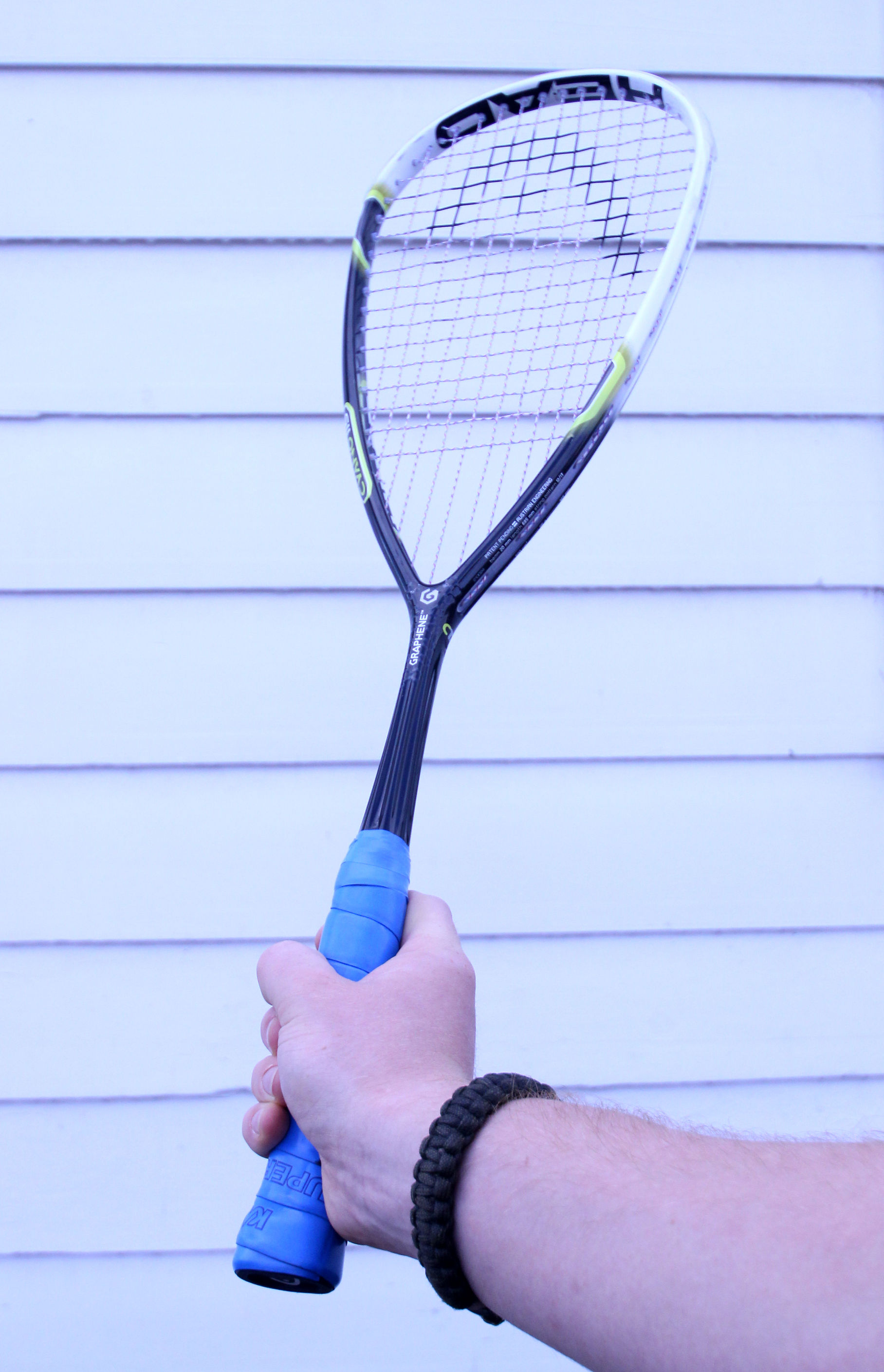
grip a squash racket like this

Range of shots: Drops and Lobs

The most common problem people have with their grip is that they hold it so that the racket face is ‘closed’ – meaning the racket face is either facing downwards or is horizontal. The grip should ensure that the face is facing upwards slightly, called an ‘Open’ racket face. The big problem comes when attempting to play a variety of shots. A bad grip might not stop you from hitting good straight drives or hitting the ball really hard, but it becomes a real problem when you start trying to use more areas of the front wall, particularly the top and bottom. The most difficult shot for players with bad grips is the lob shot, as they find it very hard to lift the ball when their racket face is naturally facing downwards or flat. They have to seriously adapt to have any chance of getting the required height for a good lob shot and this is difficult to do consistently and very hard when under any sort of pressure and not good given how important lobbing is!

It can also affect drops in a similar way. If someone has a closed racket face, they will find it difficult to get a consistent drop shot, as the ball will always want to go downwards when they hit it. You might not think this is a bad thing when aiming to play a drop shot but it means the margin for error is much smaller, as if they were to hit the ball when it’s a little bit lower on the bounce, it’s very likely to hit the tin. A player with this sort of racket face would have to always hit the ball when it’s quite high on the bounce to avoid hitting the ball down, which won’t always be possible or desirable.

It means you don’t have flexibility or manoeuvrability, which for me is the main job of the grip.

Errors & quality

As suggested above with the drops, having a bad grip can lead to errors when playing the drops but it can also have a negative impact on just about every shot. If the racket face is too closed, a player will struggle to achieve a high standard of length on a consistent basis, especially from the back corners. The racket face being flat or too closed will lead to the angle of the shot always being downwards, which isn’t always a bad thing. I’ve talked in other blogs about how it’s important to swing downwards, but the problem here is that it’s not deliberate. It’s worth saying one more time that your grip should allow you a full range of options, not restrict you to just doing one thing with the ball.

It’s never too late to change your grip. It really can revolutionise every aspect of your game, so do use our grip page to check how you’re getting on.


Filed Under: Grip, Technical, Tips

  • « Previous Page
  • 1
  • 2
  • 3
  • 4
  • 5
  • 6
  • Next Page »


Terms | Privacy policy | Contact | About us
Web Development By S G Barker.