Squash Company

Squash coaching with passion

  • Squash School
  • Blog
  • Videos
  • Shop

The importance of the backhand serve  


All the small things add up. 

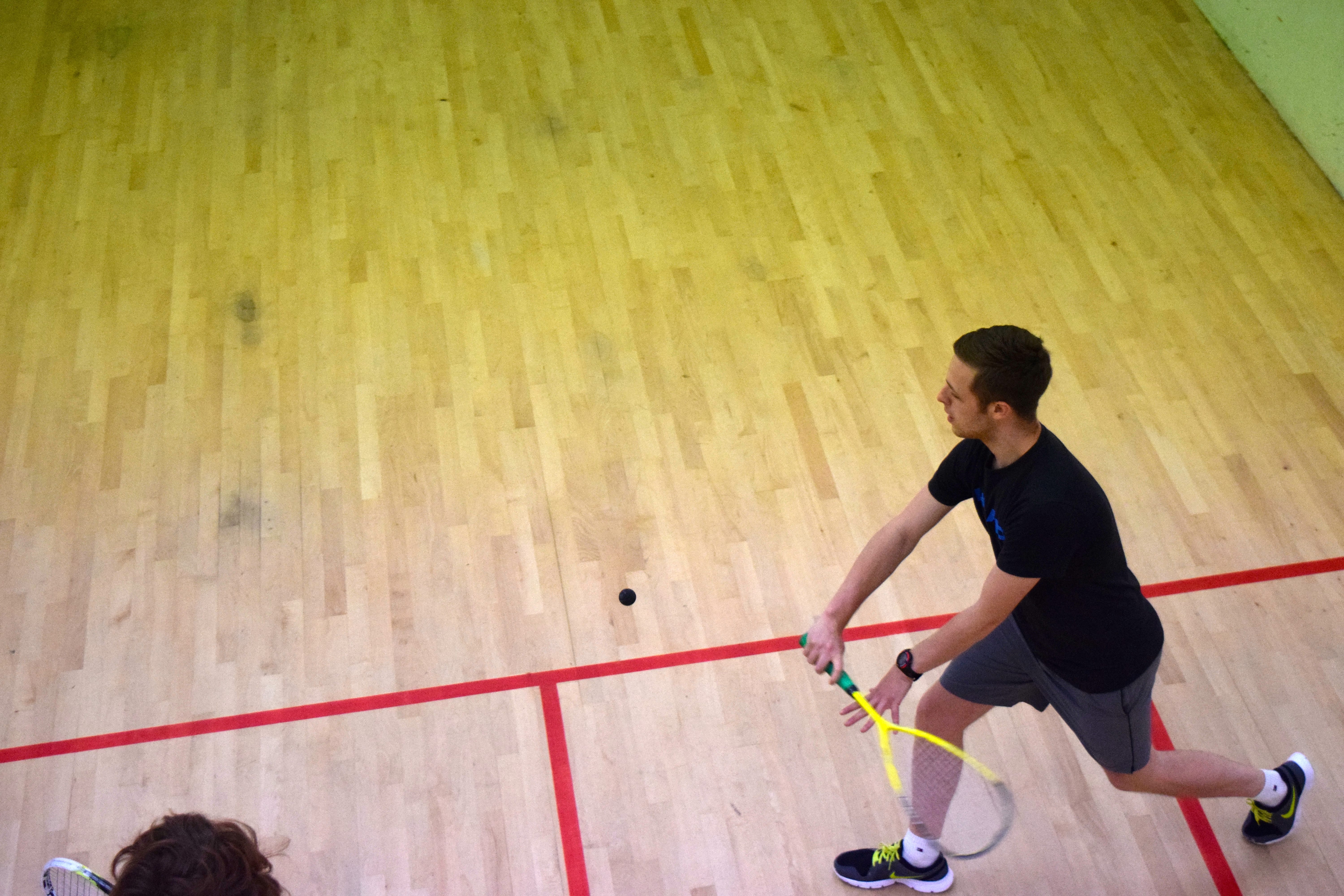
The backhand serve is a serve played using a backhand swing from the forehand side of the server.

The backhand serve is a little trickier to execute at first for most players as people tend to start off with weaker backhands so they get comfortable with a forehand serve from both sides and by then, it’s difficult to change.

There are so many advantages to being able to play a backhand serve though that once you get to a certain level, it’s almost obligatory. Even as a beginner the backhand serve is still very relevant, as serves can already be difficult to return in general and a well executed backhand serve is even more difficult to return.

For more on how to play a backhand serve, click here. You can also watch our YouTube video on the backhand serve by clicking here.
serve backhand-2-min

Watching 

When you play a backhand serve, you are able to watch the ball properly the entire time, as with all the will in the world, you will lose track of the ball whilst playing a forehand serve from the forehand side of the court. You’ll also be able to watch the opponent better as well as you’ll be facing in their direction as with the ball.

Movement

Movement wise a backhand serve is also beneficial, as you are stepping towards the T-Position when you serve and the momentum of the serve will nearly take you there on its own. The serve and return of serve is all about who gets the T-Position in the early exchanges of the rally, so any advantage like this should be seized upon.

The spin 

When you play a backhand serve from the forehand side, the ball won’t come off the side wall so much which means it would be more difficult for your opponent to return. When you play a forehand shot, the ball bounces out off the side wall quite a long way like when you play a cross-court drive. When you play a backhand serve however, the ball behaves like it would for a straight length shot and stays tighter to the side wall, which is typically more difficult for your opponent to hit.

WARNING: Some players play a backhand serve from their backhand side of the court but this is the same as playing a forehand serve from the forehand side of the court. You are facing away from your opponent and the T-Position, as well as the direction of travel of the ball.

Even if you struggle at first, it’s a real investment in your long term game to practice the backhand serve.
Filed Under: Serves, Technical, Tips

Aiming for a tight back wall boast


Making a bad shot a little bit less bad. 

Sometimes you just can’t avoid playing a back wall boast, no matter how hard you try. Since it’s inevitable at some stage in one game or another, it’s worth considering how we can make it a bit more effective of a shot and not have it bouncing out high in the middle of the court for an easy shot for our opponent.

Gluing the back wall boast to the side wall 

We’ve all seen back wall boasts that have somehow bounced incredibly tight or even hit the nick and leave us cursing our opponent’s luck. Since it can be done though, it should be something we aim for when we are forced into playing the back wall boast. Rather than lumping the back wall boast straight into the back wall so that it sits up loose in the middle of the court, hit it to either side of the centre of the back wall or closer to the back corners. This way your shot will land closer to the corners of the front court and be a little bit trickier for your opponent to return. If you can get the angle right, you can get the ball to drop right by the side wall and actually behave like a very good drop shot. The back wall boast has something of a unique spin unlike any other shot in the game, so if you can get it tight it’s got a very good chance of being a really awkward shot to deal with.

Have a go and see if you can angle your back wall boast more and keep it to the corners rather than sitting it up in the middle of the court.

You can find out more about how to play a back wall boast with our video on our YouTube Channel here.


Filed Under: Boasts, Technical, Tips

How to grip a squash racket


Holding the racket can be a very fiddly business for players of all levels – this guide will help you grip a squash racket properly!


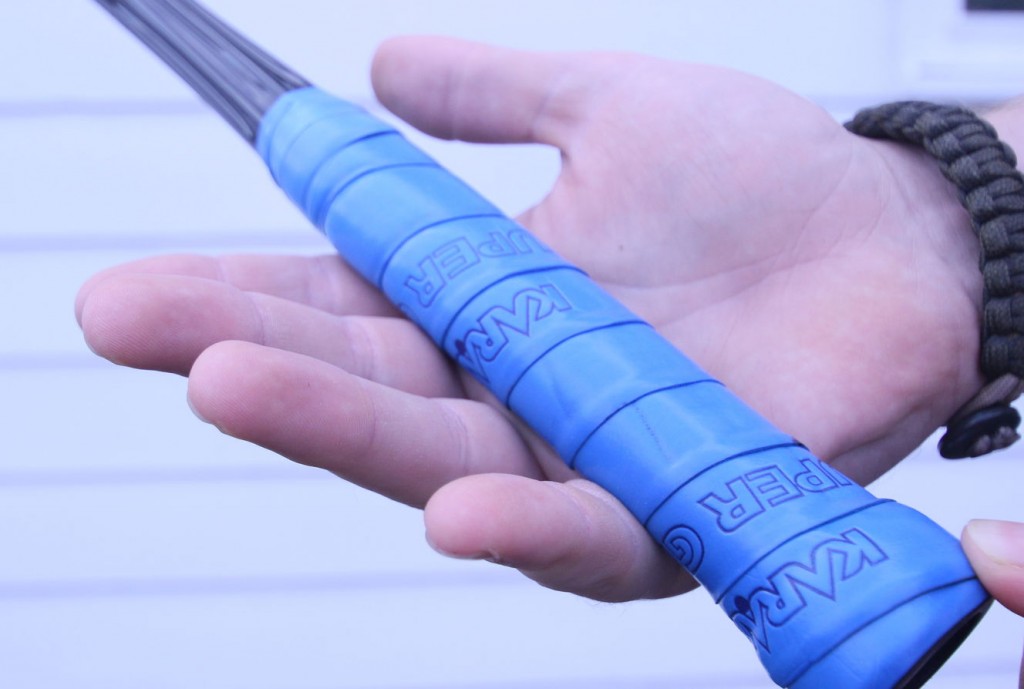
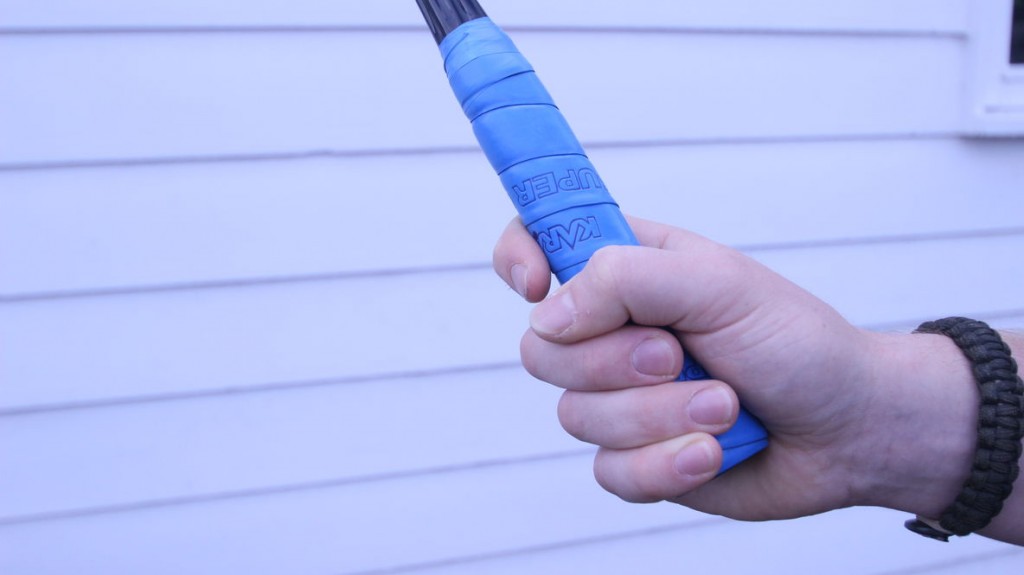
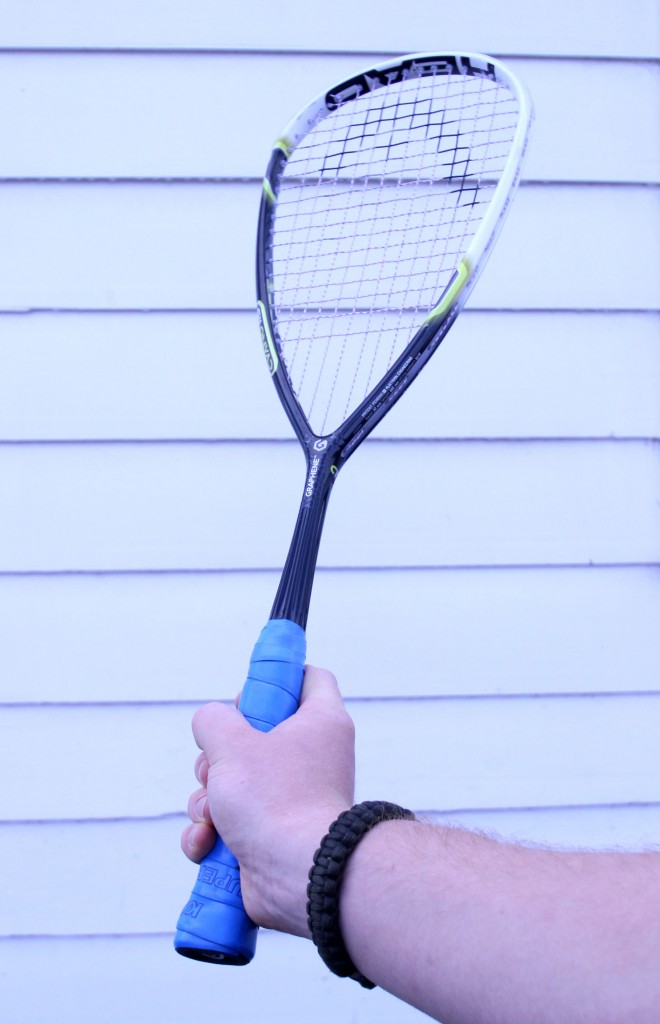
Lay the handle of the racket across the top of your palm so that it is resting just below the base of your fingers.

lay the squash racket over the palm of your hand

Make sure the racket is laying across the top of your palm at a slight angle, so that the side of the racket that will make contact with the ball is at an angle greater than 90 degrees. The racket face should not be facing straight towards the front wall or worse, pointing towards the floor at an angle smaller than 90 degrees like a tennis racket, which means the ball will always go downwards unless players go to great lengths with the wrist and lower arm.

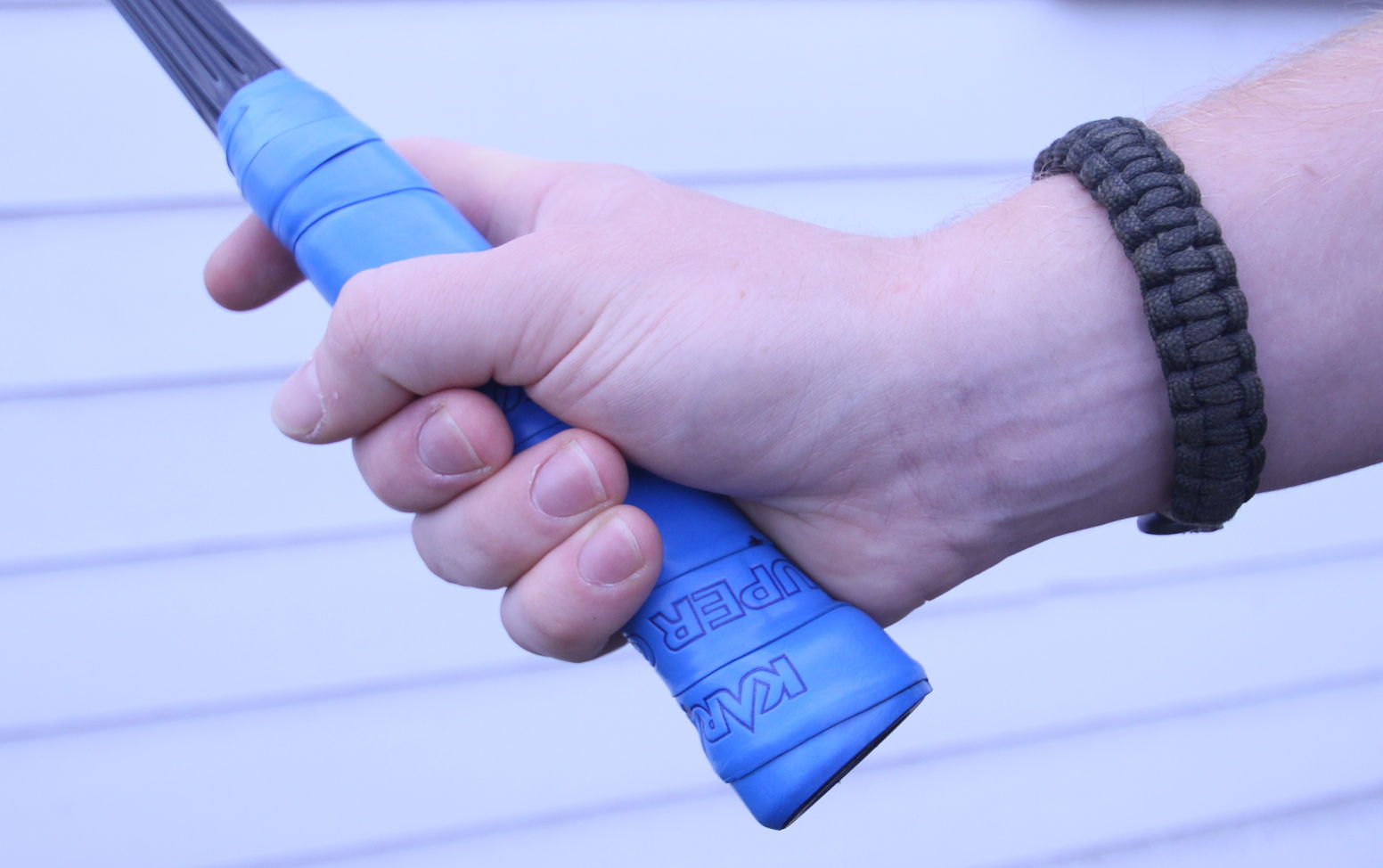
the way to grip a squash racket is often described as like shaking a hand

The way the hand grips the racket is often described as being like shaking someones hand. This is a good way to imagine the basic grip. Ensure that your index finger, known here as the trigger finger, protrudes upwards slightly away from the rest of the fingers, making a V-Shape with the thumb.

It is universally recommended that you hold the racket in the middle of the grip. This is because it enables you to get a balance between power and control. The lower you hold the racket, the easier it is to achieve power and the higher you hold the racket the easier it is to achieve control. It is not necessarily wrong to hold it at the lower or upper end though, so feel free to experiment. If you are struggling for power or control on a consistent basis though, it might be best to hold the racket in the middle.

A lower squash racket grip
A lower grip

Lastly, your hold on the racket should be firm but not rigid. You can test this by having someone try to pull the racket out of your hand. If you are gripping it correctly, it should gradually slide out of your hand. If someone is tugging your racket fiercely and it won’t move, you are holding it far too tight.

grip a squash racket like this

More squash tips


Filed Under: Grip, Technical, Tips

Let your hand go beyond the ball


Is the follow through replacing backswing?

In this post, I will discuss a small technical point which I believe can improve almost all shots for players of all abilities in squash, which does sound like a bold statement to make.

When you strike the ball, check whether your hand goes beyond the ball. If your follow through is really long enough, your hand should go beyond where the contact with the ball took place. If the ball had co-ordinates in time and space, your hand would need to go beyond this point.

If you make this subtle yet significant change to your follow through, you should notice significant improvement in your ball control, particularly when playing from the back of the court, although I have also found it very useful while volleying and playing touch shots, such as the drop and drop volley, as well.

There is always time to follow through a shot though and so the follow through is almost consuming the backswing in the modern game.”

One professional player who does this particularly well is Mohamed El Shorbagy. At times, his backswing is nearly non-existent. His follow through though is phenomenal and allows him to get superb power and control.

Greater emphasis on the follow through is something that seems to be happening at the top level of the game and is something that can also be applied at club level. With the game becoming faster and faster, there simply isn’t the same time to prepare the racket and get a perfect backswing.

There is always time to follow through a shot though and so the follow through is almost consuming the backswing in the modern game.

Once you get comfortable with letting your hand go beyond the ball more (and if you get any improvement!), see if you can begin to hit your shots quicker by replacing some of your backswing with this extended follow through. After a bit of practice, it will allow you to execute your shots quicker which is exactly what you need for taking the ball earlier. With this extended follow through, you can move higher up the court and hit the ball higher up the court, thereby applying more pressure to your opponent by reducing the time between your shots and increasing the pace of the game.

Try it out! It’s such a small change but one that can revolutionise your game and ball control.


Filed Under: Technical, Tips Tagged With: advanced squash tips, backswing, basic squash tips, follow-through

Getting your racket above the ball


Making shots take on more of a downward angle to make them more effective.

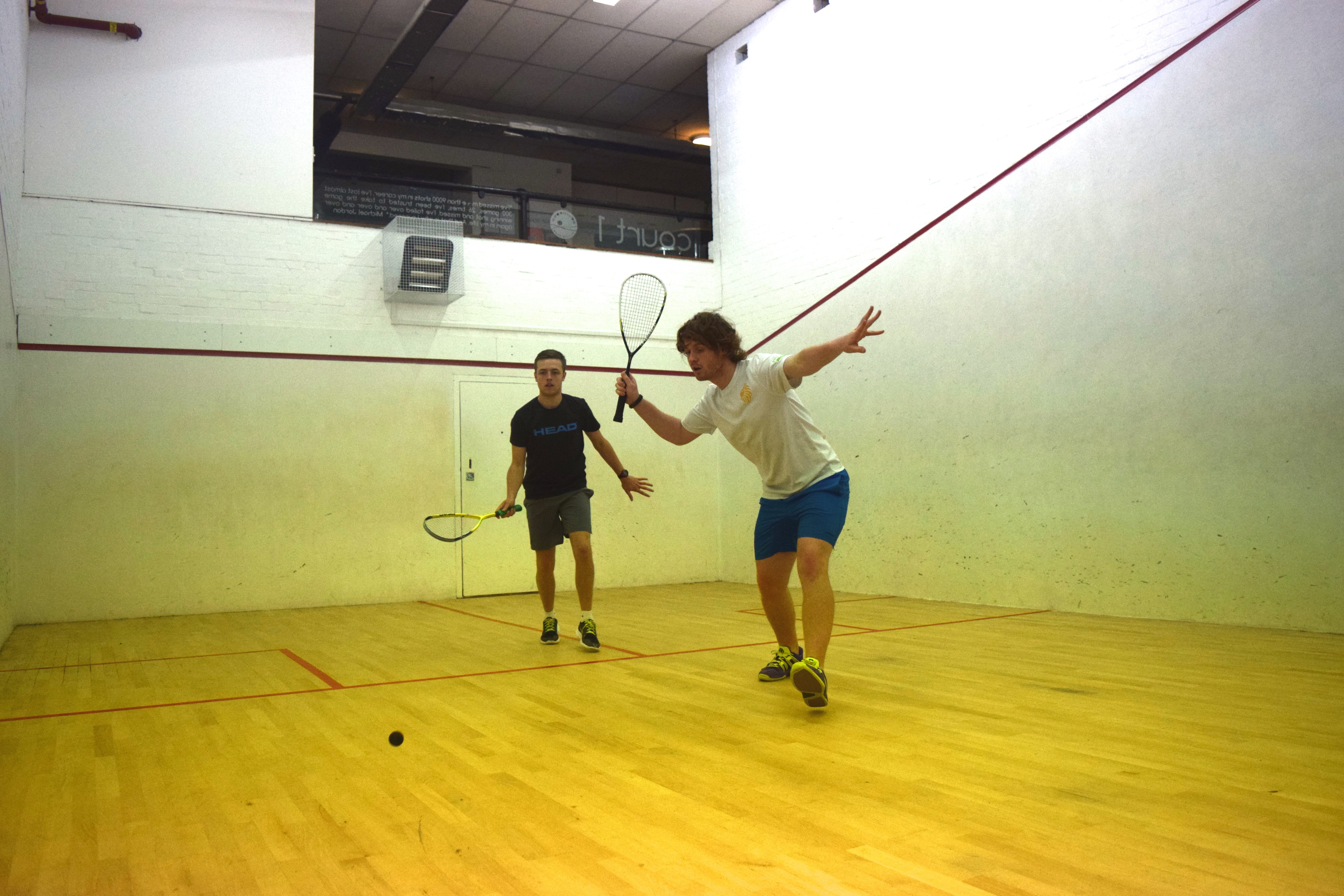
One thing you can do to make even the most ordinary shots more attacking is to get your racket above the ball. If your hit your shots from this position, the ball will go downwards and put far more pressure on your opponent, as they’ll know the ball is going to bounce twice fairly soon. This is something you should particularly look to do when you’re playing straight drives or lengths shots. It’s easy to get into a habit of hitting aimlessly down the line without really paying attention to the accuracy of your width and length but if you get your racket above the ball, you’ll make your ball die or bounce twice quicker.

The aim with playing this straight drive with the racket above the ball is to make the ball bounce twice in the back corner and not come off the back wall. If you do this repeatedly over the course of a game, your opponent will be under enormous pressure in every sense of the word.

DSC_0075-min

Physically, they’ll have to move quicker to get the ball and if they get there, they will most likely not be in the greatest position. Psychologically, they’ll have to select their shot while rushing, which is never easy. Assuming that either psychologically or physically they come up even a bit short, their technique and shot itself will also suffer.

This simple change in racket height when you begin your backswing can do all that. It just goes to show that playing attacking squash and winning points isn’t about hitting nicks or winning shots but about applying pressure through small alterations to even the simplest of shots.


Filed Under: Technical, Tips

  • « Previous Page
  • 1
  • 2
  • 3
  • 4
  • 5
  • 6
  • Next Page »


Terms | Privacy policy | Contact | About us
Web Development By S G Barker.