Squash Company

Squash coaching with passion

  • Squash School
  • Blog
  • Videos
  • Shop

The importance of the grip


Allowing for a full spectrum of shots and effects. 

I fight on an almost daily basis with the players (particularly the juniors) about how they hold the racket.

It’s fiddly and it’s niggly and it’s not easy to practice but ignoring your grip is a very short-termist way of playing as it creates more and more problems the further you get in squash.

The most important factor of any grip in my opinion is that it allows for flexibility and manoeuvrability.

For more information on how hold the racket, go to our Squash School Page on the Grip here. 
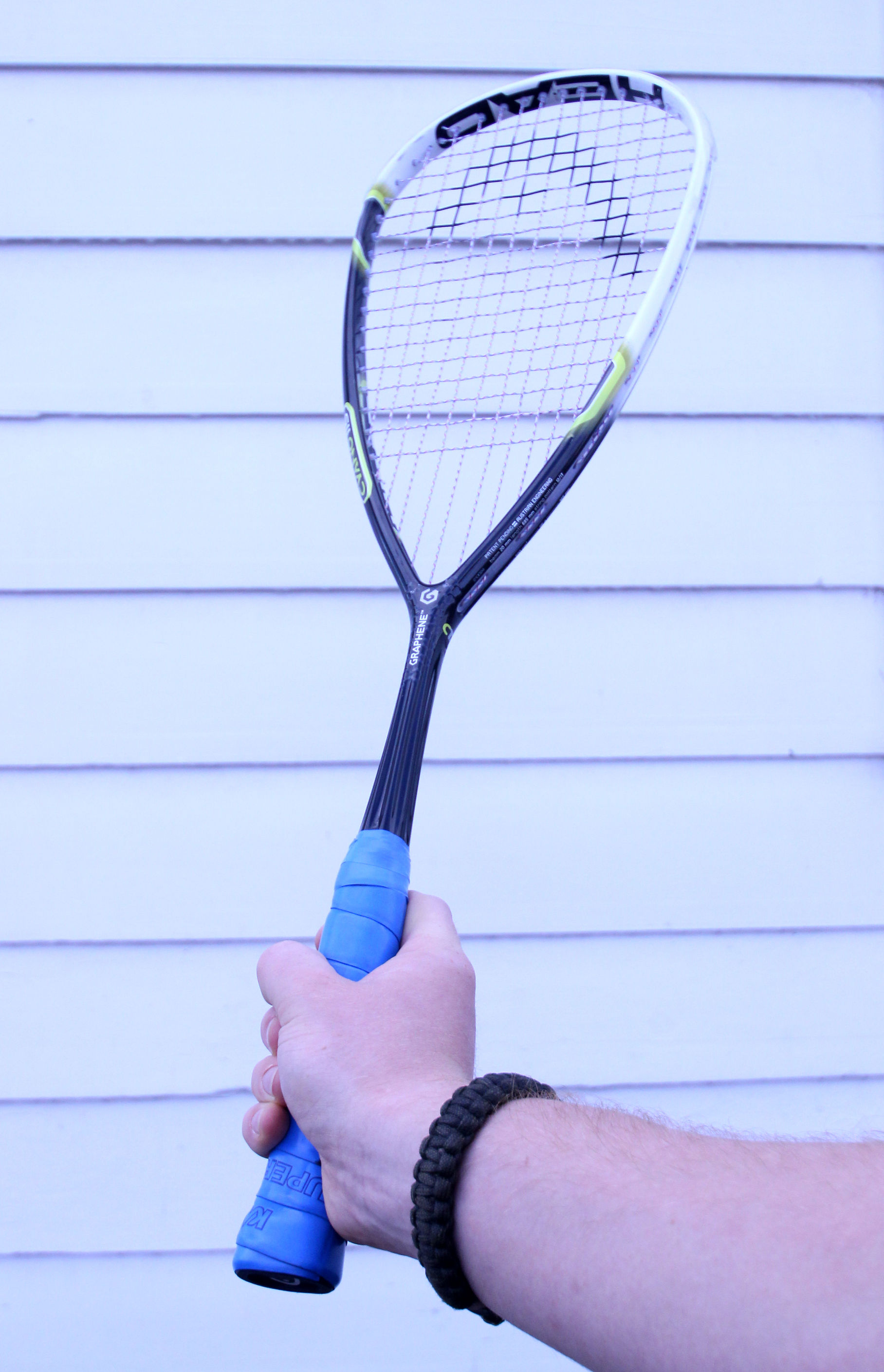
grip a squash racket like this

Range of shots: Drops and Lobs

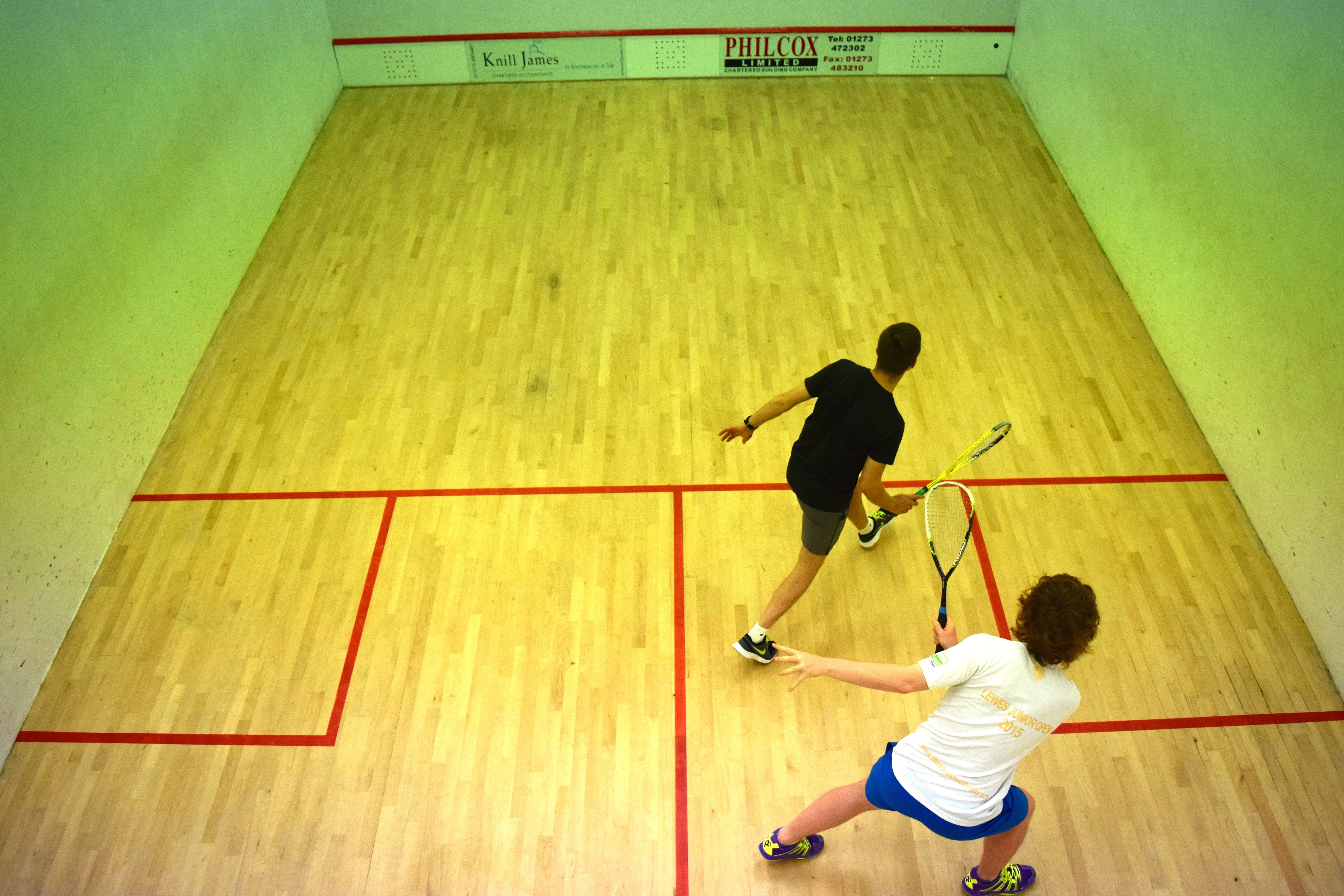
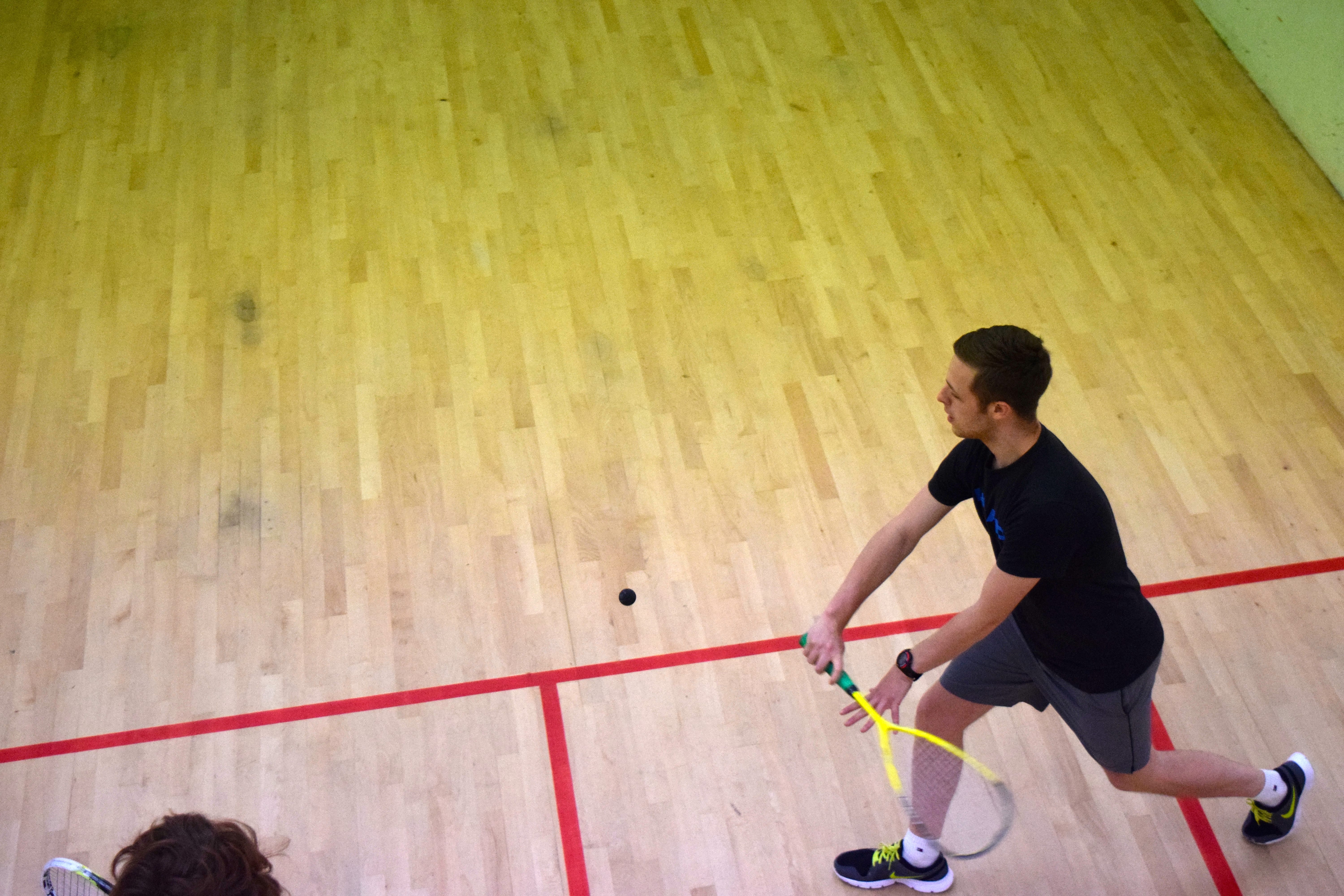
The most common problem people have with their grip is that they hold it so that the racket face is ‘closed’ – meaning the racket face is either facing downwards or is horizontal. The grip should ensure that the face is facing upwards slightly, called an ‘Open’ racket face. The big problem comes when attempting to play a variety of shots. A bad grip might not stop you from hitting good straight drives or hitting the ball really hard, but it becomes a real problem when you start trying to use more areas of the front wall, particularly the top and bottom. The most difficult shot for players with bad grips is the lob shot, as they find it very hard to lift the ball when their racket face is naturally facing downwards or flat. They have to seriously adapt to have any chance of getting the required height for a good lob shot and this is difficult to do consistently and very hard when under any sort of pressure and not good given how important lobbing is!

It can also affect drops in a similar way. If someone has a closed racket face, they will find it difficult to get a consistent drop shot, as the ball will always want to go downwards when they hit it. You might not think this is a bad thing when aiming to play a drop shot but it means the margin for error is much smaller, as if they were to hit the ball when it’s a little bit lower on the bounce, it’s very likely to hit the tin. A player with this sort of racket face would have to always hit the ball when it’s quite high on the bounce to avoid hitting the ball down, which won’t always be possible or desirable.

It means you don’t have flexibility or manoeuvrability, which for me is the main job of the grip.

Errors & quality

As suggested above with the drops, having a bad grip can lead to errors when playing the drops but it can also have a negative impact on just about every shot. If the racket face is too closed, a player will struggle to achieve a high standard of length on a consistent basis, especially from the back corners. The racket face being flat or too closed will lead to the angle of the shot always being downwards, which isn’t always a bad thing. I’ve talked in other blogs about how it’s important to swing downwards, but the problem here is that it’s not deliberate. It’s worth saying one more time that your grip should allow you a full range of options, not restrict you to just doing one thing with the ball.

It’s never too late to change your grip. It really can revolutionise every aspect of your game, so do use our grip page to check how you’re getting on.

Filed Under: Grip, Technical, Tips

Following up short shots from the back & taking the vacant T 


Going short to go long. 

Traditionally the best way to get the T-Position back from an opponent has been to play to length. However, it can also be beneficial to go short before you go long for variation and also to counteract certain styles of play.

This is a tactic that was used to really great effect by James Willstrop in his recent match against Mohamed Elshorbagy https://www.youtube.com/watch?v=r2USpFYYlGQ at the 2015 World Championships where shortly after recovering from his hip problems, he produced a tactical master class to outwit Elshorbagy in the 3rd round.

Taking away options in the middle of the court  

Part of the reason Willstrop went short from the back regularly (I presume – I’m not privy to his tactical and coaching discussions) is that it can be really effective against tall players, players who are very good on the volley and attacking the ball early around the middle of the court especially those who enjoy chopping it downwards. When you go short from the back, you deprive them of a length shot to intercept and you can force them off the middle. Elshorbagy is also very dangerous at chopping the ball downwards, so with the ball already being very low, it limited his options and denied him some of his favoured attacking shots.

When you’re playing a player who is very good at attacking around the middle of the court, this might be a way to turn the game on them.

DSC_0154-min

Following up a short shot

The way to make it really effective though is to make sure you’re pushing up high onto the T-Position, which hopefully your shot has forced them to leave, and looking to attack their next shot. The ideal scenario is for them to return your attacking boast, kill or drop from the back with a weak length shot, which you can pick off with a long volley and thereby force them into an end-to-end sprint.

More composed players may respond by going short or even lobbing the ball to try and deprive you of the volley, so you need to make sure you are on the T-Position with intent so that you can cover the short shot and still move back to cover a good lob or length shot if required.

The bottom line is when you go short from the back, follow it up and push high up the court looking for scraps to feed off. Much like a poacher or striker in football following up looking for a goalkeeper to spill the ball, you need to be pushing up, hunting for any sign of a weak shot you can attack and push to length to get your opponent moving up and down the court at speed. There is nothing worse than playing a great short shot and forcing a rushed return from your opponent, only to be too far back to take advantage of it.

Have a go no matter who you’re playing against. Short and long or long and short is the most simple but effective tactic in the game and this idea of going short first can be useful against any player. If you are playing someone with good ability on the T-Position or taking it early, it’s something to try in order to snatch back control of the middle.


Filed Under: Boasts, Drops, Kills, Stun, Tactical, Tips, Volley

The importance of the backhand serve  


All the small things add up. 

The backhand serve is a serve played using a backhand swing from the forehand side of the server.

The backhand serve is a little trickier to execute at first for most players as people tend to start off with weaker backhands so they get comfortable with a forehand serve from both sides and by then, it’s difficult to change.

There are so many advantages to being able to play a backhand serve though that once you get to a certain level, it’s almost obligatory. Even as a beginner the backhand serve is still very relevant, as serves can already be difficult to return in general and a well executed backhand serve is even more difficult to return.

For more on how to play a backhand serve, click here. You can also watch our YouTube video on the backhand serve by clicking here.

serve backhand-2-min

Watching 

When you play a backhand serve, you are able to watch the ball properly the entire time, as with all the will in the world, you will lose track of the ball whilst playing a forehand serve from the forehand side of the court. You’ll also be able to watch the opponent better as well as you’ll be facing in their direction as with the ball.

Movement

Movement wise a backhand serve is also beneficial, as you are stepping towards the T-Position when you serve and the momentum of the serve will nearly take you there on its own. The serve and return of serve is all about who gets the T-Position in the early exchanges of the rally, so any advantage like this should be seized upon.

The spin 

When you play a backhand serve from the forehand side, the ball won’t come off the side wall so much which means it would be more difficult for your opponent to return. When you play a forehand shot, the ball bounces out off the side wall quite a long way like when you play a cross-court drive. When you play a backhand serve however, the ball behaves like it would for a straight length shot and stays tighter to the side wall, which is typically more difficult for your opponent to hit.

WARNING: Some players play a backhand serve from their backhand side of the court but this is the same as playing a forehand serve from the forehand side of the court. You are facing away from your opponent and the T-Position, as well as the direction of travel of the ball.

Even if you struggle at first, it’s a real investment in your long term game to practice the backhand serve.


Filed Under: Serves, Technical, Tips

Aiming for a tight back wall boast


Making a bad shot a little bit less bad. 

Sometimes you just can’t avoid playing a back wall boast, no matter how hard you try. Since it’s inevitable at some stage in one game or another, it’s worth considering how we can make it a bit more effective of a shot and not have it bouncing out high in the middle of the court for an easy shot for our opponent.

Gluing the back wall boast to the side wall 

We’ve all seen back wall boasts that have somehow bounced incredibly tight or even hit the nick and leave us cursing our opponent’s luck. Since it can be done though, it should be something we aim for when we are forced into playing the back wall boast. Rather than lumping the back wall boast straight into the back wall so that it sits up loose in the middle of the court, hit it to either side of the centre of the back wall or closer to the back corners. This way your shot will land closer to the corners of the front court and be a little bit trickier for your opponent to return. If you can get the angle right, you can get the ball to drop right by the side wall and actually behave like a very good drop shot. The back wall boast has something of a unique spin unlike any other shot in the game, so if you can get it tight it’s got a very good chance of being a really awkward shot to deal with.

Have a go and see if you can angle your back wall boast more and keep it to the corners rather than sitting it up in the middle of the court.

You can find out more about how to play a back wall boast with our video on our YouTube Channel here.


Filed Under: Boasts, Technical, Tips

Train yourself to ignore ‘bad’ shots 


There’s no such thing as a ‘Good’ or ‘Bad’ shot. 

Good and bad are just points of view, aren’t they? In squash, we’d probably define a good shot as being one that wins the rally or causes our opponent a lot of problems. A bad one would probably be a shot that goes out or hands an opportunity to our opponent. Despite this, good and bad are still just labels. Inherently, there is no such thing as a good or bad shot. It’s just what we’ve decided to label certain events as.

Avoid letting the last shot affect your next shot

Much like ‘playing to the referee’s whistle’ in other sports, you need to keep playing even when you hit a shot you aren’t happy with. If anything, you need to play harder when you hit a shot you aren’t happy with. It’s so easy to start berating yourself or huffing the moment you play a bad shot but what you actually need to be doing is damage control. The best thing to is get on with the game and get out of the way of your opponent quickly if you need to and make sure you get as close to the T-Position as you can so that you can cover whatever shot may come next.

If you let a bad shot affect you even slightly you’ll suffer for it. You might not give up like some players but if you even acknowledge that it was a bad shot, you’ll be a little bit behind going into the next shot. Lots of players hesitate just enough in annoyance to stop them getting back to the T-Position quick enough and so they are left sprinting for their opponent’s next shot. Others allow a bad shot to annoy them enough to make a rash decision or try too hard on their next shot in an attempt to make amends for the previous ‘bad’ one.

DSC_0549-min

The reality is you can’t allow any shot to affect you, no matter how ‘good’ or ‘bad’ you consider it. The moment you do is the moment your performance will start suffering.

Of course you should note any errors or plays you make as it may be something you need to work on or think about later, but don’t let anything distract you during the rally itself.

Equally, don’t allow yourself to get carried away and complacent about a ‘good shot’.

Remember that ‘good’ and ‘bad’ are just labels. Shots are shots. Never let any shot you play impact the way you carry on in a rally.

You can read more about how to deal with ‘bad’ shots and How to overcome fear of failure.


Filed Under: Mental, Tips

  • « Previous Page
  • 1
  • …
  • 10
  • 11
  • 12
  • 13
  • 14
  • …
  • 20
  • Next Page »


Terms | Privacy policy | Contact | About us
Web Development By S G Barker.