Squash Company

Squash coaching with passion

  • Squash School
  • Blog
  • Videos
  • Shop

Don’t think about the score  


Treating every point the same. 

We’ve touched upon some of the aspects of this before in our page on ‘Fear of Failure’ but it’s worth talking about again and again. Whenever you play, do your best to zone out the score or the marker. When playing a friendly, I prefer for the other person to keep score so I can simply ignore it (from time to time you need to listen in just to make sure they’re not taking any liberties of course).

Becoming complacent or nervous

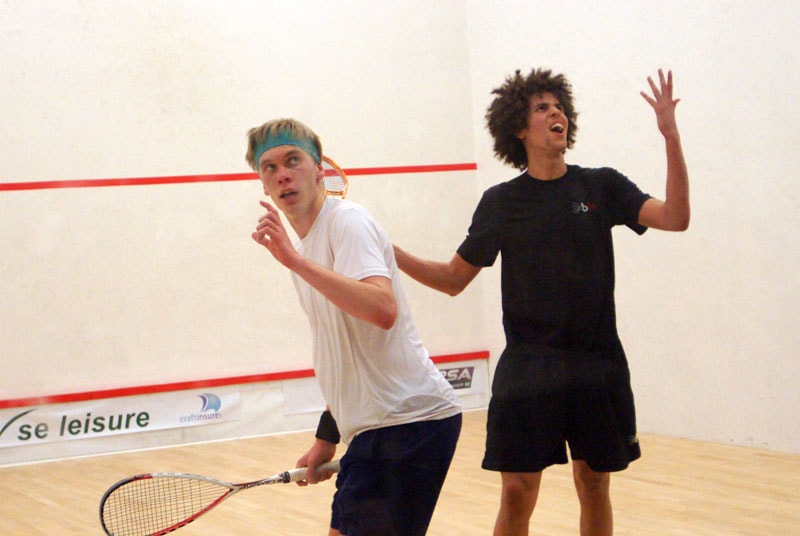
Once you start thinking about the score, all hell breaks loose. No matter how mentally strong you are, you will start to incur subtle changes in your mindset. If you are in the lead, it’s very easy for you to subconsciously step-off and not be quite as sharp or focused, even if you warn yourself and tell yourself to keep it going. Complacency is a real danger. If you are losing, particularly if you are close to being or at game/match ball down, you can start to become tense and make shot selections you wouldn’t usually make. You might become more risky and start going for unnecessary and unrealistic attacking shots or you might go the other way and freeze up and avoid playing an attacking shot when you are in a great position.

Even mid-game it’s very dangerous. Maybe your mind will drift to the end result and you’ll start seeing yourself shaking hands with your opponent in triumph or visualise what the scores will look like on the marker’s sheet or on the club website. All of these are very harmful to your chances, as you’ll start to bring about very real changes in your play.
henjoelKO-min

Let the points take care of themselves

It is easier said than done at times but do your best to focus on simply working your opponent. Focus on making sure that you make them run with every shot you play and focus on making sure that every shot you play is the right one. If you do this, the points will take care of themselves.

Filed Under: Mental, Tips

Knocking-up with purpose – Part 4: Hitting and shots


Finding your range.

Welcome to Part Four of a special series of blog posts on warming-up or knocking-up before a squash match.  A thorough warm-up should not only touch upon your hitting but it should also get you warming-up mentally, get your movement up to scratch, sharpen your racket speed and skills and help you find you find your hitting targets.

This time we will  be focusing on what makes up the entirety of most people’s warm-ups – hitting the ball. Never underestimate how important the knock-up can be in squash for your hitting. You want to start the match hitting your targets and playing good, accurate shots.

You can re-visit Part 1: The Body, Part 2: The mind & Part 3: The Racket. 

Range of shots

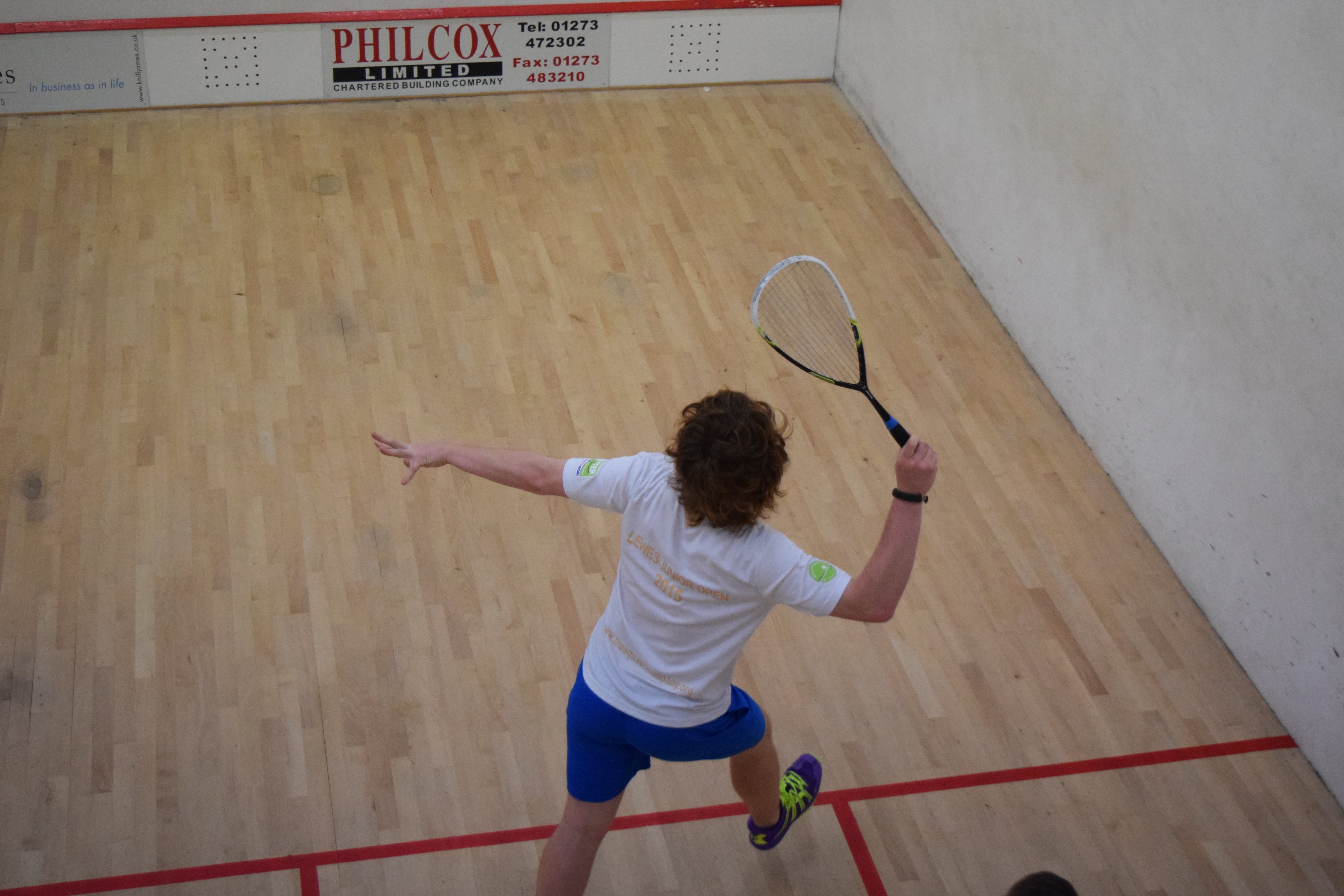
It’s important when you go on the court to knock-up that you don’t just hammer the ball or play the same shot. Most players will either knock-up by alternately smashing the ball down the line or by hitting first-time cross-courts back to each other. Neither of these is conducive to starting the game with a wide range of accurate shots, as neither helps you to practice a range of shots hit in different ways. Yes you need to warm the ball up but you also need to warm-up your hitting skills. Make sure that you play a variety of shots; you might play a lob, a drive and a kill and then cross-court to your opponent and then come forward and play a couple of long volleys to yourself before a short volley and cross-courting lobbing to your opponent. Rather than cross-courting every time, have a go at boasting to your opponent’s side and then playing a straight drive to them. Pack as many different shots into your knock-up as you can and you will start the game with a lot more verve.

If you are friendly with your opponent, you can get them to do a little drill rather than just solo hitting. A good one for this is Drive, Boast & Drop, Drive. In this drill, a player at the back plays a drive to themselves and then boasts to a player at the front who drops and then drives their own drop back to the player at the back. You can then swap ends and get to play several different shots from a variety of different positions.

SAM_0698-min

Targets

As discussed in our other posts in this series, you don’t just want to whack the ball about aimlessly in the warm-up. Have a target in mind as you hit your shots. Perhaps you’ll aim for the serve line with your drives or be aiming for it to bounce twice right on the back wall or maybe you’ll be aiming to drop the ball into the nick. Whatever it is, have a goal in mind for each of your shots.

You can read more about tips for ways to hit the ball in the knock-up in ‘Getting in the Zone’. 


Filed Under: Pre-match, Tips

Knocking up with purpose – Part 3: The Racket


Welcome to Part Three of a special series of blog posts on warming-up or knocking-up before a squash match.  A thorough warm-up should not only touch upon your hitting but it should also get you warming-up mentally, get your movement up to scratch and also sharpen your racket speed and skills. Today we will be focusing on warming-up mentally.

You can re-visit Part 1: The Body here and Part 2: The mind here. 

Getting your racket doing the talking 

In this post, we will be considering how to warm-up your racket skills and dexterity so that you’re able to adapt, improvise and use your racket to deal with all the challenges you will face in a squash match. Never underestimate how important the knock-up can be in squash. Those first few hits of the ball can be a very useful tool for helping you focus and get in the zone, as we talk about in ‘Getting in the Zone’.

What we are going to discuss today though is how you can use the knock-up and warm-up to set the tone for your play with regards to tempo and your racket head speed.

SAM_0689-min

Warming-up the way you want to play

It’s not uncommon to go into the first game feeling a bit slow with the racket. Perhaps you let a few volley opportunities go to waste or maybe you can’t quite get your racket where you want it to deal with a tight shot in the front or back corner. This is not a position you want to be in and you can prepare yourself for this in the knock-up.

Rather than just whacking the ball up and down the line to yourself without thinking, have more purpose to what you do. It’s not really getting you ready to play at the tempo or speed required. Instead, look to stretch and challenge yourself. Step forward and volley the ball to yourself for three or four shots before cross-courting to your opponent. Better still, get on the court before your opponent and really go freestyle on the volleys, throwing in the figure of eight drill and aiming for some volley nicks.

VOLLEY-5-min

Another one I like is to step forward to the mid-line and play kills against myself. I say against myself because part of me is really trying to kill the ball and get it past myself, whilst another part of me is trying to prevent the ball getting past me and keep the solo rally going. It’s really good for getting your racket head speed up to scratch and also for getting you into an attacking mentality, as you are now in a rhythm of hitting the ball early.

You can read more about tips for ways to hit the ball in the knock-up in ‘Getting in the Zone’. 

Look out for the final instalment of our special series of posts on the warm-up in squash, in which we will look at warming up our shot making and accuracy. 


Filed Under: Mental, Pre-match, Tips

Changing the pace of the game


For tips on playing at a higher tempo, check out our post on it here. 

Changing the pace of the game is among the trickier squash tactics to execute. It’s not easy to achieve the composure and ball control required to suddenly go from playing shots at one pace to playing a completely different type of shot. It is however really effective in disrupting your opponents momentum or when you need to change the game up to keep your opponent subdued and yourself in pole position. It can completely ruin your opponents rhythm and cause them to make mistakes, play weak shots and become frustrated. All of which will increase the number of opportunities you get to attack the ball and increase your points tally.

Playing your opponent’s game 

The pace of the game is something that a lot of people find very difficult to be consciously aware of while playing. Players can go through a whole game or even match without realising they were smashing the ball needlessly and overhitting their shots.

Worse still, many go through matches not realising that they have just played at their opponent’s pace the entire time, which is rarely successful. This is particularly common when first learning the ropes of matchplay at a decent level and finding yourself on the receiving end of inexplicable defeats from men old enough to be your granddad. You tell yourself you’re definitely the better player. You’re quicker, faster and have better technique and yet somehow they spring a lucky victory on you. Most of the time it is because they will play at a slower pace, knowing full well they could never hope to take a younger player on in a contest of pace and power. Without realising, you have slipped into their universe and responded in kind, returning their tricky boasts and drops with boasts and drops of your own and then you’re trapped in their game. You have become part of they reality.

In this situation, the best thing to do is to obviously increase the tempo and the intensity to make it harder uncomfortable for the slower paced player. This can at times be easier said than done, admittedly, as the ball gets colder and you struggle to get warmed up.

Changing the tempo 

There are many ways in which to increase the tempo. It doesn’t necessarily mean hitting the ball harder, although this is of course one way of doing it. Hitting the ball harder can sometimes even make matters worse if the shots are hit loose, as often happens when trying to speed up play. The best way to up the intensity is to simply take the ball earlier. Push up the court and take the ball on the volley or half-volley, move onto the ball like a rash as soon as it has bounced and don’t let it near the back wall. When you’re seeking to change the pace, the shots you play are not as important as when you play them (although they are of course important in that they need to be of reasonable quality and not hit straight back to your opponent…). All this is reducing the time your opponent has on the ball and if they like to play at a slower pace, they will usually also like a good portion of time. Take this away from them and you can turn the match.

DSC_0373-2-3-min

Conversely, if you find yourself up against a player who plays like the cartoon character Taz from Tazmania, and the ball is flying round the court, you could look to slow the pace rather than jumping feet first onboard the runaway train that is their game. This can be incredibly effective at earning a succession of quick points, as players who play at a very high pace often find it difficult to handle shots which don’t have a lot of pace on them. They struggle to deal with shots which fade in the back corners, such as lobs, and that fade in the front corners, such as drops. It is perhaps bordering on unsportsmanlike but you could also take just a little longer between points and when you get the serve, just to really draw the sting from your opponents momentum.

Make sure that you change the pace to peg back your opponent. It could be when they’re on the ascendancy or to snatch back a point if your opponent has the momentum and it could be when you need to change your tactics to make sure you stay on top. Whenever it is, there are few better ways to turn games on their head.

For more tips on playing at a higher tempo, check out our post on it here.


Filed Under: Tactical, Tips

Knocking-up with purpose – Part 2: The Mind


Welcome to Part Two of a special series of blog posts on warming-up or knocking-up before a squash match. A thorough warm-up should not only touch upon your hitting but it should also get you warming-up mentally, get your movement up to scratch and also sharpen your racket speed and skills. Today we will be focusing on warming-up mentally.

You can re-visit Part 1: Warming-up the body here.

If there is no enemy within, the enemy without can do you no harm. 

What we are going to discuss today though is how you can use the knock-up and warm-up to prepare mentally for the match so that you start brightly. Getting mentally ready for squash is probably the warm-up step that is skipped most often. This is a heinous crime as the mental warm-up is probably the most important. There’s nothing you can’t do if you are in a good place mentally and there is very little you can do if you’re not.

DSC_0565-min

Pre-court 
Always do your best to get to your game a little bit early so you have time to mentally prepare. If you have to rush in from the car or anywhere else, you’ll find yourself underprepared. Make sure you have at least a few minutes before you need to go on court in which you can start getting yourself mentally warmed-up.

One of the things I most like to do is to find somewhere private or dark and sit, close my eyes and breathe slowly and deeply. It helps to centre you and bring you into the moment, helping to release thoughts and everyday life which are racing through your mind. Relax your muscles while you do this to further help you leave normal life behind. Keep this breathing going for as long as it takes to start to feel in the moment.

At this point, visualisation is also an option and something that can bring a lot of benefit. Picture yourself playing shots from inside your body like you were playing a first person shooter game and then imagine yourself playing shots whilst you watch as if watching on television.

On court knock-up

One thing you can do as we discuss in ‘Getting in the Zone’ is to select your shots as you knock-up. Don’t just leather the ball up and down. Have a go at playing a series of different shots e.g. lob, drive, kill or even have a bit of a game with yourself. Play your best drives and see if you have to return them with a lob. If you play a weak or loose shot, look to put it away with a kill or drop.

You should also have a target you’re aiming for with your shots. With your drives, you could aim for the serve line or below it. Small things like this cause you to really focus and forget the world around you. They mean that you won’t have to spend the first part of the match battling for concentration as you are already building towards it.

Please do have a go at some of the suggestions above and do your own research and try different things and see what works for you. Try things that help you relax, things that get you fired up and see how it affects your performance. Some people play better relaxed, others play better when really fired-up.

You can also read more in-depth analysis of ways to get in the zone and get mentally ready in the knock-up on our page ‘Getting in the Zone’.

Look out for the next instalment of our special series of posts on the warm-up in squash, where we will discuss getting your racket head speed and racket skills firing. 


Filed Under: Mental, Pre-match, Tips

  • « Previous Page
  • 1
  • …
  • 11
  • 12
  • 13
  • 14
  • 15
  • …
  • 20
  • Next Page »


Terms | Privacy policy | Contact | About us
Web Development By S G Barker.