Squash Company

Squash coaching with passion

  • Squash School
  • Blog
  • Videos
  • Shop

How to grip a squash racket


Holding the racket can be a very fiddly business for players of all levels – this guide will help you grip a squash racket properly!


Lay the handle of the racket across the top of your palm so that it is resting just below the base of your fingers.
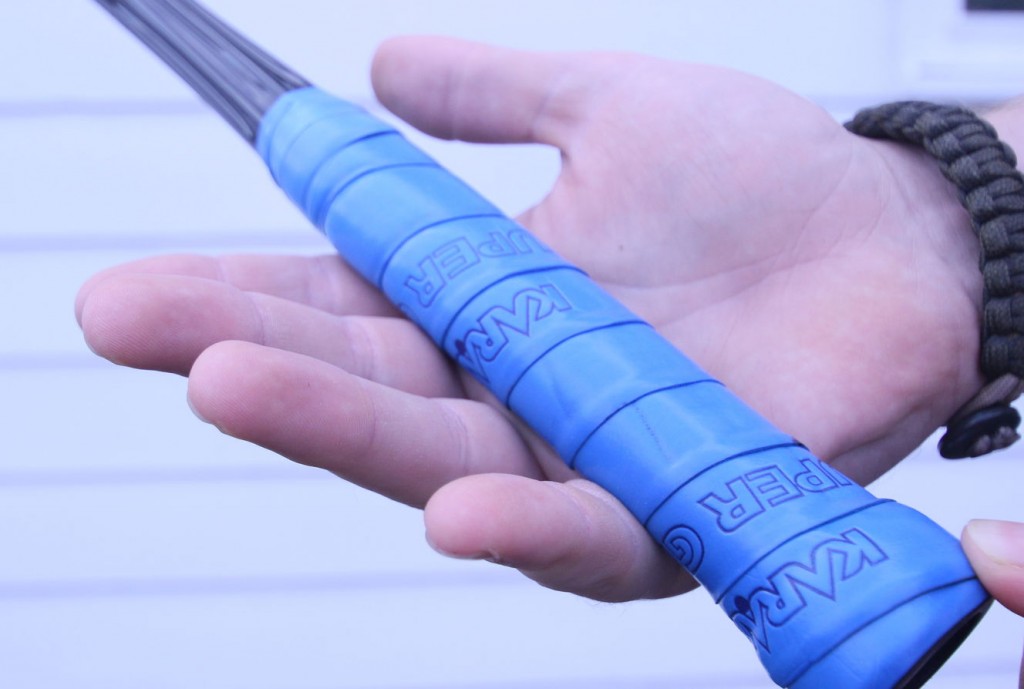
lay the squash racket over the palm of your hand

Make sure the racket is laying across the top of your palm at a slight angle, so that the side of the racket that will make contact with the ball is at an angle greater than 90 degrees. The racket face should not be facing straight towards the front wall or worse, pointing towards the floor at an angle smaller than 90 degrees like a tennis racket, which means the ball will always go downwards unless players go to great lengths with the wrist and lower arm.
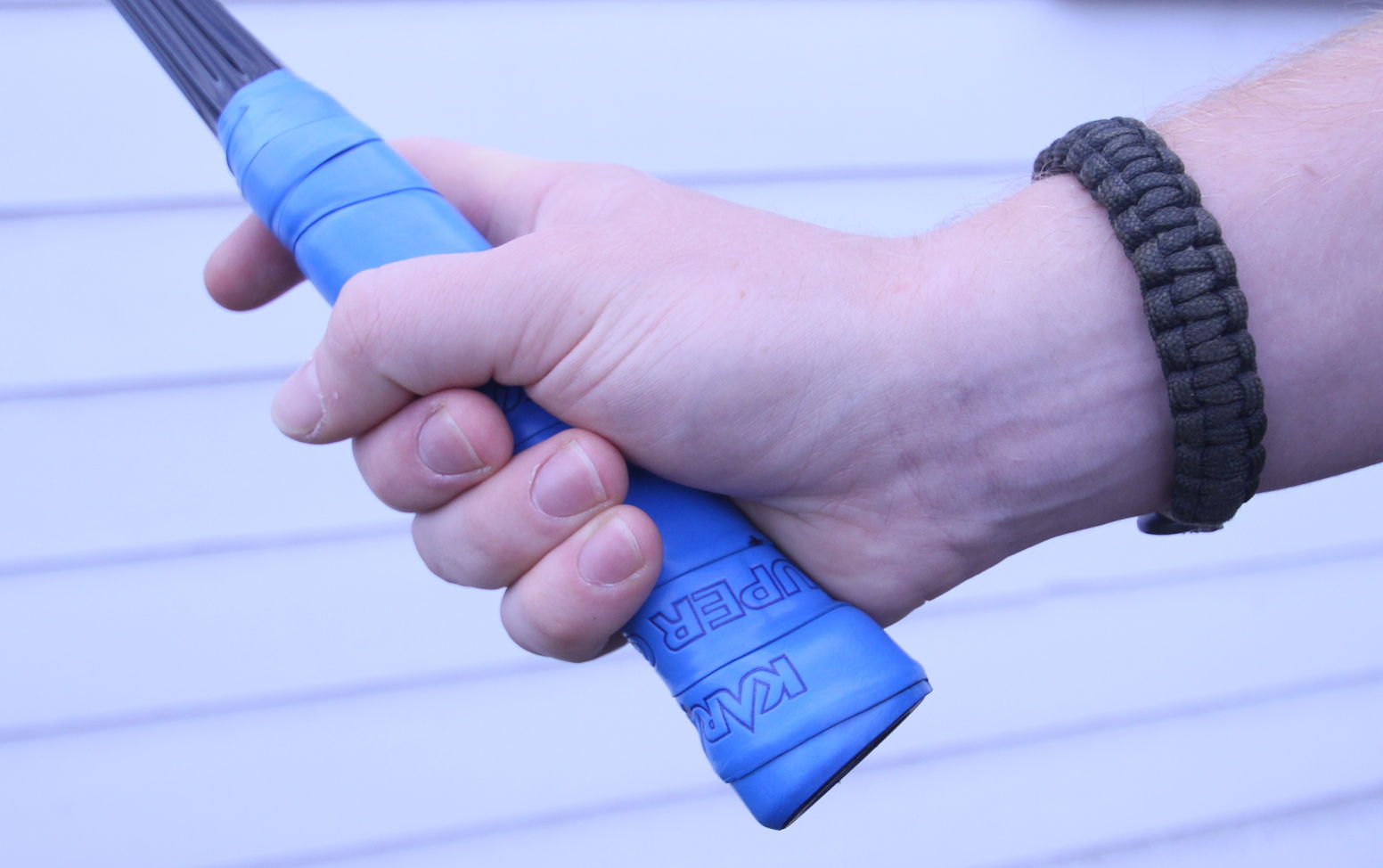
the way to grip a squash racket is often described as like shaking a hand

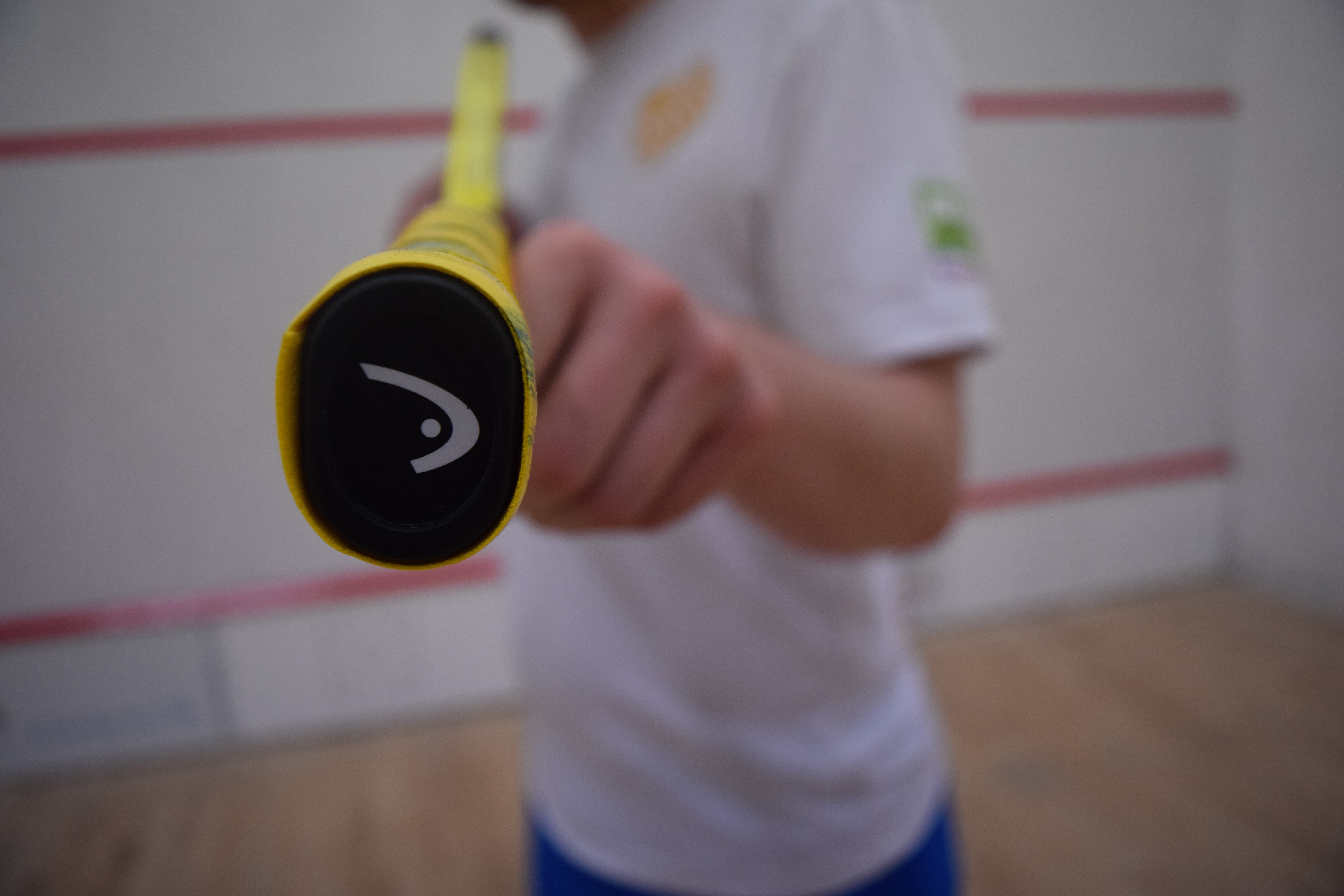
The way the hand grips the racket is often described as being like shaking someones hand. This is a good way to imagine the basic grip. Ensure that your index finger, known here as the trigger finger, protrudes upwards slightly away from the rest of the fingers, making a V-Shape with the thumb.

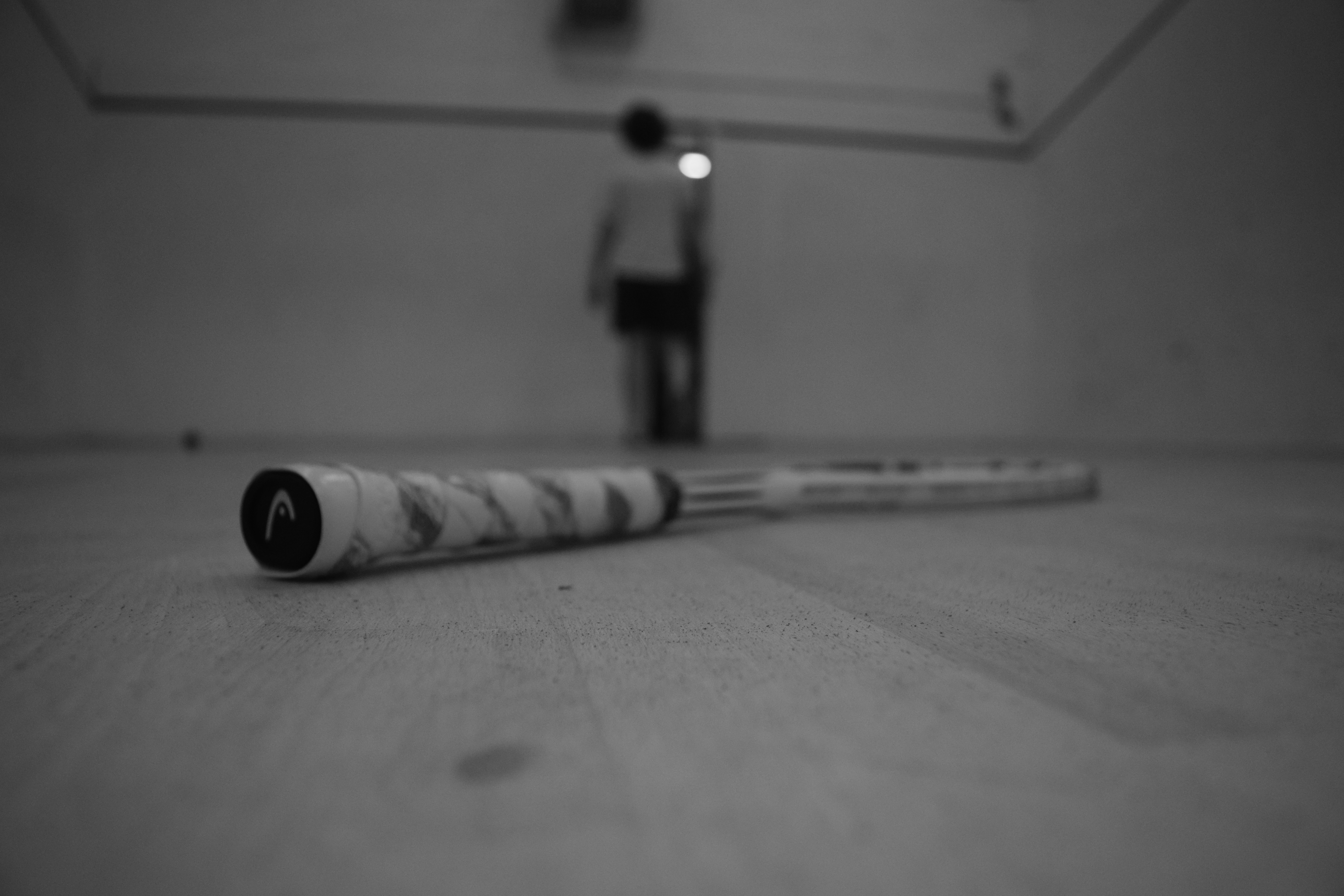
It is universally recommended that you hold the racket in the middle of the grip. This is because it enables you to get a balance between power and control. The lower you hold the racket, the easier it is to achieve power and the higher you hold the racket the easier it is to achieve control. It is not necessarily wrong to hold it at the lower or upper end though, so feel free to experiment. If you are struggling for power or control on a consistent basis though, it might be best to hold the racket in the middle.
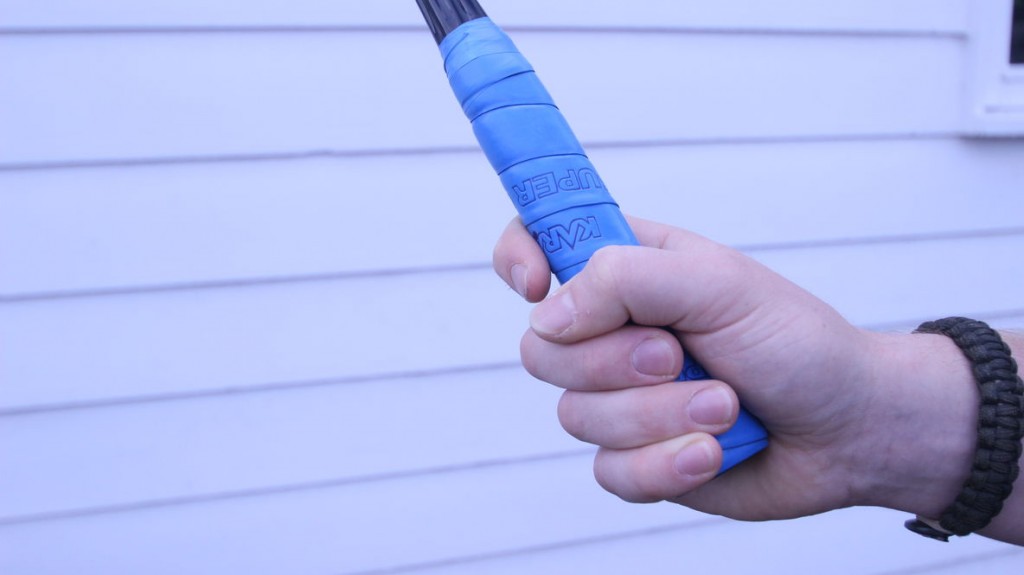
A lower squash racket grip
A lower grip

Lastly, your hold on the racket should be firm but not rigid. You can test this by having someone try to pull the racket out of your hand. If you are gripping it correctly, it should gradually slide out of your hand. If someone is tugging your racket fiercely and it won’t move, you are holding it far too tight.
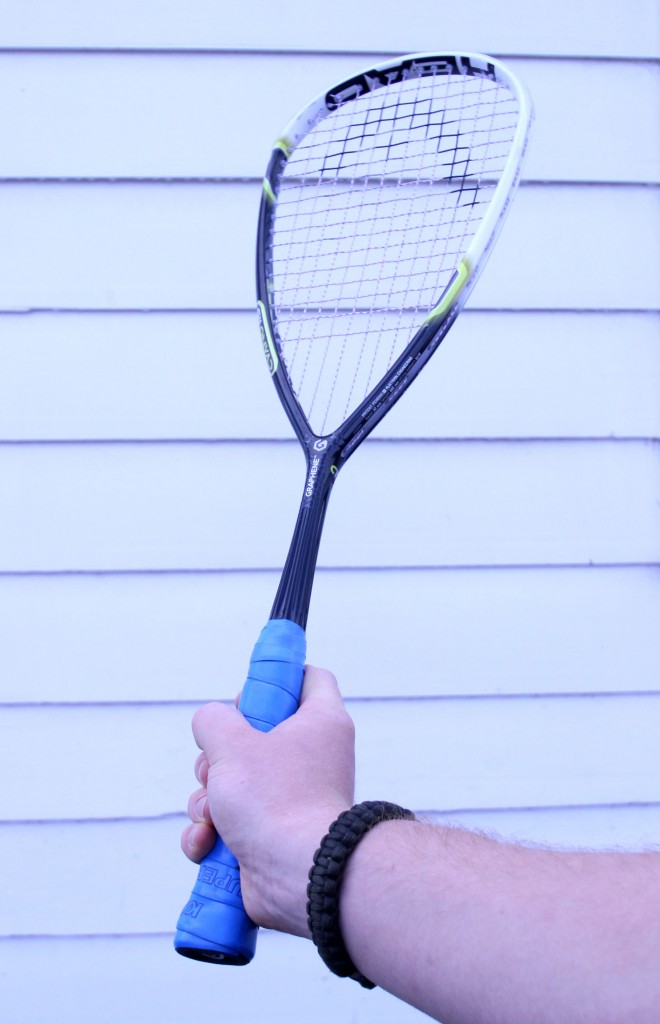
grip a squash racket like this

More squash tips


Filed Under: Grip, Technical, Tips

Knocking-up with purpose – Part 1: The body 


Warming-up the body 

Welcome to Part One of a special series of blog posts on warming-up or knocking-up before a squash match.

Out of the all the people that play squash, very few warm-up. Most people will knock-up and hit the ball to each other for a couple minutes at best but Squash and warming-up are much more complex than this though.

A thorough warm-up should not only touch upon your hitting but it should also warm you up mentally, get your movement up to scratch and also sharpen your racket speed and skills. If you cover these four major areas, you will find you are able to start the match at a high tempo, fully focused and playing good squash, rather than having to wait until the second game to get into it.

Hitting the ground running – literally. 

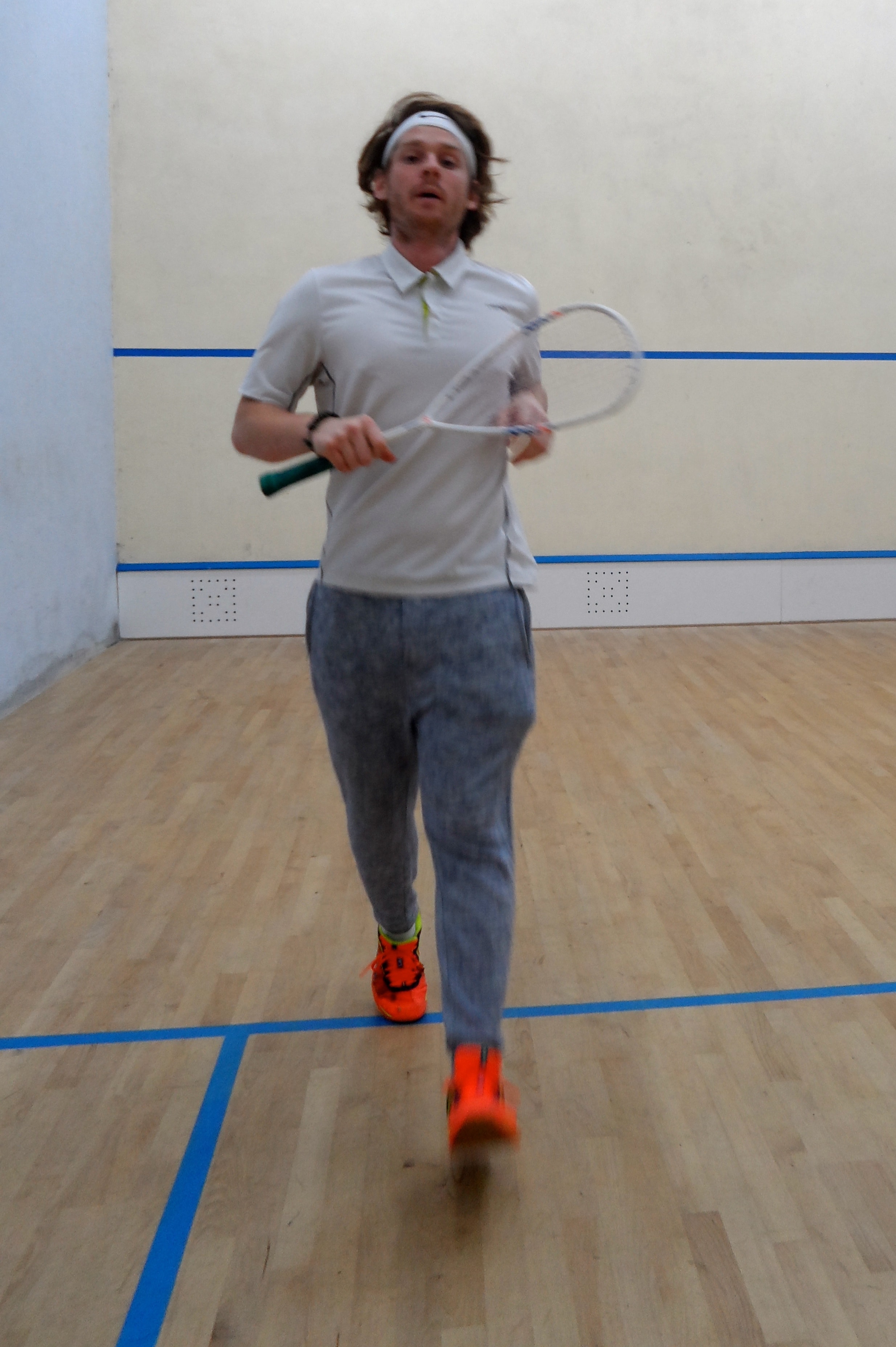
In this post, we will be considering how to warm-up physically so that we can start the game fast and ready to move around the court as quickly as possible.

SAM_0703-min

Moving dynamically

Getting the heart rate up is just the beginning. Whilst you need to get the blood pumping, you need to also really get warmed-up for squash-specific movements. There’s twists, turns, take-offs, quick steps and last ditch sprints and you need to be prepared to do all of these.

Quite often, you won’t be able to get on court before a match if you’re playing at busy times, in a team match or at an event so any sort of space you might find near the court will do. Once you’ve got the heart rate up with a bit of gentle jogging up and down (if you are able to access a gym bike, this is a great warm-up for a couple minutes), start working in more dynamic movements very quickly. Skipping is always a good one to do but only in short sharp bursts for no more than 30 seconds as you don’t want to wear yourself out! If you haven’t got a rope, any other kind of quick jumps will suffice. If you can find some stairs, some short, sharp bursts of step-ups are also good.

Next, start looking to up the intensity with some short sprints. You only want to sprint 5-10m though as this is the sort of distance you will cover regularly during a game. After doing a few sprints, look to make the sprints a bit more squash specific by decelerating and lunging on alternate legs at the end as if you were getting down low to play the ball. If you are able to get access to a court pre-match, doing 30-60 seconds of ghosting is a great way to get into squash patterns of movement.

Try carrying this onto the court during the knock-up if you can. Perform small jumps or hops whilst your opponent is hitting the ball to keep yourself primed and whilst you’re hitting the ball, try and incorporate some movement. Perhaps you’ll boast to your opponent’s side and then play a straight drive to them. If you can get on court by yourself, have a mini-match with yourself and run around the court chasing your own shots. It’s a great way of playing a variety of shots and getting the hear rate up.

However you do it make sure that when you start your match your heart rate is up and your body is raring to go.

Look out for the next instalment of our special series of posts on the warm-up in squash, where we will discuss warming-up mentally.


You can find out more about how to get yourself ready for your big match on our page on ‘Getting in the Zone’.


Filed Under: Mental, Physical, Pre-match, Tips

Playing squash whilst coaching or playing other sports


Does running, tennis or coaching truly affect your performance?

I’m running the Marathon in April and as such have begun training for it. One of the first things many people said to me was ‘that will affect your squash’ and some went the whole hog and said it would ruin my squash!

I’ve also heard many people say the same thing about coaching. There’s a widespread belief that coaching has a negative impact on your playing ability and in some ways it has affected my game but I would say it’s affected my play more on a psychological level rather than on any scientific level. I often go with a Coach’s mindset and don’t have the same intent to win as I would normally in a match. Sometimes I simply would rather not be playing a match after a day of coaching!

I’d say the same thing applies to the Marathon training. I don’t I believe that I’ll become really slow or lose any edge physically, not unless I stop playing squash or play less squash to make way for the Marathon training, which I guess I will occasionally.

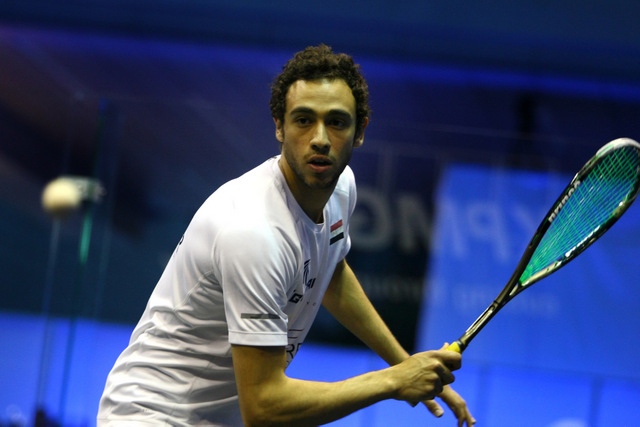
A lot of people also believe that tennis or badminton will ruin your squash. I wholeheartedly disagree. The best junior players I’ve ever worked with had ability in at least two of tennis, squash and badminton. One of the most talented I’ve ever seen was in and around the county squad for all three sports. Watching Ramy Ashour, I’m convinced he played tennis as a youngster and this is one of the reasons for his unique style and shots.


ramy-kpmg-cup

Lack of alertness

I think the negative impact from running or coaching is psychological and in many ways not actually real or quantifiable. The best way I can describe it is a lack of alertness.  When you’re just running, you can escape to anywhere in your mind and believe me, I try to scamper away as fast as I can from the fact that I’m running. In squash, you have to be so alert and attuned to all the subtleties when you play good players. If you aren’t alert, you start to get sloppy in all aspects of your game, which culminates in below-par performances. It can be similar when you’re coaching, as you’re not trying to win the rally or match as much and might be just keeping the ball alive or feeding for spells. It’s very easy psychologically to slip into an auto-pilot mode which is very difficult to recover from.

On a positive note, I’ve already noticed my recovery time between games and matches has increased significantly and I feel I have far superior endurance after just a couple month of training. Another positive is I feel much more competitive and highly charged, whereas recently I had been feeling somewhat indifferent about playing sport. The commitment to the Marathon has invigorated my all round competitiveness.

As you can see, I’ve not offered any empirical or scientific date to back up my beliefs that this is all in people’s minds! I guess I’ll just have to see how things go as I get deeper into the Marathon training.


Filed Under: Tips

Complacency


The little devil on your shoulder. 

In my opinion there is nothing more dangerous to your performance in squash, or for that matter any sport, than complacency.

One phrase that typifies it for me and one that I hear a lot is ‘you should beat him/her’. Why should I beat them? Sport isn’t a foregone conclusion. We wouldn’t bother turning up otherwise. We might as well all give up. Yet if I had a pound for every time I heard someone utter that phrase, well I’d probably have retired from squash coaching by now.

DSC_0621-min

Never expect to win

You should never go onto court thinking you should win. Thinking you could win is an entirely different thing and a very positive feeling to have. Thinking that you should win or that you deserve to win though could be the death nail in your game.

Once you start thinking you should win or that you are better than your opponent, everything starts to unravel. Perhaps you prepare for the game a little less seriously (maybe you even play or go to the gym the same day thinking it will be good to get a proper run around before the match – or both – that was a massive mistake), warm-up half-heartedly and then start expecting your opponent to be so overawed by your quality they won’t get most of your shots back.

You might not be quite so foolish but no matter how hard you try, if you start thinking for a second that you are better than your opponent, you will start to decline. Your concentration and focus of course slip first and this is slowly followed by your shot selection and anticipation. Of course once these start to go, your quality of shots won’t be long after as your opponent will take advantage of your poor choices and you won’t be in as strong a position for your own shot. Once the quality starts to go, you of course start to win fewer points. Very quickly, this can spiral out of control and you can find yourself becoming frustrated, which of course leads to further problems. Eventually, it can all completely snowball and result in you producing one of the worst performances you’ve ever churned out. You’ll quite conceivably lose to someone you should never have lost to and tell anyone who can listen you’re a better player than that.

Make sure you don’t get caught out. Ignore anyone telling you that you should beat someone. If you are playing someone who is supposedly inferior to you or is someone you consistently beat, set yourself a challenge. Perhaps tell yourself you will keep your opponent’s game scores under four points, play with a handicap or be aiming to do something difficult such as taker everything before the back wall. A target like this is a great way of focusing a wandering mind.

You are only as good as your last match. In fact, you’re only as good as your last point. Never forget that. Just as there’s always another day for you, there’s another day for your opponent and this may be their day. All those motivational one liners work both ways.

You can read more about getting focused pre-match and during the match in our page on ‘Getting in the Zone’.


Filed Under: Mental, Tips

How to overcome Fear of Failure


Handling and wielding your fears 

Fear of Failure can be both a positive and negative thing depending on how you handle it and when it occurs. Fear of Failure can be crippling during or just before a match as we will look at in Fear of Failure Part I but it can also be a great source of motivation if used during preparation as we shall see in Fear of Failure Part II.

In the following paragraphs we’ll outline ways in which you can handle Fear of Failure whenever it might occur.

Fear of Failure Part I: Game Day

Fear of failure can be one of the most debilitating conditions in sport. It usually afflicts the very motivated and rather cruelly; the more you put effort into trying to shake it off, the worse it gets.

Fear of failure is not necessarily caused by a player feeling unconfident or being of a nervous disposition. It is less about a person’s confidence and more about expectation. Some players simply feel they have to win – that they must win. Maybe it’s for their parents, perhaps its because they simply feel like they have to win the game to meet their own high expectations or maybe they feel they have something to prove.

The underlying problem is these players are thinking about winning. The more they think about winning, the more they increase the pressure on themselves. In a twisted sort of psychology, it’s actually more beneficial to think about losing a game. This is not to say you should write yourself off and decide you won’t try because you think you have a tough opponent. It’s about rationalisation and being comfortable and accepting the possibility you might lose.

When you think about losing, you rationalise your feelings. For most people the experience of rationalising losing will be surprisingly liberating. If you embrace it, it makes you stronger. You realise that nothing bad will actually happen if you lose. It might hurt and be disappointing but the sky won’t fall down and your parents (probably) won’t cast you aside. You realise that even if it all goes horribly wrong in the game, there will be more opportunities. Suddenly, the pressure seems to subside.
DSC_0552

A lot of players play their best squash in games where they perceive themselves to be the underdog. Almost everyone can relate to that feeling of having felt like they upped their game against a better player. Then you play a player who is about your level or someone you would expect to beat and often you don’t feel like you played so well. How many matches can you recall where you feel you played really well against a player who was below your perceived standard? Even a similar standard? Why is that? Why do we up our games against players who are superior to us? I believe it has a lot to do with what we’ve discussed above. When playing a player you know to be of a higher calibre, you often relinquish all expectations. As such, you free yourselves from all pressures and the constraint of expectation. When playing a player you are expected to beat, you think only of winning and when you think of winning, you apply pressure to yourself and often look to win points quickly or get concerned very quickly if they win a rally or two.

It seems completely illogical. How can actively considering thoughts of defeat be beneficial? As someone who has been crippled by fear of failure myself, I encourage you to give a try and see how it goes.

Consider what it would be like to lose. Think what it would be like to lose without winning a point. Just think about it for a minute. I lost 9-0, 9-0, 9-0 in tournament play before in a tournament where I was so crippled by my expectations that I had to run off court in the middle of a game to be sick.  It was obviously horrendous at the time but I remember that sometimes and think that even then, it wasn’t all that bad. That’s about the worst it can get and now it’s nothing but a funny anecdote and story to tell. It’s highly unlikely something even that bad will ever happen to me again or to any of you. If it did though what would you really lose? I played in several more tournaments that season and dozens of league matches. I got a million more opportunities. No one remembers it happening now. In fact, barely anyone witnessed it apart from the marker, a few parents and a couple of bored kids who were mostly looking at their phones and gameboys. No one cared and certainly no one ever laughed or teased.

No one cared or judged me and it wasn’t the last time I played squash and my mum even bought me a burger and chips. After suffering the worst loss I of my life in rather humiliating and dramatic circumstances, not a single bad thing happened. If nothing bad can happen, what is there to fear? If there is nothing to fear, there is nothing to lose. If there is nothing to lose, you’ll play with freedom and a clear mind, leaving you to make sound judgements.

Don’t dare to dream of winning, dare to dream of losing. You might be surprised at the outcome. I’ve heard it said that it’s trying to play like it means nothing to you, when secretly it means everything – that’s quite a difficult balance to achieve but it can be achieved if you embrace both winning and losing.

Our deepest fear really is that we are powerful beyond measure.


Fear of Failure Part II. – The Fear long term 

As we have seen, one way of dealing with the fear is to embrace and rationalise the fear of losing. However, you can go in the other direction completely with fear of failure, as you can harness that fear as an incredibly powerful motivational tool to drive you on.

Tim Tebow, an American Football player, coined a phrase I like very much and used when I used to train; ‘Somewhere he is out there training while I am not, and when we meet, he will win‘. He motivated himself by competing with an imaginary opponent who would most likely better him in a match or statistics wise if he was working harder and smarter than Tebow was. He used the fear of being bettered by someone to great effect and thus he harnessed his fear of failure.

Tebow didn’t allow the fear of failure to cripple him – he used it to better his training. He used the fear to motivate himself to improve his preparation to give him the best chance possible of being successful on match day.

If you use Fear of Failure to improve your preparations, it can be a fantastic weapon. Use it to make your train more, to research ways to improve the way you train, to make you stretch and recover properly and do those little extras that might give a 0.1% edge to your game.

27C1C6DC00000578-3046342-image-a-17_1429487349966-min

“Somewhere out there he is training while I am not, and when we meet, he will win.”

Be wary about comparisons though – ‘The race is long and in the end it is only against yourself’

I personally think it’s important not to get to caught up in comparisons though – philosophically and performance wise – I think you should just focus on being the best you.

As I write this, Leicester City have recently become Premier League Champions. This is the stuff dreams are made of. I feel though that they told the truth all season though when they said we are just focusing on staying up, then that they were just focusing on finishing in the top half, then getting a certain number of points, before finally acknowledging they could actually win the league at the very, very end. I don’t think they thought about outperforming Arsenal, Manchester City or Tottenham. I think their target all along was just to be the best that they could possibly be (to a very high level!) and see where it could take them. Indeed, legendary manager Sir Alex Ferguson says in his book ‘Leading’, that he never set his teams the goal of winning the league or winning the Champions League. The goal was just to win every match, one match at a time, safe in the knowledge they had done everything better than everything else and so had a high chance of being successful in winning matches. They went into each match one at a time expecting to win based on their preparation.

So it would seem you don’t want to judge your success in a race style comparison – e.g. I need to match/better the number of trophies John wins or I need to win the cup this year – as it will hold you back as it’s the wrong mentality. This will make you choke and play with the fear we saw in the first section above. These people or trophies are a factor outside of your control and so thinking about winning them is the wrong thing to do as it is the wrong sort of pressure to apply to yourself. Tebow’s imaginary character who was training when he wasn’t didn’t have a list of real accomplishments for Tebow to better, he was just there to see how far Tebow himself could get.

I always tell the juniors not to watch their opponents warm-up. Every coach will remember at least several occasions where a player of theirs has watched another player warming-up and started doubting themselves immediately. Often, that player just looks good in the warm-up or they don’t actually realise that they themselves look like that if not better.

As long as you focus on just improving yourself and doing the best that you possibly can, you will go far. If you do your very best and you don’t win, well there might have been nothing more you could have done but you can be content in knowing you did your best. More often than not though, you will be successful if you do this and over a period of time, you will see most of the results took care of themselves. (Of course it’s also impossible to ever be complete, so even if you can’t work harder, there are always ways you can work different to improve.)

Use the fear of defeat to motivate you and push you to greater heights because remember, somewhere out there he is training while you are not, and when you meet, he will win.

For more information on how to handle and rationalise beliefs and thoughts holding you back, read our article on Belief.


Filed Under: Mental, Tips

  • « Previous Page
  • 1
  • …
  • 12
  • 13
  • 14
  • 15
  • 16
  • …
  • 20
  • Next Page »


Terms | Privacy policy | Contact | About us
Web Development By S G Barker.