Squash Company

Squash coaching with passion

  • Squash School
  • Blog
  • Videos
  • Shop

Who can handle the oxygen debt best?

When you play someone who is at a similar or higher standard of ability and fitness to you, you will often spend much of the match in oxygen debt.

What is oxygen debt?

Oxygen debt occurs when your body isn’t able to get sufficient oxygen around the body quickly enough. The main symptom of oxygen debt is heavy and quick breathing, and unfortunately in squash you don’t get much time to let your breathing calm down. Soon after a tough rally is finished, the next one begins. 

How will it affect the match?

You’ll never quite become comfortable physically in a tough match, which means a lot of the game becomes about who can cope with their oxygen debt the best. This is especially important the better a player you become and at a high club or county level. At this level, the match can often become a question of who can maintain their skillset, shape, technique and shot selection best under the pressure. Naturally, a big part of playing at a high level is learning how to handle and adapt to being in oxygen debt.
Recognising when you need to change your game

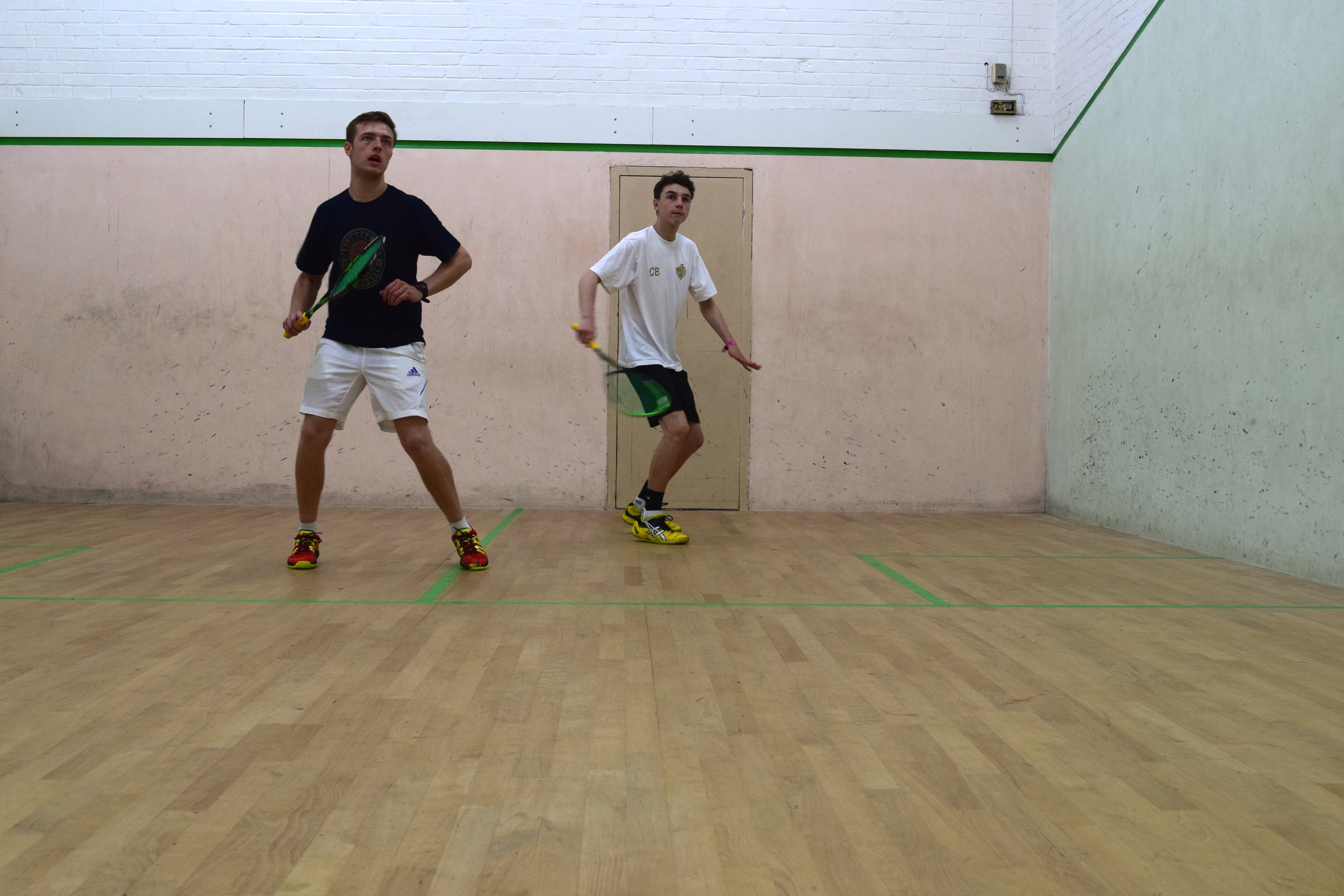
It sounds obvious that everyone should know when they are tired, but quite often players will go into oxygen debt on auto-pilot, and start playing sloppily without really knowing it. They’ll instinctively be tempted to start going for ultra-attacking shots and try to cut rallies off early, which can be effective if you are still able to move your feet sufficiently to get into a good position. Quite often though, positional play becomes really sloppy when you are tired and so forcing an attacking shot isn’t a good idea. More subtle signs of oxygen debt include your length often starts bouncing shorter, which will create other problems if you are unable to get the T-Position back and giving your opponent a chance to attack. 

Signs you have become affected by oxygen debt include:

  • Not recovering to the T-Position, or not recovering the T quickly enough 
  • Length shots bouncing short
  • Trying to win the rally really quickly
  • Attempting to play spectacular shots that aren’t really an option 
  • Slow recovery between rallies
  • Sustained heavy breathing
  • Hitting the ball out more than normal
  • Shots losing accuracy

Some of these are very obvious, but you must act the moment you notice one of these things, or any other symptom of tiredness, affecting your game. 

How to adapt – using the height of the court 

  • Mentally re-focus, and remind yourself what you want to achieve: 
    • Hitting length higher and slower
    • Attacking earlier in the rally, but still not forcing attacking shots

The first thing is to stay calm, which can take a bit of doing, and avoid trying to win rallies immediately. After that, it’s important you focus on your length shots, as accurate length which gets your opponent behind you will help you to handle a lot of the problems that oxygen debt brings. 

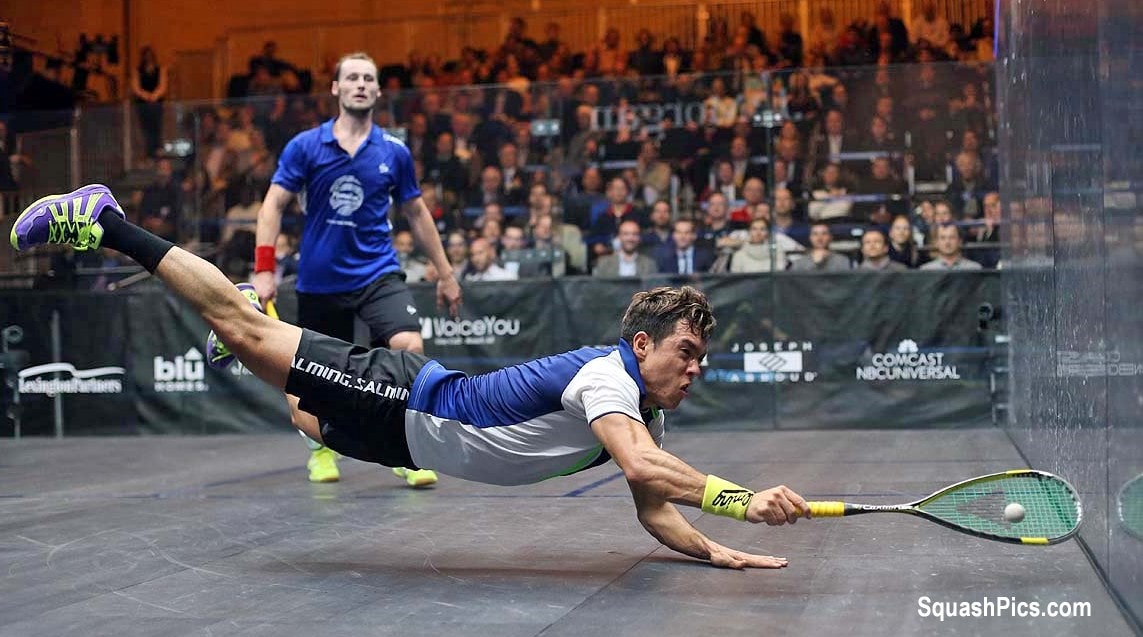
Start by aiming a bit higher on the front wall with your length – hit slower drives and go for more lob shots – as this will help you still get your length shots to the back of the court, but also give you a bit more time to recover to the T-Position. This deals with two of the major problems of oxygen debt. If you are managing to get the ball to the back of the court with high slow shots, and therefore get your opponent behind you, you will also typically get more opportunities to attack and intercept their shots, which means you don’t need to force attacks and take big risks in the pursuit of winning rallies.
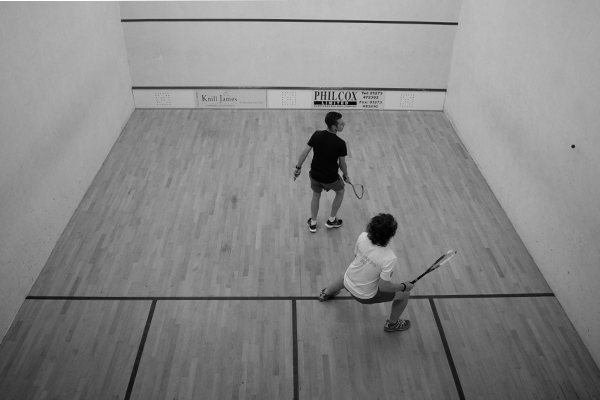
When you are tired, you can and should try to win rallies when the opportunity arises. Trying to play lots of winners can be a very good strategy when it works, but it is high risk when you’re tired and not moving your feet well. The key to getting the right balance with winning shots is to attack earlier in the rally where possible, but not to force opportunities. Try to ensure that you are going for the majority of these winning shots once you have moved your opponent behind you – ideally with your high, slow lob – as you would in the majority of the match. The aim is to try and take the first or second opportunity you get, perhaps a loose length shot from your opponent that you can volley, rather than being more patient and waiting to see if you can create a better opportunity. You need to stop trying to keep moving your opponent and instead focus on being clinical as soon as a chance presents itself. This doesn’t mean forcing a winning shot, as it might take dozens of shots for you to get an opportunity, but don’t pass that opportunity up when it does come, be it the fourth or fiftieth shot of the rally. 

Start by recognising you are in oxygen debt, stay calm, aim to get the ball to the back of the court in any which way, and then go from there. Let us know how it goes below! 

Filed Under: Matchplay, Physical, Tactical, Tips

How to play against good retrievers

The key thing when playing someone who retrieves the ball very well is patience. It is very natural to try and make your shots even better and go for the spectacular ones to win the rally; to try and hit drops a little lower, or attempt shots that aren’t really on. However, this strategy will typically lead to errors and therefore increased frustration for you. 

Expect them to return your shots

The mindset necessary to beat someone like this is to expect them to get all of your shots back. Do not be disturbed if they retrieve a shot which would normally win a rally. If they return your shot, then you simply play another one, and another one, and another one, until the rally is over. Be prepared for this to last several games; if they are retrieving a lot, it is likely they retrieve a lot in matches in general and so they will have a high level of fitness from all the running they do. 

Your aim is to keep them moving. You need to keep playing quality shots and going short when the time is right – as you need to make the court big for good retrievers by hitting the ball into open spaces – but without trying to hit the winning shot. This can be a fine balance though, as you don’t want to play drops or other attacking shots too high either in attempting to avoid making a mistake. 

Deal them a mental blow by remaining unbothered by their retrieving 

If you expect them to return every shot, you will not only prepared for them to return the shot mentally, you would also be prepared positionally as you’ll already be moving ready for them to get the ball back. If they don’t return the ball, it is a bonus, but always expect them to. This way you will not be rattled or concerned, which helps you mentally during the match and will also damage them mentally if they don’t think you are threatened by their retrieving. 

A lot of fitness is mental, and if they start to feel mentally concerned or wearied by you prolonging the rallies and not being affected by their retrieving, it may take the energy out of them and they might struggle to keep retrieving the ball as well. As mentioned earlier, this might take one, two or even three games or more to achieve against very fit retrievers, but most players have a point where their fitness will be sapped by their mind if you can reach it. 


Are their shots as strong as yours?

This is a bit of a generalisation, but if a player is relying on retrieving, they are likely to not be as accurate with their shots as other players playing at a similar level, otherwise they wouldn’t be relying on speed and fitness. If this is the case, be sure to push home your advantage. The key to this, as with a lot of things in squash, is to make sure your length is accurate and clears the service box every time. You should do this with a combination of straight drives, lobs and straight long volleys, and not rush to go short until the moment is right. This might mean not taking the earliest opportunity, but waiting for a better one to present itself, which it will if you are more accurate than them, and you allow this to show by being patient.

Using delay and putting the ball back from where it came 

Good retrievers often sprint a lot, and you can use this against them. If they are sprinting a lot to get back to the T-Position, their weight will be fully committed in the direction of the T-Position, and this will make it very hard for them to slow down and change direction. For example, if they retrieve a drop shot, they will often turn and sprint back towards the T-Position, meaning they will find it very difficult to turn around and retrieve another drop shot if you play it. If they are sprinting to the T-Position from the back of the court, they will often find it hard to return to the back if you play a length again, especially if you play a long volley, which is why using that straight long volley mentioned in the last paragraph is important.

Try out our tips and let us know how you get on!


Filed Under: Mental, Physical, Tactical, Tips Tagged With: fit, fit players, retriever, retrieving, squash tactics, tactics

Adapting the advice you receive to your needs and life

The problem with advice is that lots of people who give it to you only see you in a single match, or a particular situation or environment. Therefore, they don’t have a true picture of you in squash; only you have that. So you need to work out what you can take – if anything – from the advice and thoughts offered to you, and how you can make it work for your style and life.

Sometimes the advice itself is wrong, but the point underneath it is right

Someone once said to me that I rush to intercept too many shots before the back wall, but the problem is for me, I am not particularly quick and I am also tall, which means I need to use the volley a lot in order to control the game and attack. They were right in saying that I made a lot of mistakes doing that in this game, but it wasn’t wise medium or long term advice – I need to volley a lot, and so leaving lots of shots to bounce off the back wall isn’t really an option for me. 

This isn’t to say there was nothing for me to take from their thoughts. They had correctly spotted I had struggled to intercept the ball with any control or accuracy on a consistent basis. The reason I had been inconsistent was that I was playing someone who was in my opinion a better player, and they played at a higher speed than I was used to, and so my shots and decisions weren’t of the same quality as his. I needed to get experience of playing players who played at a higher tempo so I could acclimatise to volleying in high-speed games. No matter how good you are, if you play someone who is a level or two above you, they can make you look incredibly stupid with their tempo and the time they take away from you. 

I also tried to improve my watching and anticipation of the ball, so that I could see volley opportunities earlier and therefore be prepared earlier, which is always helpful when the game is fast. There was also room for improvement in my turning to intercept cross-court shots on the volley, as well as my tracking of the ball. By turning front-on and using my ‘radar eye’, I was able to track the ball better and therefore volley more. All of this helped me to take the ball earlier and thereby be more comfortable at a higher tempo.


Practicalities: doing what you can 

Sometimes the advice might be good in theory, but it’s just not practically possible for you. At a higher level, you need more fitness than just playing squash two to three times a week will provide you with. It might be difficult to find the time to start a gym regime, but there are still things you can do to help tip the balance. Stay for an extra 5-10 minutes after you play a match, and try to do lung bursting sets of court sprints – say 20 laps in 55 seconds (or less if you are capable!) or 12 laps in less than 30 seconds. You can aim for more laps or lower time, or give yourself less rest time as you get better. You’d be amazed at how quickly you improve by doing three to five sets once or twice a week. If you really want to test yourself, do the sprints before you play and see how you cope with the match whilst physically struggling.

Tailoring things to individuals is perhaps more widely accepted in the nutritional and physical industries, and in the pursuit of excellence in squash, you’ll need to see what works for you in both of these areas. There’s no one size fits all solution in squash, or any of these industries, so make sure that you don’t blindly accept all the advice and lessons given to you, but weigh them up and see:  

  •  If the person has a valid point – although it may not be exactly what they said, like the volley example given earlier. 
  •  How the theory behind it can be best applied to your lifestyle, personality and game.

Reflect on people’s thoughts in this way and you can squeeze the best out of the knowledge of others to help you develop your ability on the court and understanding of the game. 


Filed Under: Coaching, Mental, Off-court, Pre-match, Tips, Training

Don’t look up at the balcony

A short post this week, just a small hint about something not to do in order to maintain focus. Do not look up at the balcony, or through glass or to wherever there might be people watching. A surprising number of players get very distracted by it and it is rarely good for your performance levels. Once you start looking at who is – or isn’t – watching, you start focusing on things outside of your control like results and perceptions, which can lead to trying to win rallies too quickly, and you’ll lose the focus you need to really compete at your best level.

Any excuse to post this picture… don’t be distracted no matter what your surroundings! 

It’s not impossible that you’ll get a bit of an ‘ego boost’ or start playing harder to try to impress someone, but if that’s happening there is something else you need to work on in the mental side of your game aside from this!


If you do find yourself looking, or tempted to look, at the balcony or spectator area, you need to acknowledge it quickly and try to re-focus. This might involve ‘centring’ yourself by putting your hand to the side wall – using the touch of the wall to bring yourself back to the present moment. Or you can use a trigger word or affirmation in your head. You can read about these techniques in more detail in our posts on how to re-focus during a rally, and how to get in the zone. There are mental tips and tactics in Squash School, as well as blog posts which cover a wide array of thoughts on how to focus at different points of a match – e.g. at 1-1 in games, complacency, motivation, different mindsets and much more in the ‘Mental’ tag under the heading ‘filed under’ below this post.

Do your best at keeping it together and remain a student of the game and of life!


Filed Under: Mental, Tips

Watching for signs your opponent is tired

When to go in for the kill

We’ve discussed a little bit on the site before about when the crucial moments are in a match, and examined the need to come out flying at the start of the first game, the benefits of putting your all into the third game when the score is tied at 1-1 and how to see out the match when you have a 2-0 lead in games.

Today more generally we are going to discuss how to identify potential turning points in matches and how you can take advantage of them.


Looking for signs

Looking for signs your opponent is tired is a big part of knowing when to go on the attack, and changing your style accordingly to take advantage of that weakness. Signs of tiredness in your opponent can include obvious things like hearing them breathing harder, watching them pretend to tie their shoe laces or take an elaborate route to the service box between rallies, but sometimes they can be more subtle, especially if the player is fit. Other signs may include:

  • Moving into the front court slower
  • Volleying less
  • Trying to slow the pace
  • Trying to win the rally quicker than normal
  • Playing short shots earlier than normal
  • Length shots bouncing shorter than usual

What to do with this information 

So you’ve spotted your opponent is tired, what do you do? Sometimes they’re tired because you’ve had a gruelling game, and so you are also tired. Now is the time to dig deep and show you want it more: if you can press ahead and go on the attack at this point you are likely to overwhelm them into submission before you become exhausted yourself. It is better to be the one on the attack as tiredness sets in, as you’d be surprised at how many people lose hope if they come under a renewed attack when they are tired. They will rarely stop to think whether you are also tired, and will mostly believe that you must be still going strong. It is a bluff of sorts. If you’re not as tired, then it’s not a bluff and you need to really up the intensity.

The best ways of going on the attack in this instance are:

  • Keeping your opponent moving, without aiming to hit the winning shot. This is a delicate balance, as you want to take opportunities that come your way but most importantly, you want to keep making your opponent run and not give away errors. Hitting into empty space is the best way to achieve that. This is a good strategy against a player who is quick or who is very fit, as even though they’re tired, they’re likely to still be reliant on their physicality and are probably experienced enough to be able to draw on it even when tired. Hitting into open spaces keeps the pressure on them and keeps them moving. 


  • Taking the ball earlier wherever possible. Look to volley and make use of the half-volley, and hit the ball as high up the court as possible to give your opponent less time to recover between shots. This point is a great strategy if you know you are fitter than your opponent, or you have enough energy. It’s also good if they are starting to make mistakes, as it will increase the likelihood of them making even more. 
  • Making sure you get your own length shots past the serve box. This point is particularly important if you are playing a highly experienced player, as they will likely be able to cope with their own fatigue and still produce decent play. This keeps them pinned behind you, which means you will get more opportunities to attack, and they will be less able to attack, giving them no respite. Win the length battle.

Be on the lookout for the various signals your opponents give off during your next few matches, and see if you can work out how best to take advantage and improve your game management.

Filed Under: Game Management, Mental, Tactical, Tips Tagged With: fatigue, game management, is your opponent tired, squash tactics, tactical tips, tactics, tiredness, watching for signs your opponent is tired, what to do when your opponent is tired

  • « Previous Page
  • 1
  • 2
  • 3
  • 4
  • …
  • 20
  • Next Page »


Terms | Privacy policy | Contact | About us
Web Development By S G Barker.