Squash Company

Squash coaching with passion

  • Squash School
  • Blog
  • Videos
  • Shop

The importance of deception in the long run in a game

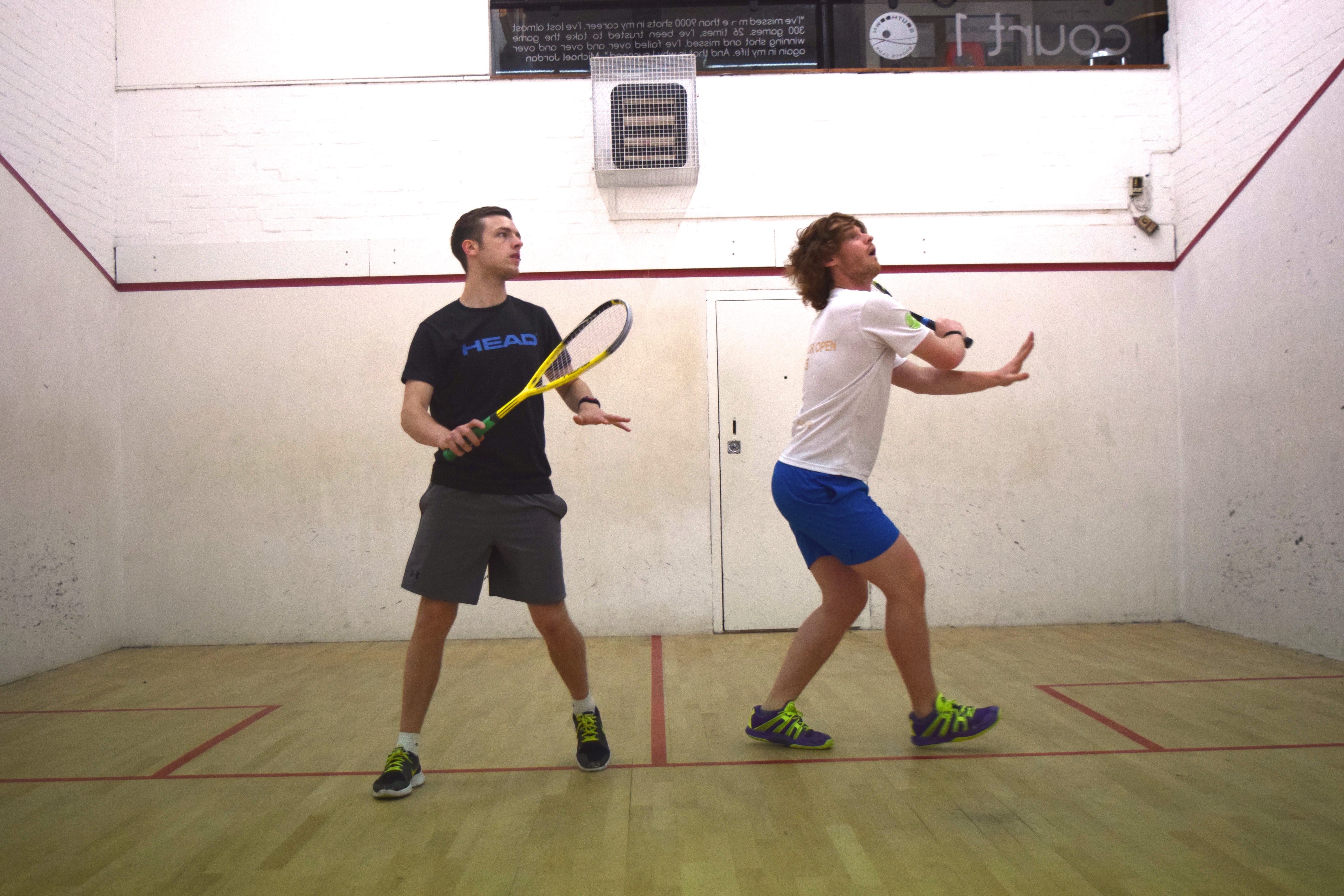
It’s so important you develop deception and/or disguise as part of your game. If your opponent is always fairly comfortable with what you are going to do, they will always feel confident and calm even if your shots move them around the court. What causes a player to become uncomfortable and creates mental pressure is leaving them guessing about which corner you will play your next shot to.

What are deception and disguise? 

People use these words in different ways sometimes in squash, so to clarify, in this instance deception means positioning your body or racket in such a way that someone is completely unsure of what shot you are going to play. Our definition of disguise is pretending to specifically play one shot when in fact you are going to play another, e.g. having a high racket and pretending to play a hard drive shot when you play a drop.


The long game: creating doubt, disrupting rhythm and seizing control

Even if the deception doesn’t result in a winning shot or even a shot which puts your opponent under a great deal of pressure, it’s still a warning to them and will almost certainly sit uncomfortably in the back of their mind. Let’s say for example you play a straight drop from the back of the court after lining up as if you were going to play a straight drive (or even just out of the blue when your opponent is expecting another straight drive because there’s been a series of straight drives or you’ve almost always picked that shot). Even if your opponent gets the drop back, they will be more wary next time you are in the back corner as they know you might well go for the straight drop, as well as the more typical choice of a long shot. With this in mind, watch to see if they move higher up the court than normal. This is a very common, instinctive move and it leaves a bit more of a gap for you to play a length shot into at the back of the court, which makes your length shot more dangerous. They may then become frustrated when the drive is played and catches them out, which can cause further frustration and lead to them dropping deeper again if they don’t keep their composure. Once that process has started in your head, you have them. If you can keep creating situations like this from all over the court through simple shot rotations – drops and drives or boasts and drives – you can really exert pressure on their mind. They will be forced to react to whatever you do, making it hard for them to take control of the game.

When players are uncertain of what shot they will face, they can resort to over-anticipating, guessing and making rash decisions. Not all players will but it’s worth testing your opponent’s defences for weaknesses, and seeing if they can handle the mental strain of facing deceptive shots. Additionally, if they are unable to anticipate your shot they won’t be able to start moving before you hit the ball and so will have to rush towards the ball quickly after you’ve played it and thereby waste energy. With this, the mental pressure starts to become physical too.

The easiest people to play against 

There is nothing easier than playing against someone who is predictable, even if they are very accurate. In your mind, you know exactly where you need to move to and you can establish a rhythm, which means you will feel comfortable and at ease, even if you are having to work very hard. You need to do all you can to ensure that people aren’t thinking like this when they play you! If instead you move into the back corner and your opponent doesn’t know whether you are likely to play a drive or a drop, or better, starts guessing, then you have a major advantage.


Even if you don’t get the winning shot or set yourself up for a winning shot or create pressure, the deceptive or disguised shot will still play a very important role both mentally and physically. It creates doubt, disrupts rhythm and takes its toll on your opponent’s fitness. If you can tire your opponent both physically and mentally, you can defeat them.
Filed Under: Disguise, Tactical, Tips Tagged With: deception, disguise

What to do when the game tied at 1-1

We’ve previously written about handling a match when you are leading 2-0, and another really common and pivotal situation during a match is when the match is tied at 1 game each.

Knowing when to push

When the match is tied at 1-1, the third game becomes vital for both players. Lose, and you need to win 2 games in a row for the first time in the match in order to win. It’s not just a physical challenge but a mental one as well. If the player losing 2-1 is also struggling physically or not as fit as the other player, the disappointment of losing the third and facing up to needing to win two games in a row might be too much for them and they might struggle to find anything like their best.

This is why you need to throw everything you’ve got at your opponent at the start of the third game.  Before you go on court for the third game, set targets for yourself or remind yourself of how you want to play. Remind yourself, and force yourself if necessary, to push high up the T-Position, to volley and take the ball early, and tell yourself that you will not let them win two rallies in a row or allow the ball to bounce twice. If you work better with targets, aim to keep them at 0-0 for as long as possible, or see how few points you can limit them to. Once you are in the game, remind yourself of your goal or target between rallies but do not dwell on the actual score – let that take care of itself.


Even doing this just for the first half of the third game might be enough to demoralise your opponent or give you an unassailable lead.

Investing in the third for reward in the fourth 

If you don’t go on the offensive in the third, and instead maintain a steady level – or worse drop off – you will give your opponent a big chance to go 2-1 up if they come out attacking, which is a position you really don’t want to allow them to get into. Working yourself as hard as possible in the third is often a good investment, as if you can win a really tough third game to go 2-1 up, the extra effort will be rewarded when your opponent is worn out physically, and therefore not capable of being truly competitive or dangerous in the fourth game.

If you are in a match poised at 1-1, double your efforts. Every game is always important but leaving yourself needing to win back to back games deep into the match is not a position you want to be in. You can also deal a devastating blow to your opponent and leave them physically unable to put as much into the fourth game, which when combined with the disappointment of losing the third, can allow you to ease to victory in the fourth providing you maintain your concentration.


Related posts:

Being 2-0 up: The 2-0 up syndrome

Don’t wait for the ball – hit it early

What to do at match ball 

Play like it’s a best of one

Complacency

Filed Under: Mental, Physical, Tactical, Tips

Play like it’s a best of one

Ignoring the bigger picture

Are you facing up to a tough opponent? Are you feeling tired? Or maybe just a bit nervous? Or even complacent? Tell yourself that the match you are playing is just a best of one game. Convince yourself. This mindset can help to keep you in the moment, and not be distracted by the match as a whole, and can also help you to put all your energy into the moment.

Winning three games might seem inconceivable in some situations, or against some opponents, but playing in a best of one; well, who knows what might happen?

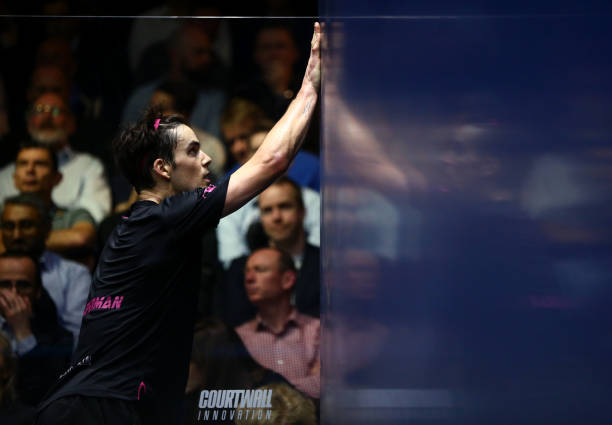
Image result for squash hand wiping on wall

The big picture can be overwhelming in squash, sport and life

This is hardly new advice, as people in sport and in life have often known the wisdom of ignoring the bigger picture if the size of the challenge or task might overwhelm someone. Sometimes, it’s counterproductive to be mindful of the whole task, and better to break things down into smaller goals.


Legendary football manager Sir Alex Ferguson spoke in his book Leadership about how he would always tell his team when they were losing to aim to get a goal back and then see where it took them. Rather than focusing on overturning a big deficit of 2-0 or 3-0, which might have seemed impossible, Ferguson had his players focus on the rather smaller and easier task of just scoring one goal.

Alex Ferguson.jpg

Sometimes winning in squash is about putting one foot in front of the other, playing a game step by step and shot by shot. If you are feeling slightly overawed going into a match, maybe because of the ability or reputation of your opponent or because you don’t feel great yourself, try to adopt the ‘best of one game’ mentality and see where it takes you. You can nick one game, can’t you?

We’ve also written a lot of other posts on ways to improve the mental side of your game, including getting in the zone, how to develop belief, how to cope with fear of failure, how to deal with complacency, avoiding thinking about the score and ignoring bad shots. 


Filed Under: Mental, Tactical, Tips

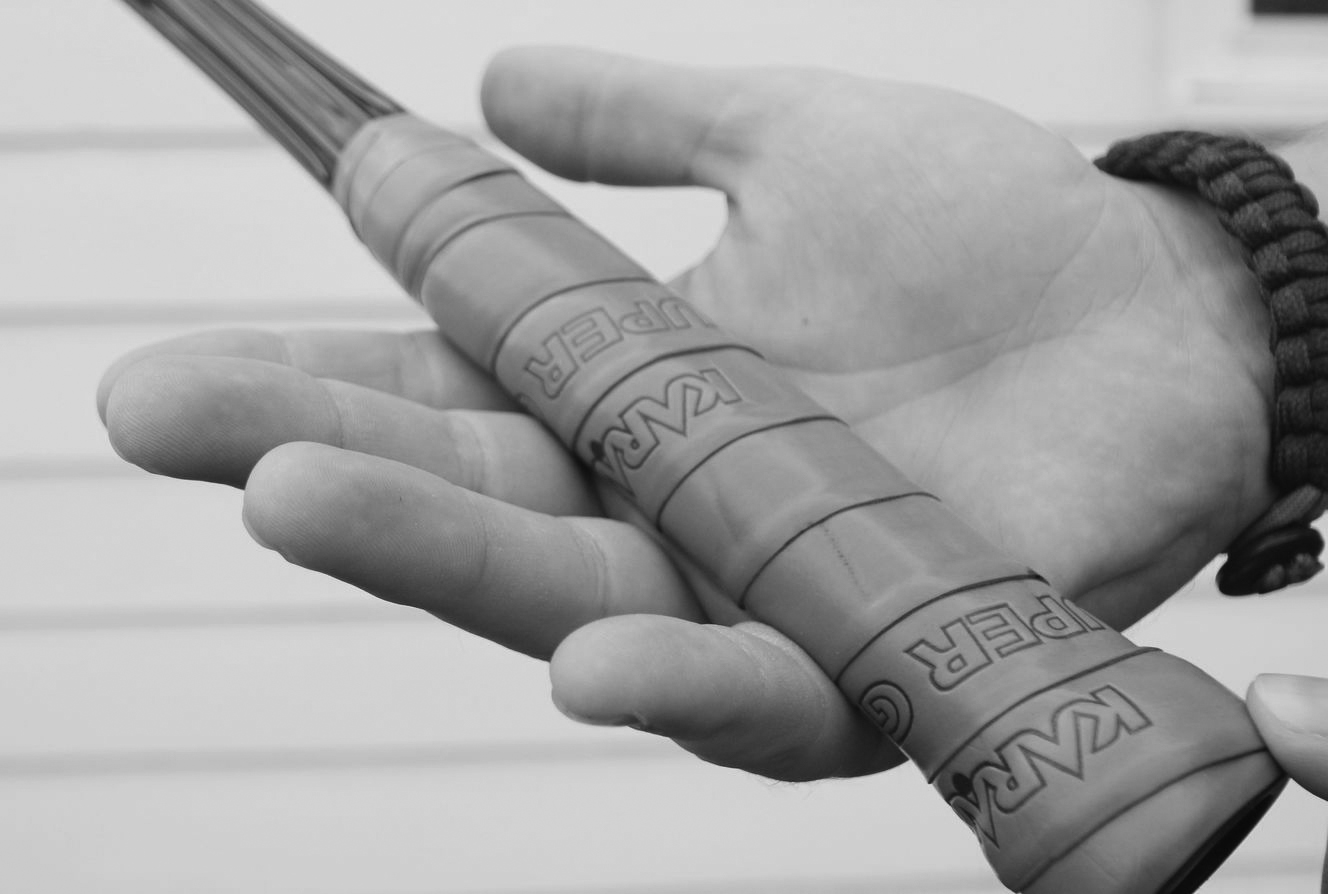
How often should you replace the grip on your racket?

Often!

This is a question I get asked on a regular basis and the real answer is it varies from player to player. The biggest factors are how much you sweat, how much you play, but perhaps most importantly, how seriously you take squash.

For information on how to actually hold the racket, check out our page on how to grip the racket.

Yuck! 


Regular players – playing three – four times a week 

If you’re playing three or four times a week, you should probably change your grip at least every two weeks, if not earlier, if you want to avoid your grip adversely affecting or distracting you. You can of course hold out for longer, but you may start to find your racket starts to slip at crucial moments, especially when hitting the ball hard. It can also start to feel rough when you’re trying to control drops or drop volleys.

There are a lot of very high level player who will change their grip far more frequently than this even, some even every match! You might be surprised at how much of a difference changing your grip this regularly can make, especially with getting touch shots like drops just right.

Weekly players – one – two times a week 

If you’re playing once or twice a week, you probably ought to change your grip once every month, although this it does depend on you and how much you sweat and how sensitive to change your hands are.

Irregular players – one – two times a month or less

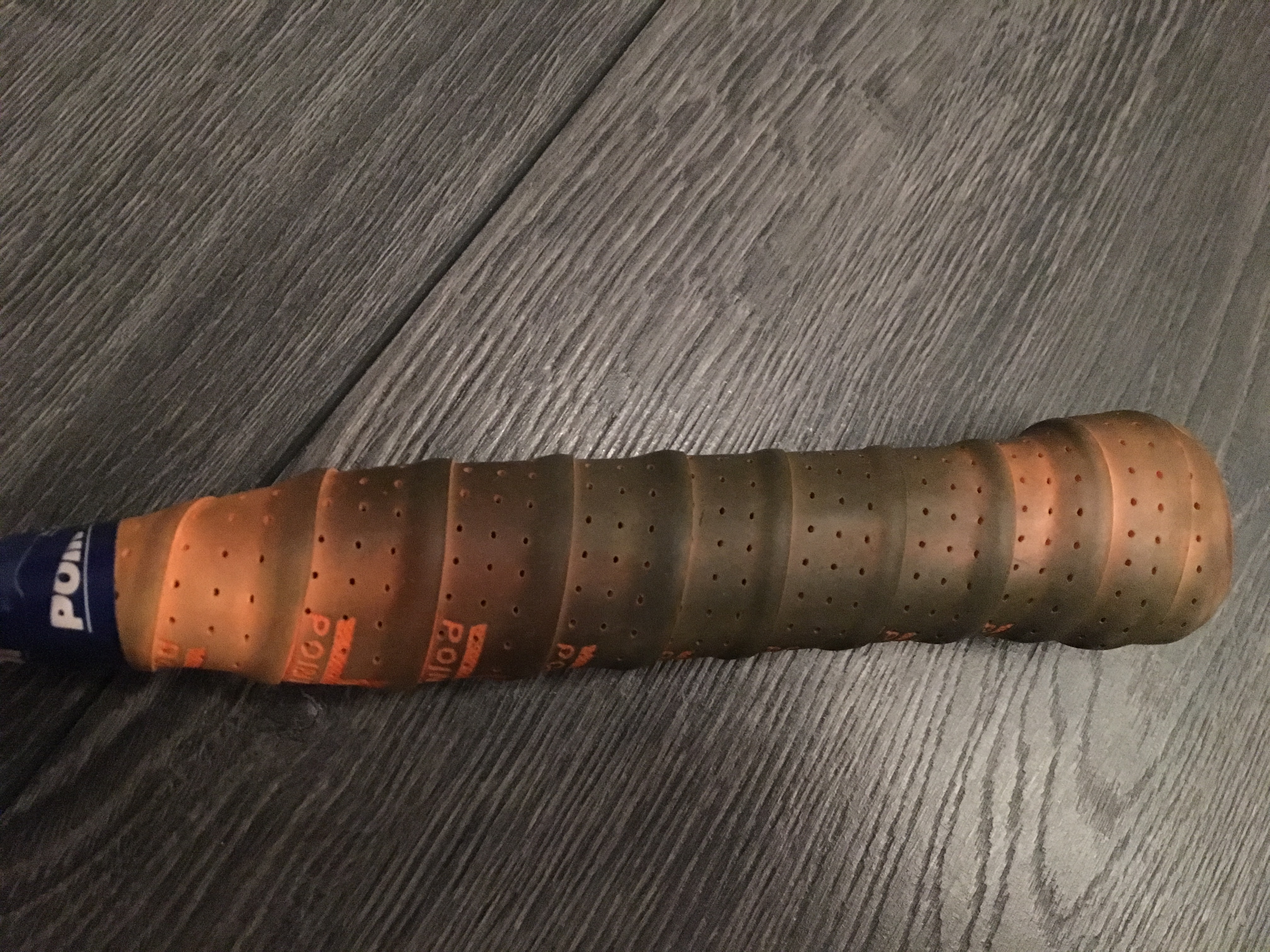
It often seems that players who play less need a new grip the most. It can be easy to think given you’ve not played for a while that you don’t need a new grip. Often this is not the case though as the ravages of time can take their toll on your grip! If you’ve left your racket in your garage for a while you might find the grip starts to colour in your hand!

Telltale signs that death has come for your grip 

  • If your grip is a light colour and is starting to go dark or is black!
  • The racket slips out of your hand. This is usually more obvious when you try to hit the ball hard.
  • You’re finding it difficult to get a high level of control on touch shots, like the drop or drop volley.
  • If the grip is fraying or is starting to flake or colouring your hands; how did you let it get to that stage?!

A new grip is long overdue! 

As with everything, it does vary from player to player. If you sweat a lot or play lots of intensive games, you will undoubtedly go through grips quicker than someone who plays the same amount as you but at a lower level. Keep an eye on your grip and watch out for the telltale signs and go with what keeps you feeling consistent with your hitting. It won’t make you the best player at the club (if you weren’t the best already!), but it is part of making sure you are well prepared and have everything in place to perform at your best, which certainly adds up and creates a platform to be the best.

Check out our posts on balls, rackets and strings for how get the best out of your equipment. 


Filed Under: Equipment, Grip, Tips Tagged With: change your grip, equipment, grip, karakal, pointfore

Tips for playing in colder weather

How to take advantage of the colder weather and negate the disadvantages.

Following on from our blog about how you can adapt your game in warmer weather, we will now look at how you can make small alterations to your game to be effective on a cold court, which is very relevant with autumn underway and winter on the horizon.

Negating the disadvantages

Stepping higher up the court

One very important thing you’ll need to do is to step higher up the court. The ball won’t come off the back wall as much in cold weather – if at all – and so you need to make sure that you are in a position to intercept the ball before the back wall, or before it loses too much energy and starts to drop.


You’ll also be in a better position to take advantage of the increased number of volley opportunities, which come more frequently on colder courts as the ball comes off the front wall slower.

Volleying serves

As well as getting more opportunities around the middle of the court, you need to be looking to volley serves as a necessity as you cannot afford to let ball drop in the back corner. This is especially the case if you are returning a lob serve. Do your best to to stand higher up the court when returning serves and volleying as much as possible, because if you let the ball drop in the back corner, you’ll find your options very limited as the ball will have almost no energy on it. Additionally, you’ll have very little space to generate any energy with your swing. If you do find yourself in this situation you can check out our tips for using your feet to deal with such a situation here and your racket here.

Aiming higher up the front wall & opening the racket face more to get length

During cold weather you may find it harder to hit an accurate length when playing drives or lobs. Naturally, the colder weather can make the walls as cold as the ball which means your shots may not come back off the front wall as much as you would think. In order to ensure your length shots are still long enough to get into the back corners and force your opponent off of the T-Position, you may need to either aim higher on the front wall or open your racket face more than usual. You could of course try hitting the ball harder, but in cold weather this can have mixed success. Depending on the temperature, you may have to hit your normal straight drive at the very least one foot higher on the front wall than you would in warmer weather.
Rotating your forearm will help you to further open your racket face and will also help you with getting the angle for extra height on the front wall and more importantly, give you some cut. This cut will give the ball a bit of extra momentum off the front wall, helping the ball to come back slightly longer.

Taking advantage of the colder weather

Capitalising on drop shot (and two wall boast) opportunities

We’ve talked a lot about the negatives of a colder court, but of course it can have major advantages too – most notably when playing drops. In cold weather even the most average drop shot can become a winner because of how much the front wall slows down the ball and how much lower the ball bounces when it is cold. Therefore, it goes without saying that you should go for drop shots more often than you would normally in warmer weather, especially when in front. Just be wary of the counter drop though as that can be just as slow or slower than your original drop! You can cover this eventuality by taking very small backwards steps towards the T-Position – but not going all the way back – so you can change direction and push forwards again quickly. The slower ball off the front wall also means you do not need to get all the way back to the T-Position, as you’ll have a bit more time to react if your opponent does respond with a reasonable length shot, but also you will still be able to cover the counter drop if it comes.


Using lob serves and lobs

We’ve mentioned how you should aim to volley all lob serves without fail during such weather and you might also like to dish out some tricky lob serves. Like the rest of your long shots, you may need to hit the ball a bit harder, as well as higher, to achieve length and you might really need to open your racket face to get extra cut and the little bit of momentum this can bring to your shot.

For similar reasons, it might be very effective to play more lob shots from the front of the court, especially if you are able to disguise it as a drop shot and lure an opponent forwards into the front, leaving space at the back. With the ball dropping like it does in cold weather this can be an unstoppable outright winner.

LAST BUT NOT LEAST – Warm-up!

You really need to warm-up thoroughly. Even putting potential injuries to one side, you generally need to get down lower in winter as the ball is bouncing lower. This is very hard to do if you don’t warm up and it’s very hard to volley more and position yourself higher up the court if you’re cold.
We’ve written several detailed posts here at the Squash Company on how to warm-up properly including a series covering warming up yourself, your hitting, your racket speed and your mind, as well as a post on trying to ‘win’ the warm-up.

There you have it! Hopefully you will now have a fantastic winter season and dominate your boxes, leagues and friends! Additionally, for your enjoyment, you may wish to use a bouncier ball in winter. Check out our guide and our video on all of the different balls in squash and advice on which one is best for you and your circumstances.

Filed Under: Tactical, Tips

  • « Previous Page
  • 1
  • 2
  • 3
  • 4
  • 5
  • …
  • 20
  • Next Page »


Terms | Privacy policy | Contact | About us
Web Development By S G Barker.