Squash Company

Squash coaching with passion

  • Squash School
  • Blog
  • Videos
  • Shop

Swapping the frying pan swat for a high to low chop

A small tip for improving your forehand volley

When hitting a forehand volley above the head, it is a very common but lazy technique for players to ‘swat’ at the ball with a frying pan style. By this, I mean starting with the racket face and inside of your wrist and palm directly facing the front wall and swinging downwards by bringing your hand straight towards the floor, not unlike a tennis smash. This style can be effective from time to time in hitting the ball hard and bringing it low but it can also result in errors and is rarely as accurate or consistent as an overhead volley hit with proper technique.
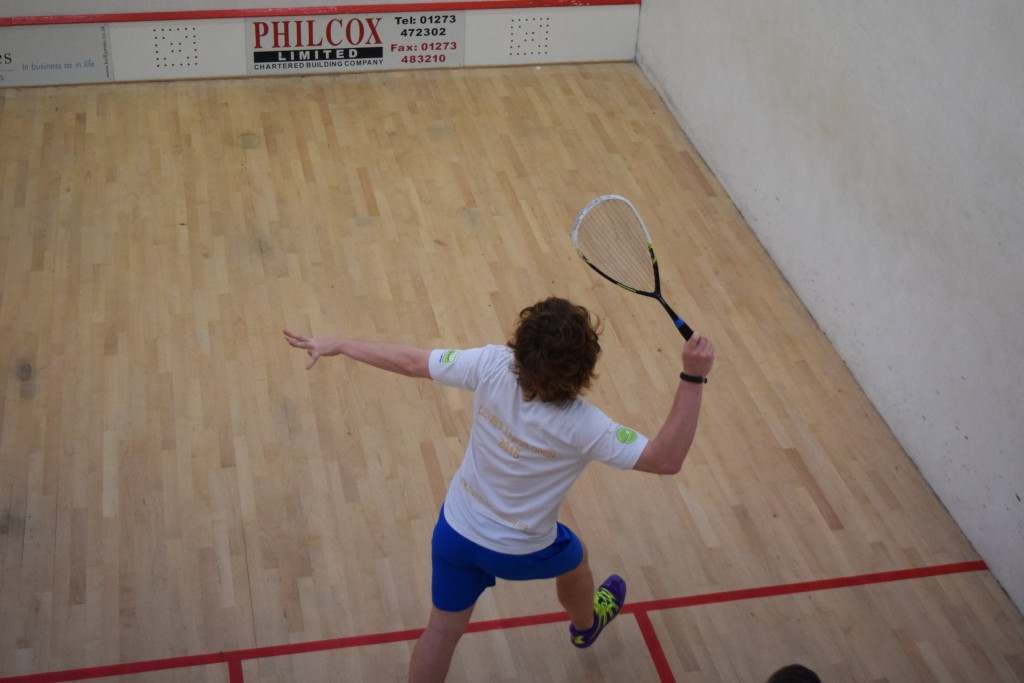
Opening the racket face and chopping

The way to achieve greater accuracy with overhead forehand volleys is to really open the racket face. For these forehand volleys, you can open your racket face by rotating the forearm clockwise (right handed players) or anti-clockwise (left handed players) so that the edge of your racket goes towards the ball first. If you can hit the ball with an open racket face, even when the ball is up high you will have much greater control over the shot. To bring the ball low, you will need to swing the racket from high to low, almost in a chopping motion. This ‘chopping’ motion as part of a high to low swing with an open racket face gives you far greater fine control over the ball than using a flat, frying pan swat swing.


This chopping motion can be particularly useful when dealing with a high serve or when you are presented with an opportunity to attack a ball in the middle of the court, so have a go and see if you can improve the quality and consistency of your overhead volleys.
Filed Under: Racket Manipulation, Technical, Tips, Volley

Following through on backhand serve

As we’ve previously discussed on this blog, the backhand serve has so many advantages over a forehand serve when the server is serving from their forehand side of the court. It allows the server to move straight towards the T-Position as they hit the ball, to watch their opponent and it also creates an angle that keeps the ball closer to the side wall after it hits it. This last point means that returns of serve are often significantly weaker, which is perfect for you as it might give you an easy opportunity to attack or win the rally immediately, leaving your opponent struggling to get into the game.


The common mistake

Almost everyone serves using their forehand on both sides of the court when they start playing, which can make the backhand serve seem unnatural. This often leads to people having a go at it but giving up on it when it feels awkward or gangly. The easiest thing to do is to treat the backhand serve as a backhand volley, which is exactly what it is. By imagining that you are hitting a backhand volley, a player can shred some of the awkwardness that often causes backhand serves to be short or go out of play. Players with perfectly good backhand volleys will often go to play a backhand serve with a really strange and awkward looking technique and movement.

Throwing the ball 

As well as the awkward swing, the other thing that often hampers players playing the backhand serve is throwing the ball too close to their bodies as they go to serve. This adds to the awkwardness of the swing as the server then has little space in which to swing. When you throw the ball up for a backhand serve, make sure that it goes away from your body and gives you space enough to step towards the ball and swing with plenty of space. You might need to try a this a few times to get a feel for how much space you need to provide yourself with when you throw the ball. You can also check out our posts on using different throws when you serve and how to use the throw to make your lob serve even deadlier.

If you are struggling with the backhand serve, persevere. The dividends in the long run will be incredible. Experiment with the throw a little bit to ensure you have enough space and make sure your swing is fluid and resembles the swing you would use when hitting a backhand volley. It won’t be long before you get the hang of it and it will start to become a staple of your game.

For more tips on how to play the backhand serve, check out our page dedicated to it here. 


Filed Under: Serves, Technical, Tips

Moving around the ball instead of backwards


How to deal with loose shots using your feet 

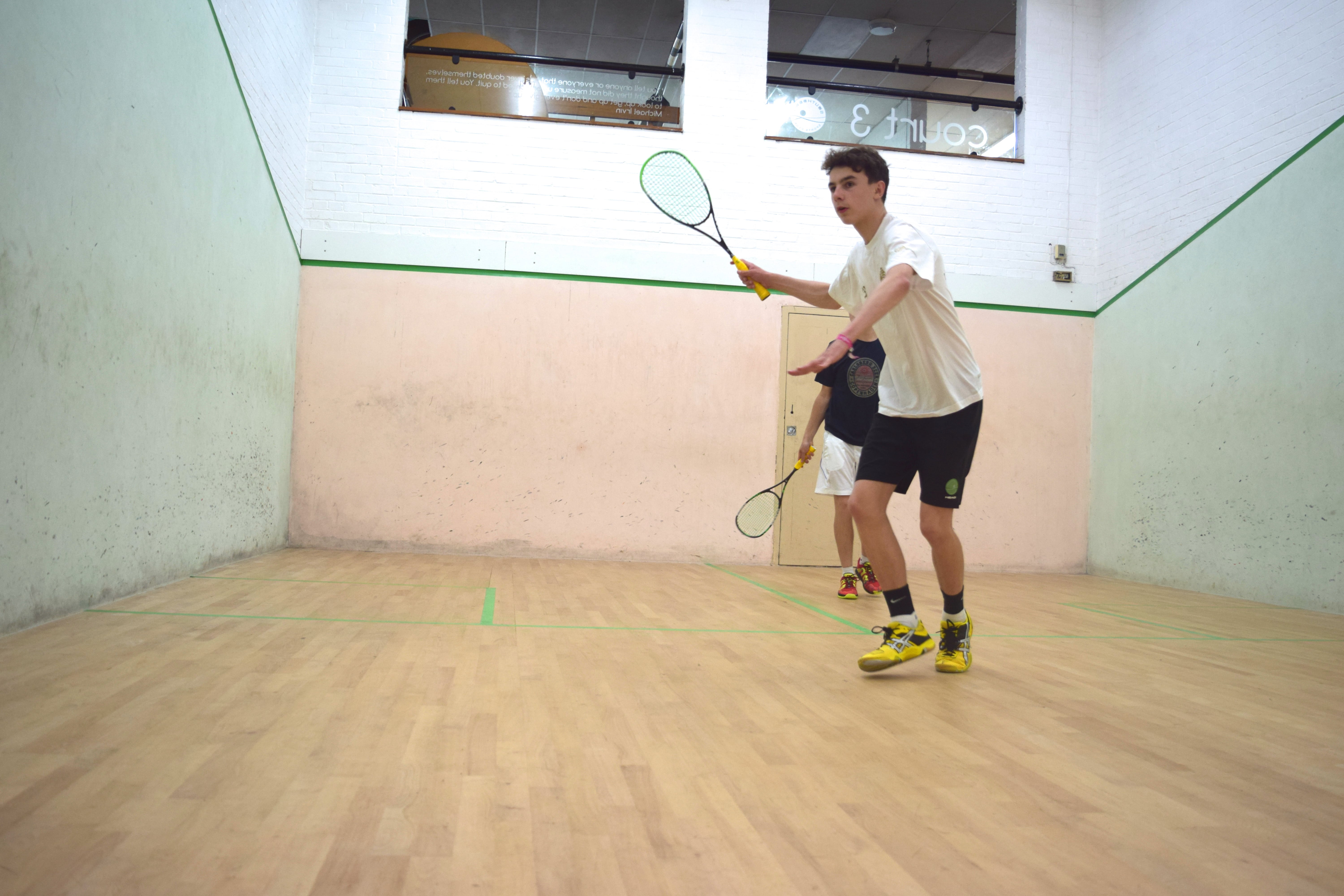
When the ball is coming towards you – perhaps at an awkward or unexpected angle – do you step backwards or do you move more sideways and around the ball?

Getting your weight through the ball and staying central 

Moving backwards can be detrimental as since you and your body are now going backwards, it can be difficult to transfer your weight forwards again and through the ball when you hit your shot. This might mean you end up stretching forwards or flicking your racket at the ball, resulting in a weak or inconsistent shot.

Instead, when the ball is coming towards you, try to move ‘around it’ – moving towards the centre of the court in order to create space for the ball to the side of you, rather than in front of you. Think of how a matador tries to get a bull to run towards the red cape to the side of his body as opposed to having the red cape directly in front of his body.


Turning or rotating to create the angle 

Getting around the ball might involve a couple of small, quick steps or maybe even a larger step depending on your movement style, but it almost always involves some rotation to turn your body towards the side wall. This turn is the key, as if you are able to turn your body towards the side wall, you have more ability to guide the ball towards the corners of the court.

Another benefit of this sideways movement and turning is it can also keep you closer to the T-Position, resulting in less time and movement required to get back to the T-Position. It can even create a better angle for hitting the nick!

Have a look at how you are dealing with loose shots and balls in the middle of the court and see if you can rotate, turn or move sideways quickly in order to generate a more accurate, tighter shot.

Filed Under: Movement, Physical, Positional, Tips

Swinging towards the ball with the edge of your racket

A tip for getting an open racket face 

Sometimes in coaching you hear another coach, or even someone you are teaching, explain something in a way that you’ve never thought of and the way they explain it is better than you could have put it yourself. I had one such experience recently when at a coach workshop regarding playing with an open racket face that I think is worth sharing.


Explaining how to hit the ball with an open racket face 

While discussing developing an open racket face (an open racket face in squash means having the side of the racket you will strike the ball with tilted up slightly. For more information check out our page on the grip), one coach described hitting the ball with an open racket face as swinging towards the ball with the edge of your racket. I thought this phrasing offered a really clear and simple way of not only describing hitting the ball with an open racket face, but also giving listeners a clear and easy target to aim for. When hitting with an open racket face, you are swinging edge first towards the ball. Just to be clear, the ‘edge’ mentioned in this phrase is the bottom edge of the racket, which is the side of the frame that is closest to the floor when you hold the racket in your hand.

Swinging towards the ball with ‘the edge of your racket’.

This way of visualising the swing could help you particularly if you struggle with getting the correct grip, or with hitting drop shots, lobs or getting the ball out of the back corner. These areas all rely on a strong grip and an open racket face to achieve an accurate and quality shot consistently.

If you are someone that struggles with either your grip or the idea of hitting the ball with an open racket face, see if you can use the idea of swinging with the ‘edge of your racket’ to help you achieve your aim.

Check out our other posts on racket faces, which include the importance of manipulating your racket face for different shots, how it can improve your cross-courts and its usefulness in the back corners.


Filed Under: Racket Manipulation, Tips

Whose game do you play: yours or your opponents? 


Changing the rhythm on your opponent. 

Quite often squash matches can become battles of charisma. Whose game style is stronger? Most players will have experienced playing someone who plays a really slow tempo and style with lots of high, slow serves, drops and boasts. Everyone will have also played someone who ran around and hit the ball so hard it’s a wonder the floor and the walls are still intact. These are extreme examples though as quite often playing styles aren’t as easy to pinpoint as this. This can be bad news for you as you may be unable to work out what your opponent is doing and how to change it and worse, you may find yourself ‘playing their game’.

Synchronising with your opponent’s game 

When you play someone who plays slowly and slows the game down with lots of lobs or drops, it can be very easy to be sucked in to their game and way of playing. Typically players will also start playing more drops and boasts etc, as it can be easier to play at this pace than to change it. The real damage isn’t done though in the slowing of the shots played but in the effect it has on movement, positioning and urgency. It is very common for a player to move a bit slower, drop deeper on the court and lose attacking intent when playing someone who plays lots of slow shots. This does a lot more than any shots to create a very slow tempo, which usually worked out better for the player who wants to play slow shots. The slow tempo is their arena, their home ground and you’re the one out of place.

Equally, it’s very easy to get caught up in a ‘hitting contest’ with someone who likes to hit the ball hard. Before players have noticed what is happening, if they ever notice, they might find they have been caught up trying to hit the ball harder and faster than their opponent and ended up losing all accuracy and control of the ball and the game. This can create a tempo and situations where you are rushing into the shot in order to try and make it faster, which can be just as bad as losing urgency in a slow tempo game.

What to do?

The most important thing is awareness. It’s very easy to fall in sync with your opponent’s style without realising anything has happened. The first thing to do is to be aware of whether you are playing the game you want to play or whether you have started playing the game your opponent wants to play. At the end of a rally, think whether you were playing to your strengths and hitting the shots you want to play in the manner you want to play them, or whether your opponent had it their way or you had played shots or a style that played into their hands. At first, you are just trying to look retrospectively at what has just happened. If you keep practicing this, in time you will be able to start recognising the signs of getting pulled into your opponent’s game while it’s happening or without having to stop and think about it. Once you are able to do this, you can start to actively resist them with your play, stepping forwards and taking the ball earlier and giving a slower paced opponent less time or slowing down and focusing on accuracy – perhaps by using the height of the front wall – against a fast and furious opponent.

Ask yourself between rallies and games if you were playing how you wanted to play or if you were playing how your opponent wants you to play. If it’s the latter, see if you can make positive changes and counteract their style.


Filed Under: Tactical, Tips

  • « Previous Page
  • 1
  • 2
  • 3
  • 4
  • 5
  • 6
  • …
  • 20
  • Next Page »


Terms | Privacy policy | Contact | About us
Web Development By S G Barker.