Squash Company

Squash coaching with passion

  • Squash School
  • Blog
  • Videos
  • Shop

Alignment between feet and racket


Your shot must follow your feet.

Footwork is often the root cause of unwanted shots. If you don’t get your feet in the right place, any racket skills will count for little and you can find your straight drives bouncing off the side wall first and various other shots behaving badly. Perhaps more importantly, if you end up with your feet in a less than perfect place – which will happen frequently – work with this and don’t try and do something silly like smashing the ball.

Trying to get the feet in position

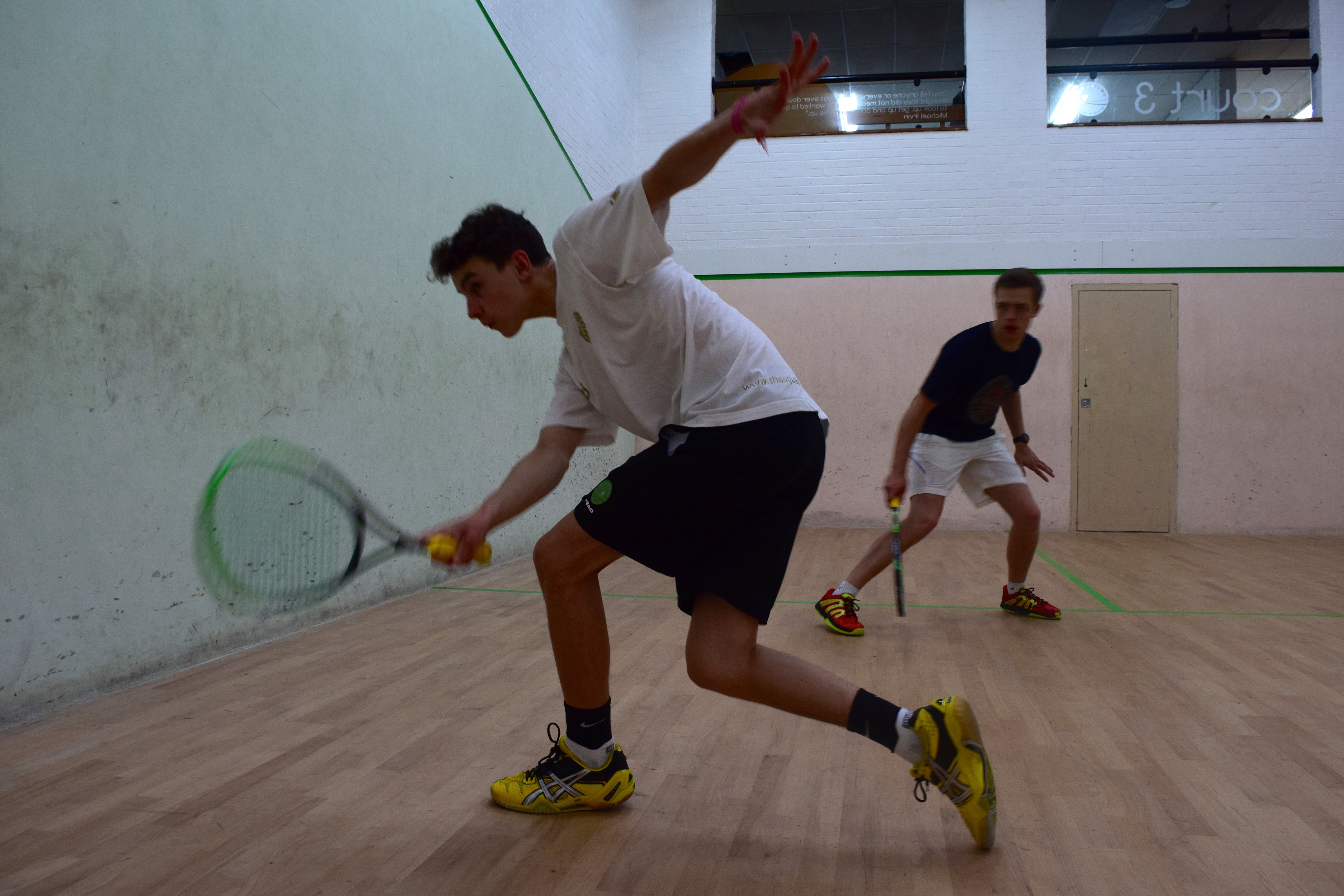
People will often try to go for shots that their feet simply haven’t put them in a position to play and this usually leads to mis-hits or unintentional shots. It is perhaps most common in the back corners of the court, where players are unable to get around the ball, and therefore get their weight behind the ball, which often means the shot is lacking both power and control. The ball often ends up in the middle via the side wall through being under-hit.
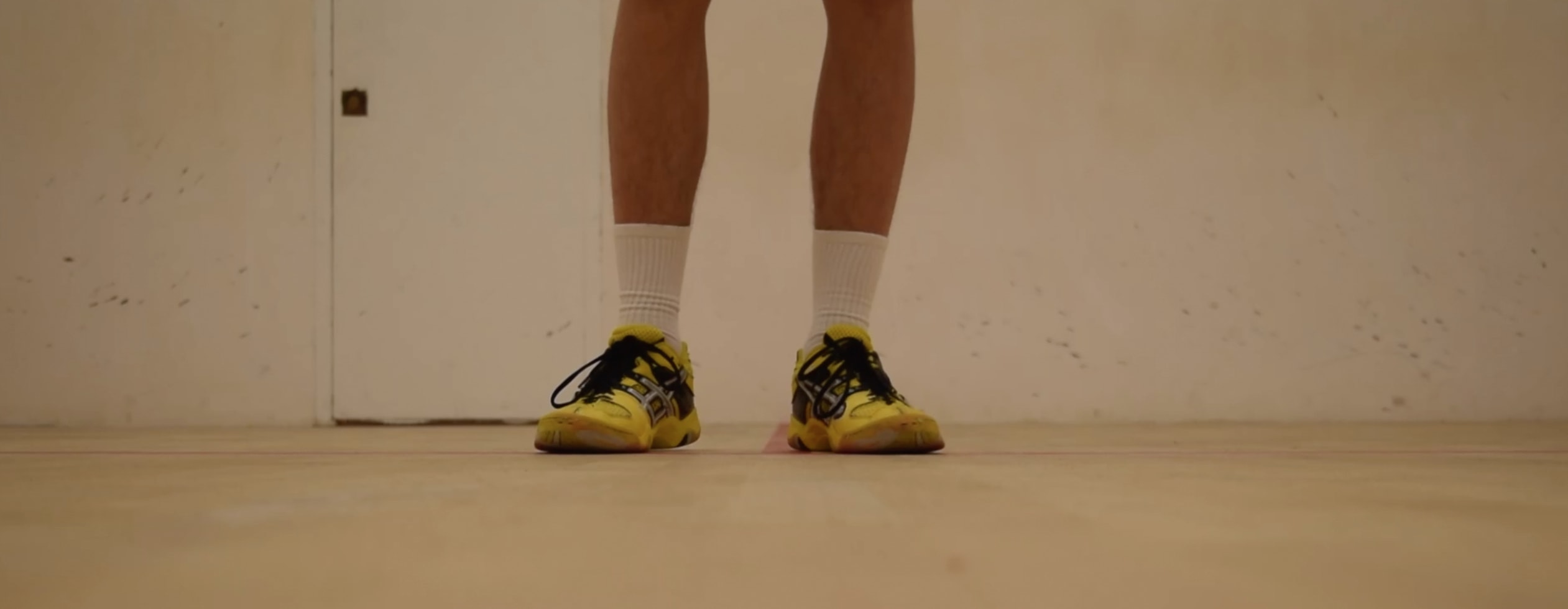
Whenever you go for the shot, first make sure you sort your feet out. You are always aiming to get as much of your body weight as you can into your shot, which might mean moving quickly to get your body behind the ball, preferably with your feet pointing straight towards the side wall so that you can get all of your bodyweight behind the ball.

When it isn’t possible to get around the ball or have your feet pointing straight towards the side wall with the body in a side-on position, you may need to try leading with your back leg or use a small jump or hop to generate momentum.

When you try your best but you don’t succeed…

Sometimes you just can’t get your feet into the position you desire no matter what you do and in these situations it is important to make sure you accept the position you are in and be realistic about your options. Don’t try to go for a normal shot if you are in a difficult position, instead try to play a shot that will help you get out of this position. The most common shots to play in such a position are the boast or lob, with the lob being the preferred option. The lob gives you a better chance of re-taking the T-Position, as well as giving you a great deal of time to sort yourself out. It also gives you the opportunity to trade places with your opponent and get them behind you, whereas the boast will always leave an opponent in front of you, which might be undesirable against some players.

Always listen to your feet. If you’re in a difficult position, play a defensive shot that reflects that and try to use this to get into a better position from which you can start to build attacks. Don’t try and hammer the ball!

Filed Under: Physical, Positional, Technical, Tips

What to do at match ball


How to adjust your play to help you win a high-pressure point.

Players are often able to conjure up amazing feats of energy and fitness at match point that make spectators and coaches wonder why they didn’t play like that earlier in the match. Today we’re going to discuss how you can adjust your tactics and play on important points, such as game balls and match balls, to help you be more successful in converting match balls or saving them if you are on the receiving end.

Match ball up

The first thing is to ignore it. Ignore the score. Even the best intentioned of players can start to become sloppy, even while being focused. It’s very easy to drop a bit deeper on the court and hit the ball a bit later and all of a sudden the quality of shot, intensity and movement isn’t there and the other player is closing in. Make sure you focus on putting pressure on your opponent with each shot you play and ensuring that whatever you do, you don’t let your opponent’s shots bounce twice. Always make sure you fight tooth and nail when at match ball – do not let the ball bounce twice. While the ball is in play, your opponent is under immense pressure, so bust a gut to keep your opponent under that pressure as you never know when it might get to them.
Second of all, similarly to what we will discuss when match ball down, you should try to be more disciplined when closing the match out. Don’t attack half-chances or go for short shots unless you are sure it is on and you are in a strong position. This will likely result in you playing a lot more length shots, which is fine so long as you hit them accurately and at a good tempo, which means taking them early where possible and not letting the ball hit the back wall. By doing this, you might even panic your opponent, who at match ball down, might be feeling the need to try something spectacular and so might do something rash out of frustration in response to your disciplined play.

Match ball down

When match ball down, there is an argument to say you should just go gung-ho and spectacular but most comebacks I’ve ever achieved have started, and often finished, with very boring, predictable lengths. I don’t like the idea of playing not to lose very often during matches but at match ball down, it is in my opinion the best tactic. You can make yourself very hard to beat and also really test your opponent’s mindset, as if they’ve lost a tiny bit of focus or are a bit hasty in wanting to finish you off, lots of length shots might make it impossible for them to break you down. This can start to put them under pressure as they start to worry about you catching up, which in turn plays into the tactic of keeping it long, as they may become increasingly edgy and impatient and start attempting shots that aren’t viable.
You need to hit your length shots early though. If you play at a really slow, steady rhythm you can allow them to attack you and give them an advantage. Make sure you try to step forwards and hit the length shots somewhere around the back of the serve box so that you are not only hard to break down, you are also hard to break down at a high tempo, doubling your defences.

Next time you are game or match ball up or down, have a go at the suggestions made here and see if you are able to be more successful in winning these crucial points. Best of luck!


Filed Under: Mental, Tactical, Tips

A small tip for an even deadlier lob serve


Dropping the ball, not throwing it

A small thing that could make your lob serves even harder to return comes in the way you throw the ball – or don’t throw it. Typically, we all throw the ball up to hit it when we serve, as this throw gives the ball some momentum and energy, making it easier to hit, and of course gives us space to swing.

However, you can use the throw to have different effects on your serve, as we’ve discussed previously. To enhance your slow, high lob serve even more you can ‘drop’ the ball rather than throwing it, or roll it down your hand and let it fall out, so that the ball has less momentum and energy. When you then hit your lob serve, the ball has less energy and momentum than normal and so if you aim it right, it will just drop or fall into the back corner and never be in danger of coming back out.

It can be a little tricky at first but it’s a nice addition to the lob serve and can make for a nice option to have available to you against players who dread a slow ball or serve, or those who struggle to deal with shots high in the air.


Filed Under: Serves, Tips

What to do if you can’t turn your head or neck fast enough when on the T-Position


Trusting the peripheral vision

A big part of coaching is trying to adapt key principles of squash to fit individuals. One is watching the ball. You have to watch the ball in squash – you simply can’t play to any real level unless you watch what is going on. One beginner player I have worked with recently simply struggled physically with turning her head to watch the ball when it was in the back corner. Naturally, it’s a disaster if she can’t watch, as she was caught out by boasts or drops and other unexpected shots. When she did watch though, she wasn’t able to turn her head back fast enough to cope with a cross-court shot – especially one struck with any sort of pace.

I do recommend getting both eyes on the ball where possible, especially if you have one eye stronger than the other as we’ve discussed previously, but if for whatever reason this isn’t practical for you, aim to use your peripheral vision. If you use your peripheral vision, you won’t need to turn your head or neck anywhere near as much and so you won’t be caught out by fast cross-court shots.

Using your peripheral vision can also be an advantage in anticipation in some instances, as when watching in your periphery, you tend to pick up just enough vital clues about what shot your opponent will play and don’t get overloaded and therefore possibly confused or tricked by your opponent.

If turning your head or neck to watch behind you when you are on the T-Position doesn’t work for you, try focusing more on your peripheral vision. The same goes for any other advice or tips you may receive – try to tailor and adapt it in a way that works for you. You need to get a good grasp of all fundamental parts of the game but often your best use of the fundamental aspect may be different to that of another.


Filed Under: Tips, Watching the ball

Accepting short term loss if you want to improve


Short term pain, long term gain

One thing I often hear from players who I coach when I ask how something that we are working on or have worked on is going, they’ll frequently say things along the lines of ‘Oh, I didn’t really want to practise it because I feared I would lose that game if I did’ or ‘I tried it one time and gave away an easy point, so I’ll leave it for an easier match or game’. I believe this is a bad mindset to have if you want to improve.

Firstly, what does it matter if you lose a game or match? It isn’t a big deal and it won’t appear on the front or the back page of the newspaper tomorrow and no one will die or be hurt because of it. Secondly, on a more practical level, difficult games or training is exactly the time you need to make a change, as these are the occasions when you will need to use your new skill or thinking. It’s no good practising at a low or easy pace or when playing a weaker player because it will give you more time or because you will win anyway. If you spend most of your time playing squash against people who will test you and cause you to play at a high pace, then you need to practise in that same environment. It’s precisely in these difficult matches that you need to do something to change a shot or technique you desire to improve, even if it comes at the cost of losing some matches. It will be repaid tenfold down the line when you win more matches because you have a higher skill level.

It sounds a bit like a Yoda quote from Star Wars, or maybe even a Nike advert, but go ahead and do the shot, grip or tactic. Just do it. Don’t try or have a go – just go for it. It might not come off immediately or the first time but just keep doing it in time, no matter what the outcome and soon you will find the outcome and results taking care of themselves. 

Building in my backhand serve

When I was first adopting a backhand serve, I just started playing it during matches. It certainly didn’t always work out for me and a few ended up out of court or in the nick via my opponent’s racket. It typically didn’t cost me the match though; even if it did play a part, there were typically other factors which caused me to lose. In time, I began to get adept at playing it in matches and it actually happened surprisingly quickly. Had I only ever played a backhand serve during low pressure situations or in training, I never would have picked it up as quickly as I did.

If you want to change or improve something about your game, do it now. Start doing it immediately – don’t wait for the right situation or the right circumstances – they’ll never arrive and if they do they’ll seldom be the circumstances you need to actually make quality and long last improvements to your game.


Filed Under: Coaching, Serves, Tips

  • « Previous Page
  • 1
  • …
  • 3
  • 4
  • 5
  • 6
  • 7
  • …
  • 20
  • Next Page »


Terms | Privacy policy | Contact | About us
Web Development By S G Barker.