Squash Company

Squash coaching with passion

  • Squash School
  • Blog
  • Videos
  • Shop

Use your natural advantages


When I was growing, up a very good player who played at our club was also a great badminton player. He had great ability on the volley and he would be able to pick things out the air, especially lob serves on the cross-court drop volley, which most players had no chance of dealing with. As well as this, he also used his body very well to disguise shots from the front. He certainly wasn’t textbook in many areas of his game but he was very effective.

I distinctly remember him going to get some coaching from a coach in the area to help him get into the over 45’s county team now that he had turned 45. The coach, however, focused mainly on improving his technique and making it more effective in a squash sense.
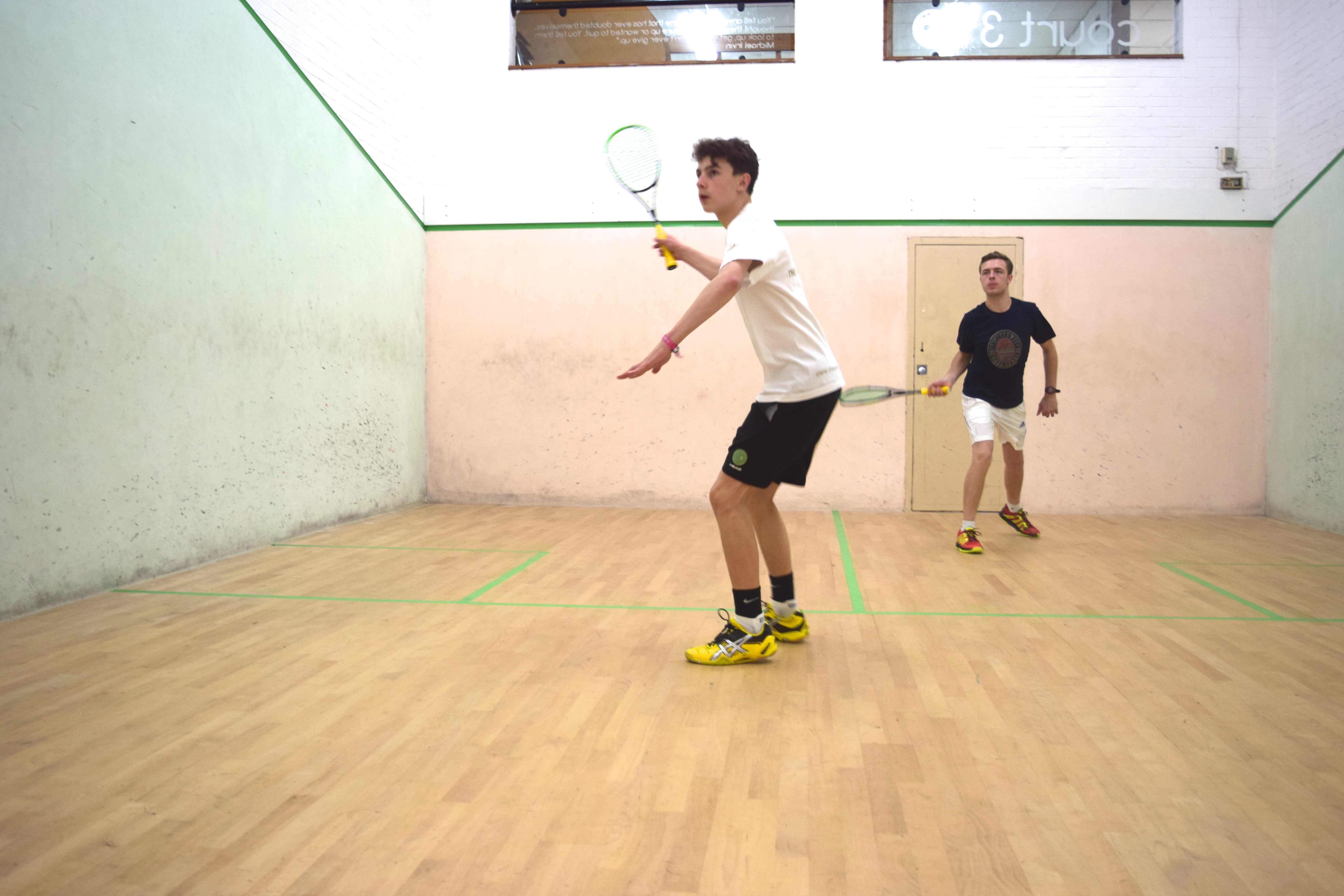
Whilst he looked more graceful on the court, and some of his drives were more accurate, he lost a lot of his edge and effectiveness. He was now a lot easier to play against and actually suddenly very beatable, whereas before he had been able to take lots of points off the very best at the club and in the county leagues even if he wasn’t as good as them.

I think the coach made a mistake here, because although he certainly improved this player’s technique, he actually took away from his game and his natural effectiveness.

I think any individual style which can provide something different should be embraced. I always encourage badminton players to use their volley skills on the squash court, because they see things and are able to do things players who’ve played only squash are unable to do. The same goes for any unique tendencies too. I know several players who played to a good level with very open stances on the forehand. Typically players are encouraged to face the side wall but these players had great deception and speed by playing facing the front wall, which won them a lot of points.

The only question you have to ask yourself is whether the ‘mutation’ or unique style is advantageous to your game and consistent under pressure. If the style breaks down under pressure, it may be something you have to consider changing or you may need to develop a second option that you can use when your normal style isn’t enough. It is also something for coaches to consider as well; perhaps an odd style is more effective in some instances than a traditional style.

For more thoughts on using or avoiding natural aspects of your game, check out our Squash Player Problems posts for fast players, skilled players and tall players. 


Filed Under: Disguise, Tactical, Tips

Is your length shot coming off the back wall too much?


Allowing your opponent more time and space. 

I posted not too long ago about whether people are actually achieving anything when they try to play a length shot, particularly drives (or rails in US parlance). Continuing with that theme, it’s also vital players monitor their length shots to see if they are coming off the back wall too much.

When the ball bounces off the back wall 

Lots of players overhit their length and allow their opponent a good deal of space and time when the ball comes off the back wall. At worst, the ball should come off the back wall no more than a rackets length, which isn’t as much as it sounds. Even when it is coming off the back wall as much as this though, it allows an opponent increased time to get to the ball, they have to move slightly less and they will also have more room to swing as the ball is no longer trapped in the corner. All of this adds up over the course of a game and leaves your opponent feeling fairly comfortable. Contrast this with making them rush towards the back corner as they know your shot isn’t coming off the back. Firstly, they are rushing, which is physically demanding, especially if repeated. Secondly, because they are rushing, they will tend to have weaker decision making and therefore their shot choices may suffer. Lastly, they are under pressure technically, as they have to find a way to get the ball out of the back with two walls in the way.

Balance between overhitting and under-hitting 

On hot days or with a hot ball it can be tough to find a balance between length and overhitting the ball, as it it is just as easy to under-hit the ball and play a short length as it is to overhit. First and foremost make sure your length shot gets your opponent off the T-Position, which usually means getting the first bounce of your shot behind the serve box. However, be keenly aware of how much your shot is coming off the back wall. Do your best to retain your length whilst making sure the ball is bouncing twice right in or near the back corner. The best way to achieve this is to get your racket above the ball, Amr Shabana style, so that whenever you hit the shot it is going downwards. It might also mean hitting the ball lower or even hitting the ball a touch slower. Usually, accuracy is more important than power when hitting drives, although this is not always the case.

During your next few games, see if your length shots are coming off the back wall a lot and if you can do anything about this.


Filed Under: Drives, Lobs, Tactical, Tips

Snatching defeat from the jaws of victory


Not converting easy chances.

The biggest instance of snatching defeat from the jaws of victory in squash is when players dominate a rally and do all of the work to get in a great position, or are gifted a great opportunity, and then become casual and make a mess of what should’ve been the winning shot.

Loose, awkward balls down the middle 

It happens a fair amount when a player is on the T-Position and forces a wild, loose shot towards the middle. Instead of giving this shot the treatment it deserves, lots of players will flail at the ball and throw away the opportunity to attack a loose ball. While these shots are often awkward to deal with, we have to be prepared for them as they often present a fantastic opportunity to attack. If you are struggling with shots that are coming at your body or close to you, try to practice improvising. You can do this simply by working on your racket head speed, which can be as simple as hitting volleys to yourself as fast as you can from very close to the front wall  (see video below). Exercises like this help you develop dexterity with your racket, which is important when the ball is in an awkward position.

Alternatively, you can have a partner play loose cross-courts at you which you aim to drop volley tight to the side wall. Figure of 8’s (see video below) are also a great way of developing speed of racket, feet and thought when done in challenging circumstances.

Always play as if the ball will be returned

Often though, defeat is snatched when the ball isn’t even coming awkwardly at the hitter. Players frequently act as if they have won the rally after their opponent hits a weak shot. This is a terrible attitude to have as you lose the positioning and quality on your shot, and then the movement out of the shot, all of which can cost you dearly. If your opponent has hit a weak shot, it is time to up your game, not relax and put your feet up. Receiving a weak shot should be like the moment a shark smells blood – it should be the moment you go gung-ho. There’s nothing worse than playing a drop shot too high because of casualness, or worse, managing to still play an accurate drop shot but not moving back to the T-Position properly and so being caught out when your opponent scrapes an awful shot back. Always play as if your opponent will return every shot you play, that way you can stay focused.

When you are playing, notice if you are converting and capitalising on the chances you create and the chances you are given. Or does your profligacy hold you back and possibly even cost you a match in which you dominated the majority of the rallies?


Filed Under: Mental, Tips, Volley

Return serves into the four corners!


Claiming the T-Position at the start of the rally. 

A lot of rallies are decided before they’ve really even begun during the serve and return of serve phase.

Most people realise the benefits of volleying an opponent’s serve and most people are able to volley the majority of serves after playing for a while but people don’t always consider what sort of volleys they are playing or where they are hitting the ball too.

Hitting the four corners

It sounds very simple and possibly very boring but most serves should be volleyed into one of the four traditional corners of the court (some have argued for their being eight or more ‘corners’). By volleying the serve into one of these corners, you are forcing your opponent away from the T-Position. When your volley doesn’t reach or go to one of the four corners, it is much easier for your opponent to get to your shot and they will be far more likely to retain the T-Position, which is bad news for you. If you play a loose return or return to the middle, you will likely find yourself under pressure immediately against a stronger player or even that you have lost the rally after the next shot.

Personally, I think the majority of your serve returns should be straight long volleys, as this is the shot that when played well will get you to the T-Position and get your opponent behind you, which is the perfect start to any rally (except for hitting the nick). The cross-court volley and short volley are good return options to use sparingly to catch your opponent out but both need slightly more accuracy or they will sit up nicely for a well placed opponent. The volley lob is a particularly nice option if your opponent plays a high lob serve.

Using boasts or kills

If you go for boasts, kill shots or simply hit an inaccurate shot which ends up anywhere near the middle of the court, you won’t move your opponent away from the T-Position as much. Kills and boasts can be effective returns if you are able to catch your opponent over anticipating and moving to one side of the court very early. This is typically best done on occasion as your opponent won’t be expecting such a shot or if you disguise your intentions well.

Have a good look at your return of serve and see if it is helping you get off to a good start to rallies or if it is actually leaving you vulnerable early in the rally. There are lots of players out there who play well once they get into the rally but often don’t make it that far because their serve or return isn’t of a high enough standard. Don’t be that player – practice and improve your serve and return.


Filed Under: Return of Serve, Serves, Tactical, Tips, Volley

Get out of the back corners in one shot


You may only get one chance

Being behind your opponent when they are on the T-Position is rarely an advantage on the squash court. Occasionally you might come up against a player who is vulnerable to short shorts from the back but generally you want to spend as little time as possible in the backseat. Against most players, the longer you spend behind them, the more your chances of winning the rally will diminish. Some players will also punish you after getting just one opportunity to get in front of you, so you need to make sure you reclaim the T urgently.

Using height to evade your opponent

The best option for getting the ball is usually to hit a high and slow lob shot. The height will provide you with the length to get the ball to the back of the court and also help you to evade any volleys. The slow pace will also give you the time required to get out of the back corner and back into a more promising position. It may even surprise an opponent as most matches are typically played at a fast pace and this change in rhythm may cause your opponent some difficulties. You have to make sure you get enough height though, as many players attempt lob shots from the back but don’t actually get the required height to get their opponent off the T-Position.

In order to get more height, you may need to open your racket face further, lift the ball more or get yourself lower so you can get underneath the ball.

Positioning and footwork is also very important. Check out our video below and our post on some of things you might do with your feet to help your shot.

Going short to go long

You may also seek to play a boast if your opponent is deep or you are struggling to get the ball straight, ideally a two-wall boast, but you need to ensure that whatever it is you do, you are looking to get back in front immediately. After playing the boast, you’ll need to be looking to press high up the court quickly so that you can play a long shot, either on the volley or in response to a short shot, to trap your opponent behind you in the back.

The message is simple; if you are in the back corner act swiftly and decisively to get yourself back in front before your opponent gets any opportunities to attack you – they may only need one. Look for the lob primarily and if not an attacking two wall boast with a view to playing long with your next shot to take back the T-Position.


Filed Under: Tips

  • « Previous Page
  • 1
  • …
  • 4
  • 5
  • 6
  • 7
  • 8
  • …
  • 20
  • Next Page »


Terms | Privacy policy | Contact | About us
Web Development By S G Barker.