Squash Company

Squash coaching with passion

  • Squash School
  • Blog
  • Videos
  • Shop

How to play against good retrievers

The key thing when playing someone who retrieves the ball very well is patience. It is very natural to try and make your shots even better and go for the spectacular ones to win the rally; to try and hit drops a little lower, or attempt shots that aren’t really on. However, this strategy will typically lead to errors and therefore increased frustration for you. 

Expect them to return your shots

The mindset necessary to beat someone like this is to expect them to get all of your shots back. Do not be disturbed if they retrieve a shot which would normally win a rally. If they return your shot, then you simply play another one, and another one, and another one, until the rally is over. Be prepared for this to last several games; if they are retrieving a lot, it is likely they retrieve a lot in matches in general and so they will have a high level of fitness from all the running they do. 

Your aim is to keep them moving. You need to keep playing quality shots and going short when the time is right – as you need to make the court big for good retrievers by hitting the ball into open spaces – but without trying to hit the winning shot. This can be a fine balance though, as you don’t want to play drops or other attacking shots too high either in attempting to avoid making a mistake. 

Deal them a mental blow by remaining unbothered by their retrieving 

If you expect them to return every shot, you will not only prepared for them to return the shot mentally, you would also be prepared positionally as you’ll already be moving ready for them to get the ball back. If they don’t return the ball, it is a bonus, but always expect them to. This way you will not be rattled or concerned, which helps you mentally during the match and will also damage them mentally if they don’t think you are threatened by their retrieving. 

A lot of fitness is mental, and if they start to feel mentally concerned or wearied by you prolonging the rallies and not being affected by their retrieving, it may take the energy out of them and they might struggle to keep retrieving the ball as well. As mentioned earlier, this might take one, two or even three games or more to achieve against very fit retrievers, but most players have a point where their fitness will be sapped by their mind if you can reach it. 


Are their shots as strong as yours?

This is a bit of a generalisation, but if a player is relying on retrieving, they are likely to not be as accurate with their shots as other players playing at a similar level, otherwise they wouldn’t be relying on speed and fitness. If this is the case, be sure to push home your advantage. The key to this, as with a lot of things in squash, is to make sure your length is accurate and clears the service box every time. You should do this with a combination of straight drives, lobs and straight long volleys, and not rush to go short until the moment is right. This might mean not taking the earliest opportunity, but waiting for a better one to present itself, which it will if you are more accurate than them, and you allow this to show by being patient.

Using delay and putting the ball back from where it came 

Good retrievers often sprint a lot, and you can use this against them. If they are sprinting a lot to get back to the T-Position, their weight will be fully committed in the direction of the T-Position, and this will make it very hard for them to slow down and change direction. For example, if they retrieve a drop shot, they will often turn and sprint back towards the T-Position, meaning they will find it very difficult to turn around and retrieve another drop shot if you play it. If they are sprinting to the T-Position from the back of the court, they will often find it hard to return to the back if you play a length again, especially if you play a long volley, which is why using that straight long volley mentioned in the last paragraph is important.

Try out our tips and let us know how you get on!
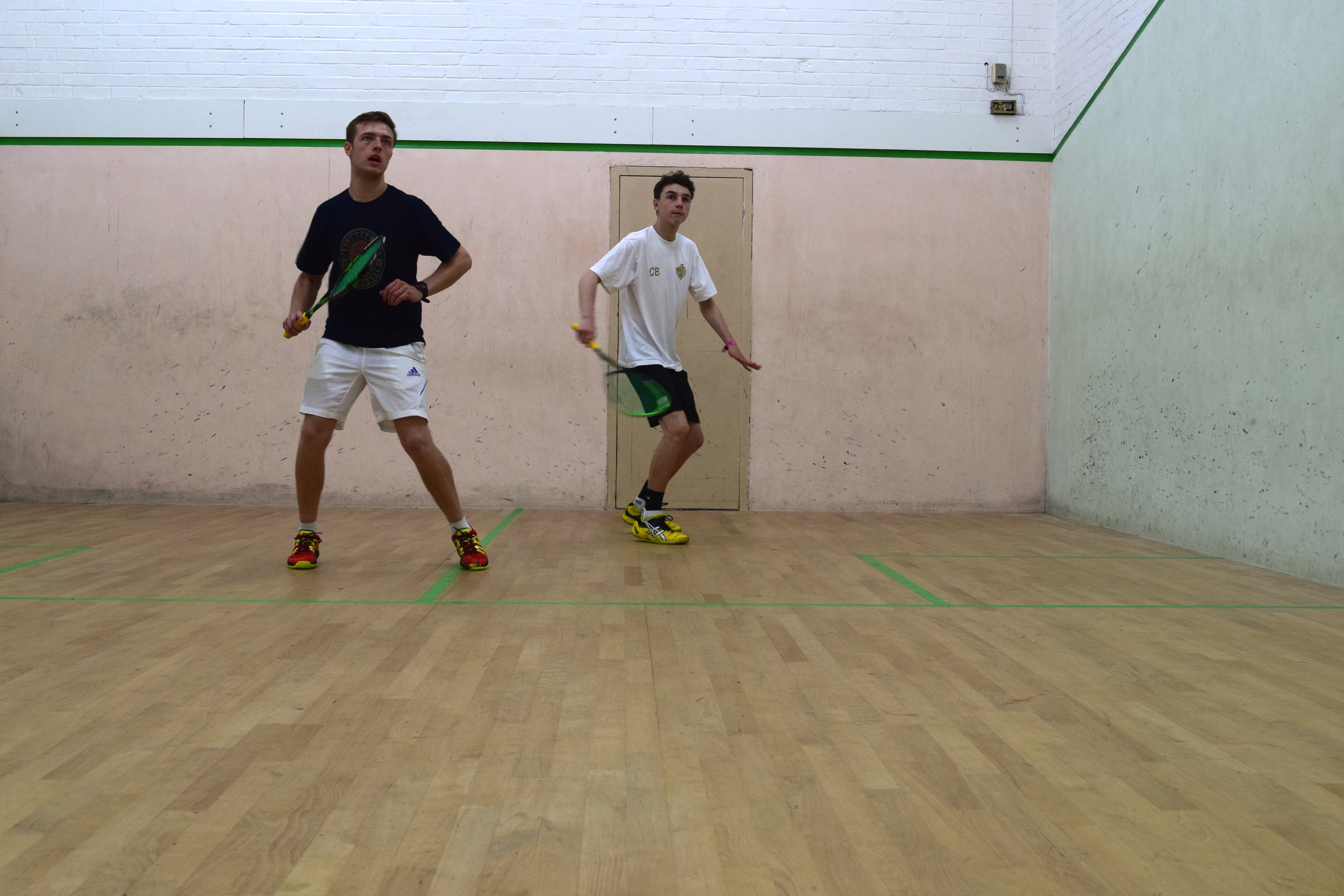


Filed Under: Mental, Physical, Tactical, Tips Tagged With: fit, fit players, retriever, retrieving, squash tactics, tactics

Watching for signs your opponent is tired

When to go in for the kill

We’ve discussed a little bit on the site before about when the crucial moments are in a match, and examined the need to come out flying at the start of the first game, the benefits of putting your all into the third game when the score is tied at 1-1 and how to see out the match when you have a 2-0 lead in games.

Today more generally we are going to discuss how to identify potential turning points in matches and how you can take advantage of them.


Looking for signs

Looking for signs your opponent is tired is a big part of knowing when to go on the attack, and changing your style accordingly to take advantage of that weakness. Signs of tiredness in your opponent can include obvious things like hearing them breathing harder, watching them pretend to tie their shoe laces or take an elaborate route to the service box between rallies, but sometimes they can be more subtle, especially if the player is fit. Other signs may include:

  • Moving into the front court slower
  • Volleying less
  • Trying to slow the pace
  • Trying to win the rally quicker than normal
  • Playing short shots earlier than normal
  • Length shots bouncing shorter than usual

What to do with this information 

So you’ve spotted your opponent is tired, what do you do? Sometimes they’re tired because you’ve had a gruelling game, and so you are also tired. Now is the time to dig deep and show you want it more: if you can press ahead and go on the attack at this point you are likely to overwhelm them into submission before you become exhausted yourself. It is better to be the one on the attack as tiredness sets in, as you’d be surprised at how many people lose hope if they come under a renewed attack when they are tired. They will rarely stop to think whether you are also tired, and will mostly believe that you must be still going strong. It is a bluff of sorts. If you’re not as tired, then it’s not a bluff and you need to really up the intensity.

The best ways of going on the attack in this instance are:

  • Keeping your opponent moving, without aiming to hit the winning shot. This is a delicate balance, as you want to take opportunities that come your way but most importantly, you want to keep making your opponent run and not give away errors. Hitting into empty space is the best way to achieve that. This is a good strategy against a player who is quick or who is very fit, as even though they’re tired, they’re likely to still be reliant on their physicality and are probably experienced enough to be able to draw on it even when tired. Hitting into open spaces keeps the pressure on them and keeps them moving. 


  • Taking the ball earlier wherever possible. Look to volley and make use of the half-volley, and hit the ball as high up the court as possible to give your opponent less time to recover between shots. This point is a great strategy if you know you are fitter than your opponent, or you have enough energy. It’s also good if they are starting to make mistakes, as it will increase the likelihood of them making even more. 
  • Making sure you get your own length shots past the serve box. This point is particularly important if you are playing a highly experienced player, as they will likely be able to cope with their own fatigue and still produce decent play. This keeps them pinned behind you, which means you will get more opportunities to attack, and they will be less able to attack, giving them no respite. Win the length battle.

Be on the lookout for the various signals your opponents give off during your next few matches, and see if you can work out how best to take advantage and improve your game management.

Filed Under: Game Management, Mental, Tactical, Tips Tagged With: fatigue, game management, is your opponent tired, squash tactics, tactical tips, tactics, tiredness, watching for signs your opponent is tired, what to do when your opponent is tired


Terms | Privacy policy | Contact | About us
Web Development By S G Barker.